Research & Developments is a blog for brief updates that provide context for the flurry of news regarding law and policy changes that impact science and scientists today.
The Office of Management and Budget (OMB) proposed a new rule on 28 May that, if finalized, would give political appointees approval power over scientific grants, reduce support for international collaboration, limit funding for publication fees, and make other extensive alterations to the federal government’s funding review process.
The proposed “Guidance for Federal Financial Assistance” would require senior political appointees to conduct reviews of each grant, and would not allow those appointees to defer to peer reviewers for grantmaking decisions. Scientific peer review “remains advisory and does not replace agency discretion,” according to the proposal.
“It replaces expertise with political appointees, globally decouples the U.S. and completely guts our scientific ecosystem.”
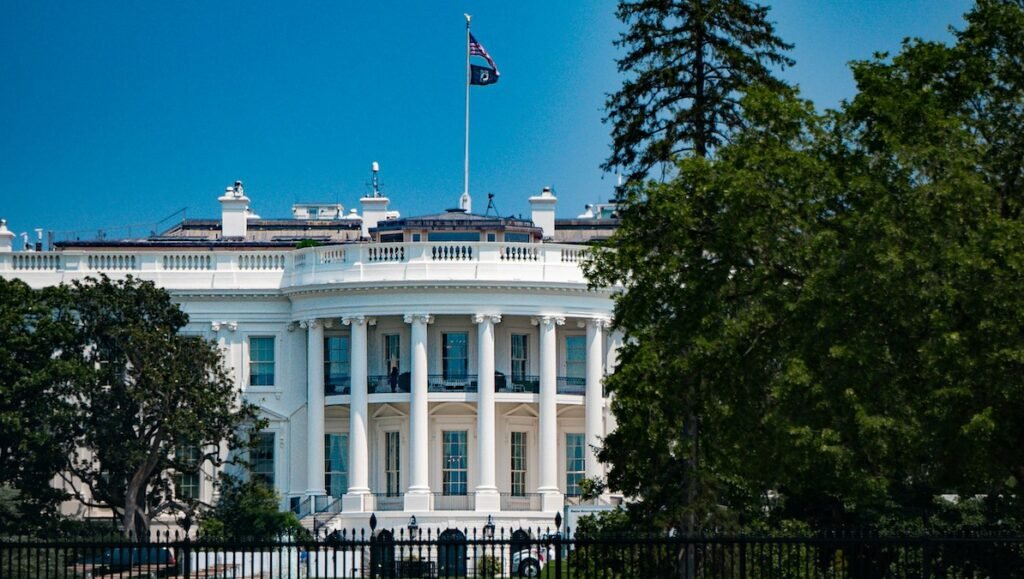
The proposed rule would further codify an executive order from last August, titled “Improving Oversight of Federal Grantmaking,” in which the White House ordered federal agency heads to award grants that “advance the President’s policy priorities” and align with its criteria for “Gold Standard Science.”
The proposal states that the OMB made the suggested revisions in response to a lack of “transparency, accountability, and proper oversight” between 2021 and 2024. “Federal awards were often used during those years to promote a ‘woke’ policy agenda that did not reflect the values of the vast majority of the American public,” the proposal claims, referencing “unlawful DEI [Diversity, Equity, and Inclusion] practices, various anti-American ideologies in American education,” and “non-replicable and highly misleading studies” as examples.
“We warned of this exact form of government overreach in science a year ago,” Colette Delawalla, founder of Stand Up for Science, told Scientific American in reference to the administration’s proposed rule. “It replaces expertise with political appointees, globally decouples the U.S. and completely guts our scientific ecosystem.”
In addition to elevating government oversight of the grantmaking process, the proposed rule would, among other changes:
- Allow federal agencies to terminate active grants at any time if they are deemed “inconsistent with program goals or agency priorities.”
- Prohibit the use of federal funds for research collaborations with foreign entities affiliated with countries under sanction by the United States, unless exceptions are authorized by federal law or the head of a federal agency.
- Disallow federal grants from being used for most publication costs and open access fees.
- Require that grant recipients obtain pre-approval from federal agencies to use their funding to attend conferences or obtain professional memberships related to the scientific work covered by their grant.
- Allow federal agencies to receive exemptions from the requirement to publicly advertise grant competitions when “publicly announcing an opportunity would pose a risk to national security or is in the national interest of the United States.”
- Ban federal funds from being used to “fund, promote, encourage, subsidize, or facilitate” any activities related to DEI or “gender ideology,” defined as “theories or ideologies that deny the biological reality of sex or the sex binary in humans.”
Related
• Read the Proposed Rule
• White House Proposes New Rules Giving Political Appointees Final Approval on Research Grants
• Summary of Key Changes in OMB’s Proposed Federal Financial Assistance Rule
• The State of the Science 1 Year On: Academia and Research
• Get Involved: AGU’s Science Policy Action Center
“Congress has repeatedly appropriated funds for science agencies with the expectation that those funds would be administered through merit-based, expert-driven processes insulated from political interference,” Elizabeth Ginexi, a former official at the National Institutes of Health, wrote in a blog post. “This rule attempts to override that expectation.”
Stand Up for Science will host an online meeting with scientist speakers on Tuesday, 2 June at 4 p.m. ET to review the proposed rule. The Office of Management and Budget is accepting public comments on it until 13 July.
—Grace van Deelen (@gvd.bsky.social), Staff Writer
These updates are made possible through information from the scientific community. Do you have a story about how changes in law or policy are affecting scientists or research? Send us a tip at eos@agu.org.

Text © 2026. AGU. CC BY-NC-ND 3.0
Except where otherwise noted, images are subject to copyright. Any reuse without express permission from the copyright owner is prohibited.