Editors’ Highlights are summaries of recent papers by AGU’s journal editors.
Source: Water Resources Research
Recent studies have shown the climatic envelope for blanket bog peatlands to be contracting, yet questions remain about what will happen to existing peatlands as they pass outside of this shrinking bioclimatic envelope.
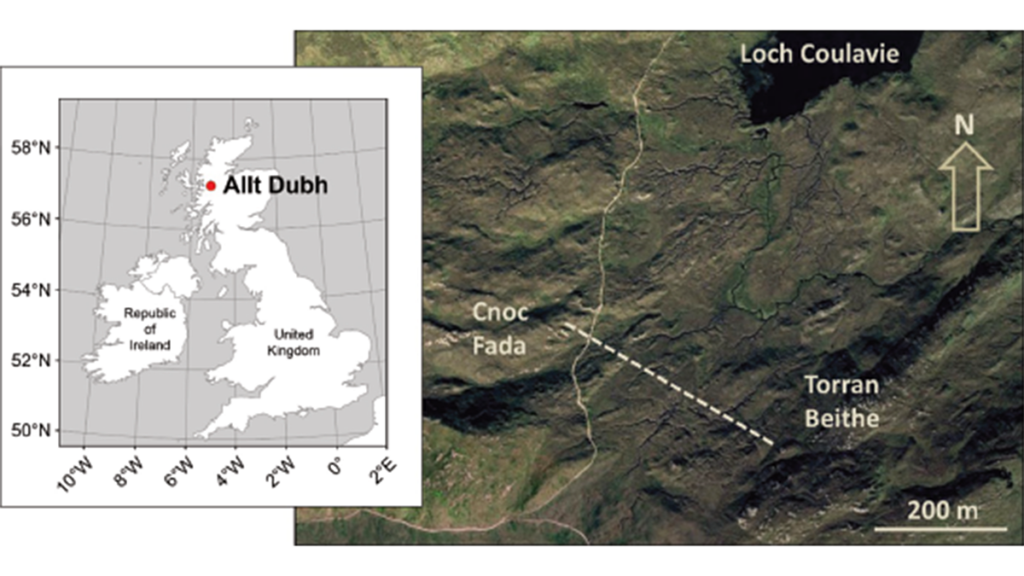
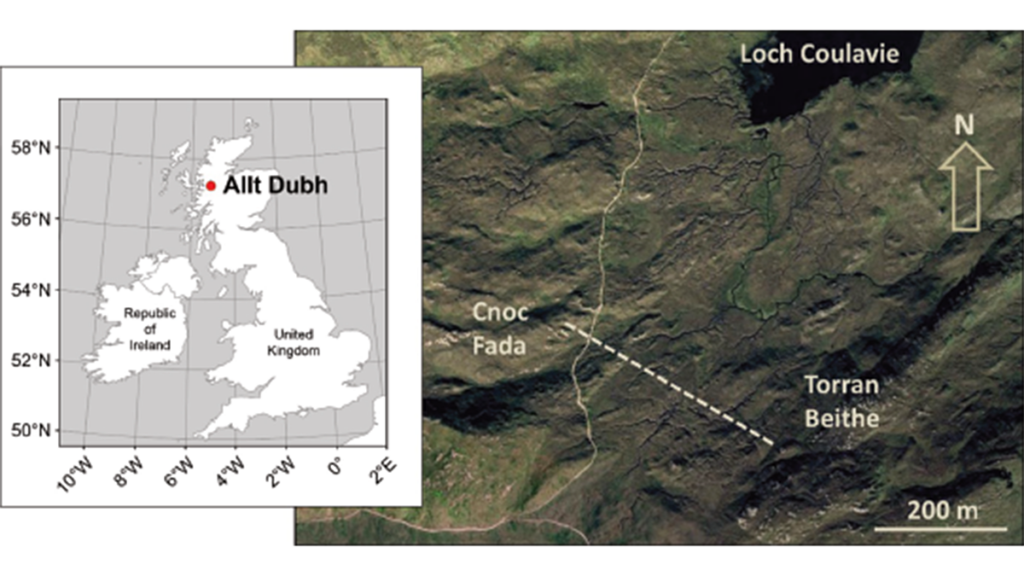
DigiBog, a process-based model, accurately predicts peat depth in an area of very complex topography. This presents a significant advancement in modeling peat depth in areas with complex terrain. The implications of peat expanding at a faster rate on the relatively dry and steeper slopes, compared to the wetter basins, is contrary to the current thinking.
Despite being at the edge of the future climatic envelope for blanket bog, under all climate scenarios, the site continues accumulating peat until 2100, with the greatest accumulation occurring under the moderate Representative Concentration Pathway (RCP) 4.5 scenario.
While peat thickness generally depends on wetness, wetness does not fully explain accumulation patterns in blanket bogs, with some very wet areas having only shallow peat accumulation.
Tom Winter’s conceptual model proposed that wetland vulnerability to climate change depends on wetness and the position within the hydrological landscape. Baird et al. [2026] does indeed show peat depth to have moderate to strong correlations with wetness. However, greater recent peat accumulation, and predicted future accumulation, is away from basins which contradicts Winter’s “wetter is better” and may be partially explained by the ability of peatlands themselves to engineer and alter landscape wetness.
Overall, ecohydrological models that are process-based are better than simple bioclimatic models for assessing future peatland carbon, when accounting for accumulation rates and spatial patterns.
Citation: Baird, A. J., Young, D. M., Ramirez, J. A., Gill, P. J., Morris, P. J., Peleg, N., et al.(2026). Assessing the response of blanket peatlands to climate change using the DigiBog model and winter’s concept of the “hydrologic landscape”. Water Resources Research, 62, e2025WR042050. https://doi.org/10.1029/2025WR042050
—Paul Whitfield, Associate Editor, Water Resources Research, with input from Joshua Ratcliffe
Text © 2026. The authors. CC BY-NC-ND 3.0
Except where otherwise noted, images are subject to copyright. Any reuse without express permission from the copyright owner is prohibited.