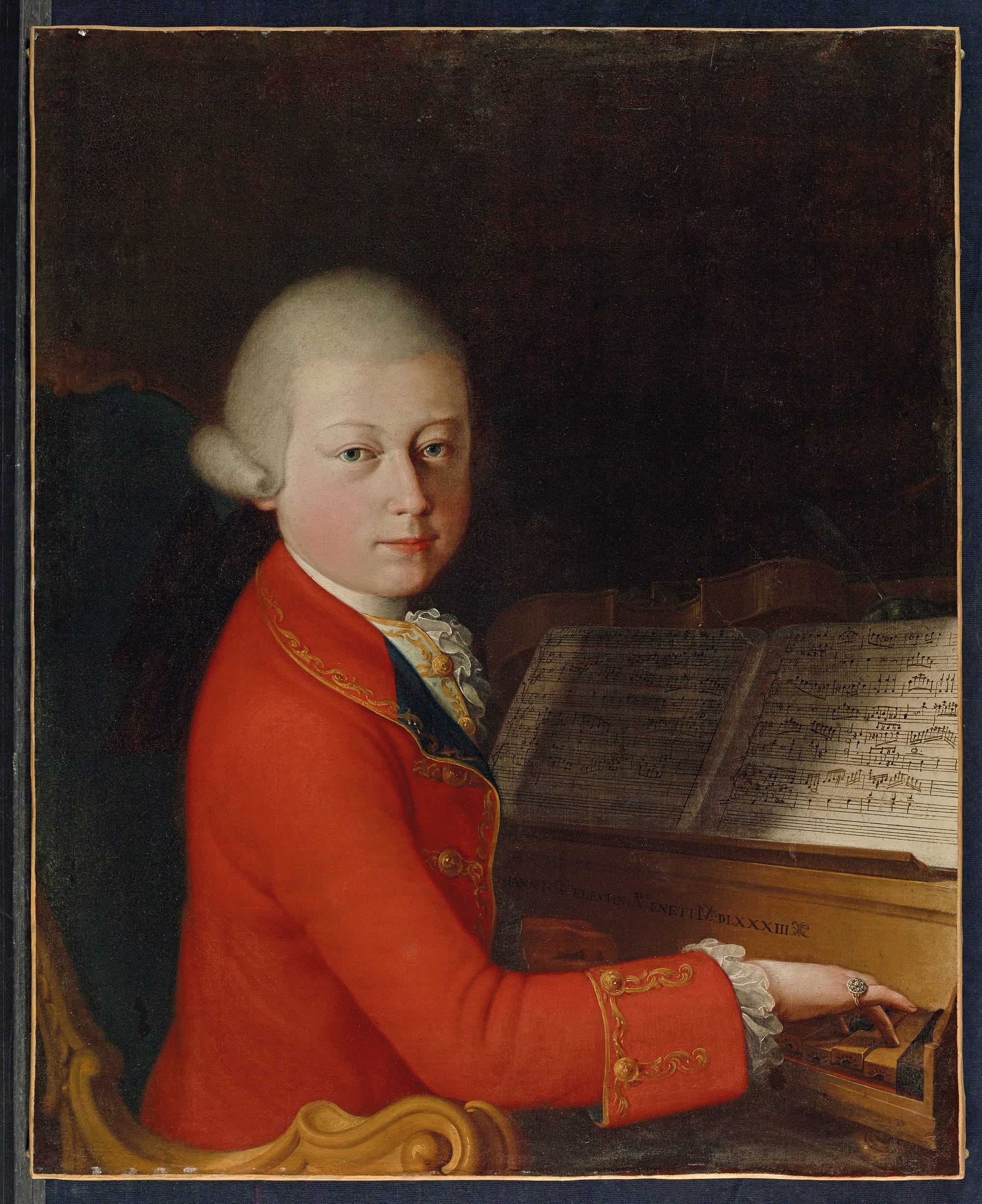
Last summer, I spent a month in Salzburg, Austria, and I eschewed Mozart tourism the entire time. Some things are unavoidable — the Mozartkugeln chocolates in every supermarket, the opera festival founded in his memory — but I wanted to appear as a local, and guided tours don’t give that impression. Now I see it was a missed opportunity.
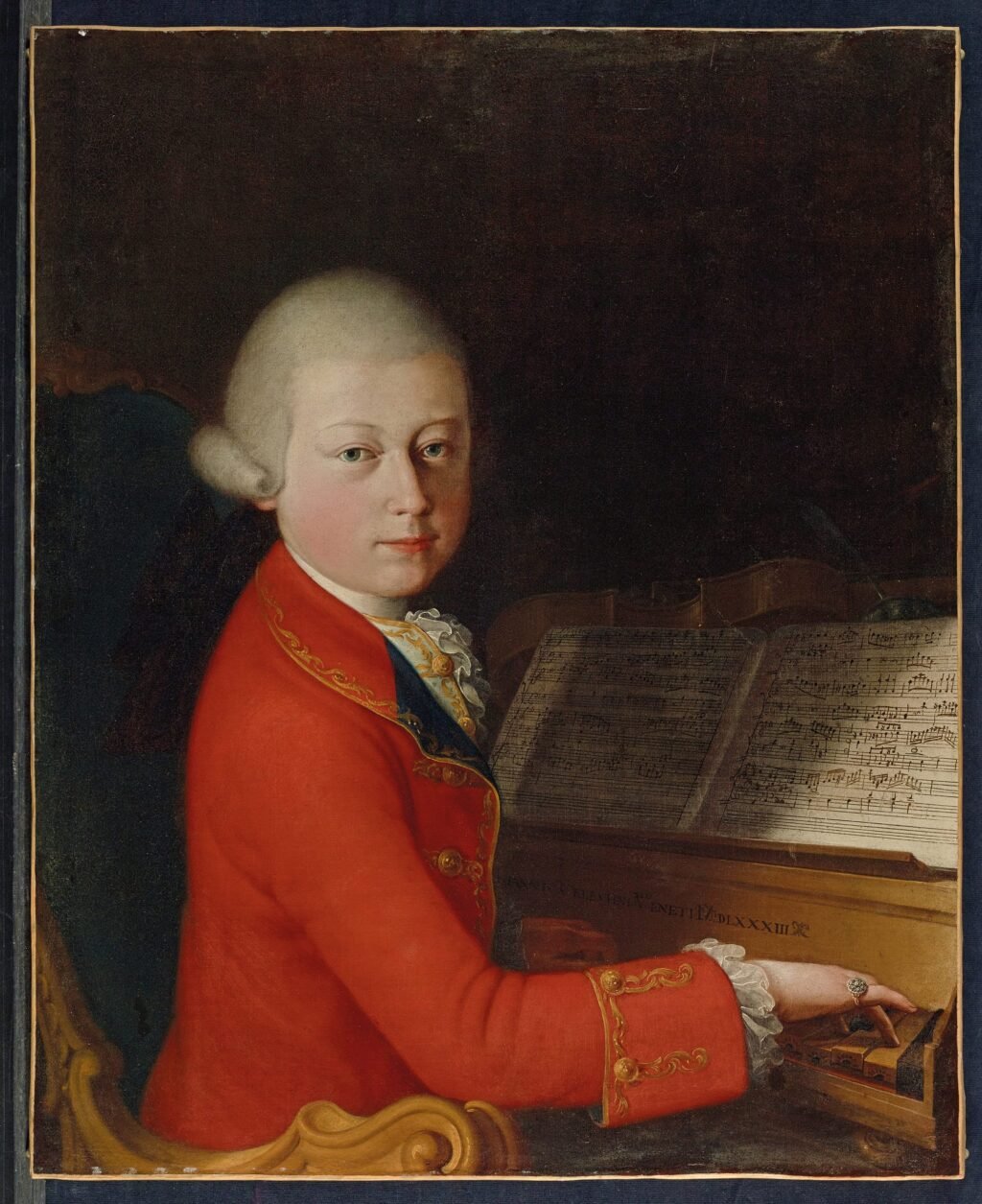
Lucky for me, and all of New York City, a second chance presents itself at the Morgan Library. Wolfgang Amadeus Mozart: Treasures from the Mozarteum Foundation of Salzburg guides visitors through the life and career of the virtuoso via pieces of well-preserved ephemera, from his childhood violin made of spruce and maple, to original sketches of the set design of the opera The Magic Flute (1791). Classical fans will find much to love, as will anyone interested in the history of artistry and patronage in Europe. I had to chuckle when Mozart was described in an 18th-century letter as a “freelance composer.” You and me both, Amadeus.
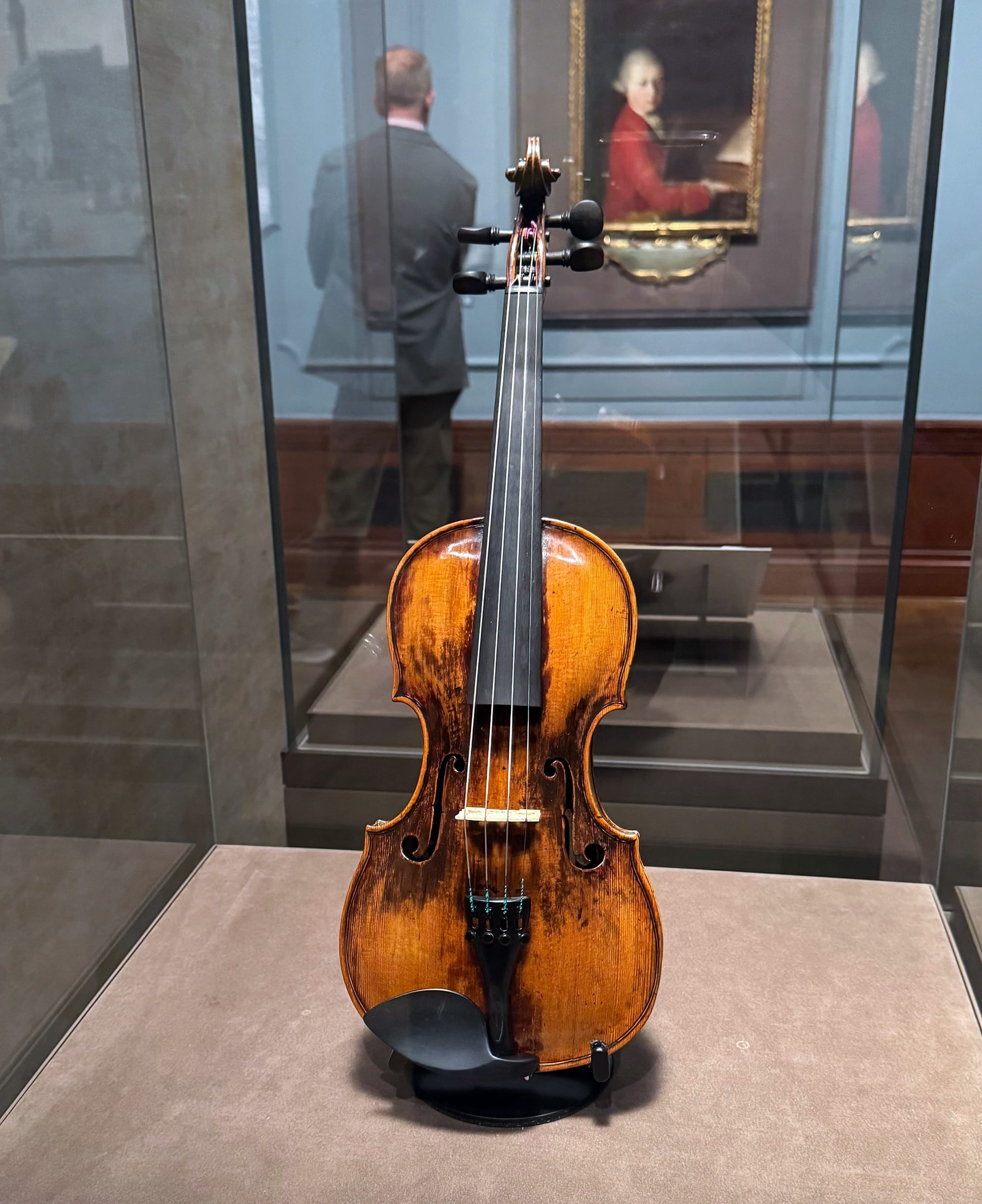
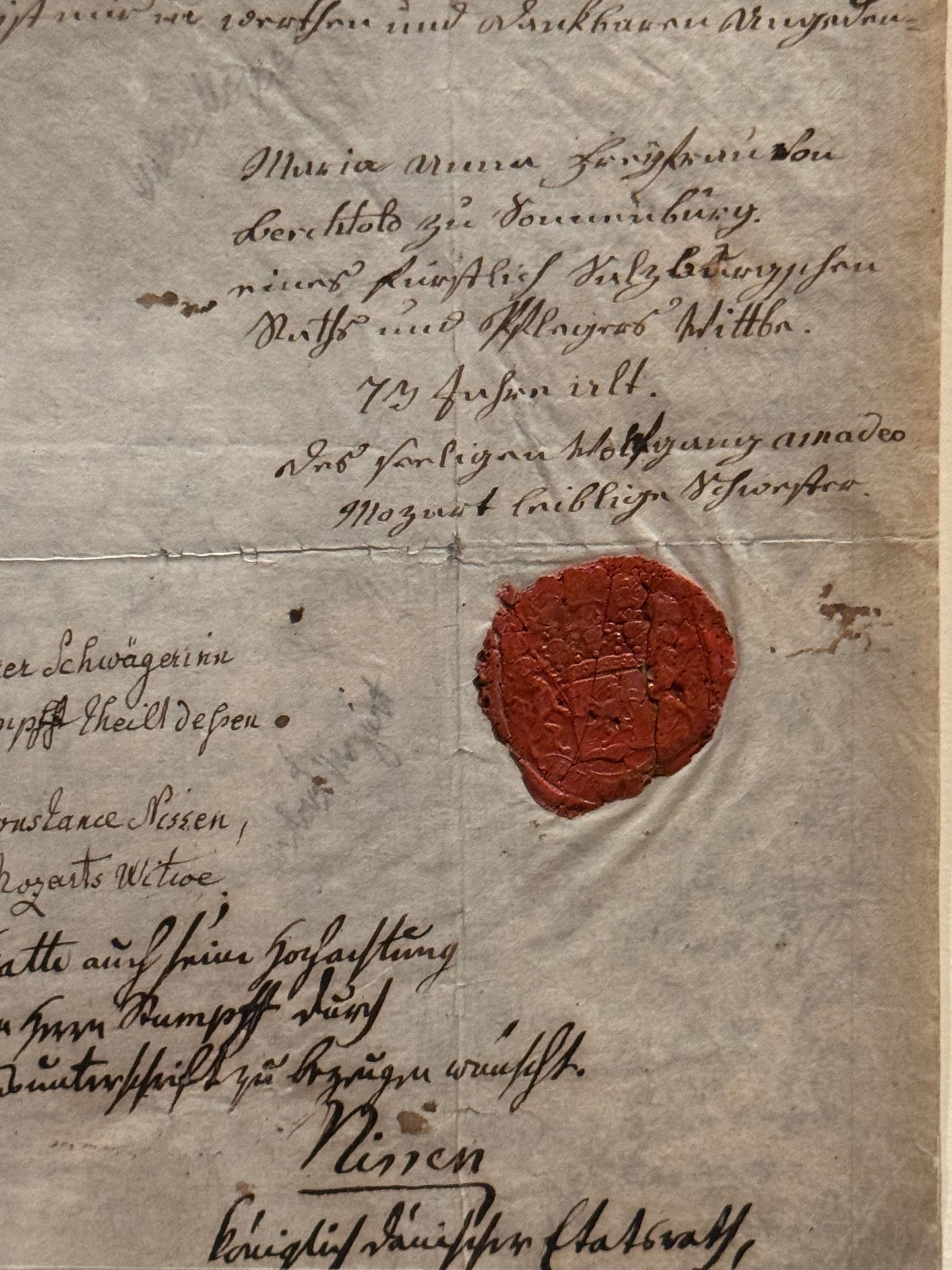
Left: A Violin from Salzburg made by Andreas Ferdinand Mayr (c. 1746), spruce and maple; right: Detail of letter from Maria Anna von Berchtold zu Sonnenburg, née Mozart (“Nannerl”; 1751–1829) to Johann Andreas Stumpff, Salzburg written on September 21, 1824, with postscripts by Constanze Nissen (formerly Mozart) and her second husband Georg Nikolaus Nissen (both photos courtesy Morgan Library & Museum)
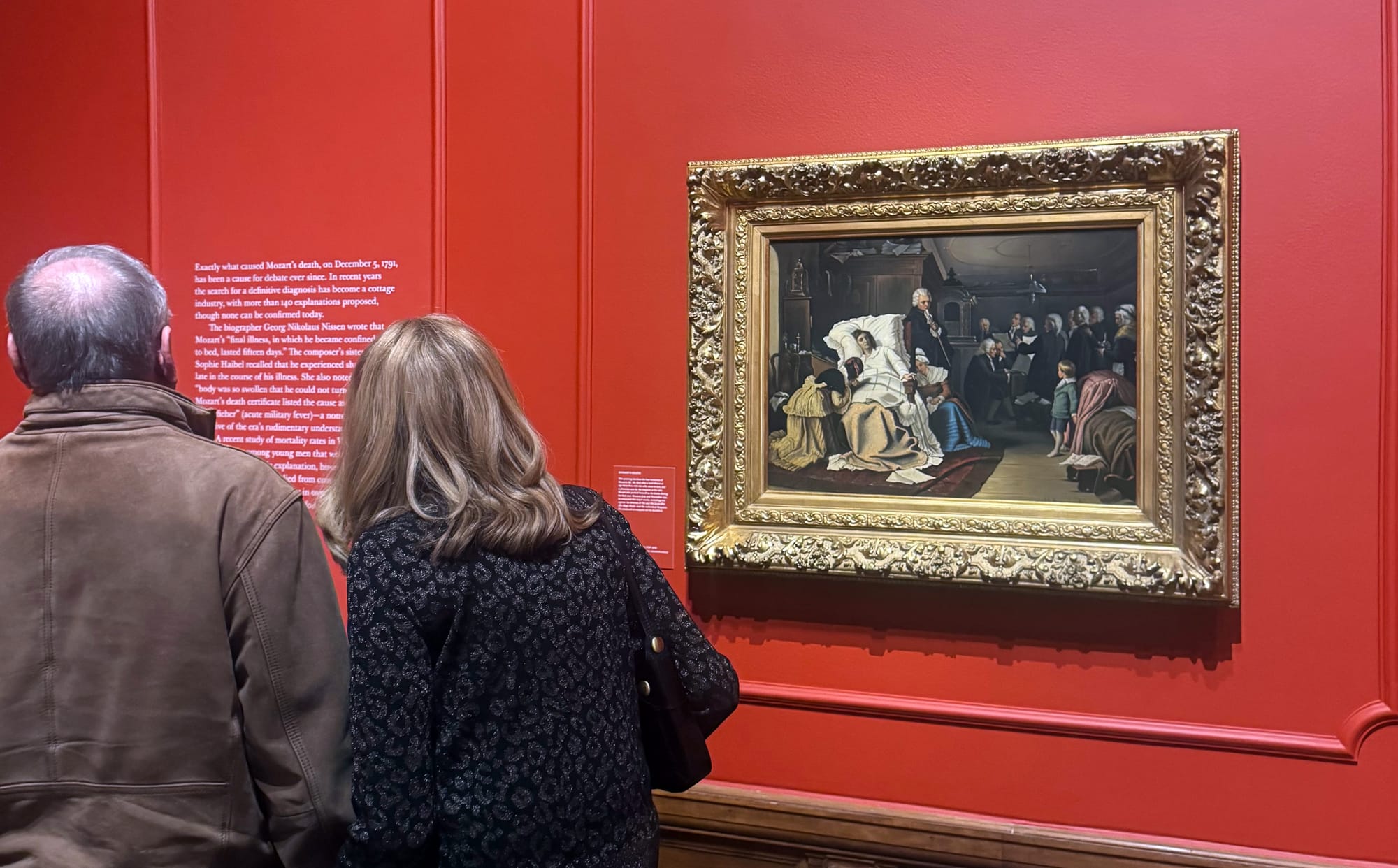
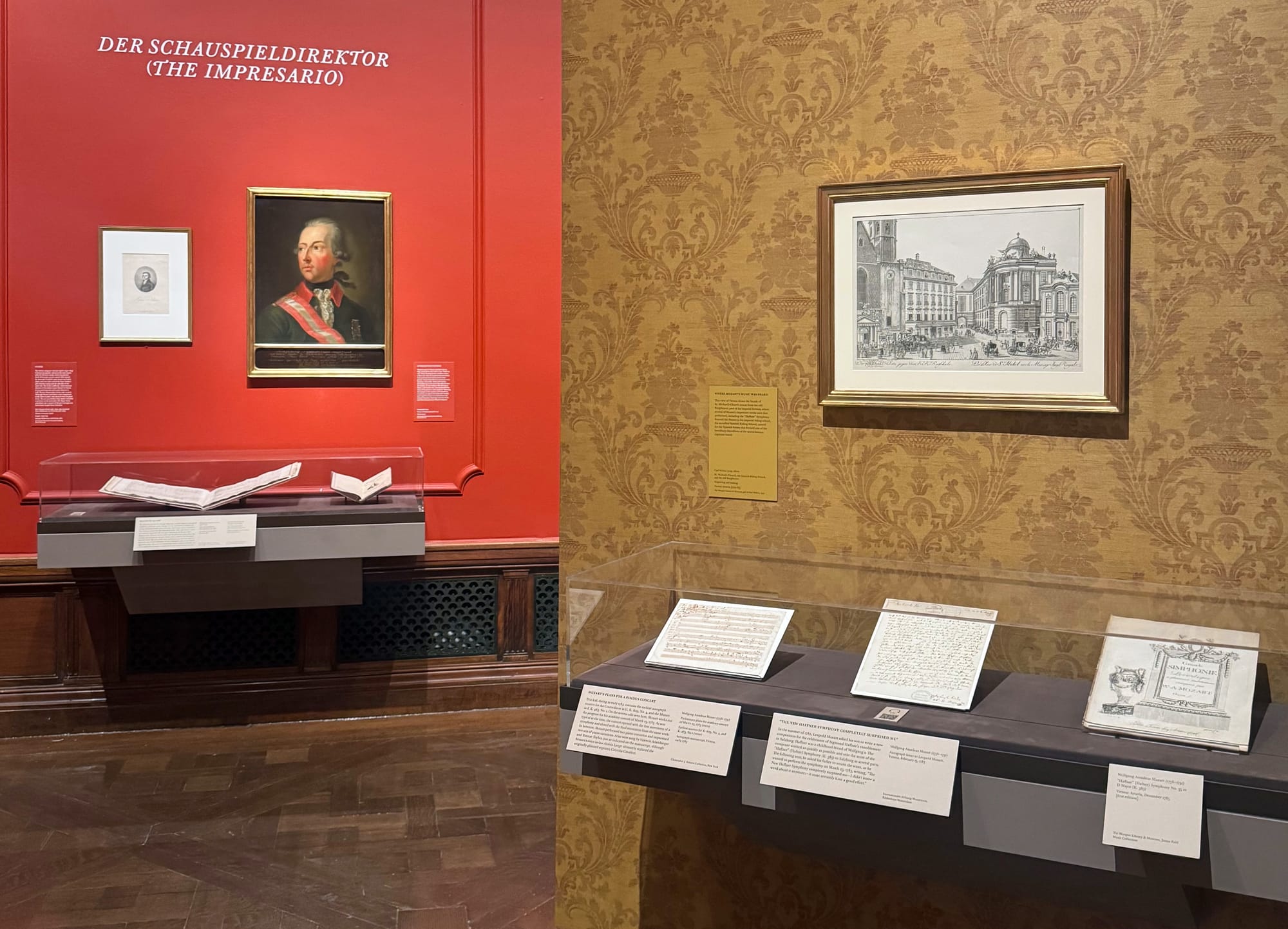
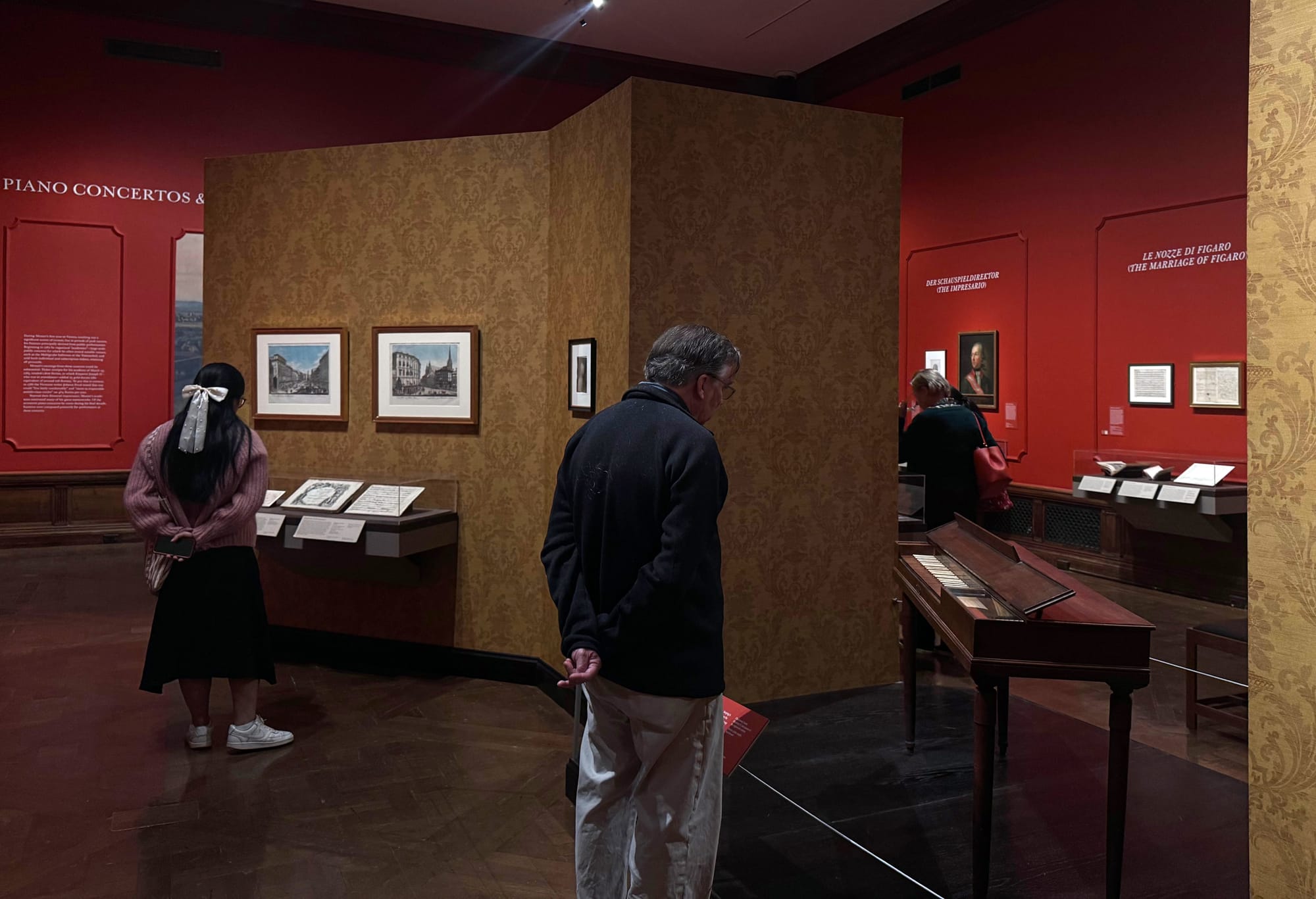
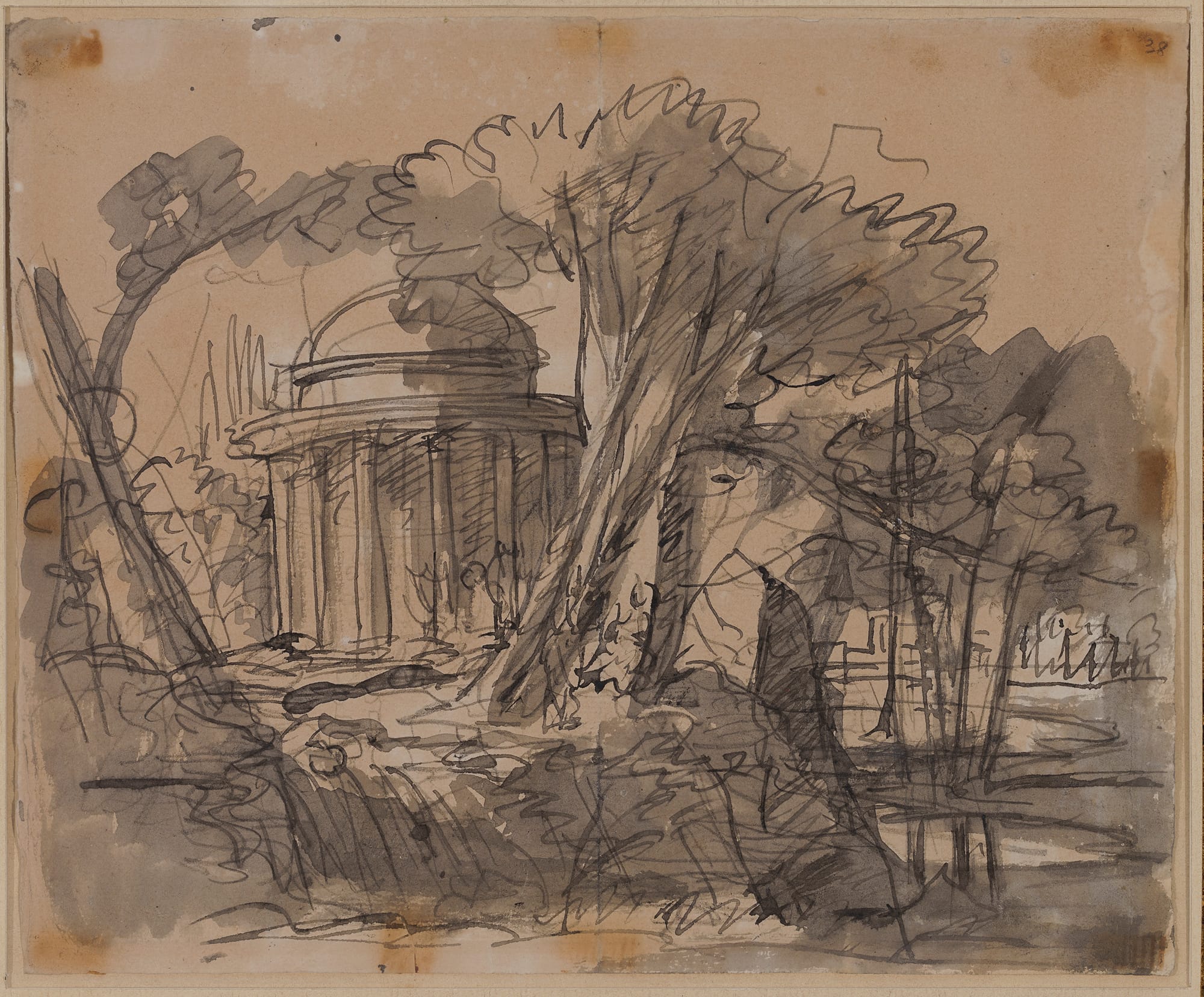
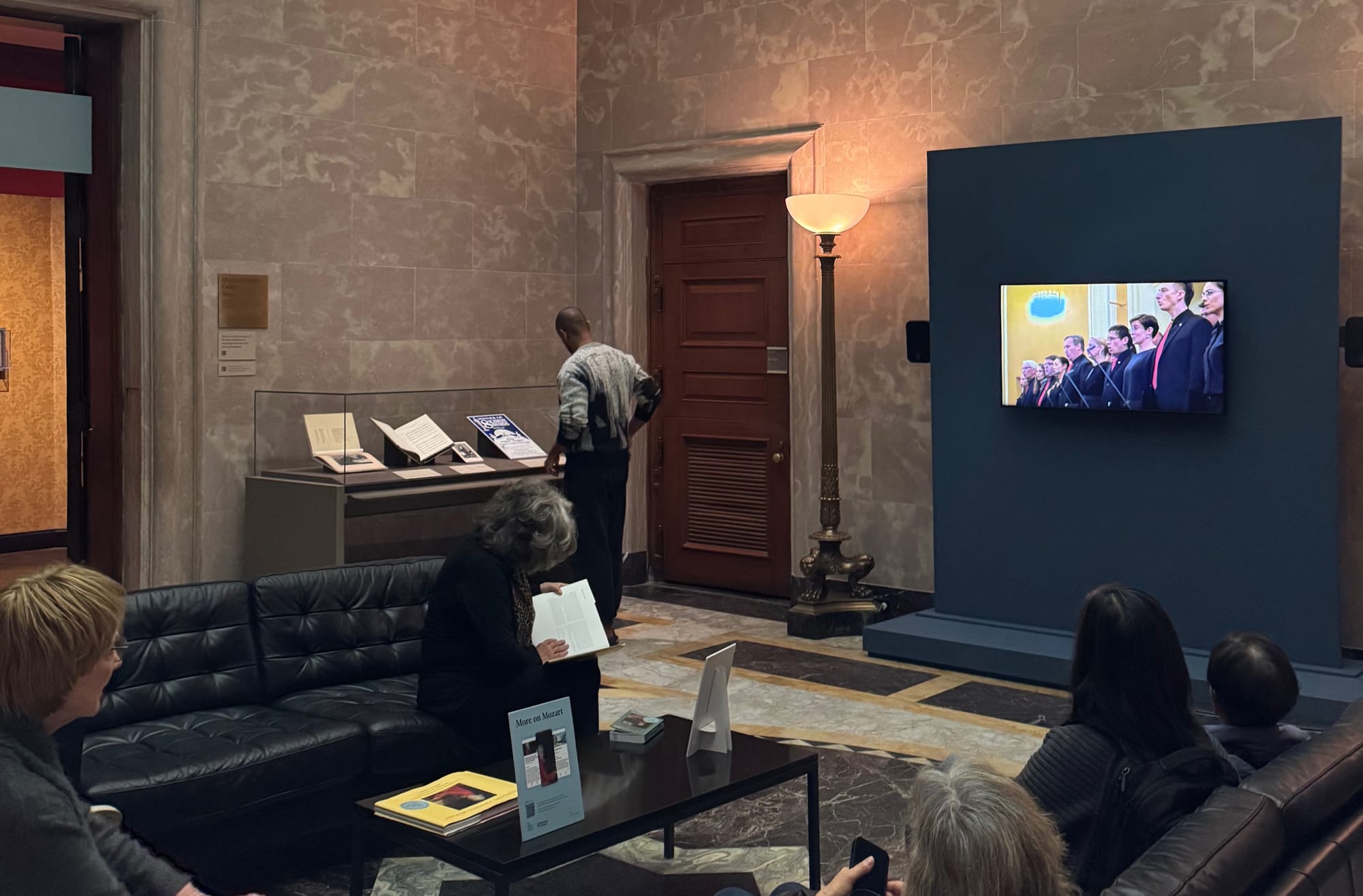
The Morgan’s identity as a regal respite from the rest of midtown Manhattan befits the exhibition’s gilded aesthetics and the lovely loop of sonatas filtering through the two galleries, playfully labeled “Act I” and “Act II.” The show raises the question of whether a musical score can be a work of art in its own right. If the penmanship is beautiful, and the wax seal intricate? Or is it more about what these pieces mean for the medium, as with the 1787 serenade “Eine kleine Nachtmusik”? Some of the most interesting pieces aren’t necessarily tied to Mozart, such as the portraits of prince-archbishops who supported the composer, rendered by unidentified artists who expertly captured a subject’s bug eyes or ruddy cheeks.
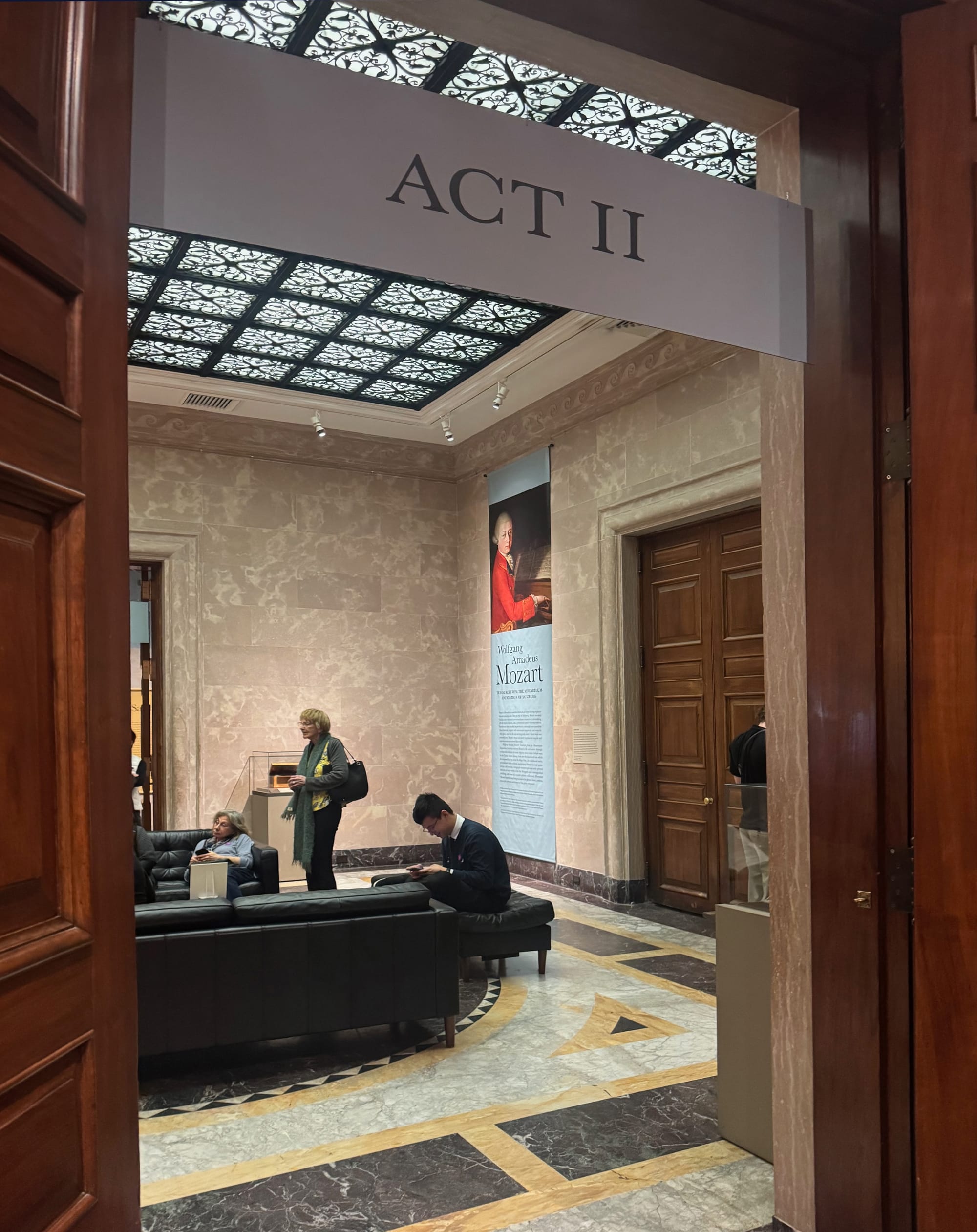
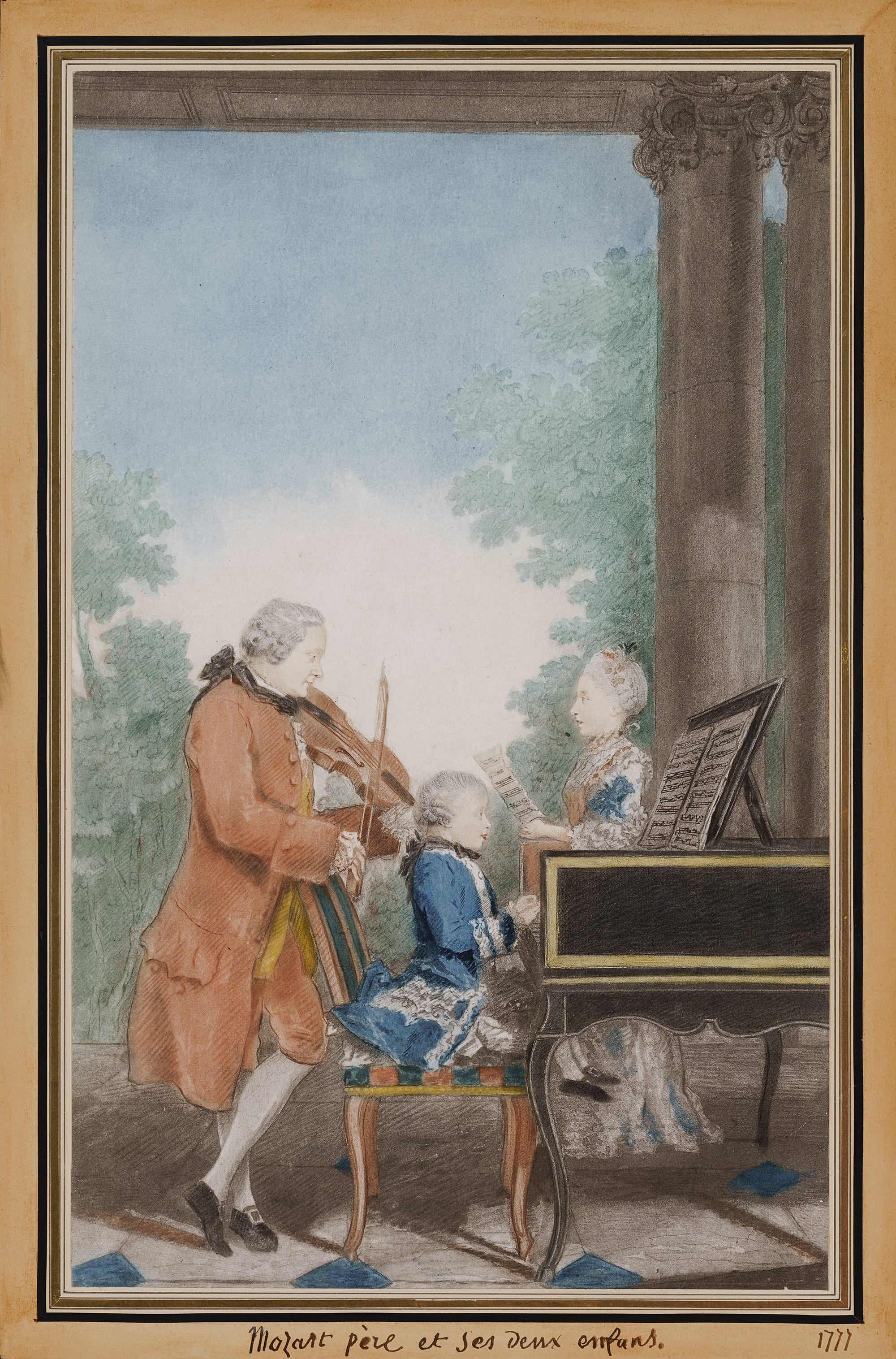
Left: Installation view of Wolfgang Amadeus Mozart: Treasures from the Mozarteum Foundation of Salzburg at the Morgan Library & Museum (photo Greta Rainbow/Hyperallergic); right: Jean-Baptiste Delafosse, after Louis Carrogis de Carmontelle (1717–1806), “The Mozart Family, Paris” (1764), copperplate engraving (photo courtesy Morgan Library & Museum)
Mozart himself had a sense of humor I only discovered through his correspondence with his family, particularly those with Maria Anna Thekla Mozart, whom Wolfgang called “Bäsle,” or little cousin. One of the original letters is preserved, next to a pencil drawing of Anna, and an audio guide translates the decidedly … scatological language. Here’s a taste: “It will soon be 22 years that I have been shitting out of the same hole, and it is still not torn!” The curatorial text notes that the Bäsle letters were censored in the 19th and 20th centuries because of their obscenity. For example: “I kiss your hands, your face, your knees, and your — in short, everything that you allow me to kiss.” Scandalous!
The volume of work brought from Austria is manageable, and the tone appropriately reverent. Of his hometown, Mozart wrote, “Salzburg is no place for my talent,” a quote reproduced on a gallery wall. He made Salzburg a world-class music destination. I needed distance to appreciate the talent the city had birthed.
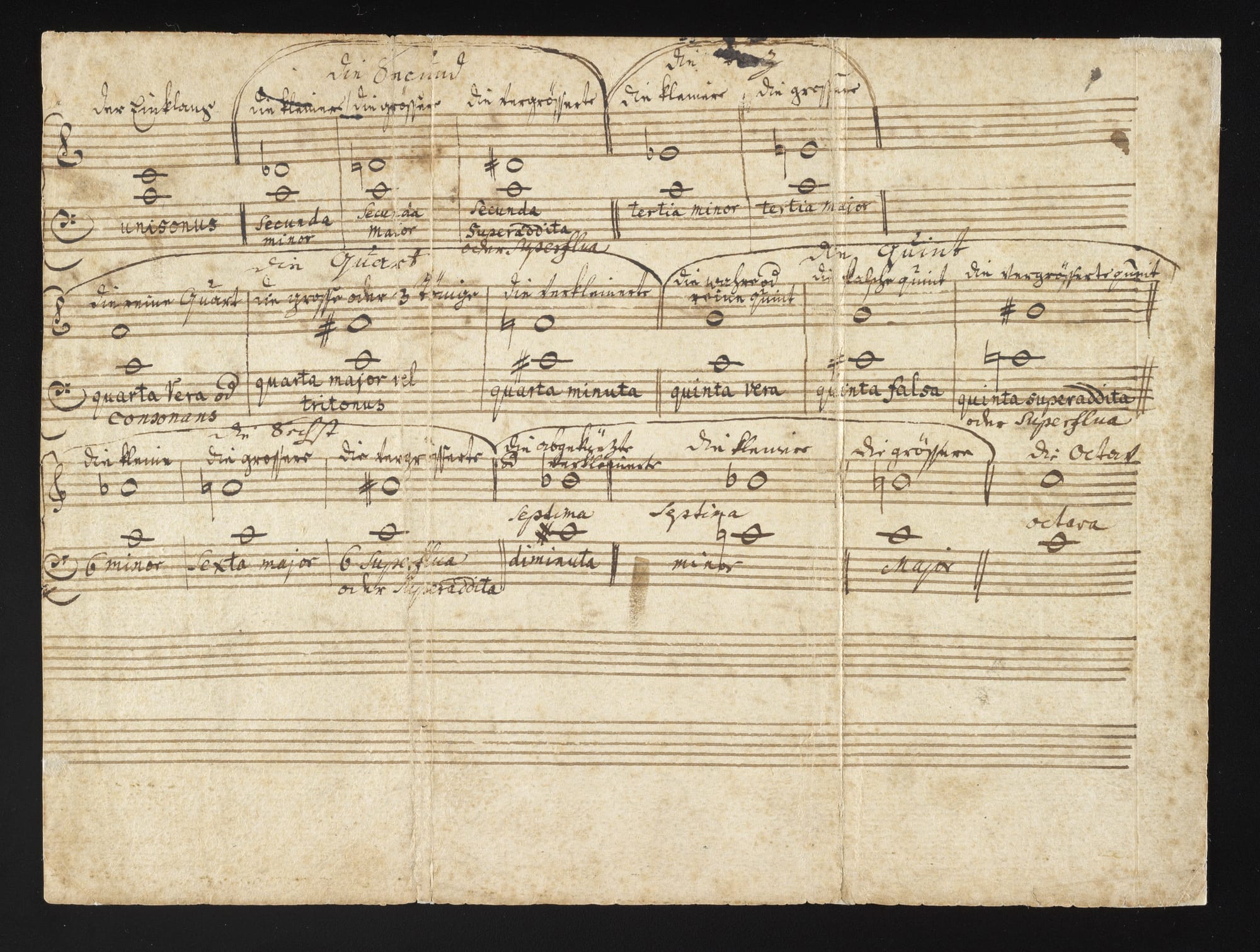
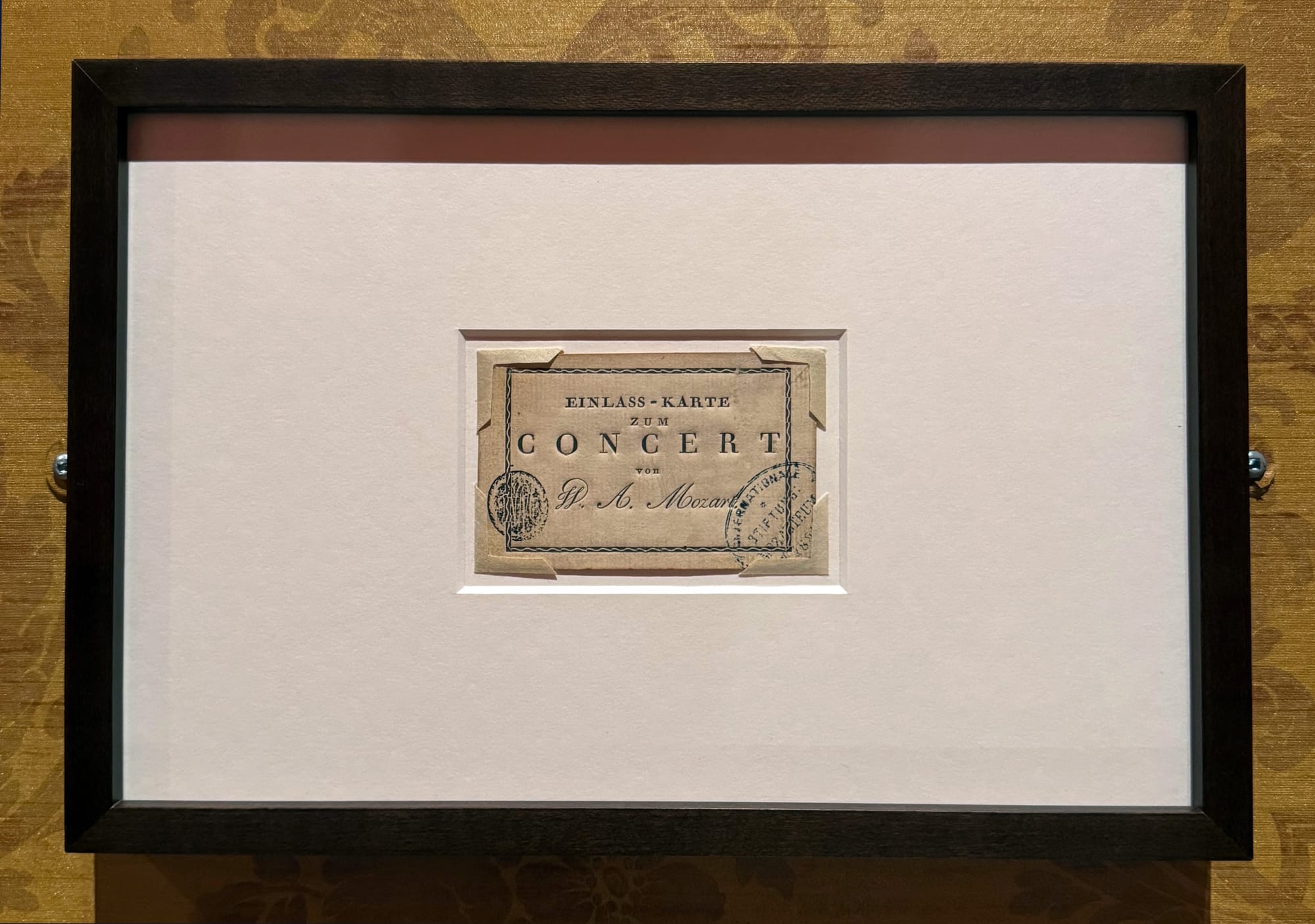
Admission ticket to a concert by Wolfgang Amadeus Mozart, Vienna (photo Greta Rainbow/Hyperallergic)
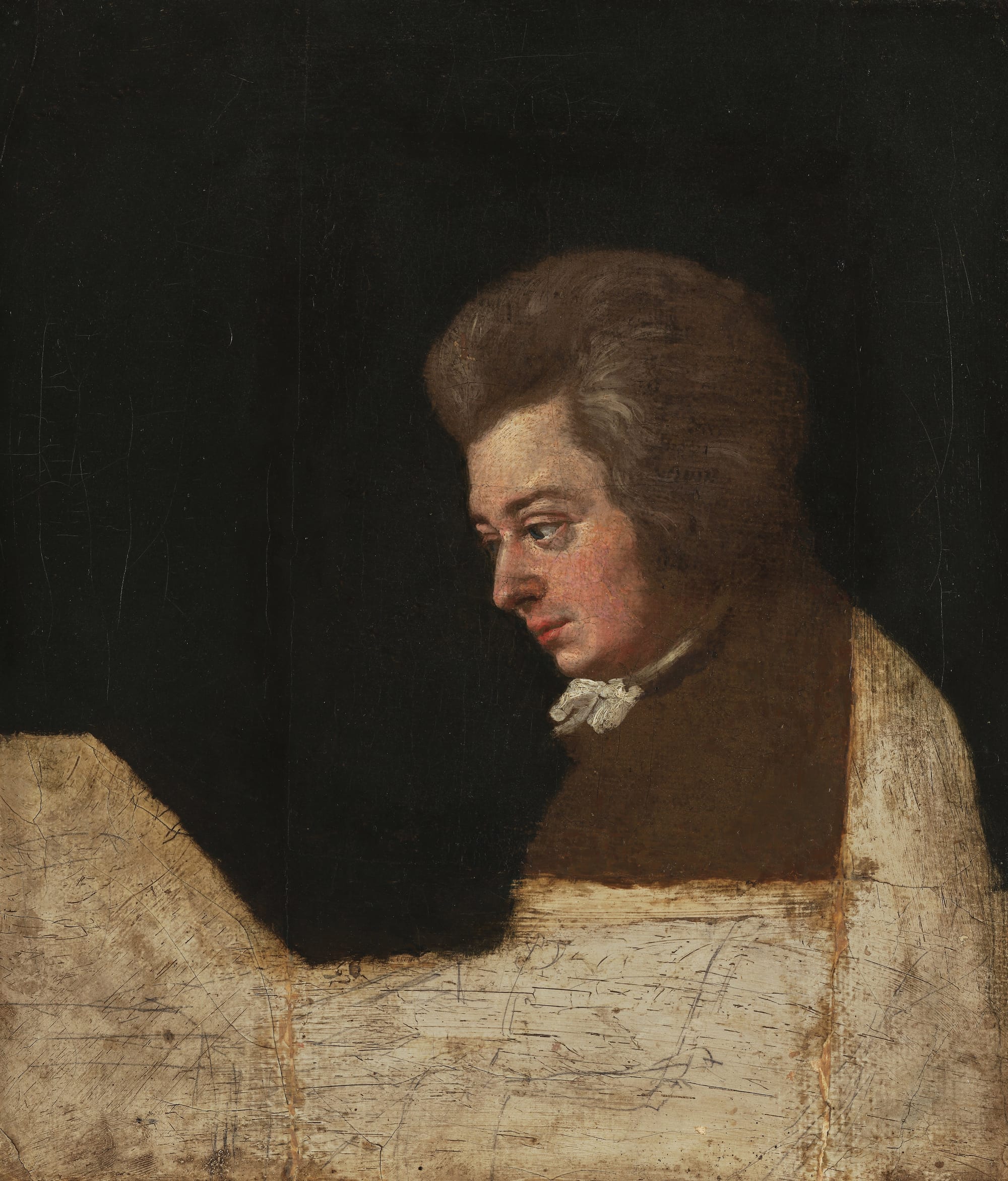
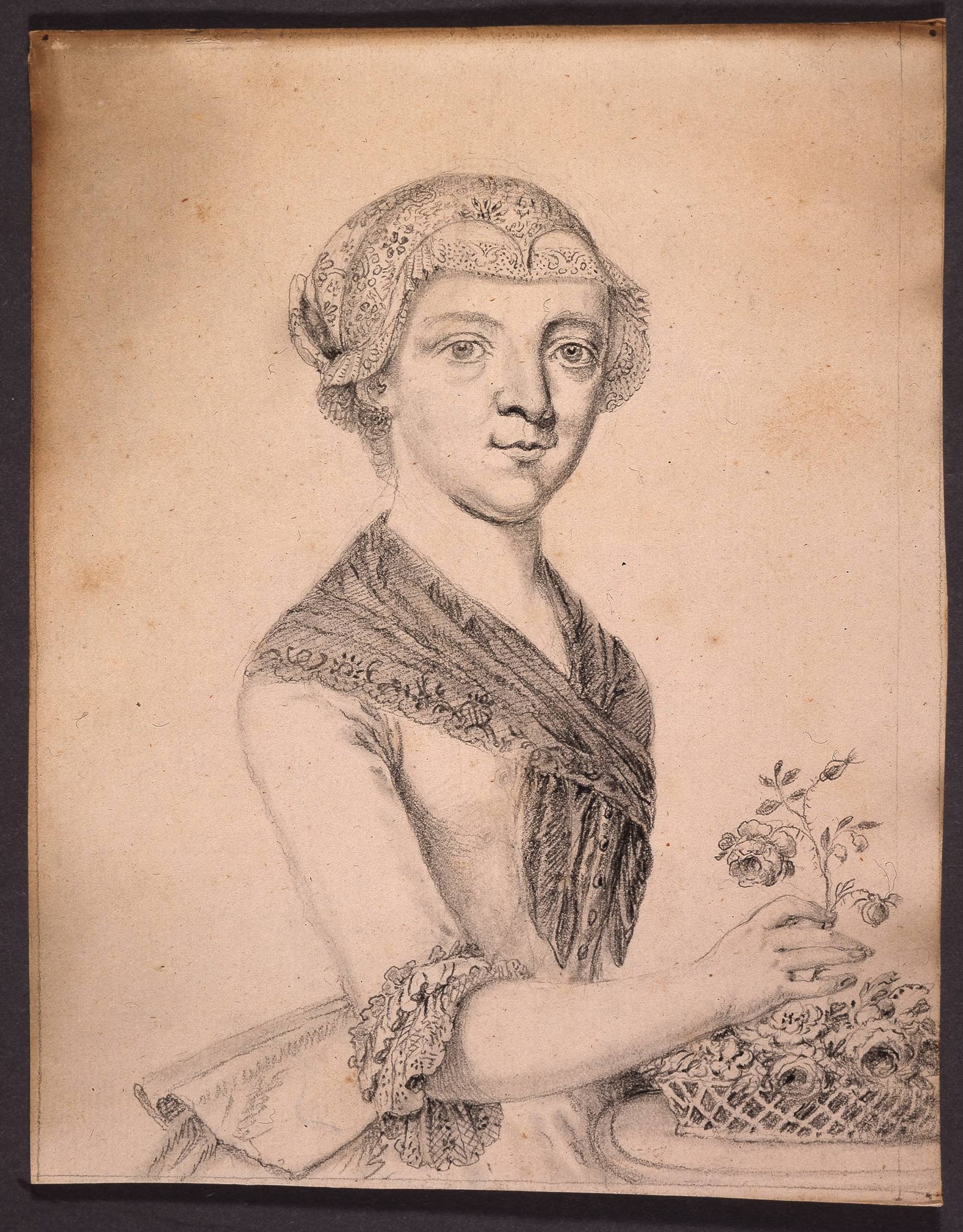
Left: Johann Joseph Lange, unfinished portrait of Wolfgang Amadeus Mozart (c. 1789), oil on canvas; right: Unidentified artist, “Portrait of Maria Anna Thekla Mozart” (c. last quarter of the 18th century), pencil on paper (both photos courtesy Morgan Library & Museum)
Wolfgang Amadeus Mozart: Treasures from the Mozarteum Foundation of Salzburg continues at the Morgan Library & Museum (225 Madison Avenue, Murray Hill, Manhattan) through May 31. The exhibition was organized by the Morgan in collaboration with the Mozart Museums of the International Mozarteum Foundation, Salzburg. It is curated by Robinson McClellan in collaboration with Deborah Gatewood, Armin Brinzing, and Linus Klumpner of the Mozarteum, and Christopher J. Salmon.