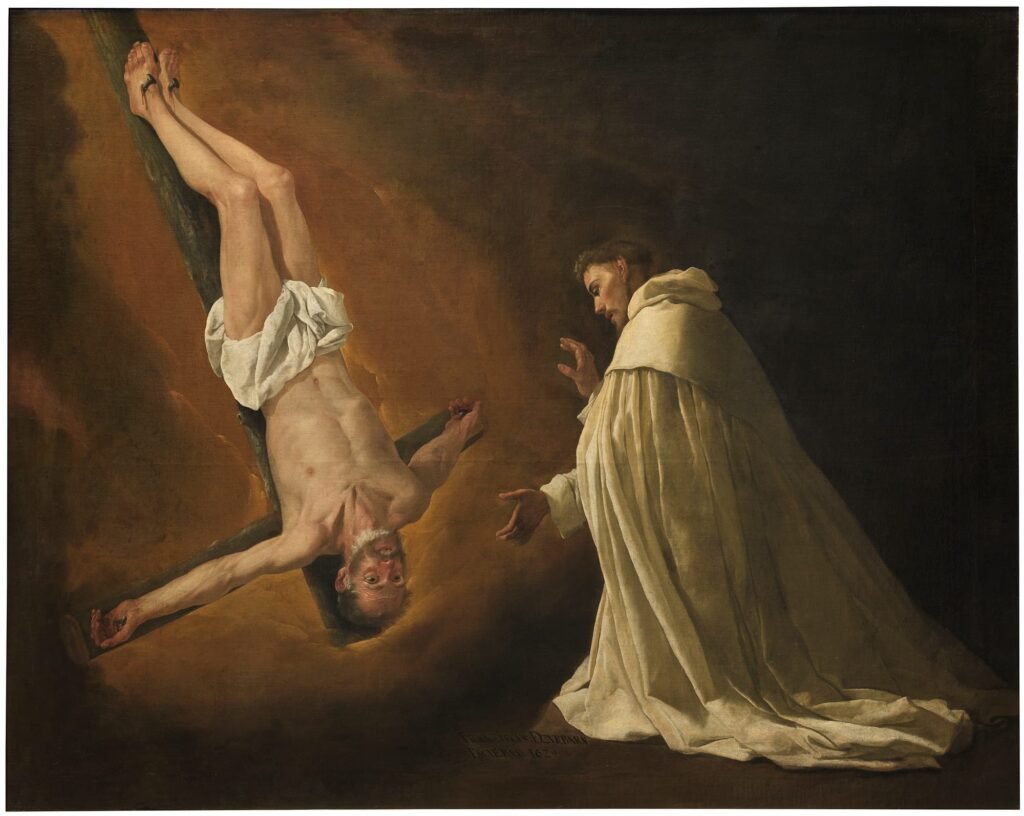
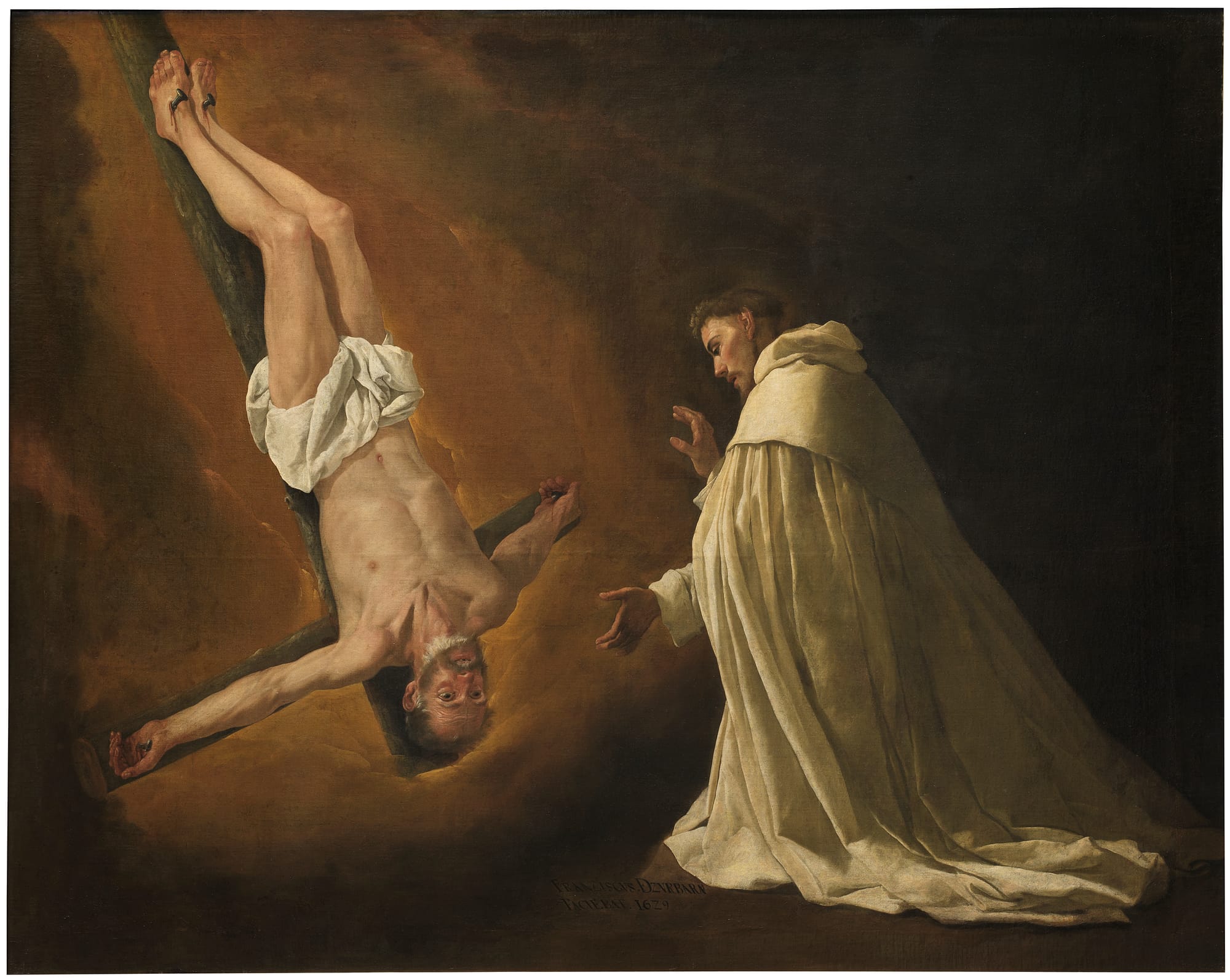
LONDON — Francisco de Zurbarán, that brilliant, 17th-century Spanish painter, is showing off the fruits of his piety (perhaps) on the grand scale at London’s National Gallery for the very first time.
Many of the works on display, once occupants of overbearingly towering altars in churches or monasteries in or near Seville in Southern Spain, are huge, and they are being displayed, sparely and sombrely, against walls the color of pitch black tar.
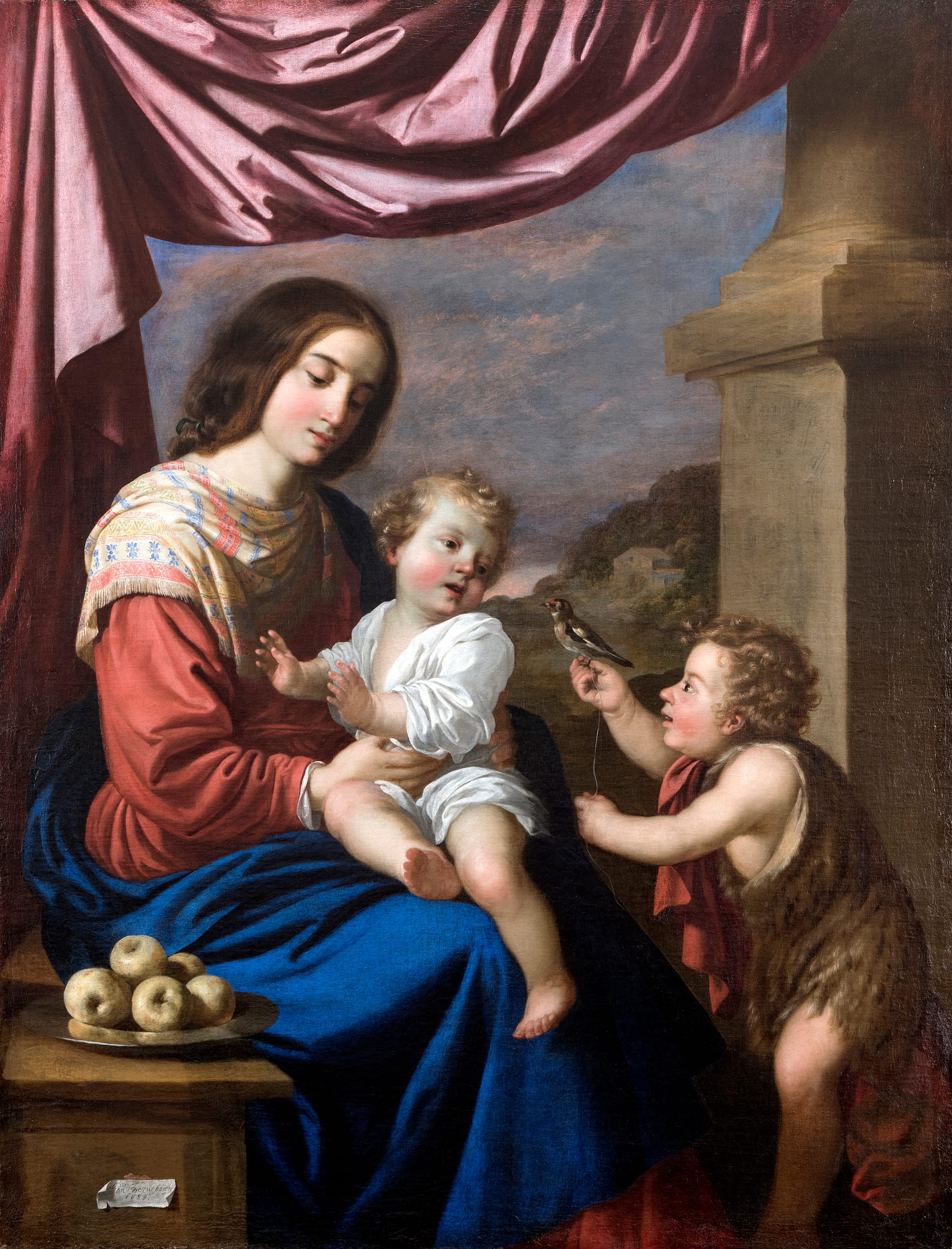
Crucifixion scenes. Individual monks in their tattered brown habits. Female saints in gorgeous fabrics tricked out to look like ladies of the court. The Court of King Bejayzus, that is.
The effect is sepulchral, awe-inspiring, and somewhat terrifying and fear-inducing. Frightening you back to God. This is cultural Catholicism run rampant, fuelled by prosperity thanks to an ever-burgeoning empire. One tiny fact alone: Zurbarán and his studio painted 120 works that found their way to the Spanish Americas.
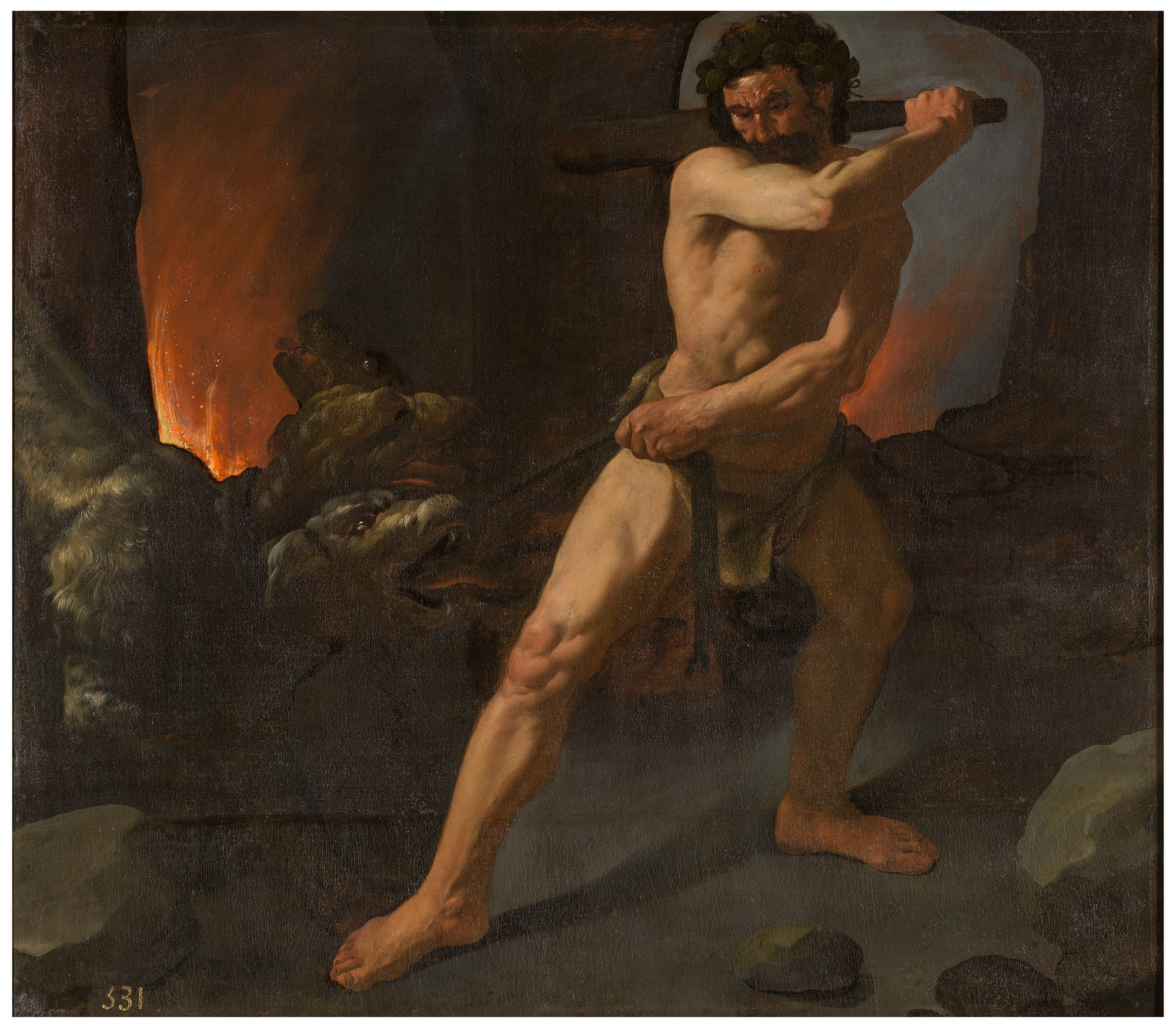
One word, used in my opening sentence, snags like a nagging pain in a back tooth, however. All this godliness, all this god fever … Was he himself a pious man? Was all this to do with sincerity? Does belief actually make a difference in how well you paint?
Was he a believer at all? I ask the curator. I remind her of Agnolo Bronzino, the great Florentine, also a painter of pious scenes, though best known of all for his glacial portraits of the Medici family. He, too, was a magnificent painter of fabric. Was he a man of faith? Well, he wrote filthy scatological verses in his spare time.
Her reply is quickeningly enigmatic. Nobody knows, she says. There are no personal records. No letters, no diaries, no portraits, no drawings. Merely many contracts. Only the money matters survived. Although he did have children, lots of them.
Then she points me in the direction of a small painting in the very last gallery, painted when Bronzino was an old man. It’s a small crucifixion scene. Given the scale of most of the paintings in this show, it does seem shockingly small when you finally alight on it, just to the right of the exit door.
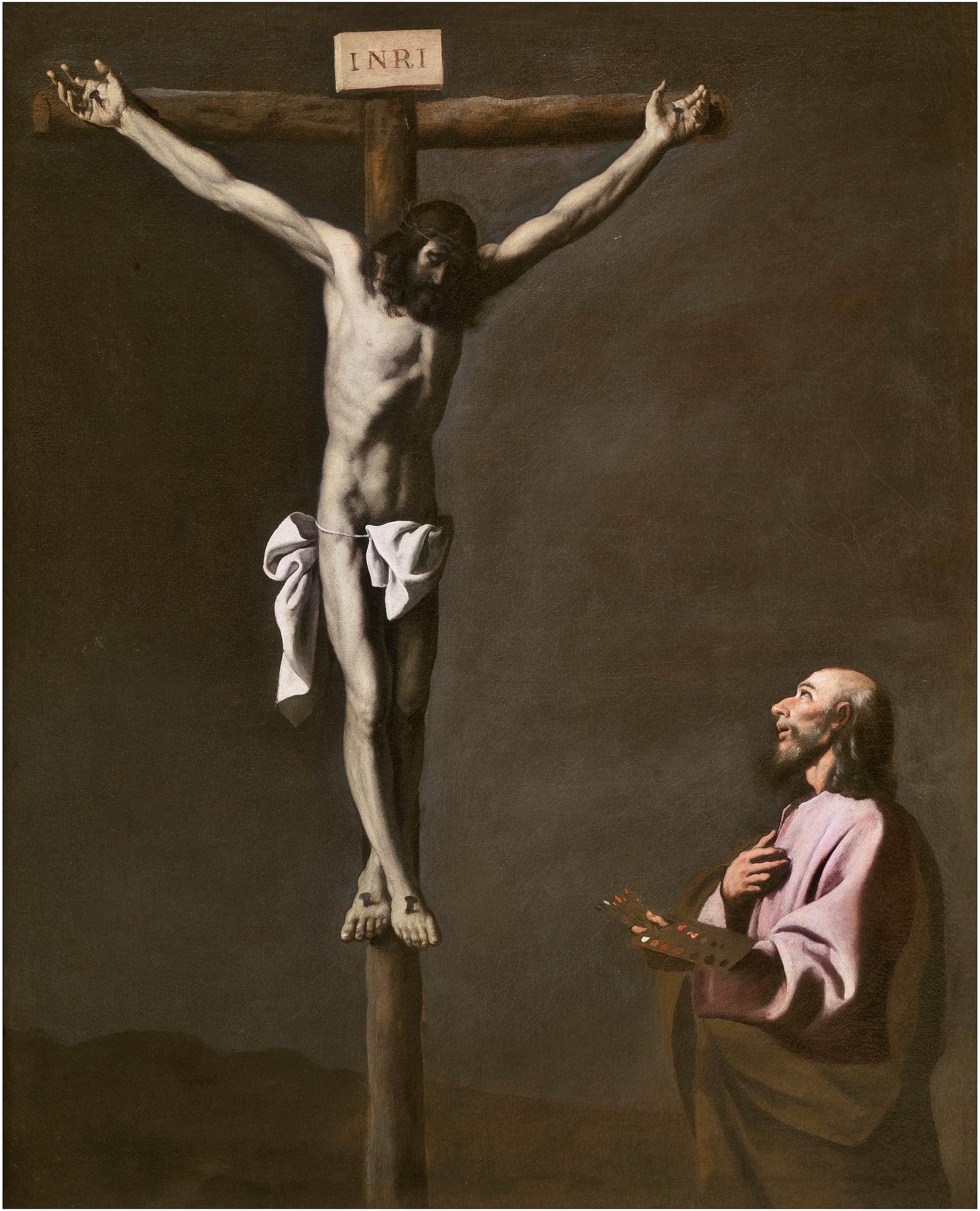
An old, scrubbily bearded bald man is standing beside the cross from which Jesus depends. He has in his left hand some painting brushes and a palette with paints (used) — brown, white, orange. Who is this old man? Representations of donors at the foot of the cross are not unusual. But this man is a self-declared painter, is he not?
This is unique, the curator tells me. It’s Bronzino as an old man. He has inserted himself into the drama of Christ’s crucifixion. Ergo he was pious (or perhaps not).
The argument is by no means watertight. Saint Luke, one of the 12 apostles, was the patron saint of painters. You could therefore just as well argue that this is St Luke, portrayed as an old man. Why assume it to be Bronzino then? We have no idea whether or not this is a likeness of Bronzino because we don’t know what he looked like. And even if this were a likeness of Bronzino, who’s to say that he wasn’t posturing? The church had been his paymaster on the grand scale. Cosying up can get you anywhere.
Zurbarán continues at London’s National Gallery through August 23. It then travels on to the Louvre Museum and the Art Institute of Chicago.