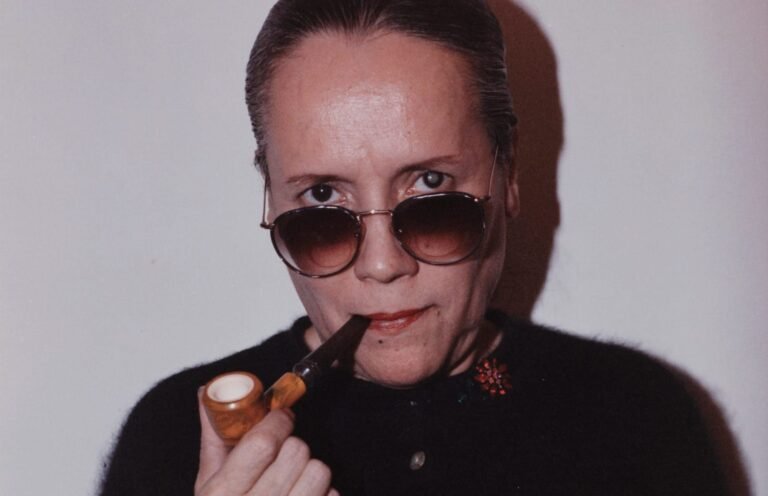
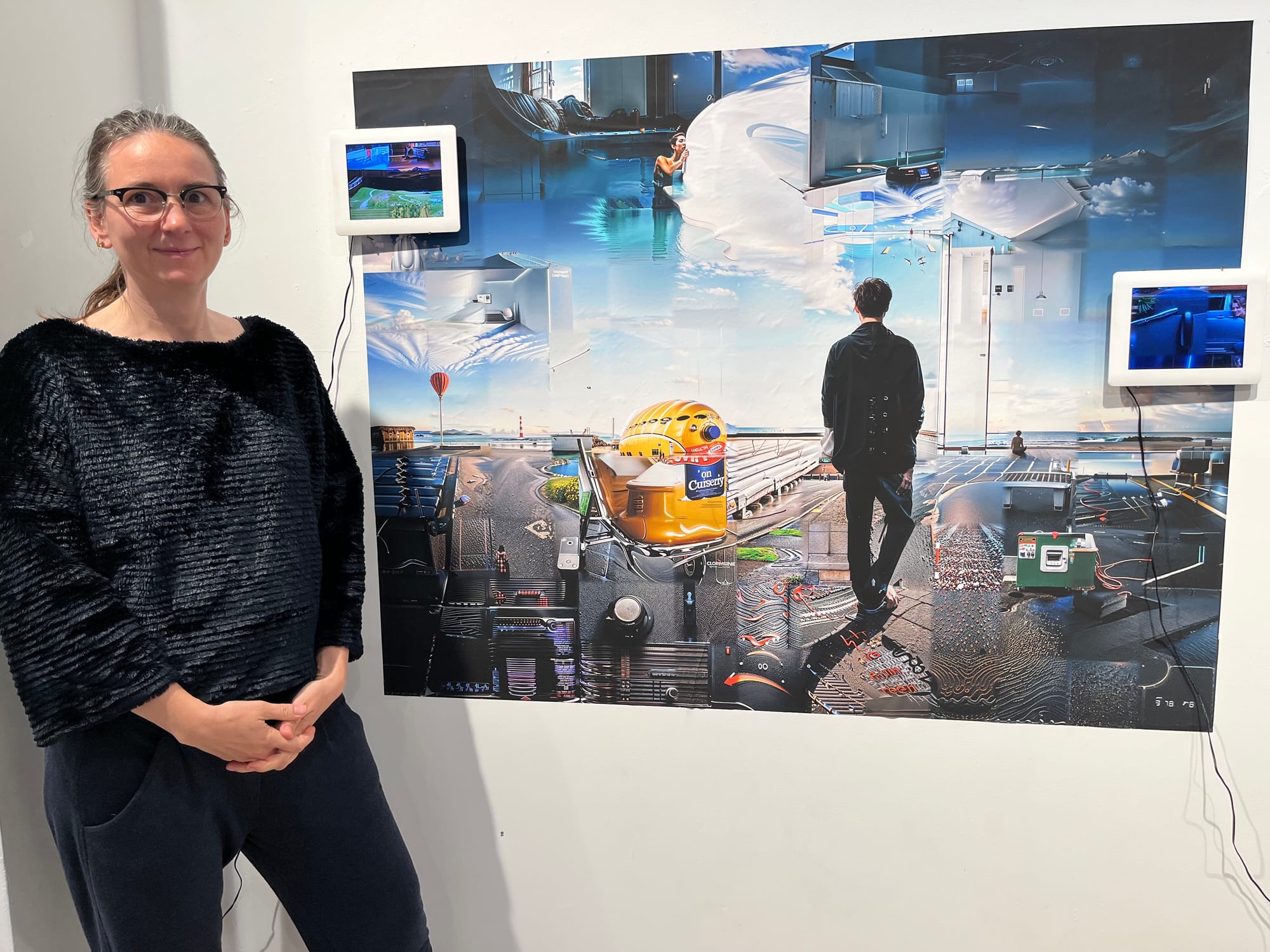
Artist Elisabeth Smolarz is well known in Ridgewood for running a popular seasonal ice cream window, but her photography ironically engages with the unsettling effects of isolation.
Her photo collage and video installation, “Soft Confinement,” one of several works at Supermoon Art Space’s exhibition for Ridgewood Open Studios, features a lone male figure walking through a hi-tech dystopic landscape while AI-generated images on screens include affirmations and lullabies.
“We’re in a moment right now where a lot of people experience loneliness,” Smolarz told Hyperallergic. “I realized from my students at Pratt how lonely they are and that led me to do work with AI.”
Fortunately, life in the neighborhood remains much more connected and communal, as seen during Ridgewood’s fourth annual open studios event this weekend, which drew hundreds of people to explore hidden alcoves in converted factories, basement art spaces teeming with sculptures, and printmaking workshops in playgrounds.
The Western Queens arts scene had long been in Bushwick’s shadow (does anyone remember Quooklyn?), participating in the North Brooklyn neighborhood’s sprawling open studios festival for several years before growing too large and spinning off in 2019.
No one confuses the two impossibly hip neighborhoods any longer.
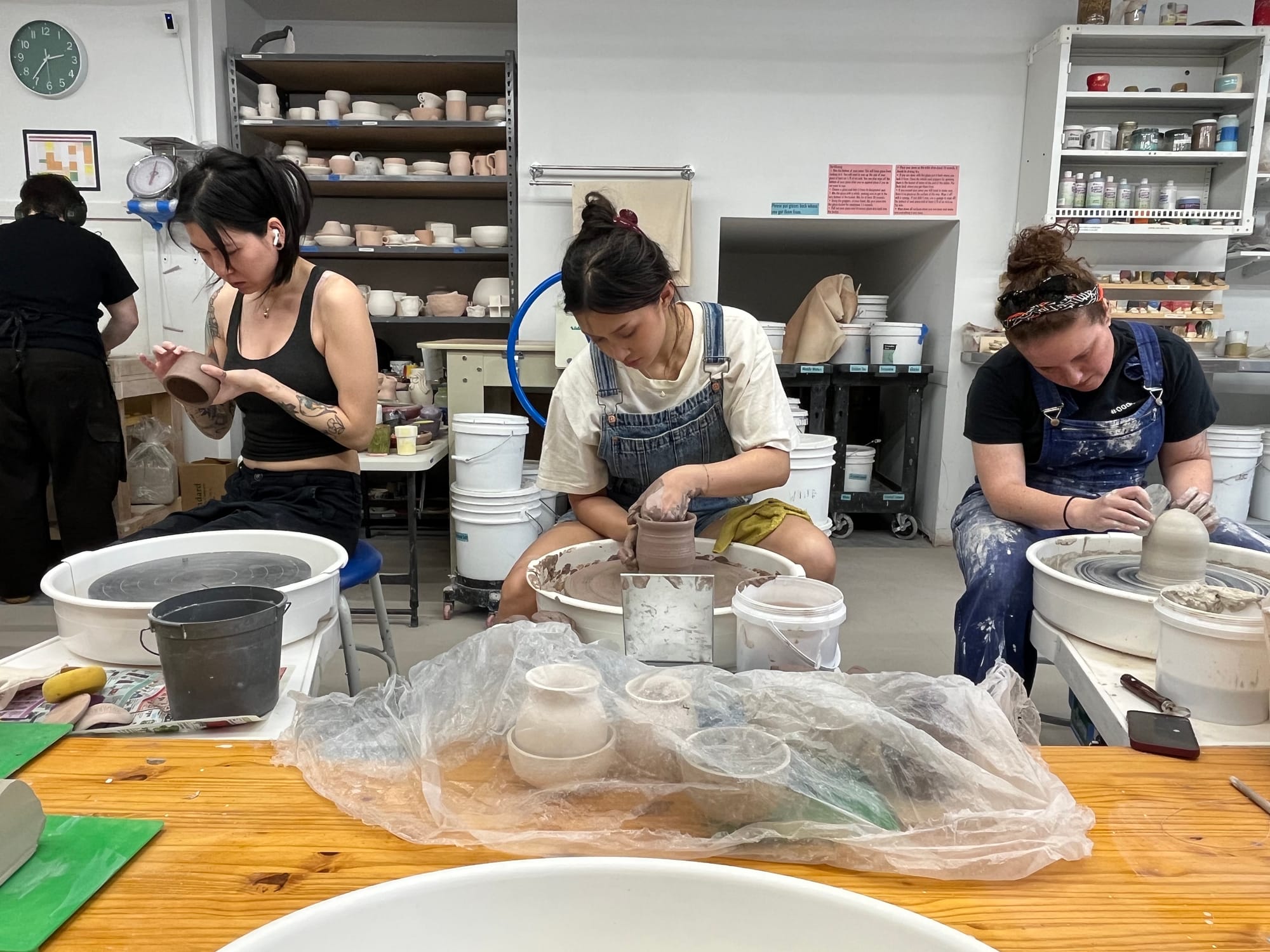
Since the pandemic, Ridgewood has been named by Time Out as one of the world’s coolest neighborhoods thanks to its trendy restaurants, coffee shops, bars, and performance venues. UnionDocs, a nonprofit that regularly screens the work of documentary filmmakers, moved to Onderdonk Avenue in 2022. HBO’s John Wilson opened Low Cinema on 60th Street last year. The area is now home to a dozen art spaces and five ceramics studios, including Ridgewood Ceramics, which opened 10 days ago.
The festival, which features several pop-up art spaces, has gotten livelier and less scrappy, too. On a rainy Saturday evening, roving bands of Gen Z-ers wandered between galleries within the Forest Avenue M, Myrtle-Wyckoff L, and Halsey L train stops.
At Supermoon, which serves as a childcare facility, a swarm of hip Gen X parents and their kids celebrated the opening of Provisional Horizons, featuring the work of artists Stacie Johnson, Kerry Law, Rob de Oude, Amy Decker, and Mary Billyou. Artist Christopher Rose, who moved his studio from Greenpoint to Supermoon’s basement 12 years ago, curated the show at the Onderdonk Avenue day care and community arts space for the third straight year.
“It seems to be getting bigger and bigger every year,” Rose said. “There’s a lot of artists who have known each other for a long time too.”
At the Center for Information Alternatives (CIA) Gallery, on Cypress Avenue, multimedia artist Laura Weyl exhibited more than 200 photographs, many of nude or partially nude figures, that she took over the past 15 years. Weyl called the figures her “muses” and said their relationships changed over time.
“A lot of the muses I follow I’ve been with for many years,” she said. “The story is more important than the image. There’s a lot of mystery. I don’t explain it, but if you look and stare long enough, stories emerge.”
Some of the most intriguing attractions at the Ridgewood Open Studios were found in converted lofts or hidden subterranean areas below street level.
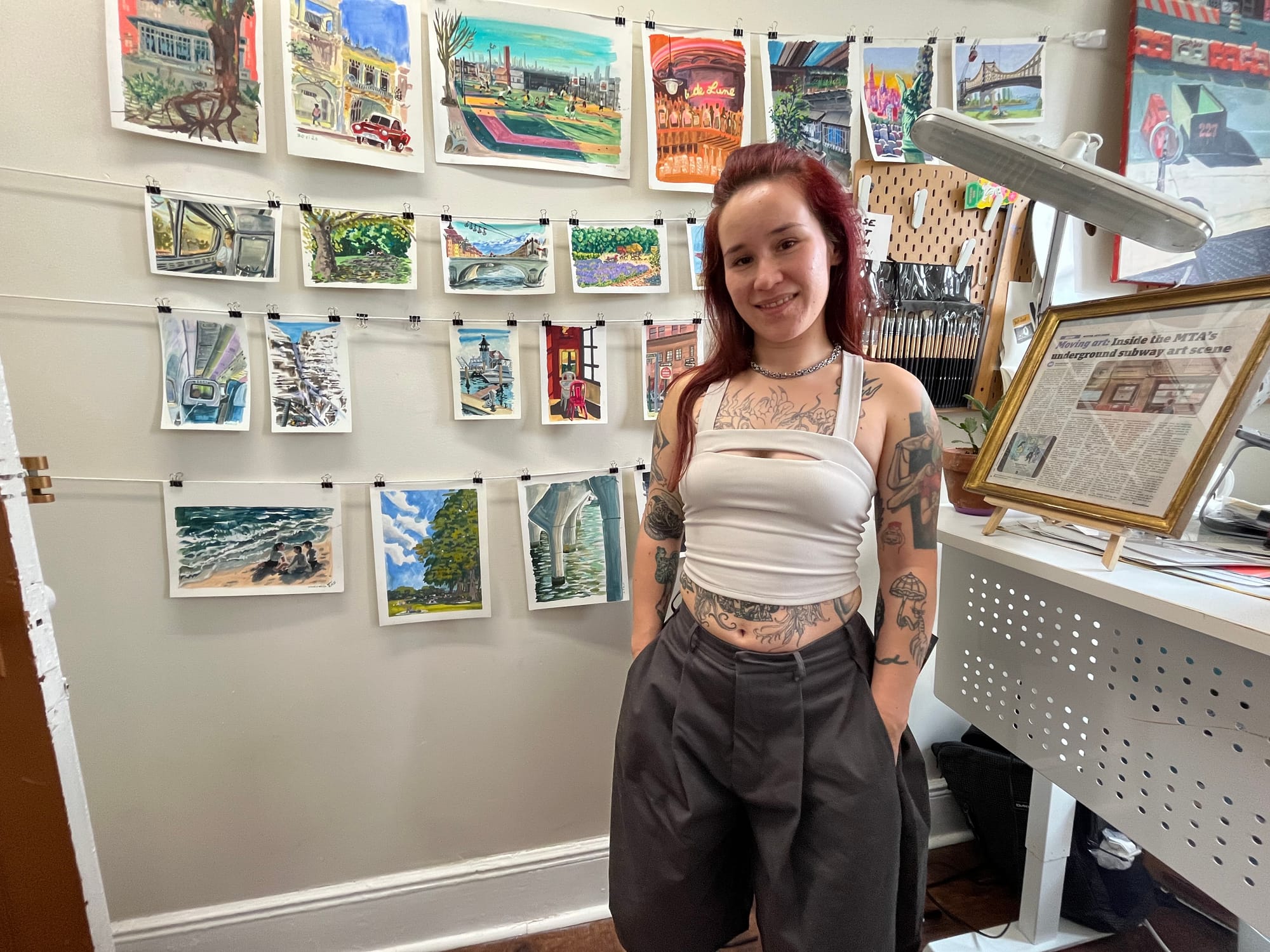
On one residential street, an artist named Zovi, who creates cheeky illustrations for the Metropolitan Transportation Authority’s campaigns, hung dozens of colorful plein air paintings of scenes in New York, Connecticut, and her native France. Her favorite MTA illustration was a drawing of two queer women kissing with the tagline, “Spread the love, just not on the escalator.”
Nearby, self-taught painter Andrew Hockenberry filled his Harman Street studio and his building’s hallways with abstract canvases he stretched himself. Hockenberry made many of his large-scale paintings during residencies in the Italian Alps in 2019 and 2021, experiences he said changed his life.
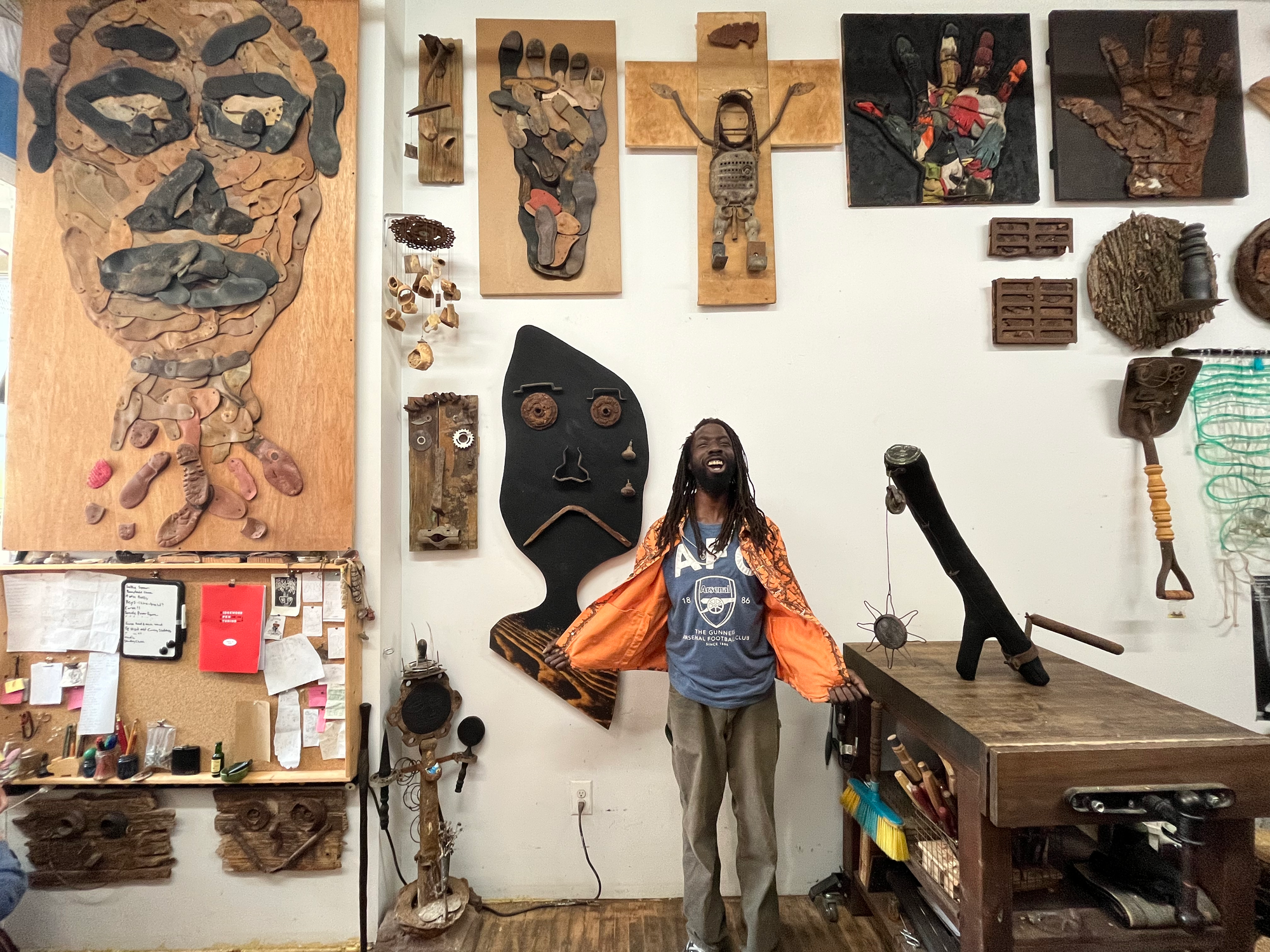
Down the street on Woodward Avenue, Clement Oladipo’s storefront studio was festooned with boxes of found rusty old stove pipes, window ingot bars, bike chains, horseshoes, and nails, which he used to make astonishing mixed-media sculptures.
“I have a tetanus shot for sure, you’re not the first person to ask that,” he said.
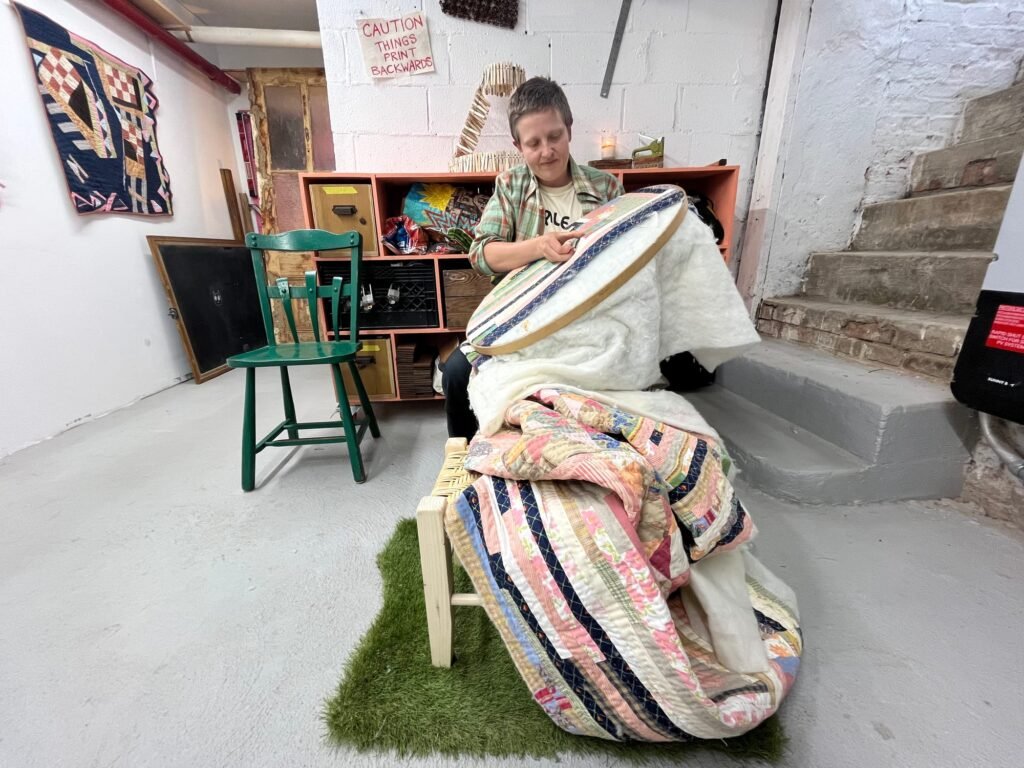
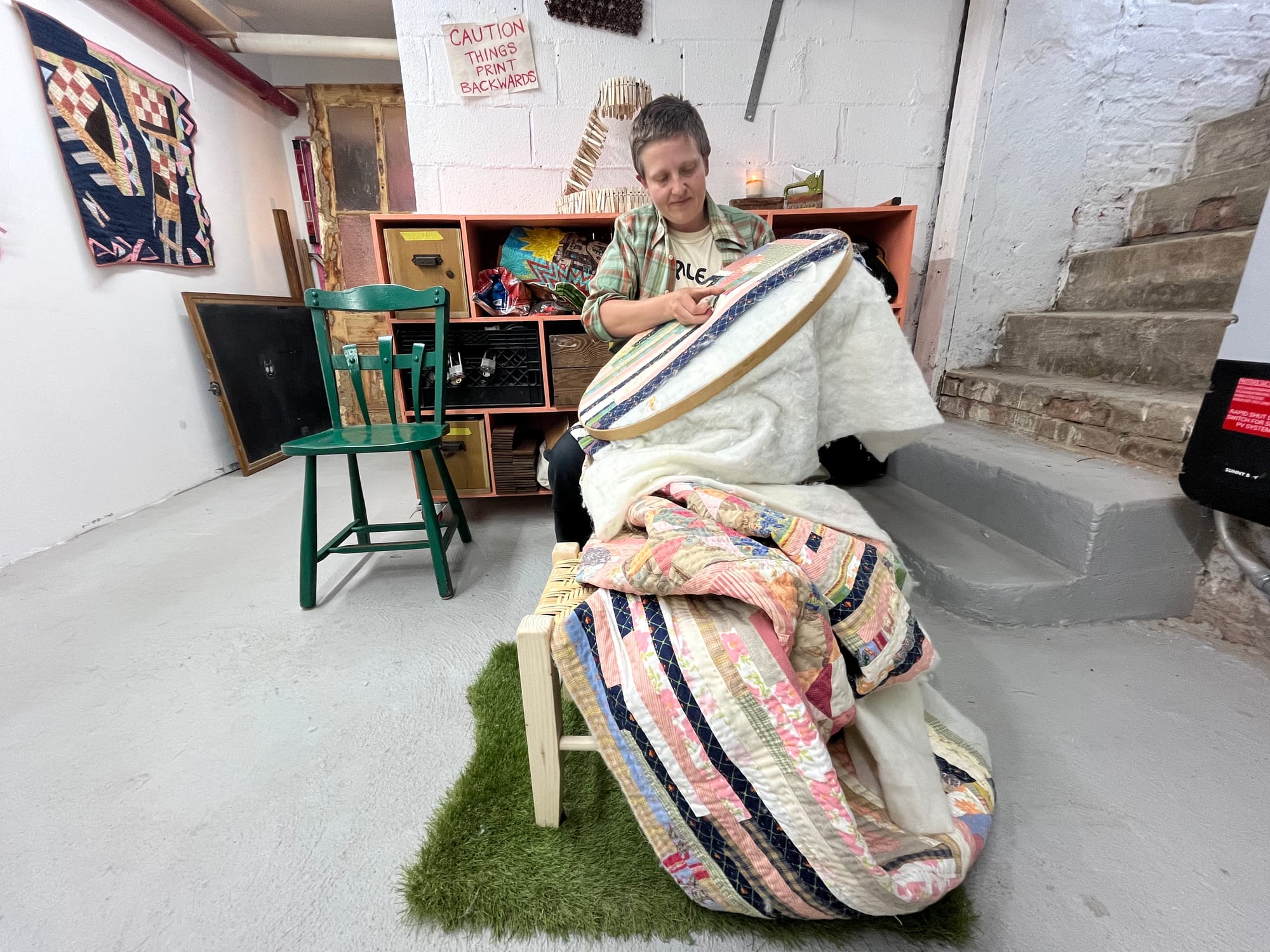
In the basement of the same building, printmaker Cedar Kirwin greeted visitors while weaving strips of fabric into a quilt. The artist started making quilts in 2020 as a gift for a friend who had a baby during the pandemic, and found the process of working with fabric “really freeing.”
“I don’t have to worry about registration, color mixing, or additions,” they said. “It’s a very precise medium that has allowed play back into my process. It’s not too messy, I can spread the fabric out, and I love to pick and choose.”
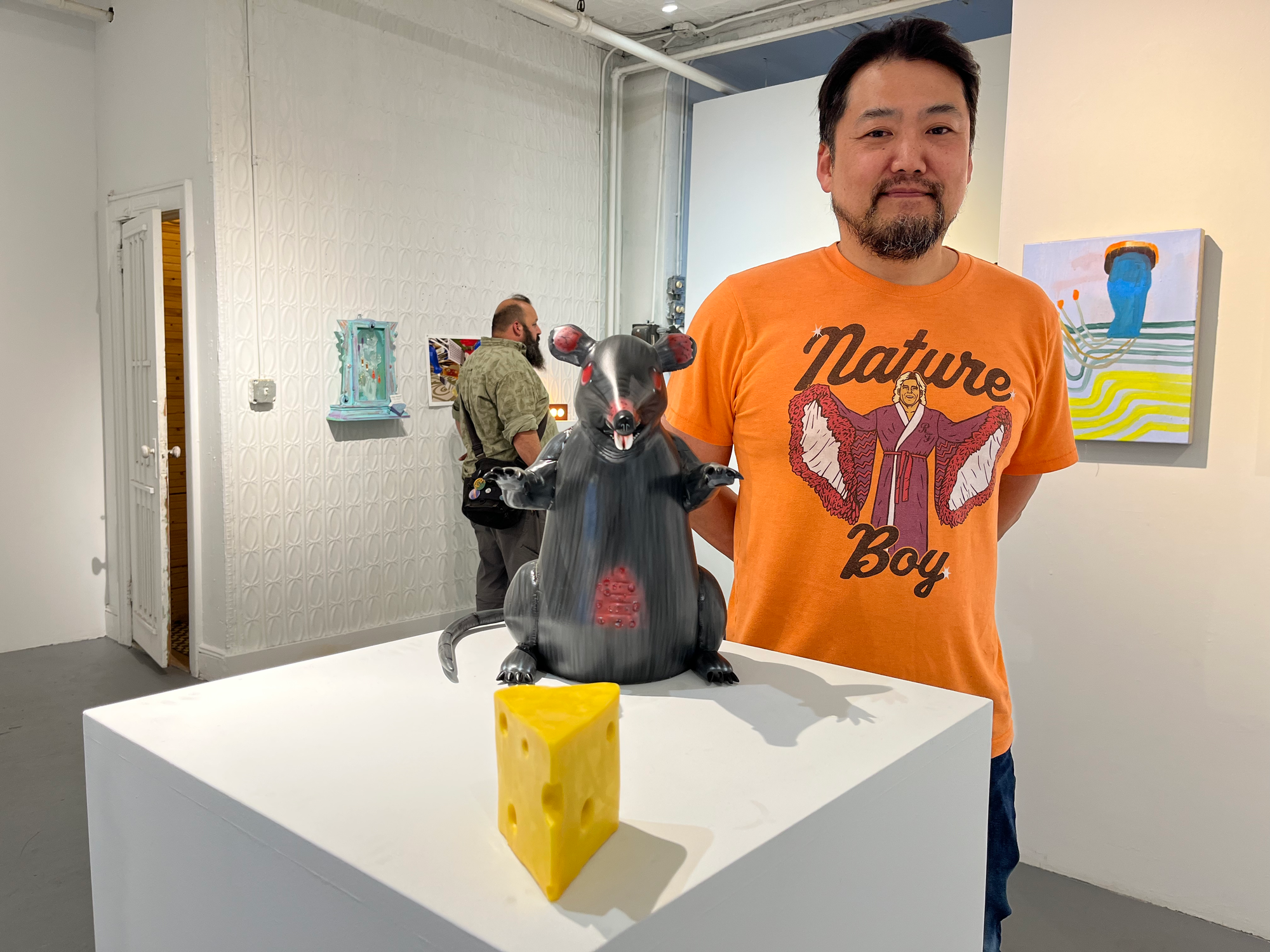
Ridgewood Open Studios founder Nao Matsumoto marveled at the crowds that attended throughout the weekend. More than 200 people came to the opening night party at his gallery Lorimito, which featured 83 works by neighborhood artists.
As the festival wound down on Sunday, Matsumoto planned to head further east to Glendale, where several artists were hosting a closing barbecue.
“It’s spreading out now,” he said. “People in Glendale started contacting us about participating, but I said I can’t guarantee foot traffic. Eventually, they’ll split off. That’s what happened here.”