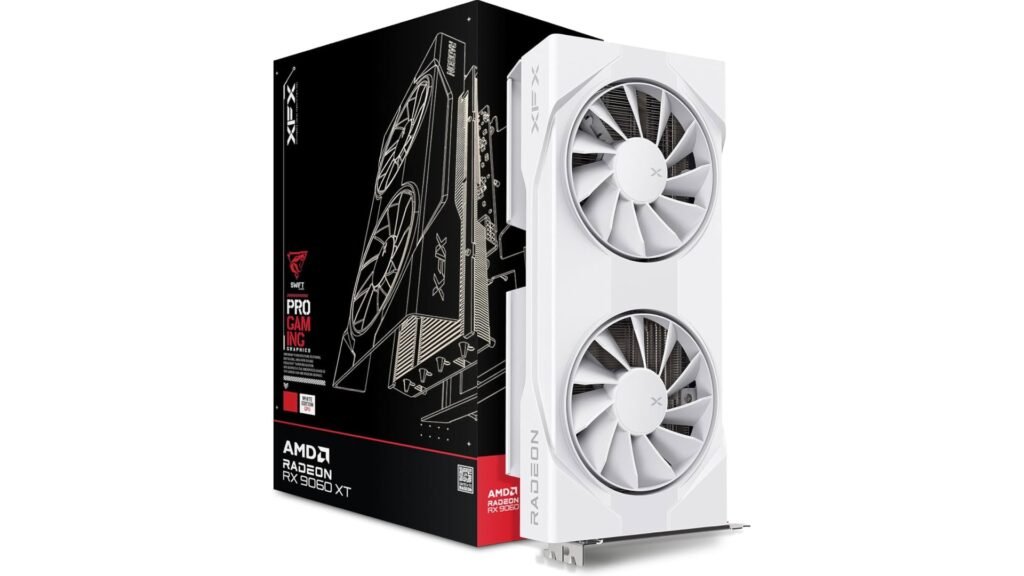

If you have a high-end graphics card that spends most of its time sitting idle, a new wave of tech startups wants to put your machine to work. As reported by IEEE Spectrum, companies like Abu Dhabi-based Far Labs and Austin-based Evolving Edge are pitching an “Airbnb for AI inference.” Instead of relying purely on massive data centers, these platforms plan to pay home users and computer hobbyists to process light AI workloads on their spare GPU and CPU capacity.
The concept builds on a familiar idea previously seen in volunteer projects like SETI@Home or crypto-mining networks like Salad, which already coordinates over 60,000 daily active consumer GPUs. However, rather than searching for radio signals or solving arbitrary blockchain math, these new platforms route real customer inference tasks directly to consumer hardware. “Inference” is the process where a trained AI model generates answers to user prompts—directly to consumer hardware.
How distributed AI networks handle security and workloads
Running third-party workloads on a personal computer naturally raises obvious privacy and security questions. To keep host systems secure, Far Labs operates on a principle of “least privilege.” This approach isolates inference inside encrypted, sandboxed environments with strict boundaries on CPU, GPU, memory, and storage access. Evolving Edge takes a similar approach and open-sources its node software so hosts can inspect the code running on their machines.
Handling large AI models across scattered home hardware presents technical hurdles. However, the platforms focus primarily on smaller, fine-tuned open-source models rather than massive frontier systems. To manage performance, Far Labs uses a proprietary orchestrator to split models into smaller fragments, distributing pieces across multiple devices before reassembling the output. Evolving Edge relies on Ray, an open-source framework commonly used in traditional data centers, to slice up tasks across its network (via Tom’s Hardware).
Electricity costs, reliability claims, and real-world payouts
Founders behind these platforms argue that distributed compute offers better reliability than centralized cloud providers. Evolving Edge founder John Federico points out that losing individual home nodes won’t crash a network of hundreds of thousands of devices, offering built-in protection against the massive outages that occasionally disrupt traditional data centers.
Whether this model proves profitable for home users remains an open question. High-end GPUs like the RTX 4090 draw significant power under heavy load. This means local electricity rates can quickly swallow up small payouts. While platforms like Salad have historically paid out modest earnings after taking their cut, neither Far Labs nor Evolving Edge has released final payout schedules as they scale up their networks.
The post Startups Want to Rent Your Idle Gaming PC to Power AI Workloads appeared first on Android Headlines.