
Starlink has officially confirmed that it is building a mobile carrier to compete with AT&T, T-Mobile, and Verizon. Speculation has circulated for months, particularly after Elon Musk tried to work out MVNO deals with the carriers, but they all turned him down.
The company officially confirmed this on X, saying, “We announced an agreement to acquire a nationwide low-band spectrum license portfolio that will pave the way for Starlink to become a major mobile carrier in the US.”
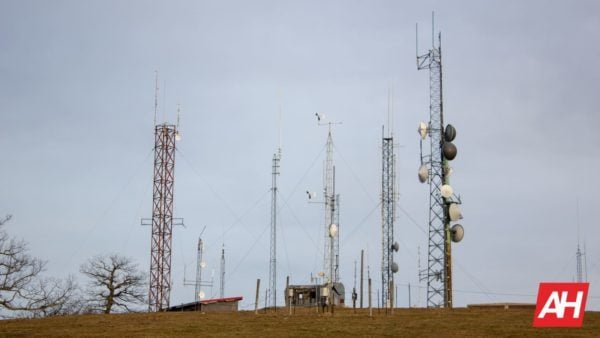
SpaceX has agreed to buy up to 14 MHz of low-band spectrum in the 800 MHz band, which most smartphones on sale today already support. This complements Starlink’s network, as low-band signals travel far and can penetrate deep into buildings. Essentially, low-band spectrum covers more area but typically has slower speeds, while higher-band spectrum covers less area but delivers much faster speeds. That is why many carriers use a mix of low-, mid-, and high-band spectrum in their networks.
In response, AT&T, Verizon, and T-Mobile US stock all fell about 7% in after-hours trading. This marks a significant shift in their competition.
The FCC also greenlit the Gen2 constellation
In addition, the Federal Communications Commission (FCC) greenlit the Gen2 constellation, which will allow SpaceX to deploy around 15,000 satellites.
These new V2 satellites will offer 100 times the bandwidth of current satellites, enabling faster smartphone speeds. But this also means they’ll support more connections to the network, which will matter once the Starlink mobile carrier becomes a reality.
SpaceX had also already purchased 40 MHz of AWS-4, 10 MHz of AWS-H Block, and 15 MHz of unpaired AWS-3 spectrum from EchoStar earlier this year. As well as picking up two licenses during the AWS-3 auction. Of course, this is still far less than what the big three have in this space. SpaceX previously said it would mount small cellular base stations on Starlink dishes and deploy basic terrestrial infrastructure.
The post Starlink Confirms It’s Launching a US Mobile Carrier, and the FCC Just Gave It a Big Boost appeared first on Android Headlines.