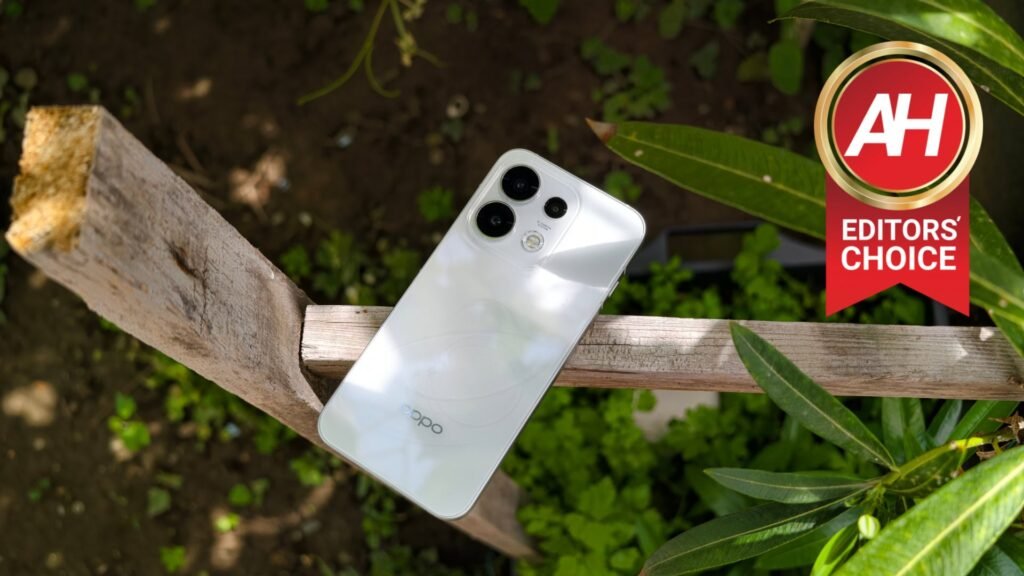

Some of you will remember that, back in February, we reviewed the OPPO Reno15 5G and Reno15 Pro 5G. Considering that the Reno series is not exactly a yearly ordeal for OPPO, two new phones in that series dropped recently, direct successors to the Reno15 5G phones. I’m talking about the OPPO Reno16 5G and Reno16 Pro 5G, two phones that we’re checking out here. These two managed to surprise me out of the box, actually.
With last-gen models, the base Reno15 was larger than the ‘Pro’ model. Rumors were claiming it would be the other way around with the OPPO Reno16 series. Well, it’s not. In fact, this time around, both smartphones are quite compact. That managed to surprise me in a very positive way, I must say. There are not many great compact mid-rangers out there, and these could fill that gap. I’ve been using both phones simultaneously to get the best idea of the differences between them for this review. So, let’s see what the OPPO Reno16 5G series has to offer.

Compact, capable, and built for all-day battery life.
Pros
- Solid design
- Very comfortable to hold and use
- Ideal size for many
- Outstanding battery life
- Good performance
- Fast charging
- Good display
- Capable speakers
Cons
- Pricey
- Camera performance could be better
OPPO supplied us with a review unit of the OPPO Reno16 5G, but didn’t have a say in our opinion, nor did they see this review before you. We’ve been using the device for over a week before forming an opinion.

The compact powerhouse with a 200MP punch.
Pros
- Ideal size for many
- Comfortable to hold and use
- Very good performance
- Good display
- Excellent battery life
- Fast charging
- Capable speakers
Cons
- Pricey
OPPO supplied us with a review unit of the OPPO Reno16 Pro 5G, but didn’t have a say in our opinion, nor did they see this review before you. We’ve been using the device for over a week before forming an opinion.
Specs
OPPO Reno16 5G Specs
| Display Size | 6.32 inches |
| Display Resolution | 1.5K AMOLED |
| Refresh Rate | 120Hz |
| Dimensions | 151.21 x 72.42 x 8.22-8.36 mm |
| Weight | 177/188 grams |
| Chipset | Snapdragon 7 Gen 4 |
| RAM | 8GB |
| Storage | 256GB/512GB |
| Battery | 6,700mAh |
| Charging | 80W wired (charger included) |
| OS | Android 16 with ColorOS 16 |
| Main Camera | 50MP (OIS) |
| Ultrawide Camera | 50MP |
| Telephoto Camera | N/A |
| Periscope Telephoto Camera | 50MP (3.5x optical zoom) |
| Front-Facing Camera | 50MP (100-degree FoV) |
| Network and Connectivity | Wi-Fi 7, GPS, Bluetooth 6.0, NFC ??? |
| Water Resistance | IP68/IP69/IP69K |
| Colors | Dream Purple, Pop White, Twilight Violet |
OPPO Reno16 Pro 5G Specs
| Display Size | 6.32 inches |
| Display Resolution | 1.5K AMOLED |
| Refresh Rate | 144Hz |
| Dimensions | 151.21 x 72.42 x 8.20-8.36 mm |
| Weight | 185/188 grams |
| Chipset | MediaTek Dimensity 8550 |
| RAM | 12GB |
| Storage | 512GB |
| Battery | 6,700mAh |
| Charging | 80W wired (charger included) |
| OS | Android 16 with ColorOS 16 |
| Main Camera | 200MP (OIS) |
| Ultrawide Camera | 50MP |
| Telephoto Camera | N/A |
| Periscope Telephoto Camera | 50MP (3.5x optical zoom) |
| Front-Facing Camera | 50MP (100-degree FoV) |
| Network and Connectivity | Wi-Fi 7, GPS, Bluetooth 6.0, NFC ??? |
| Water Resistance | IP68/IP69/IP69K |
| Colors | Pop White, Starlight White, Straight Black |
OPPO Reno16 5G Series Review: Design
OPPO actually opted to offer two compact devices in the series this time around. With the OPPO Reno15 5G series, only the ‘Pro’ model had a smaller display. This time around, both the vanilla and ‘Pro’ variants include a compact 6.32-inch panel. That, combined with rather thin, uniform bezels, makes these two phones quite compact. OPPO actually sent me both devices in the same colorway, and at first, I had problems differentiating between the two. The ‘AI Camera System’ writing is in a different spot on the two phones, on the back, which is the only way I could tell them apart just be looking at them. The design is basically the same.
The two phones look basically the same
They both have a flat display, with a centered display camera hole up top. The frame is flat all around, while there are physical buttons on both the right and left sides. On the right, the power/lock and volume up and down keys are located. On the left sits an AI key. The back of the phone is also flat, with the exception of the camera island. The whole module protrudes slightly, and then two out of three cameras protrude even more than that. Using a case here is a good idea, simply due to protecting the cameras themselves, if nothing else.

The Pop White color option that OPPO sent of both devices comes with a ‘3D Floating Planet Effect’ on the back. That’s not something you’ll notice in pictures, but in real life, it looks very nice. It actually does seem like the planet and the stars float above the backside of the device. I’m usually not really into such tricks when it comes to design, but this is done so tastefully and minimalistically that I actually dig it. It really does add a bit of flair to the overall design.
They are slippery, but the size helps
The two phones are slippery, but less slippery than most other metal + glass phones. It’s possible OPPO applied some sort of non-slip coating on the back or something. Then again, it’s summer where I’m at, so that probably plays a role in it. Both phones seem grippy enough, though. They’re also quite compact, so the fact that they’re slippery is not as emphasized as it would have been if they were larger.
Both of them are also quite light, though the weight will depend on the model you get. Still, despite the fact that they have large batteries, they’re well under 200 grams in terms of weight. Overall, the design is not flashy or anything, but it works. The phones look sleek and feel great to hold and use, even without a case. A case is included, though we’ll talk more about that in the next section.
OPPO Reno16 5G Series Review: Accessories
You’ll be glad to hear that OPPO did not skimp on the contents of the retail box. In addition to the phone, charging cable, SIM card ejector tool, and documentation… you’ll be getting something not everyone includes these days. OPPO did include a SuperVOOC charger in the box, along with a case. An 80W charger is included with both phones, and the same goes for a see-through case. That case has silicone sides and a hard shell plastic back side. It’s a nice case, actually. It offers good protection and adds a lot of grip to the equation. At the very least, it will serve you well until you get something else. I love to see cases in retail boxes.


OPPO Reno16 5G Series Review: Display
While both of these smartphones do ship with 6.32-inch displays, those panels are not the same. Yes, they’re the same size, but their specs are not the same. The OPPO Reno16 includes a 1.5K AMOLED display with a 120Hz refresh rate. The Reno16 Pro, on the other hand, has a 1.5K AMOLED display as well, but its refresh rate goes up to 144Hz. The OPPO Reno16 Pro also has a slight brightness advantage, based on what we’ve seen, but both panels are more than bright enough, so you don’t have to worry about that. Adaptive brightness also works well, and it learns your preferences if you tweak it, of course.
Very capable displays with high-frequency PWM dimming
When using them side-by-side, I honestly didn’t notice any difference between them. Yes, the Reno16 Pro 5G has a higher refresh rate, but the difference between 120Hz and 144Hz is minimal even when both are in use. It’s nice to have for gaming purposes, of course. Other than that, the two displays are basically on the same level. They’re both vivid and sharp, while they also have great viewing angles. The touch response is also very good. Both panels have a peak brightness of 3,600 nits, while both also support capable PWM dimming and DC dimming.

Plenty of added options can be found in the settings
You do get plenty of added options in the display settings as well. Adaptive Tone is here, and it can adjust the screen color temperature based on ambient lighting and thus keep the colors consistent. There are also plenty of Eye Care options to protect your eyes, manual color tweaking, image sharpener, video color boost, and so on. The vast majority of display features/options found in the company’s flagships are here as well. I don’t have a single complaint about these two displays.
OPPO Reno16 5G Series Review: Performance
Up until now, these two phones seemed… well, almost identical. Well, here’s where things get different. OPPO opted to use two different SoCs in these phones, which is not surprising. The company has to differentiate them somehow. The OPPO Reno16 5G is fueled by the Snapdragon 7 Gen 4, while the OPPO Reno16 Pro 5G comes with the MediaTek Dimensity 8550 Super. RAM and storage options are also different. The base model includes 8GB or 12GB of LPDDR5X RAM and 256GB or 512GB of UFS 3.1 flash storage. The ‘Pro’ model has a single 12GB LPDDR5X RAM variant and 256GB and 512GB UFS 3.1 storage options.
The OPPO Reno16 Pro 5G is notably more powerful
So, unsurprisingly, the OPPO Reno16 Pro 5G has a more powerful processor. As you can see in the benchmarks shared below this section, that chip is considerably more powerful, and that especially goes for multi-core performance and its GPU, especially the GPU. Having said that, both phones did a very good job day-to-day. The Snapdragon 7 Gen 4, despite being inferior, is plenty powerful, and the fact OPPO used LPDDR5X RAM only helps things. UFS 3.1 may not be the latest, but it doesn’t really matter here. I’ve had no proper lag during my usage, though yes, I did manage to get them to slow down slightly at times, as with any other phone with mid-range chips. You really have to put some strain on them, though.
ColorOS 16, which runs on both devices, only helps the general performance feel, the animations are great, and in general, using both devices is a joy. Everything you do is snappy, pretty much, and they can easily handle some video editing, heavier multitasking, and so on. It’s really not a problem. The ‘Pro’ model is a better choice for gaming, that’s for sure. It has a much more powerful GPU, and if you’re planning to play some truly demanding games, you should choose the ‘Pro’ model, that’s for sure.
The benchmark results are interesting
You will notice that, in the 3D Mark Wildlife Extreme Stress Test, the stability of the OPPO Reno16 5G was much higher. That could be due to the SoC, but in all honesty, we did not notice that in actual use. Benchmarks only go so far, so all we can attest to is actual usage, and both did a very good job in that regard. These are powerful mid-rangers, and they perform as such.
Benchmarks:
Geekbench:
| Device | Single-Core | Multi-Core | GPU |
| OPPO Reno16 5G | 1,201 | 3,826 | 4,693 |
| OPPO Reno16 Pro 5G | 1,549 | 6,183 | 14,188 |
| OPPO Reno15 Pro 5G | 1,630 | 6,369 | 11,848 |
3D Mark (Wildlife Extreme Stress Test):
| Device | Best Loop | Lowest Loop | Stability |
| OPPO Reno16 5G | 1,988 | 1,928 | 97% |
| OPPO Reno16 Pro 5G | 4,395 | 1,556 | 35.4% |
| OPPO Reno15 Pro 5G | 3,881 | 1,918 | 49.4% |
Thermals:
IMAGE
3D Mark (Wildlife Extreme Stress Test) thermals:
| Device | Temperature (F) |
| OPPO Reno16 5G | 112.9 |
| OPPO Reno16 Pro 5G | 113 |
| OPPO Reno15 Pro 5G | 93.2 |
Genshin Impact thermals:
| Device | Temperature (F) |
| OPPO Reno16 5G | 108.3 |
| OPPO Reno16 Pro 5G | 109.8 |
| OPPO Reno15 Pro 5G | 100.2 |
OPPO Reno16 5G Series Review: Battery Life
Another similarity between these two handsets is the battery capacity. OPPO opted to use the same 6,700mAh unit in both devices. That is a silicone-carbon battery, which makes sure that the devices are not thick or heavy. Needless to say, a 6,700mAh battery capacity is huge for 6.32-inch smartphones. For comparison’s sake, the Galaxy S26 Ultra with a 6.9-inch display has a 5,000mAh battery. It also has a more power-hungry processor on top of that.
The battery life is outstanding on both of them
Battery life is one thing you don’t have to worry about when it comes to these two phones… not at all. Even if you’re a power user, that won’t be a problem. They both can reach immensely high screen-on times, though we did get slightly better results from the non-Pro model. That difference won’t really matter to you, however, as you can get truly a ton of use from both phones before you’ll need to grab the charger. I was unable to kill either phone with heavy usage, gaming aside. Plenty of emails, messages via several messaging apps, tons of browsing across three browsers, image editing, video editing, plenty of picture taking, and even some light gaming… it did not make a serious dent at all. I was ending most of my days with 50%+ battery life on both phones and over 7 hours of screen-on time.
Charging is also plenty fast
Even if you, by some chance, manage to kill the battery in a single day, OPPO’s 80W charging is included, as is a charger. These are huge batteries, but OPPO’s charging can get them to full charge in around an hour and 5-10 minutes. Wireless charging, on the other hand, is not a part of the offering.
| Device | Battery life | Charging |
| OPPO Reno16 5G | 26:03:44 | 01:06:43 |
| OPPO Reno16 Pro 5G | 26:24:13 | 01:04:17 |
| OPPO Reno15 Pro 5G | 24:03:11 | 0:55:17 |
OPPO Reno16 5G Series Review: Camera
The camera setup is yet another differentiating factor between the two phones. The OPPO Reno16 Pro has a better main camera, along with a better selfie shooter. The ultrawide and telephoto cameras are the same, and the performance is quite similar. More on that later, though. Let’s focus on the main cameras. The OPPO Reno16 includes a 50-megapixel main camera with an f/1.8 aperture, along with a 1/1.95-inch sensor. Sony’s LYT-600 sensor is used here. OPOP also uses a 5P lens here, and the camera supports OIS. The OPPO Reno16 Pro, on the other hand, has a 200-megapixel main camera with an f/1.8 aperture and a 1/1.56-inch sensor size. Samsung’s S5KHP5 sensor is used here, with OIS and a 6P lens.
The OPPO Reno16 Pro 5G has the advantage across the board
As already mentioned, the ultrawide and telephoto cameras (hardware) are the same. A 50-megapixel ultrawide camera is used, with an f/2.0 aperture and a 1/2.88-inch sensor size. A 6P lens is used here. A 50-megapixel telephoto camera is used, with an f/2.8 aperture and a 1/2.75-inch sensor size. Samsung’s JN5 sensor is used by OPPO, and it supports OIS. The 4P lens is placed on top here. When it comes to front cameras, they’re different. The OPPO Reno16 has a 50-megapixel camera with an f/2.0 aperture and a 1/2.88-inch sensor size. A 5P lens is used here. The OPPO Reno16 Pro, on the flip side, has a 50-megapixel camera with an f/2.0 aperture lens and a 1/2.75-inch sensor size. Samsung’s JN5 sensor is used here, and a 5P lens.

The ‘Pro’ model has the same camera hardware for the main camera (as its predecessor), and yet this model does perform better than the previous one. OPPO tweaked quite a few things on the software side of things. Those images also look better than what the OPPO Reno16 provides. Its inferior main camera is not difficult to spot when you’re looking at camera samples, albeit the difference is less noticeable under good lighting. The OPPO Reno16 Pro provides better dynamic range, a bit more detail, and we also preferred the colors it provided most of the time. It also does a notably better job in low light, with less noise and more details.
The ‘Pro’ model does a better job with secondary cameras as well
When it comes to ultrawide and telephoto camera shots, they’re a bit different, we’re guessing due to different chips, but not that different. They’re a level or two below the main camera shots, and that is more noticeable in low light. Images from both of those cameras look good, but not great, even though the ‘Pro’ model has the advantage across the board. The details could be greater, for one, while the colors are also taking a hit, especially on the vanilla model. You have to manage your expectations considering the camera hardware, though.
OPPO Reno16 5G camera samples:


OPPO Reno16 Pro 5G camera samples:


TEXT
Camera UI:


4K video recording thermals:
| Device | 5 minutes | 10 minutes |
| OPPO Reno16 5G | 103.4 | 107.7 |
| OPPO Reno16 Pro 5G | 104.4 | 109.5 |
| OPPO Reno15 Pro 5G | 92.7 | 94.5 |
OPPO Reno16 5G Series Review: Software
The OPPO Reno16 series phones ship with Android 16, which has OPPO’s ColorOS 16 on top of it. OPPO is also promising 5 years of major OS updates and 6 years of security patches for both smartphones. If you’ve used any recent version of ColorOS or OxygenOS, you’ll know what to expect here. It is one of the smoothest Android skins on the market, if not the smoothest one. It does have its quirks, as does every software, but it’s my favorite Android skin on the market at the moment… and has been for a while.
ColorOS 16 is great and has plenty of useful features
There are a lot of reasons for that, ranging from outstanding fluidity and reliability to all the features that are baked into it. AI Mind Space that OPPO offers seemed like another AI gimmick, but it does offer a lot of functionality. Google’s Gemini, Perplexity AI, and DeepSeek are all baked into it… well, integrated with it, is a better choice of words. Then there are a ton of AI features that OPPO offers. I used AI image editing tools the most for removing objects and making pictures sharper with the help of AI. That works outstandingly well. There are a ton of other options, such as AI Writer, AI Painter, and so on.

The OS looks like a mix of iOS and Android, which is not my favorite thing in the world, as I very much preferred the look of older ColorOS software. That’s a personal preference, however. The point is, the OS looks modern, and you can tweak its design to a degree. There are plenty of customization options, ranging from making the lock screen yours and removing icons from the status bar, to theming the OS to a higher degree, and so on. It’s not the most customizable OS, but it’s rather good in that respect.
It’s not perfect, though
There are some annoyances here still, though. The main one, for me personally, is the fact that messages disappear from the lock screen when you see them (not open them). No, this is not a bug; it’s how OPPO imagined it to work. That’s something iOS does, and it’s very annoying to core Android users. The notifications still remain in the notification shade, though. Small things like that may annoy you, but overall, the OS is outstanding. I didn’t encounter a single bug thus far, though that doesn’t surprise me. When bugs appear in ColorOS, OPPO is quick to fix them.
Another side note, for those of you who love using third-party launchers, do note that they’re working fine… as long as you use a three-button navigation. If you switch over to navigation gestures, the swipe-up gesture brings you to the home screen with a slight delay. I fixed this via adb and a third-party navigation gestures app, but it’s worth noting. I know many of you prefer third-party launchers.


OPPO Reno16 5G Series Review: Audio
Both of these smartphones include stereo speakers. They’re virtually the same in terms of performance/output. They also did about the same as the ones on the Reno15 series, so it seems like OPPO didn’t change much this time around. They have a good loudness, on par with most flagship smartphones out there. Smartphones that are notably larger in terms of size, so that’s nice to see. The sound quality output is also very good.
Neither phone ships with an audio jack, though. You can connect your wired headphones to the Type-C ports on these two phones if you want. Alternatively, both smartphones support Bluetooth 5.4 for wireless audio connectivity. I’ve used three pairs of earphones/headphones connected via Bluetooth (from Sony, FiiO, and OnePlus), and had a really good experience without connection drops. The same goes for two smartwatches (from OnePlus and HONOR)
OPPO Reno16 5G Series Review: Should you buy it?
While I wholeheartedly recommend the OPPO Reno15 and Reno15 Pro, these two are a tougher sell. Why? Well, not because they’re not good enough, not at all. It’s because they’re notably more expensive than their predecessors. The Reno16 Pro 5G costs around €300 more than its predecessor. For a 6-month difference and minimal changes between generations, that’s just a huge price jump. We know why it happened, as component prices are out there these days, but still… it’s a huge price jump. If you really want a powerful, compact phone, and you’re ready to pay the price, you won’t be sorry. That especially goes for the ‘Pro’ model. Outstanding battery life, fast charging, great display, very good performance, solid camera performance, and so on. It’s all on board.

You should buy the OPPO Reno16 (Pro) if you:
- Want a compact, yet capable phone
- Are tired of large devices
- Use your phone a lot and need great battery life
- Enjoy a good display
- Liked previous OxygenOS/ColorOS software
You shouldn’t buy the OPPO Reno16 (Pro) if you:
- Enjoy large displays more
- Are heavily into gaming
The post OPPO Reno16 5G Series Review: Compact Power, Unexpected Price appeared first on Android Headlines.