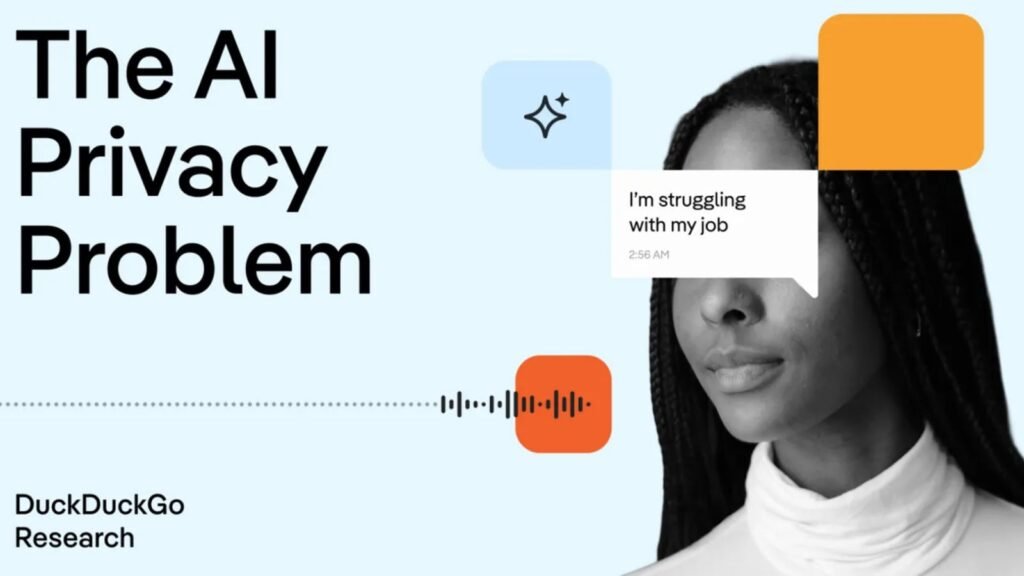

Regardless of how you feel about AI, it has become a part of the lifestyle for many. But should you trust it with your personal information? Well, DuckDuckGo, a company known for its stance on privacy, has released a new survey report detailing how much information people are sharing with AI chatbots. This also covers how little many users know about what happens to those conversations. Here’s what they found.
DuckDuckGo survey finds users are sharing personal information with AI
DuckDuckGo surveyed nearly 2,000 US adults to hear directly from them about AI. This revealed that nearly one in three users have shared something with AI that they wouldn’t tell their close ones. That’s apparently 32%. Among AI enthusiasts, that figure rises to 56%. The survey also found a clear difference between parents and non-parents. Among parents who use AI, 43% have shared something with a chatbot that they have never told anyone else, compared with 25% of users without children at home.
Furthermore, the company says that 54% of them didn’t know that most chatbots train on their conversations by default. Only 25% of them realized AI chats can be subpoenaed by law enforcement. Once people know how most AI companies use their chats, 58% of them were uncomfortable with their conversations being used to train AI. 30% of the respondents specified feeling “very uncomfortable.”
Judgment-free space
The report notes that many people use AI chatbots as a judgment-free space for sharing personal thoughts. However, unlike web search queries, AI conversations can reveal users’ thought processes, communication styles, and more. DuckDuckGo says AI companies have encouraged people to treat chatbots like confidants through ads and media campaigns, even though these conversations may not be as private as users are led to believe.
The survey also found that people trust large AI companies slightly more than the US government with their data. Still, 39% said they have no trust in AI companies, compared with 48% who said the same about the government.
Proactive steps to protect privacy
DuckDuckGo says that users still have an opportunity to change how they approach AI privacy. This is especially as chatbot habits are still relatively new. “When we talk about online privacy in search engines and browsers, many people think “it’s too late, my information is already out there.” But the most valuable information you could share with Big Tech is your next question, not the questions you asked days or months or years ago. So, it’s never too late to make the switch to more private services online,” said the report.
Lastly, it adds that until regulations catch up, DuckDuckGo recommends users take proactive steps to protect their privacy when using AI chatbots. That includes using AI tools with clear data policies and more transparent data-handling policies.


The post DuckDuckGo Survey Reveals Just How Personal AI Conversations Have Become appeared first on Android Headlines.