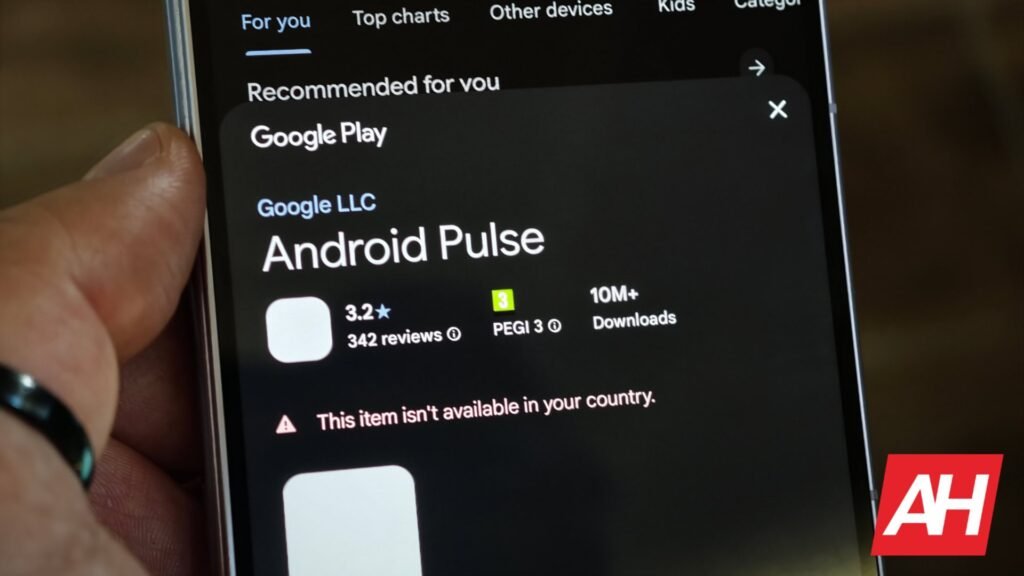

Our phones come preinstalled with apps. Some of which are pretty obvious what they are and what they do, and some might come across a little strange. Now, if you recently saw an app called “Android Pulse” as part of the available Google Play updates, don’t worry, you haven’t been hacked.
Android Pulse app appears in Google Play updates
According to a report from 9to5Google, it seems that an app called “Android Pulse” was recently spotted in the Google Play updates over the weekend. The app has no icon. In place of an icon is just a blank square, so if you saw it and thought this might be malware, you’re not alone.
The description of its Play Store listing isn’t exactly very descriptive either. It reads, “This app facilitates rule distribution for anomaly detection in critical system resource consumption by the Android operating system and installed applications.” It sounds super technical so unless you’re familiar with those terms, it might not mean much to you.
However, 9to5Google speculates that the app helps with software diagnostics for Android and other installed apps. It could have something to do with management or control of the phone’s battery, CPU, or memory. If you own a Pixel device, you might notice it in your system Setting as “Pulse.”
So should you be worried?
Firstly, no. The developer of the app is Google so that’s pretty high up there as far as trustworthiness is concerned. Secondly, based on APKMirror’s listing, the app has been around since March. It has over 10 million downloads and at least seven previous builds. It’s just a bit odd (and slightly alarming) that it suddenly appeared as a Play Store update.
In the past, and with other system apps, Google typically used its System Services approach to deliver updates. That being said, Google does have some native Android apps listed in the Play Store, so it’s not unprecedented. Either way, if you see this update, don’t be alarmed. Just let it update itself whenever it has to and let it do its thing.
The post Android Pulse Showed Up in Your Play Store Updates, and No, You Weren’t Hacked appeared first on Android Headlines.