This time around, we’re comparing two budget smartphones. We’ll be comparing devices from Google in Samsung, the Google Pixel 10a vs Samsung Galaxy A37. The Google Pixel 10a arrived in February, while the Galaxy A37 followed in March. Do note that the Google Pixel 10a costs a bit more than the Galaxy A37, it’s a $50 difference, at least looking at their launch price tags.
These two phones do both look different and have notably different internals. They also differ in terms of size, as the Pixel 10a’s display is considerably smaller. With that being said, we’ll first list their specs, and then we’ll compare their designs, displays, performance, battery life, cameras, and audio output. Let’s get to it.
Specs

Google Pixel 10a

Samsung Galaxy A37
| Google Pixel 10a | Samsung Galaxy A37 | |
|---|---|---|
| Dimensions | 153.9 x 73 x 9 mm | 162.9 x 78.2 x 7.4 mm |
| Weight | 183 grams | 196 grams |
| Display | 6.3-inch pOLED | 6.7-inch Super AMOLED |
| Refresh rate | 120Hz | 120Hz |
| Resolution | 2424 x 1080 | 2340 x 1080 |
| Chipset | Google Tensor G4 | Samsung Exynos 1480 |
| RAM | 8GB | 6GB/8GB/12GB |
| Storage | 128GB/256GB (UFS 3.1) | 128GB/256GB |
| Main camera | 48MP (wide, f/1.7 aperture, 1/2.0-inch sensor size, Dual Pixel PDAF, OIS) | 50MP (f/1.8 aperture, 1/1.56-inch sensor size, PDAF, OIS) |
| Ultra-wide camera | 13MP (ultrawide, f/2.2 aperture, 120-degree FoV, 1/3.1-inch sensor size) | 8MP (f/2.2 aperture, 1/4.0-inch sensor size) |
| Telephoto/macro camera | N/A | 5MP (macro, f/2.4 aperture) |
| Periscope telephoto camera | N/A | N/A |
| Selfie camera | 13MP (f/2.2 aperture, 96.1-inch sensor size) | 12MP (f/2.2 aperture, 1/3.2-inch sensor size) |
| Battery size | 5,100mAh | 5,000mAh |
| Charging | 30W wired, 10W wireless (charger not included) | 45W wired (charger not included) |
| Colors | Obsidian, Fog, Lavender, Berry | Graygreen, Charkoal, White, Light Violet |
Google Pixel 10a vs Samsung Galaxy A37: Design
Both of these smartphones have rounded corners, and to a similar degree as well. They both also include flat displays, with centered display camera holes. Those display holes are different in size, however, the one on the Galaxy A37 is visibly smaller. The bezels around the Galaxy A37’s display are also thinner, quite a bit thinner, in fact. They’re uniform on both smartphones, though.
The frame on both devices is flat, though it does curve a bit towards the edges. The Pixel 10a includes a power/lock button above the volume up and down keys on the right side. The Galaxy A37, on the other hand, has a power/lock button below the volume up and down keys, also on the right side. There are no other buttons on either of these two smartphones. And frames on both devices are made out of aluminum.
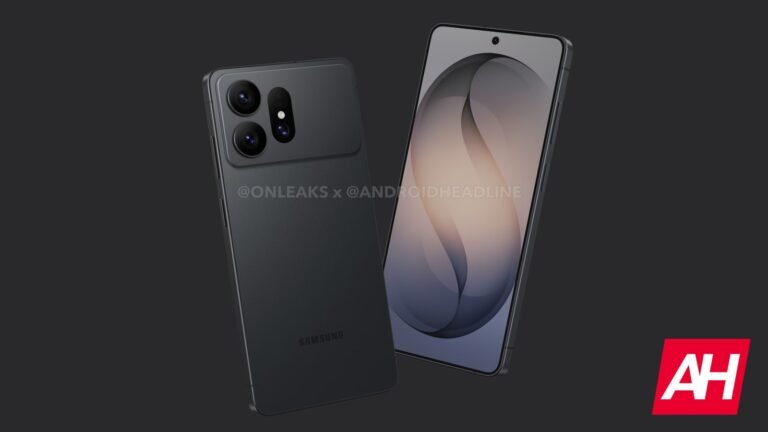
Both phones include plastic backplates, and those backplates are flat. Their camera designs are notably different, though. The Pixel 10a includes two horizontally aligned cameras in the top-left corner. Those cameras do not protrude on the back. The Galaxy A37, on the other hand, includes three vertically-aligned cameras in the top-left corner, and they do protrude. The Galaxy A37 is taller, wider, and thinner in comparison. That’s perfectly normal considering it has a much larger display. The phone is also a bit heavier. They both come with IP68 certifications.
Google Pixel 10a vs Samsung Galaxy A37: Display
The Google Pixel 10a features a 6.3-inch P-OLED display, which is flat. It supports HDR content, a 120Hz refresh rate, and its brightness goes up to 3,000 nits. The screen-to-body ratio is around 84%, and the resolution here is 2424 x 1080 pixels. The display aspect ratio is 20:9, and the panel is protected by the Gorilla Glass 7i.

The Samsung Galaxy A37, on the other hand, has a 6.7-inch Super AMOLED display. That display is also flat, and it offers a resolution of 2340 x 1080 pixels. It supports a 120Hz refresh rate, and its brightness goes up to 1,900 nits. The screen-to-body ratio is around 87%, and the display aspect ratio is 19.5:9. Corning’s Gorilla Glass Victus+ protects this panel.
Both of these panels are vivid, have good viewing angles, and are sharp enough. The Pixel 10a can technically get a bit brighter, but both are bright enough. There’s not much to complain about here, as far as displays are concerned. They do their job, and even though they don’t have high-frequency PWM dimming and are not LTPO panels, they’re more than good enough at these price ranges.
Google Pixel 10a vs Samsung Galaxy A37: Performance
The Google Pixel 10a is fueled by the Google Tensor G4 processor. That is a 4nm chip, and it is backed by 8GB of LPDDR5 RAM inside the Pixel 10a. Google also opted to use UFS 3.1 flash storage inside of this smartphone. Do note that the storage is not expandable, so be careful when choosing the storage option for your needs.
The Samsung Galaxy A37, on the other hand, is fueled by the Samsung Exynos 1480 processor. That is also a 4nm chip, and it’s backed by 6GB, 8GB, or 12GB of LPDDR5 RAM and UFS 3.1 flash storage. This one also does not allow for storage expansion, so choose your storage option carefully.
The Google Tensor G4 is not exactly a high-end chip, as it’s well-below high-end offerings these days. However, it still beats the Exynos 1480 when we’re looking at sheer performance, from basically every angle. The Galaxy A37 is a solid performer, but the Pixel 10a does have the edge in that regard. It also feels a bit snappier during day-to-day use. Neither of these two devices is made for gaming, though, so keep that in mind. They can play some less demanding games without a problem, but truly demanding games are not recommended, even though they can technically run them.
Google Pixel 10a vs Samsung Galaxy A37: Battery
The Google Pixel 10a comes with a 5,100mAh battery on the inside. The Samsung Galaxy A37, on the other hand, includes a 5,000mAh battery. The Google Pixel 10a does have a notably smaller display, and it actually does offer better battery life, but the difference is not as significant as you’d think. They’re both within an hour of screen-on-time, basically. Neither phone will break any records, but both of them offer solid battery life.
Do note that phones with silicon-carbon batteries these days can crush both of these, though. Neither of these two phones has a silicon-carbon battery, therefore their battery capacities are not as high as you’d expect. As already mentioned, however, for most people, both of these phones will offer enough juice to get them to the end of the day. Power users could have issues, though.
The Google Pixel 10a supports 30W wired, 10W wireless, and bypass charging. The Samsung Galaxy A37, on the other hand, supports 45W wired charging. The Pixel 10a can be fully charged in an hour and a half, while the Galaxy A37 takes around an hour and 10 minutes to fully charge. Do note that chargers are not included in their retail boxes, though, so you’ll need to buy compatible ones separately if you don’t already own them.
Google Pixel 10a vs Samsung Galaxy A37: Cameras
Google opted to include two cameras on the back of the Pixel 10a. You’ll find a 48-megapixel main camera with an f/1.7 aperture and a 1/2.0-inch sensor size. That camera also supports dual pixel PDAF, and OIS. The second camera is a 13-megapixel ultrawide unit with an f/2.2 aperture, a 1/3.1-inch sensor size, and a 120-degree FoV).

The Samsung Galaxy A37, on the other hand, has three cameras on the back. A 50-megapixel main camera has an f/1.8 aperture lens, a 1/1.56-inch sensor size, and supports PDAF and OIS. There is also an 8-megapixel ultrawide camera with an f/2.2 aperture lens and a 1/4.0-inch sensor size. The last camera on the back is a 5-megapixel macro shooter (f/2.4 aperture).
Both phones do a good job with the main camera. The images from the Pixel 10a do end up looking more contrasty, but neither phone provides color-accurate shots, both have their own styles. Neither of these cameras can compete with the best out there, though. Ultrawide cameras are alright, but nothing to write home about, especially the one on the Galaxy A37. That is even more true when you shoot in low light. That 5-megapixel macro camera on the Galaxy A37 is not particularly useful in general.
Audio
Both of these smartphones have stereo speakers. The ones on the Galaxy A37 are actually louder; we could hear the difference with ease. The Pixel 10a still has a solid speaker set, though. The sound quality from both phones is good.
There is no audio jack on either phone. They do include Type-C ports, which you can use to connect your wired headphones. The Pixel 10a supports Bluetooth 6.0, while the Galaxy A37 supports Bluetooth 5.4 connectivity.
The post Phone Comparisons: Google Pixel 10a vs Samsung Galaxy A37 appeared first on Android Headlines.