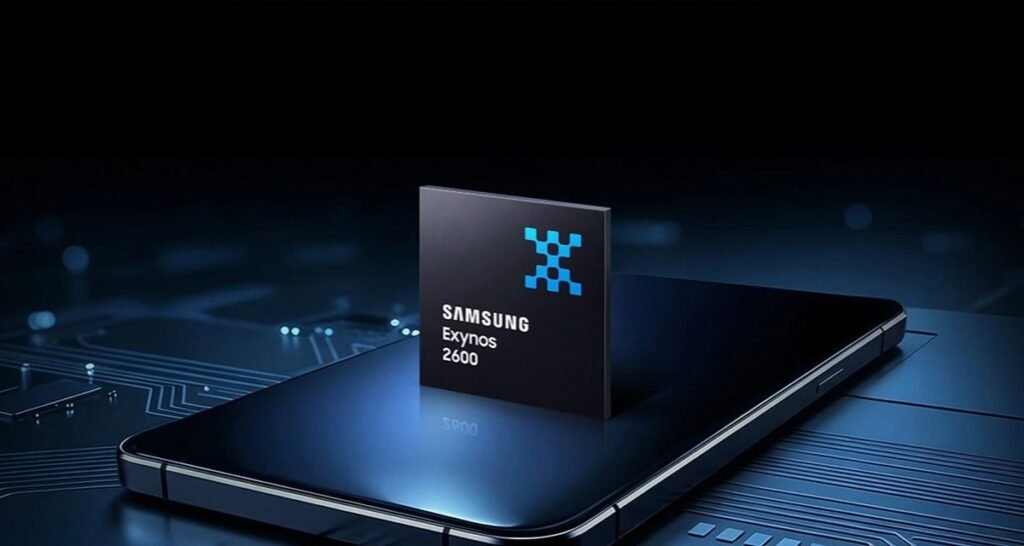

AI is useful. It can help you summarize books and documents and journals in seconds. You can use it to find and explain topics for you in ways traditional search cannot. It can also help you generate templates for posters, presentations, and blogs. But did you know it can also be used to help boost graphics? That is what Samsung is doing by bringing AI graphics support to its Exynos 2600 chipset.
Exynos 2600 gets AI graphics boost
As it stands, GPUs have a bottleneck in terms of how much it can process. This is true regardless of how old or new it is. Obviously more powerful GPUs can handle a bigger load, but ultimately, there is still a ceiling. However, with the Exynos 2600, Samsung is trying to make up for that with AI graphics.
How are they achieving this? This is done through Exynos Neural Super Sampling (ENSS), an AI graphics optimization software. Basically, the idea is that the actual GPU itself can be used to render lower-resolution graphics. Then, with the help of AI, it “fills in the gaps” to make it look sharper and higher-resolution. It goes one step further to generate in-between frames. This will result in motion looking smoother, without the GPU pumping out all those frames by itself.
What this means is that in the future, companies like Samsung can push out chipsets with cheaper and lower-end GPUs, but still make up for it in the software. Another use for the ENSS software is that it makes your phone’s hardware more heat and energy efficient. In fact, benchmarks show that the Exynos 2600 is outperforming its competitors in graphics by about 15%.
Right now, only the Exynos 2600 supports ENSS. However, Samsung is expected to expand the tech to future chipsets. This could include the upcoming Exynos 2700, which will use side-by-side architecture that will help make phones run even cooler than before.
Wait, this sounds familiar…
If the idea of using software to boost and upscale graphics sounds familiar, it’s because it’s not exactly new technology per se. Samsung uses something similar for their TVs with the Neural Quantum Processor. We’ve also seen it used on PCs.
NVIDIA’s DLSS technology has been around for years, although it did get a recent boost with DLSS 4’s Multi Frame Generation. AMD also has its own take with FSR, and Intel with XeSS. However, when it comes to Samsung’s own mobile chipsets, it’s a first. Qualcomm has long been using something similar with AFME.
So with this launch, it brings Samsung’s Exynos chipsets closer in performance to its competitors. It remains to be seen how this actually plays out in real life, but on paper, it’s exciting.
The post Samsung’s Exynos 2600 Uses AI to Boost Graphics, and It’s a Lot Like DLSS for Your Phone appeared first on Android Headlines.