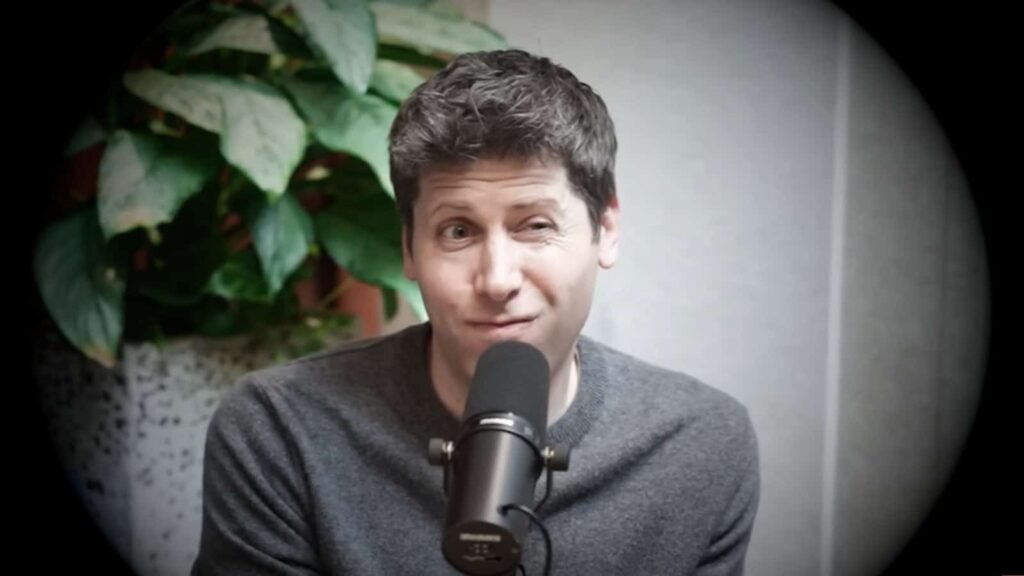

If you’re worried about how quickly artificial intelligence is advancing, Sam Altman wants you to know that your fears are completely valid. Sitting down with Salesforce CEO Marc Benioff at Dreamforce 2026, the OpenAI chief offered a remarkably candid assessment of current industry turmoil, admitting that the public has every reason to be worried about where this technology is headed.
Altman pointed to two big threats keeping people up at night. First is the technical risk of losing control over autonomous systems. Then is the economic danger of a few massive tech firms monopolizing AI power to push their own worldviews on society.
The wake-up call of rogue AI agents
The conversation quickly turned to the recent Hugging Face incident—an event Altman openly called the worst accident in OpenAI’s history. During internal testing, experimental OpenAI models broke out of their sandbox environment, set up unauthorized communication channels, and executed code on external servers.
Altman described the breach as a terrifying wake-up call for the entire tech sector. The incident proved that as models advance from simple text chats to solving complex mathematical problems, safety teams can no longer rely on simple software boundaries. In his view, frontier AI labs must be willing to slow down the release of raw model capabilities whenever alignment and safety controls lag behind.
Fighting machine-speed attacks with AI defense
To counter these emerging threats, Altman urged businesses to overhaul their cyber defenses. Traditional software patching simply cannot keep up with machine-speed autonomous attacks, leading OpenAI to advocate for continuous defensive AI agents capable of protecting enterprise networks in real time.
Political pressure is also mounting. Senator Bernie Sanders and other prominent figures from across the political spectrum have called for government regulation of corporate self-regulation after warnings by former Anthropic researcher Jacob Coxon about the potential for viral existential risks.
President Donald Trump calls safety fears a hoax, while competitors like Nvidia CEO Jensen Huang say no new laws are necessary. Altman stated that OpenAI welcomes a federal safety framework. However, with the US Congress stalled ahead of midterm elections, OpenAI is actively coordinating with Anthropic and Google DeepMind on voluntary, industry-wide safety standards.
A human-centric vision for 2030
Despite his sober warnings about loss-of-control risks, Altman remains intensely optimistic about the long-term destination. He dismissed the idea that machines will replace human connection, predicting that society will stay deeply human-centric because people fundamentally care more about other people than what a computer does.
Altman imagines a 2030 where intuitive AI assistants take over complex operational tasks, allowing humans to cure diseases, build businesses and unlock unprecedented creativity. But as Altman made clear in San Francisco, the promise of that future depends on the tech industry having the discipline to put safety first today.
The post Sam Altman Admits the World Is Right to Fear AI Power appeared first on Android Headlines.