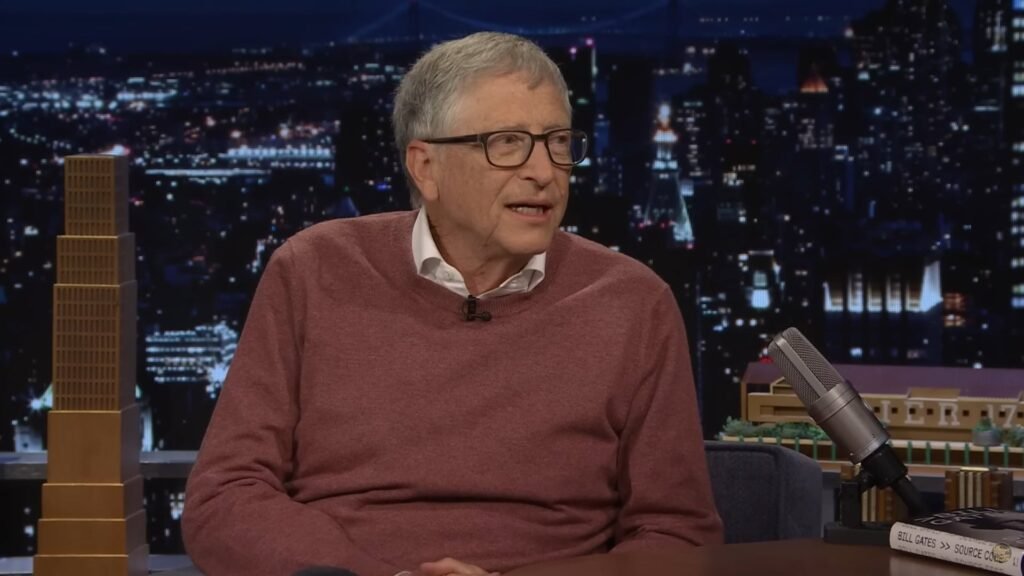

If sci-fi movies have taught us anything, it’s that humanity only unites when an extraterrestrial threat lands on Earth. Bill Gates believes artificial intelligence is that exact “alien intelligence”—and he is warning that world governments are dangerously unprepared for the shockwaves it is about to send through global power and the workforce.
In an interview with Reuters, the Microsoft co-founder offered a blunt assessment of current policy efforts. He argued that major powers like the United States and China must set aside geopolitical rivalries to coordinate on AI before the technology runs out of control.
Jobs, companion risks, and the 18-month clock
Gates revealed he is taking his concerns straight to top officials. He already spoke with US President Donald Trump while planning upcoming talks with Chinese President Xi Jinping. Its biggest worry centers on the speed of workforce displacement—a concern backed by Microsoft AI’s CEO, who predicted AI tools could replace every white-collar job in just 18 months.
To prevent widespread economic turmoil, Gates suggested governments might eventually need to classify certain roles as “Human Reserved.” He also flagged less-discussed risks, including cyber vulnerabilities and the psychological toll of AI companion addiction.
Some US politicians have proposed aggressive guardrails. The list includes Senator Bernie Sanders’ idea for an AI sovereign wealth fund and a Ban Artificial Superintelligence Act with nuclear-level penalties. However, the current administration has largely dismissed these fears as a hoax, leaving a regulatory void Gates wants filled.
A $1 billion push for the global poor
Despite his sharper tone on government inaction, Gates maintains that AI can still be a force for good if access is distributed fairly. Addressing recent congressional testimony regarding his past association with Jeffrey Epstein, Gates confirmed the scrutiny caused no reputational damage or loss of access to world leaders, leaving his foundation fully focused on its global health and development goals.
Rather than letting advanced AI stay concentrated in wealthy nations, the Gates Foundation is committing at least $1 billion over the next two years—out of its $9 billion annual budget—to bring AI tools to lower-income regions. Funding will go to three main areas:
- Healthcare: Supporting frontline healthcare workers, accelerating vaccine discovery and developing new treatments.
- Agriculture and Education: Providing custom tools for farmers to increase yields and personalized AI tutoring for students.
- Language Support: Expanding large language models so they operate natively across every language spoken on Earth.
By pairing urgent warnings to world leaders with massive private funding, Gates is trying to ensure that as AI reshapes the global workforce, it bridges the gap between the rich and the poor instead of pulling them further apart.
The post Bill Gates Thinks the US and China Must Cooperate on Alien-Level AI Risks appeared first on Android Headlines.