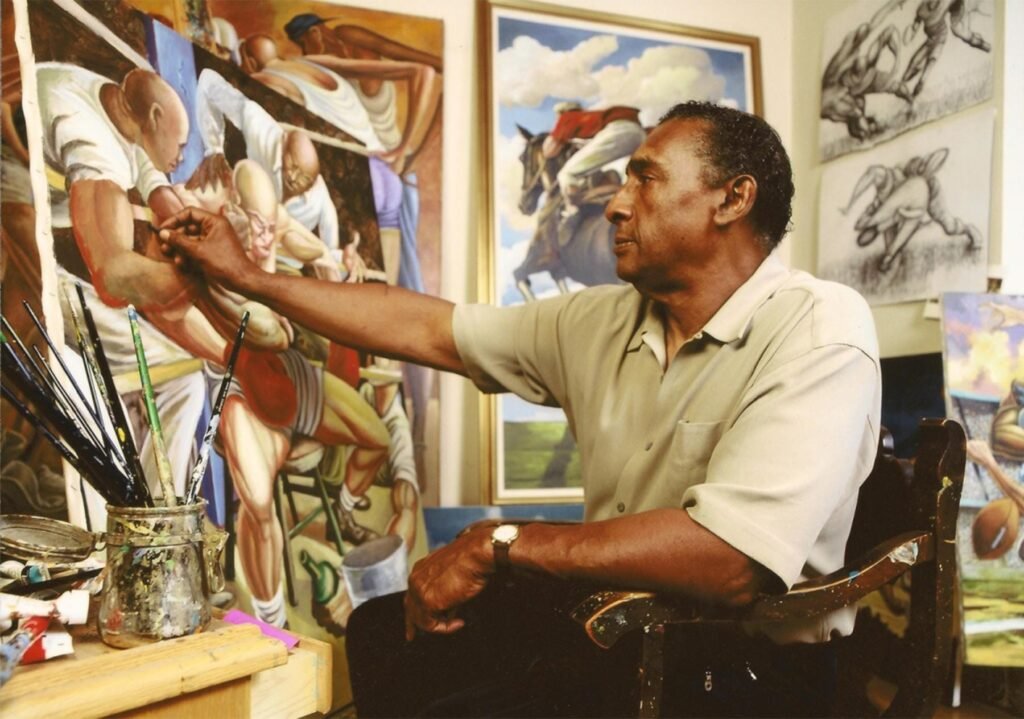
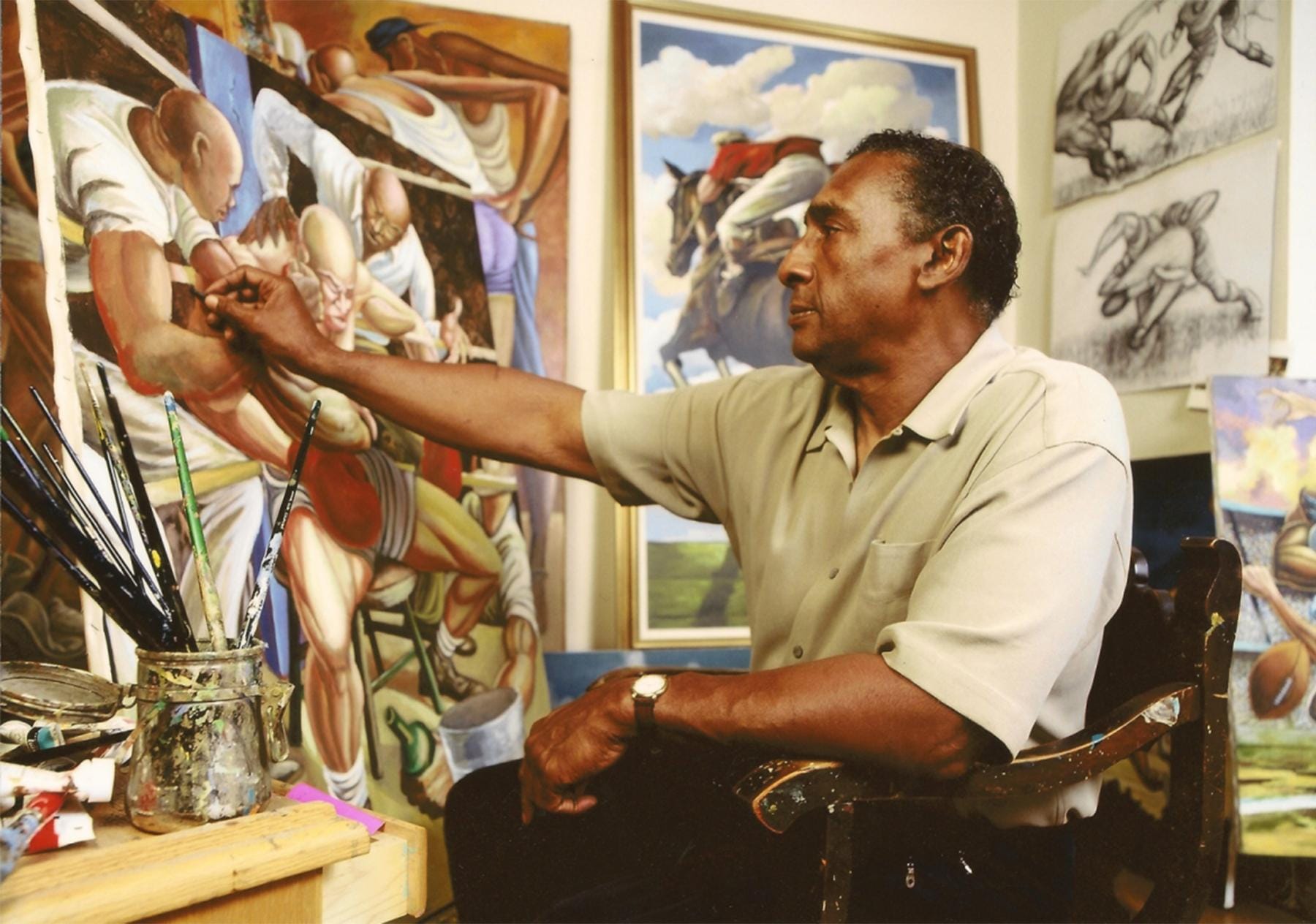
When artist Ernie Barnes died in 2009, his daughter Erin was left to sort through the vestiges of materials the Los Angeles-based painter and professional football player had accumulated over his decades-long art practice.
There were canvases, sure, but also paint tubes, brushes, and containers Barnes kept in the garage that he used as his studio to create vibrant, kinetic scenes of Black church gatherings, football games, and nightlife during the Jim Crow era, including his iconic work “The Sugar Shack” (1976), making him one of Southern California’s most beloved artists.
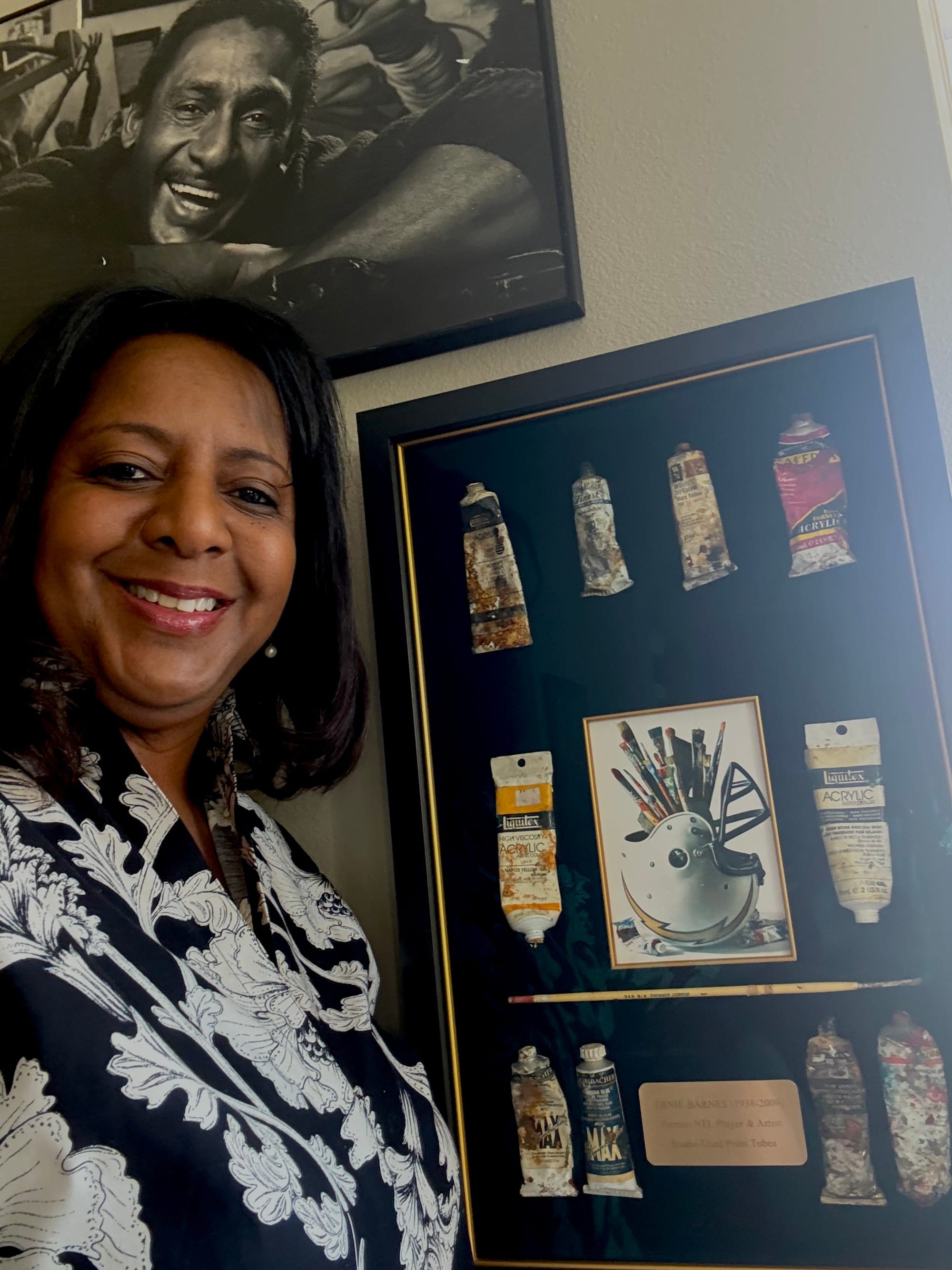
For years, Barnes stored her father’s partially squeezed containers of Liquitex, Grumbacher, and Winsor & Newton acrylic paint and thought little about it until about a year ago, when she began to realize the materials were integral to commemorating his legacy.
“I realized how much of the physical studio still existed through the paint tubes and brushes, and I felt a responsibility to preserve them as part of a record of his historical practice,” Barnes told Hyperallergic. “These tubes are the physical remnants of his creative process.”
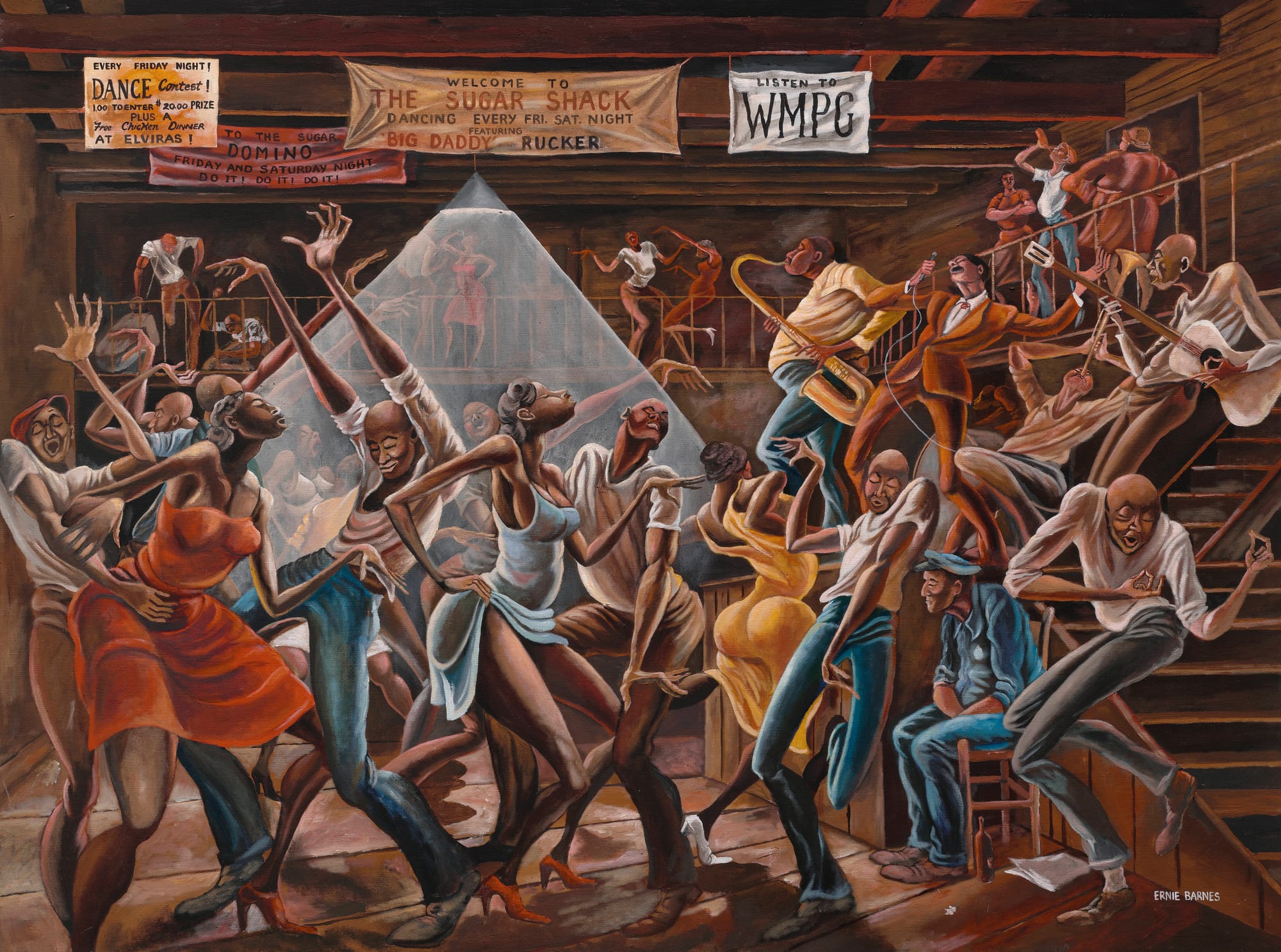
Black figurative painters such as Jacob Lawrence, Amy Sherald, and Kerry James Marshall have been widely celebrated by museums and institutions in the last decade. Barnes isn’t always mentioned in the same breath as other contemporary art stars despite the $15.3 million sale of “The Sugar Shack” in 2022. (Its buyer, energy trader Bill Perkins, told the New York Times that “for certain segments of America, it’s more famous than the ‘Mona Lisa.’”)
That could soon change. A major documentary about Barnes’s life, Who is Ernie Barnes, was announced in July, and the Canton Museum of Art in Ohio recently opened a special exhibition celebrating his work, Good Times: The Artistic Journey of Ernie Barnes, on August 18. Some of Barnes’s works will also be on display at the Lucas Museum of Narrative Art, which opens to the public on September 22.
Barnes grew up in Durham, North Carolina, under Jim Crow segregation, learning about art from books and catalogs because museums did not allow Black people to enter them. Encouraged by his mother, he sketched throughout his childhood and attended North Carolina College (now North Carolina Central University) on a football scholarship.
Barnes proved to be a gifted athlete in college and was drafted into the NFL, where he played for five seasons. But he never put aside his art and often made pencil or charcoal sketches of other players while he was on the sidelines during a game.
“His teammates were in awe of how he could come up with an idea and sketch it right away,” Thaleen Barnes, Ernie’s second wife, told Hyperallergic. “When we went to places, he watched how people walked, their mannerisms, and how they talked. He was interested in their body, their form and movement. Just looking around the world that we lived in was an inspiration for him to sketch.”