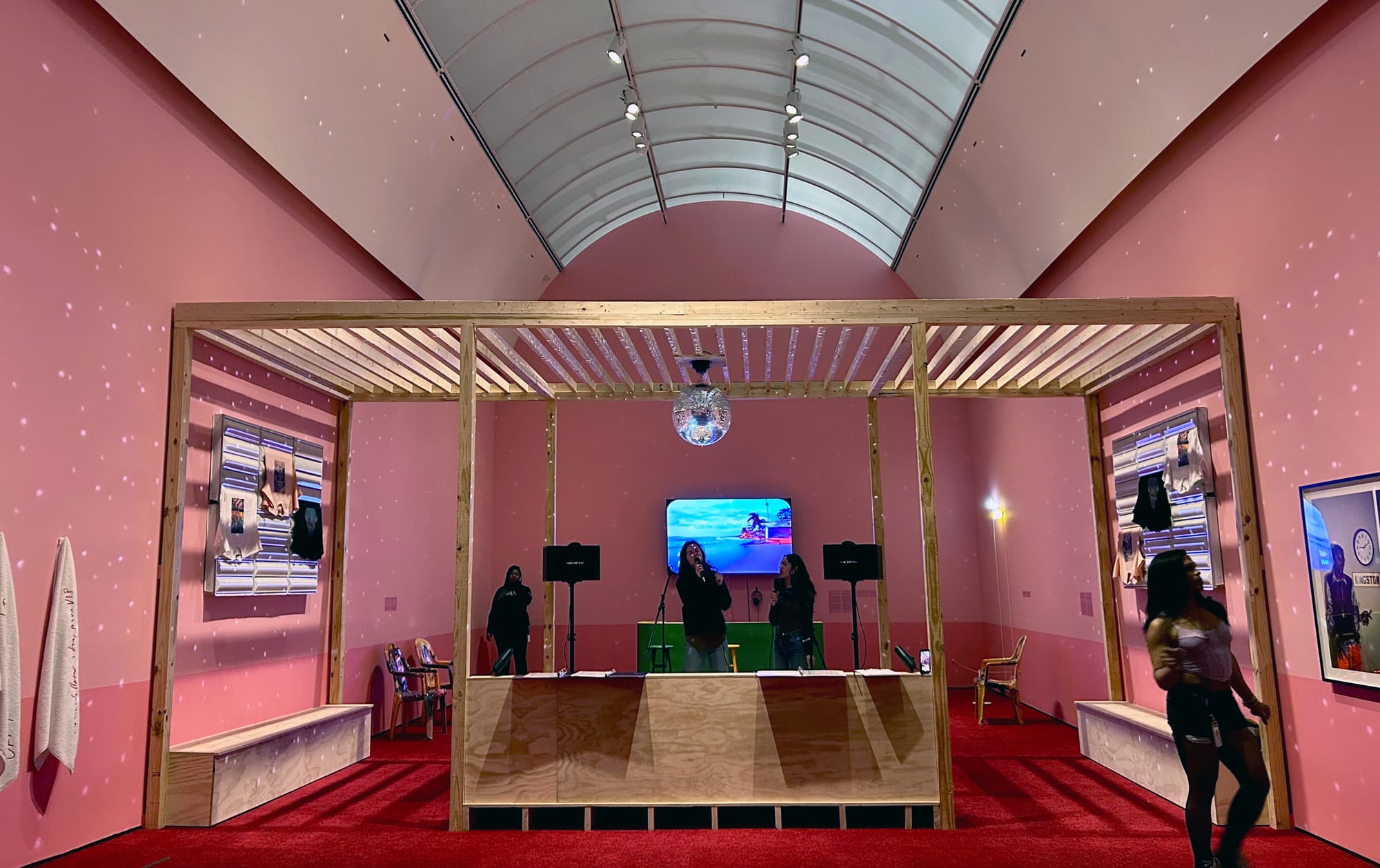
CHICAGO — An eerie, operatic, disembodied chorus floats to the front of Dispossessions in the Americas: The Extraction of Bodies, Land, and Heritage from La Conquista to the Present at Wrightwood 659. This is “Coro de plantas extintas” (2020) by the Ecuadorian artist Saskia Calderón, a video performance mourning the loss of endangered and extinct plant species. Ten minutes down the coast of Lake Michigan, another exhibition also opens with sound: A honeyed voice croons a Selena song from somewhere deep inside of Dancing the Revolution: From Dancehall to Reggaetón at the Museum of Contemporary Art Chicago. Is this a recording of Selena herself, or someone skilled singing karaoke? It is, as it turns out, “Karaoke El Nuevo Horizonte” (2014/25) by Puerto Rican artist Radamés “Juni” Figueroa; as part of the work, visitors can sing karaoke (dancehall, reggae, reggaetón, salsa, and other Caribbean genres) during the museum’s free hours.
The moods here are strikingly different, but the two exhibitions pair artfully, complementing each other’s sensibilities and scope. “Coro de plantas extintas” sets the tone for Dispossessions in the Americas as solemn — mourning something taken, in this case, autonomy. “Karaoke El Nuevo Horizonte,” on the other hand, with its glittering disco ball, Miami windows, and flamingo pink paint, celebrates something given — joy and togetherness — as does Dancing the Revolution as a whole. Dispossessions in the Americas poses a problem: The expansion of European colonialism since the turn of the 16th century catalyzed widespread dispossession in the form of deprivation of land, culture, and language across the Americas. The show’s more than 40 works critique and unsettle this problem; they begin to rock at its foundations. Dancing the Revolution, meanwhile, keeps rocking the colonial boat until it capsizes. It offers a solution to the problem that the former poses: Dancehall and reggaetón, explored by around 50 contemporary artists, comprise a revolutionary practice for collective liberation.
The works in Dispossessions in the Americas range from bearing witness to the deprivations of colonialism to poking holes in the fabric of its consequences. “Burial Pyramid” (1974) by the late Cuban artist Ana Mendieta — known for her singular “earth-body” sculptures — feels, at first glance, the most passive. It was also, to me, the most moving. For three minutes and 17 seconds, on Super 8 color film, Mendieta lies nude and supine beneath a mound of earth and stones in Oaxaca, Mexico. Look closer, though — she’s not lying still. She’s breathing, deeper and deeper, until the stones roll away and she’s free. The small, intimate photographs of the series Exilio (1988–2007) by the Argentinian initiative Archivo de la Memoria Trans, too, may seem like mere documentation. The scenes are simple: tossing bread crumbs to swans, dozing off on the train, blowing a kiss to the camera. But the act of archiving — especially the lives of these trans women who were forced into exile in the ’90s in the aftermath of the Dirty War — preserves their histories, often excluded from dominant institutional narratives.
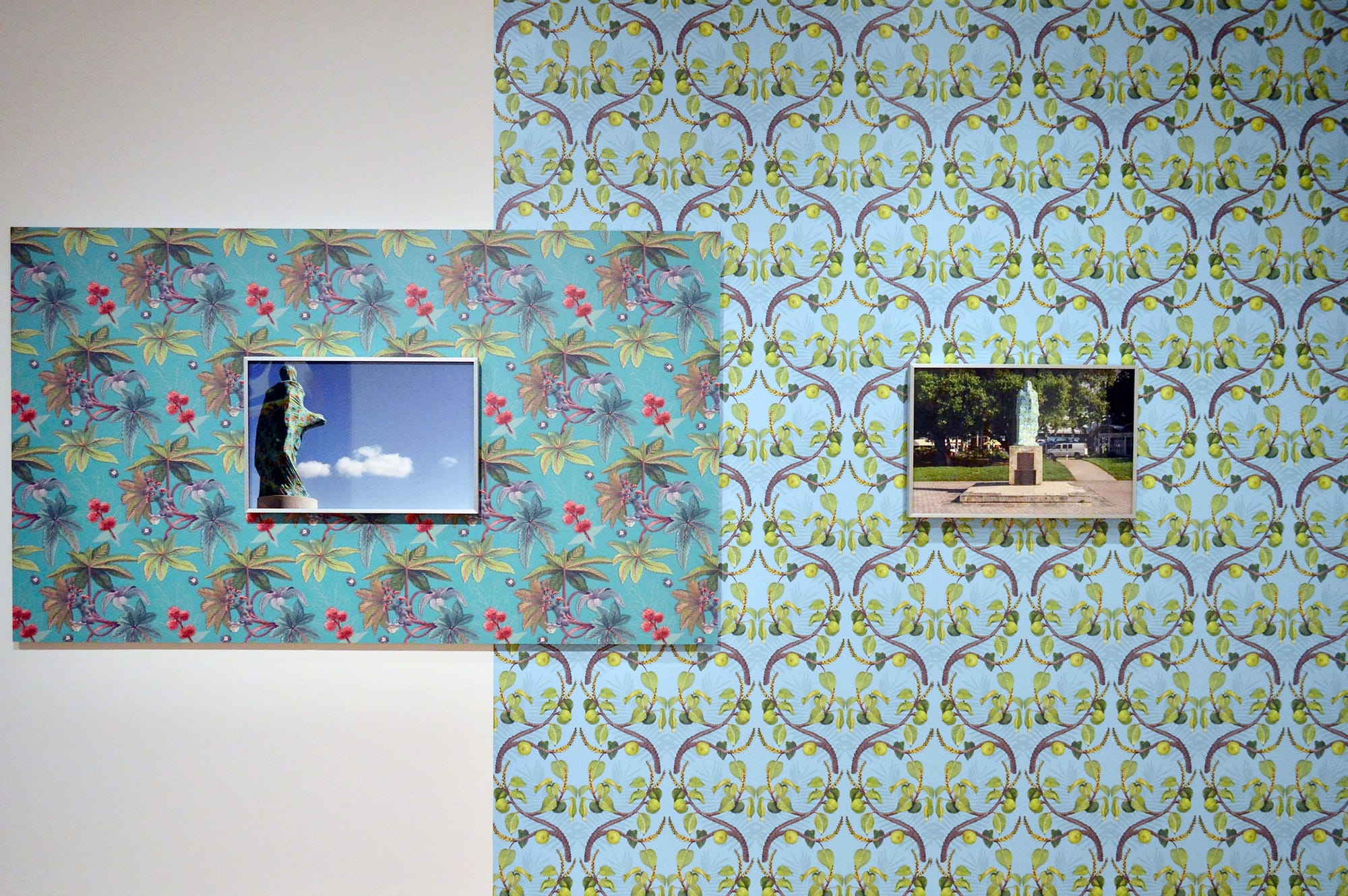
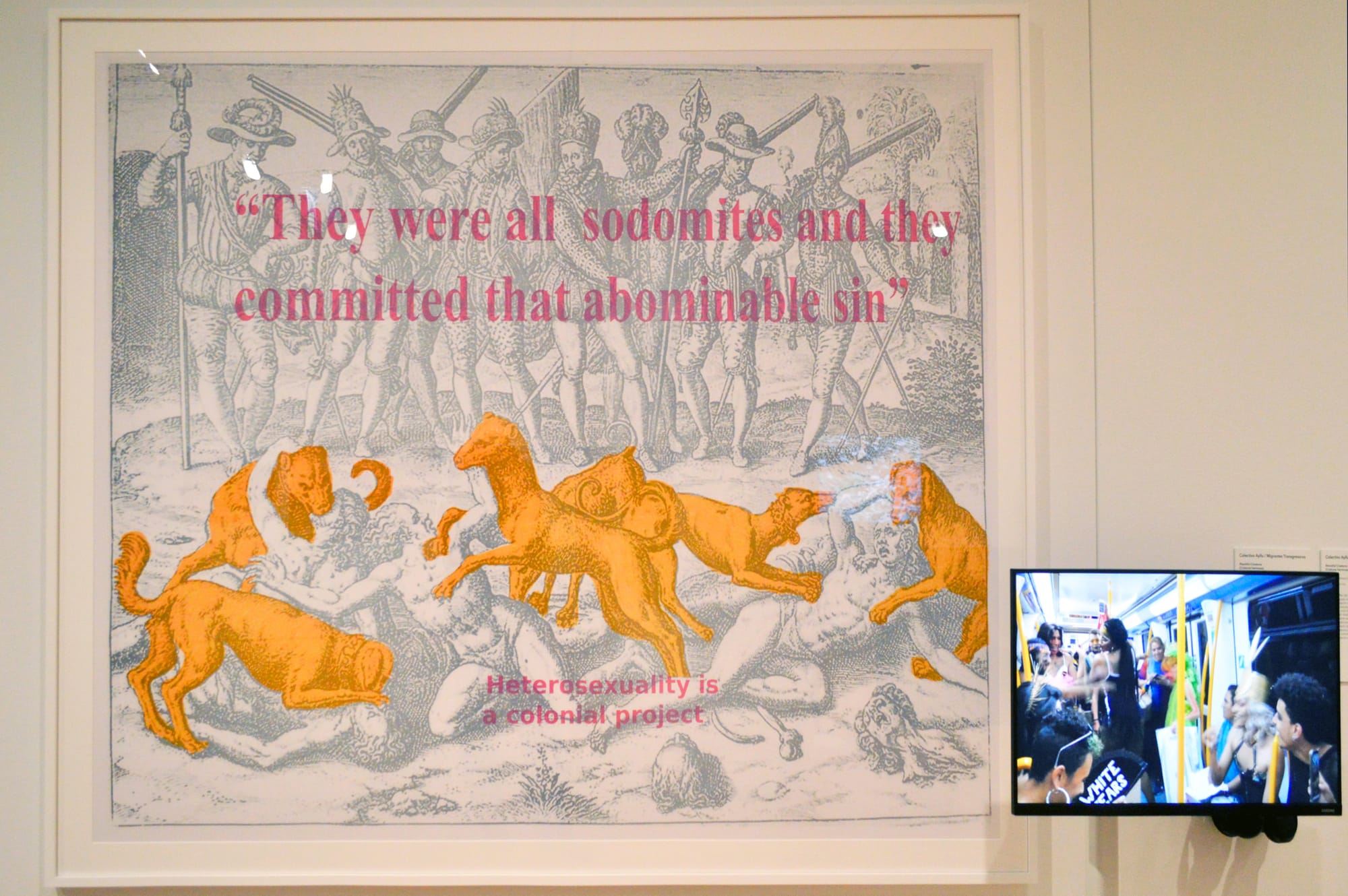
The photo series What did they actually see? (Pervert, Deviant, Possessed) (2018) by the Colombian artist Camilo Godoy takes this a step further, challenging historical narratives. Christian missionaries to the Americas described the ritual dances of Indigenous people as “barbarous” and “possessed” — but what did they see, and through what lens? These large-scale photographs seem to frame the colonized’s response to the colonizer’s vision: They’re so dark as to appear almost pitch-black, but if you squint, lithe bodies in motion emerge, moving and dancing. “The Cloaking (Cover-up of the Christopher Columbus statue behind the Bayfront Park Amphitheater in Miami, Florida)” (2020) and “No nos culpen por lo que pasó” (2020) complete the continuum, actively shaking the trunk of colonialism like a fruit tree. In the former, the Dominican artist Joiri Minaya designed spandex fabric with native tropical plant patterns and literally re-covered colonial monuments, then photographed them. The latter, a lithograph by Colectivo Ayllu / Migrantes Transgresorxs, is a subversive adaptation of Theodor de Bry’s 1655 “Balboa’s Massacre of the Cueva” — an early account of colonial violence against gender and sexual difference — that condemns a massacre justified by “sodomy,” declaring that “heterosexuality is a colonial project” in overlaid pink text.
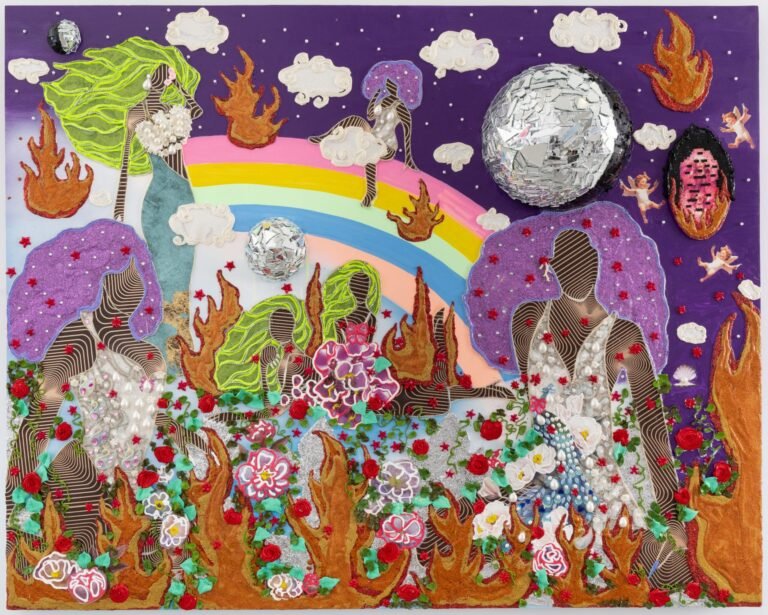
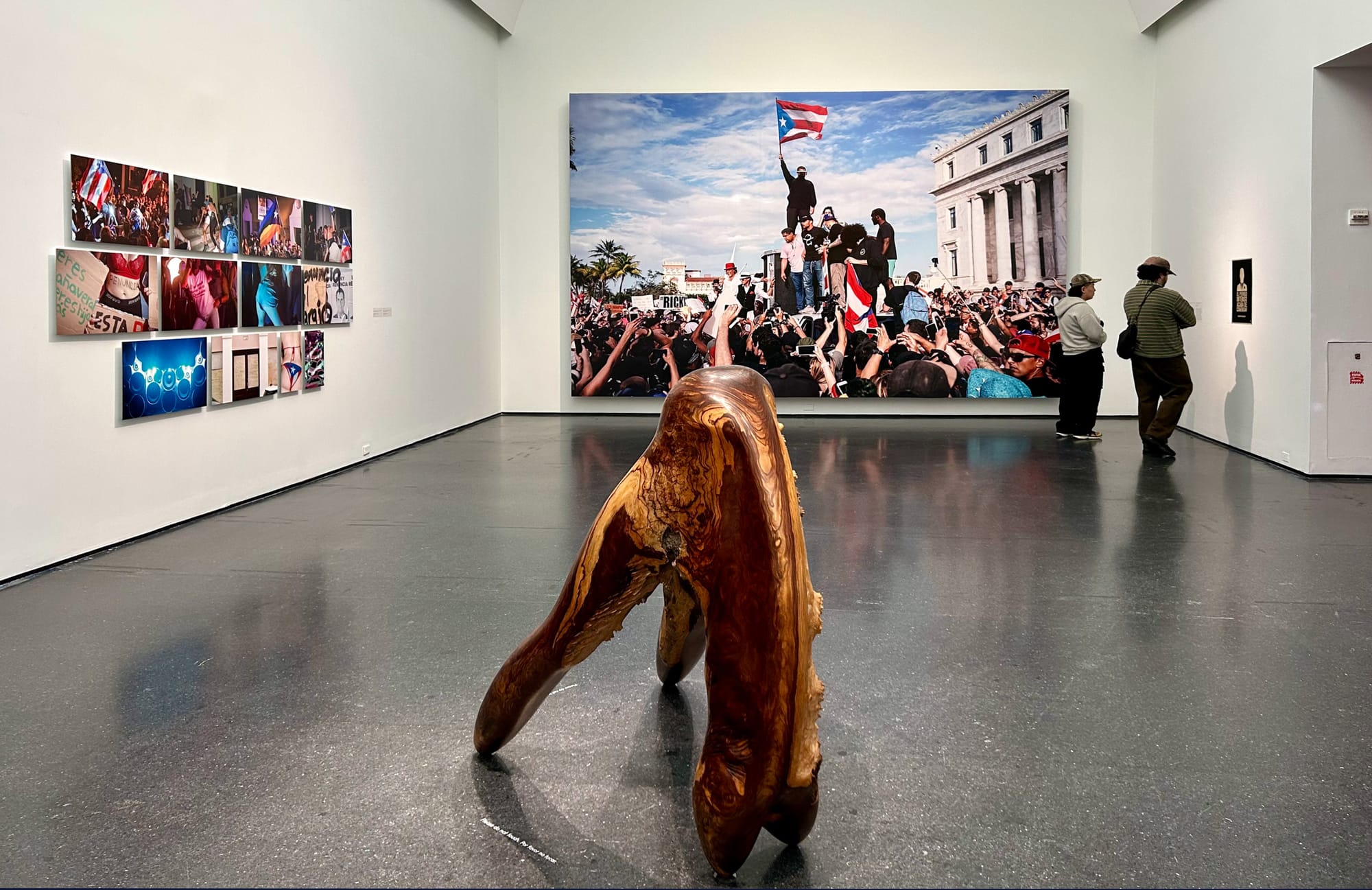
To return to the earlier metaphor: If Dispossessions in the Americas rocks the conquistadors’ caravel, then Dancing the Revolution shoves it until it sinks (and invites us in for a celebratory swim). The latter focuses on the Caribbean, tracing the evolution of music from Jamaica, where reggae gave birth to dancehall in the late ’70s, through Panama, where reggae en español fused reggae rhythms with Spanish lyrics, to Puerto Rico, where reggaetón transformed in the ’90s — and later played a significant role in the Verano del ’19 protests against then-governor Ricardo Rosselló. Each one of these grassroots genres, the exhibition shows us, is in its own way rooted in the struggle against colonial oppression.
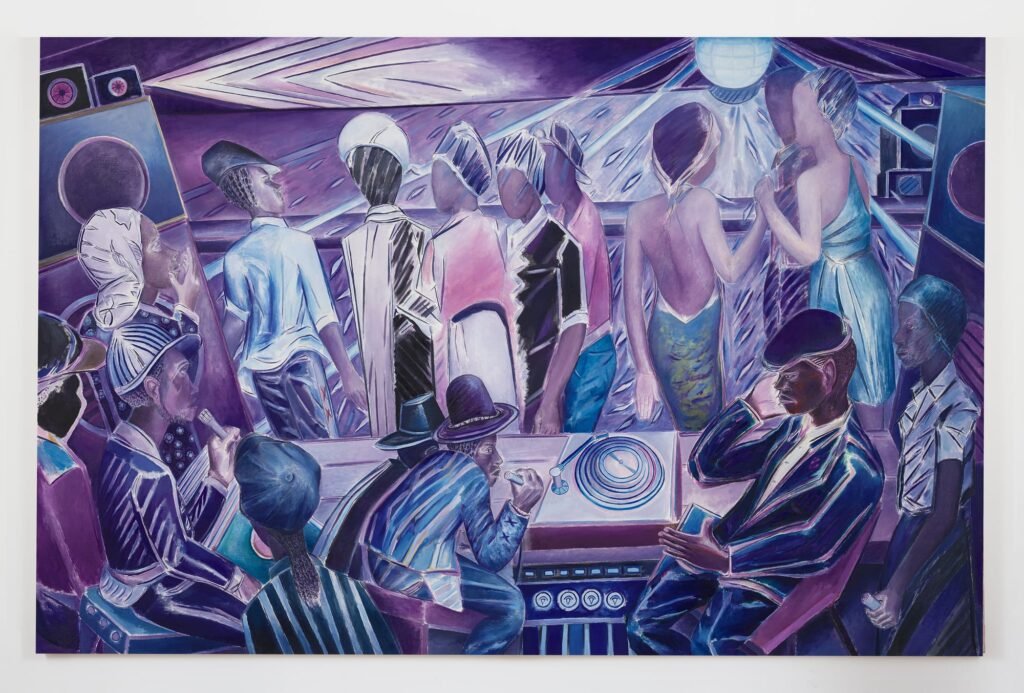
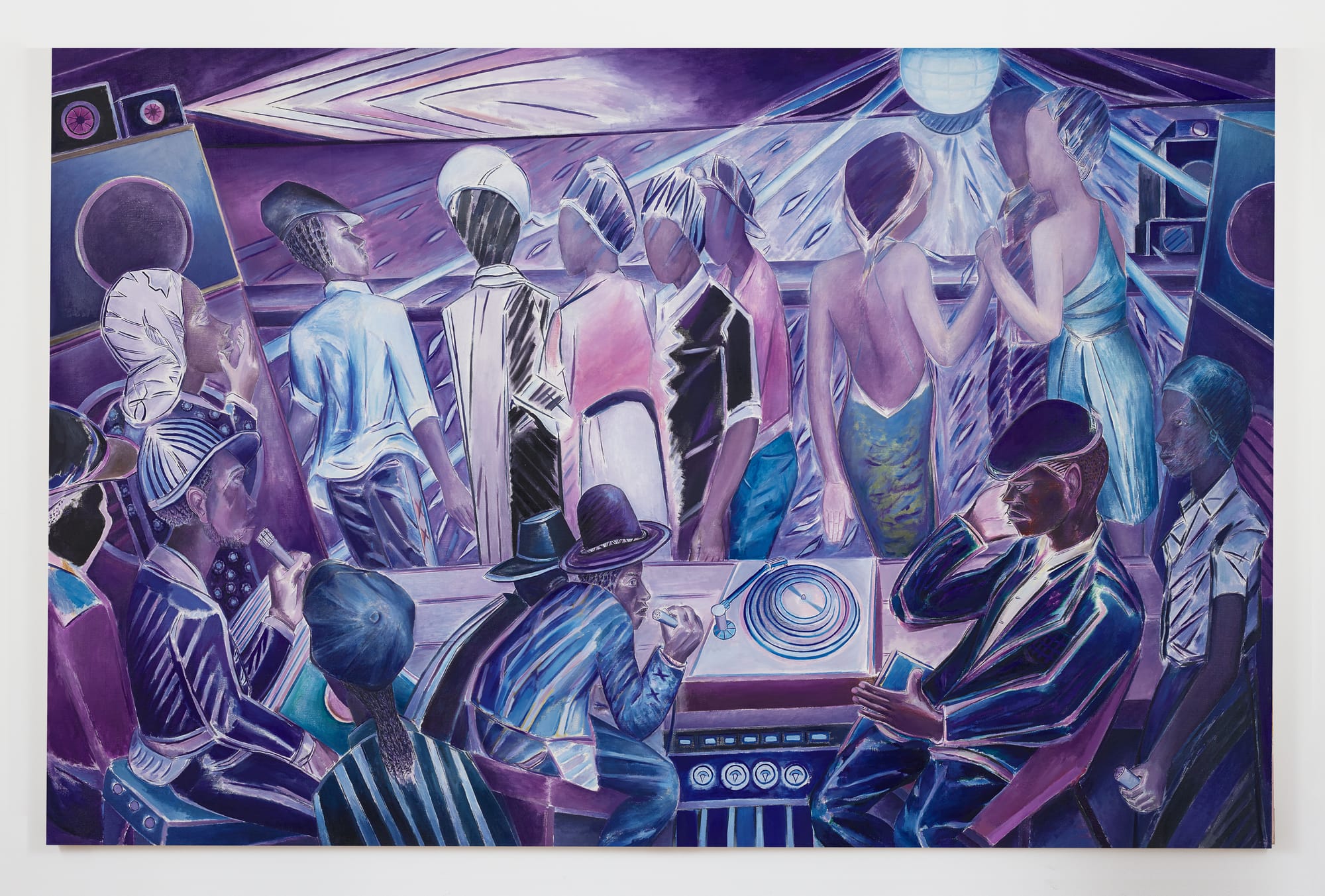
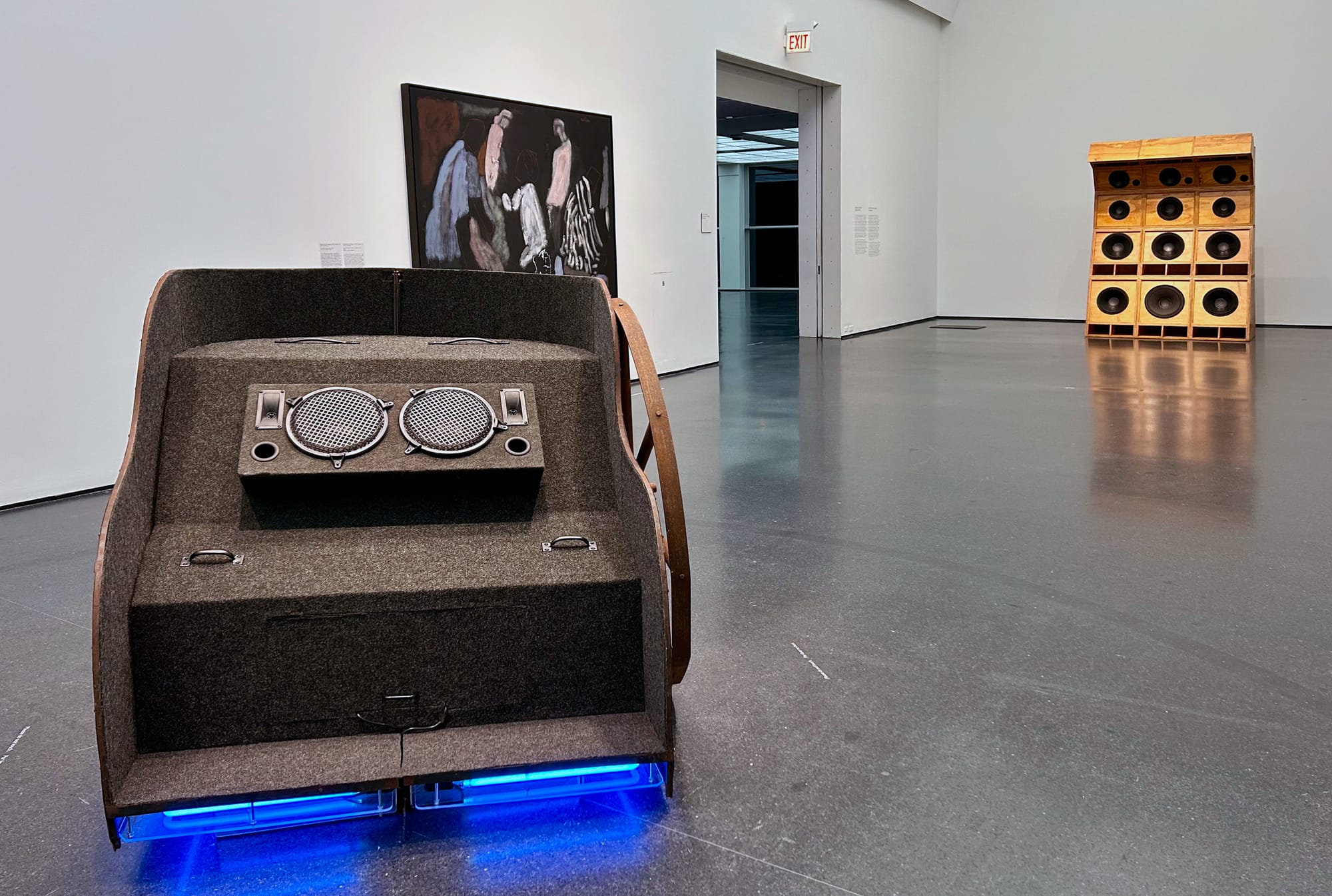
In an alcove dedicated to dancehall, ritual, and spirituality in Jamaica early in the exhibition, Adrian Boot’s photo portrait, “Lee ‘Scratch’ Perry’s Black Ark Studios – Kingston, Jamaica, 1979” (1979), introduces us to Lee “Scratch” Perry, whose Black Ark recording studio shaped reggae, dub, and dancehall. Just beyond the alcove, Michael Richards’s sculpture “Swing Lo’” (1996), a one-wheeled, rusted chariot whose title references the African-American spiritual “Swing Low, Sweet Chariot,” blasts Jamaican dancehall and a Panamanian reggae en español song from its speaker system. One genre blends into the next in its neon blue lowrider underglow, suggesting that movements for liberation share not only a struggle but also a sound.
As the exhibition progresses toward the more explicitly revolutionary “perreo combativo” (combative twerking protest by queer youth) of el Verano del ’19 — encapsulated by Garvin Sierra Vega’s tongue-in-cheek “El perreo intenso” (2019) print — it becomes more participatory, more democratic. Pieces like Juan Rivera’s “Amplified Panama” (2026) installation invite the museum-goer in: Put on these headphones, sit on these red cushions over red carpet (an homage to Panama’s Diablos Rojos), and listen to these mixes, each exploring a key moment in reggae en español. Take a load off, grab a bar stool, and watch beach sand bounce on the speakers of Blue Curry’s “J Bar 2.0” (2026). Listen, dance, rest — then join us, Dancing the Revolution says.
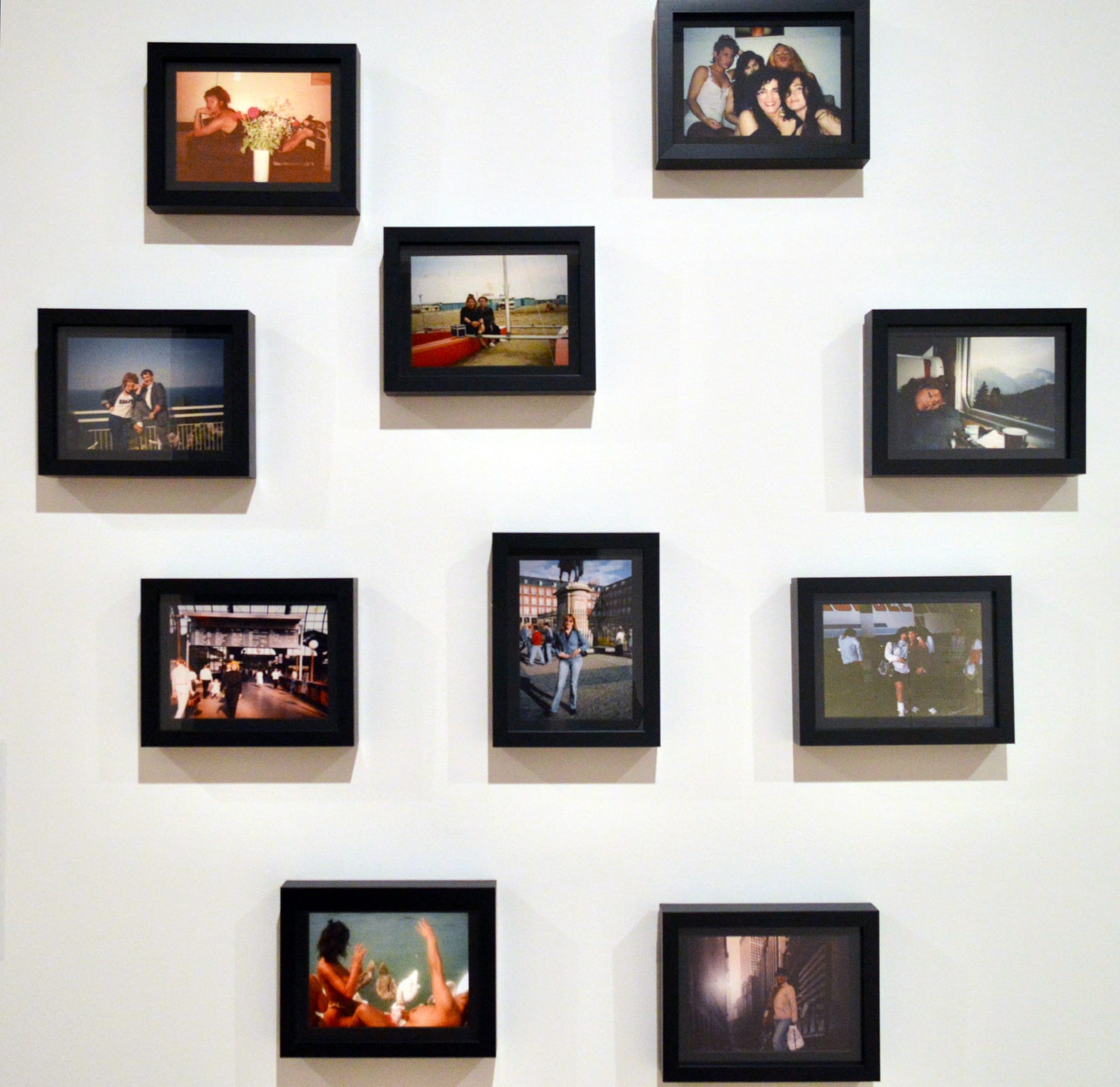
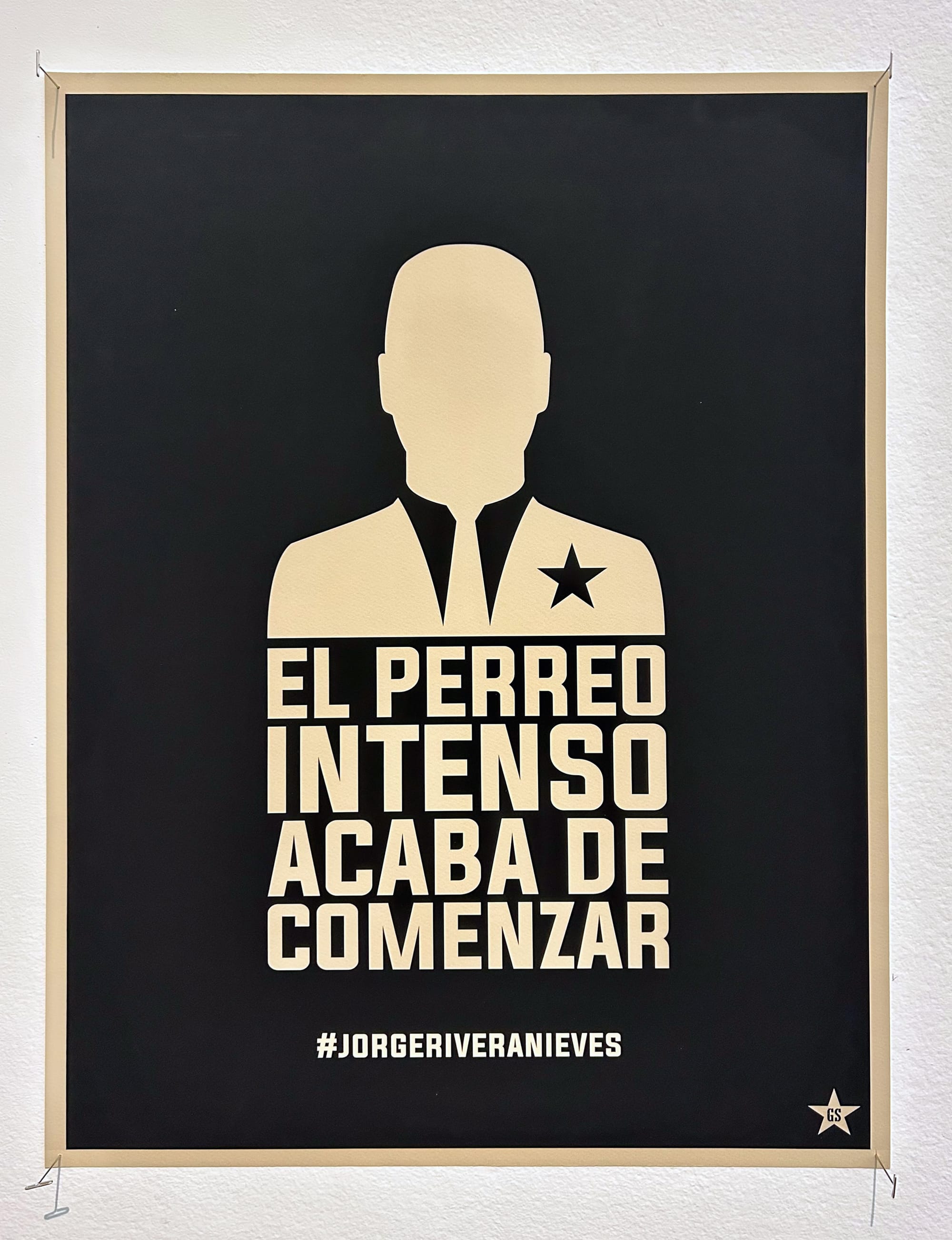
Left: Installation view of Archivo de la Memoria Trans, Exilio (1988–2007), photography; right: Garvin Sierra Vega, “El perreo intenso” (2019), digital print
Dispossessions in the Americas: The Extraction of Bodies, Land, and Heritage from La Conquista to the Present continues at Wrightwood 659 (659 West Wrightwood Avenue, Chicago, Illinois) through July 18. The exhibition was curated by Jonathan D. Katz and Eduardo Carrera.
Dancing the Revolution: From Dancehall to Reggaetón continues at the Museum of Contemporary Art Chicago (220 East Chicago Avenue, Chicago, Illinois) through September 20. The exhibition was curated by Carla Acevedo-Yates with Cecilia González Godino, Iris Colburn, Nolan Jimbo, and nibia pastrana santiago.