This article is part of Hyperallergic’s 2026 Pride Month series, featuring interviews with queer and trans elder artists throughout June.
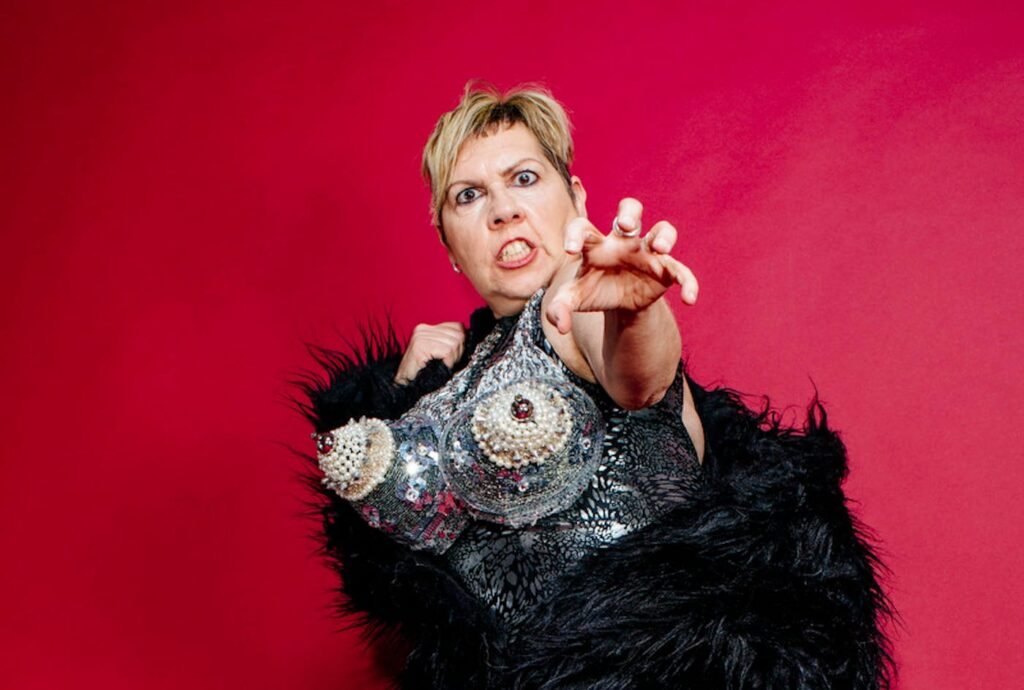
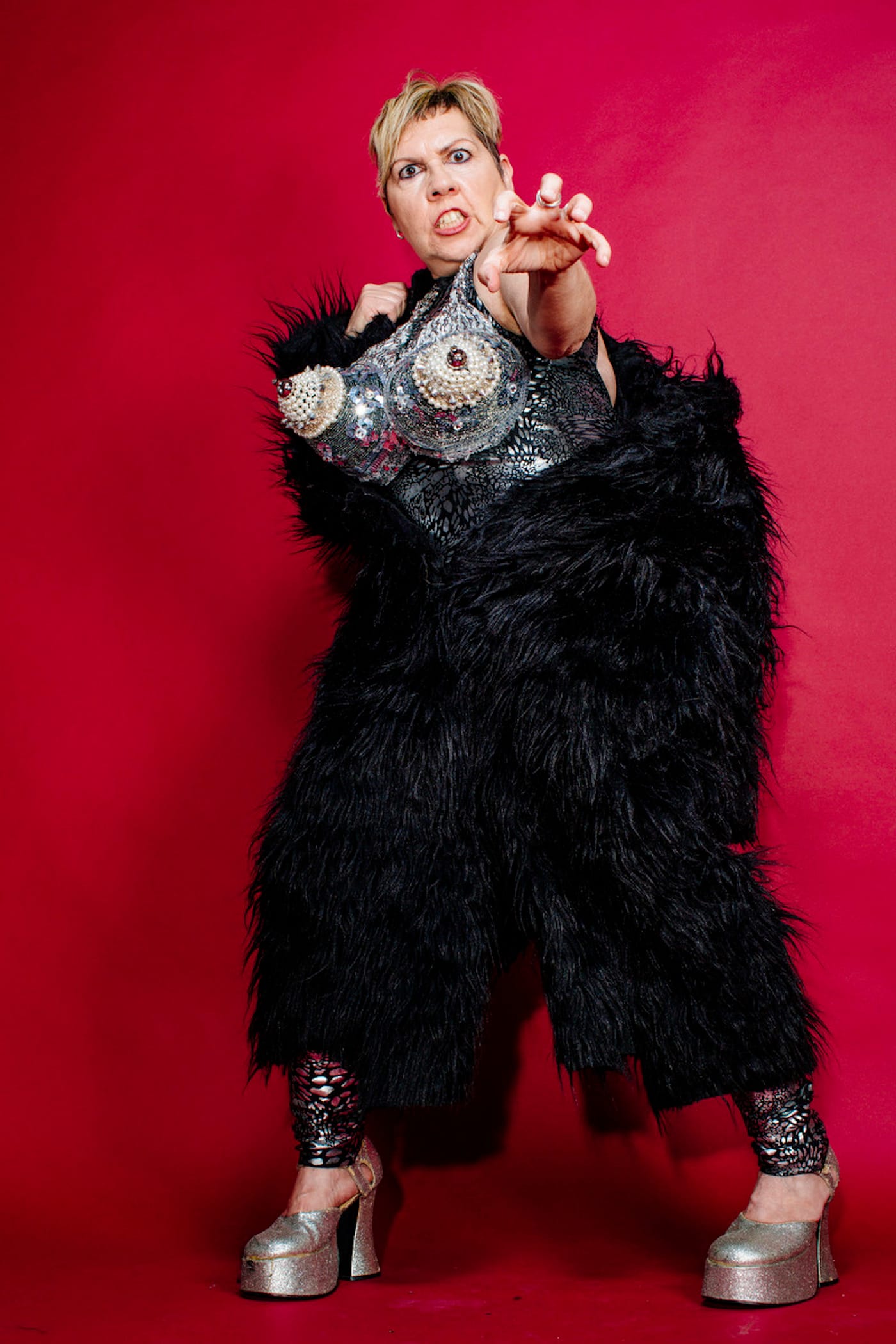
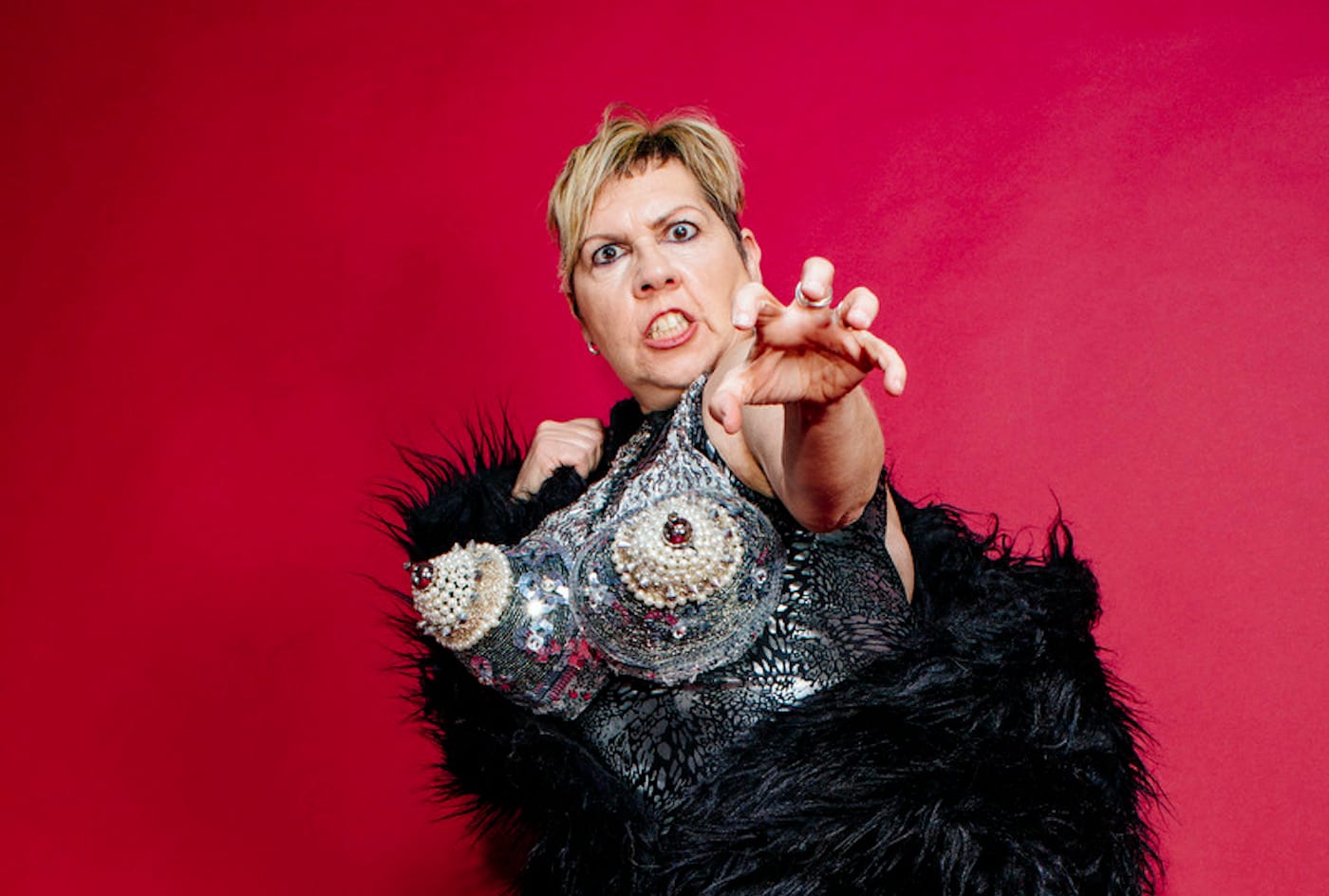
When the off-Broadway theater Soho Rep moved from its longtime Tribeca space in 2024, it went out with a bang. The final show at the location, Give Me Carmelita Tropicana!, was a fitting tribute to its history as a downtown theater hub. The titular star, Carmelita Tropicana, has been a fixture of New York’s downtown theater and performance art scene since the 1980s. As the alter ego of Cuban-American writer and performer Alina Troyano, Carmelita Tropicana has confronted stereotypes of Latina and queer women, embodying a variety of genders and personas — including animals — and challenging audiences to reimagine their surrounding worlds.
Carmelita had a serendipitous birth in the East Village when a radio performance prompted Troyano to create a pseudonym, while a standup routine for a comedy class she took alongside Holly Hughes led to a stage persona. What resulted was not just an outré and out lesbian “Latin spitfire,” in her words, but also decades of film and theater work on topics ranging from racism and homelessness to revolution to questions of identity: In Give Me Carmelita Tropicana!, cowritten with award-winning playwright, and her former student, Branden Jacobs-Jenkins, Troyano toys with selling the Carmelita persona to Branden (played by Ugo Chukwu). She was also a central figure in the early years of WOW Café Theater, a queer, feminist collective in the East Village where artists including Hughes, Eileen Myles, and the Five Lesbian Brothers performed.
Currently, she’s working on a podcast commissioned by Soho Rep, That’s Not What Happened, which will lead to a theater work. Directed by her collaborator and sister, filmmaker Ela Troyano, it looks back on her life, family, and friends.
Hyperallergic spoke with Carmelita about her fast-paced introduction to writing and performing in New York’s 1980s club culture, her collaborators and inspirations, and her queer community. Our conversation has been edited and condensed for clarity.
Hyperallergic: I want to start by congratulating you on your Obie Award for Lifetime Achievement.
Carmelita Tropicana: Thank you, thank you, thank you. It was great to receive this honor, and actually it was even more wonderful to have my friends throw me a party. Holly Hughes spoke at it and so did Lois Weaver, and my sister [Ela Troyano], of course, because she’s a longtime collaborator.
H: This interview series relates to legacy and artistic lineage, and it seems like your most recent play, Give Me Carmelita Tropicana!, touches on those subjects in both the content and your collaboration with co-writer Branden Jacobs-Jenkins.
CT: Exactly. I met Branden in 2007 at New York University when I was teaching a course. He was a student who had just come out of Princeton and he was brilliant. He wanted to drop the class because he had gotten a job at the New Yorker. I said, “No, keep the job, just come to the class because it’ll be wonderful to have you.” He ended up staying in class and that’s how we became friends. Then it turned into a collaboration. We were respondents to each other’s works for a while. We got a grant in 2016 from Creative Capital [for the play]. It was [originally] envisioned as a conversation between the two of us, and the juxtaposition of him as a young, hot, Black American playwright and me, an older Latina lesbian. That’s how it began. But then things change and we changed from 2016 to when we showed it in 2024, that’s a long time. He became a father. COVID happened. All these things put it on pause.
We did go to London in 2018 and worked on it. It was wonderful that we were doing a collaboration that included his idea of what if he bought the character of Carmelita? What does it mean to buy a persona with a lot of oeuvre attached to it? How does that work? It was great because it began with a scene that he had come up with in a lawyer’s office and my character was going to sign. It also takes a turn into a Freaky Friday situation where Carmelita gets upset with Alina — me — and goes into the body of the person who’s playing Branden on stage, Ugo Chukwu. But within that mayhem, it’s very autobiographical about when I met him and what it was like when he did this piece that we actually show in Give Me Carmelita Tropicana!, when he played with a goldfish. All those things were part of the piece, very much trying to figure out two intergenerational artists that had experienced their coming up in the downtown theater scene very differently. I came from the ’80s. He was in 2009, ’10, ’11. It was a conversation, not of two people but throughout many characters within the play.