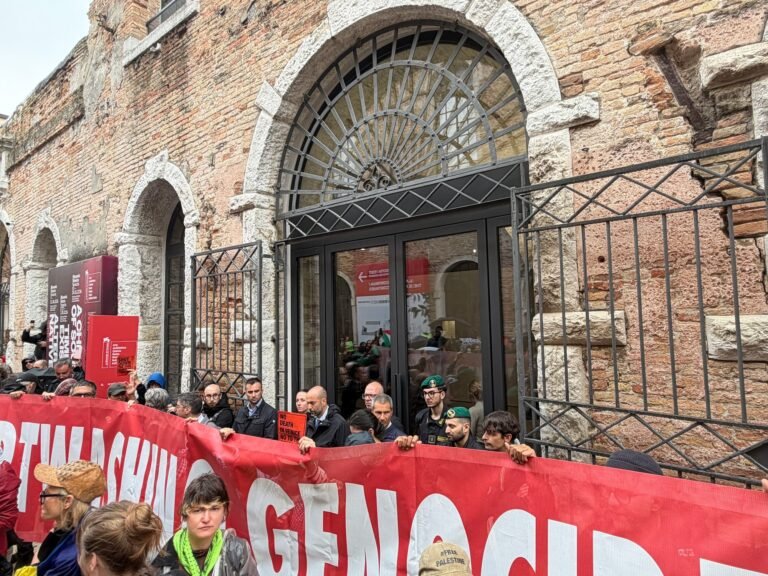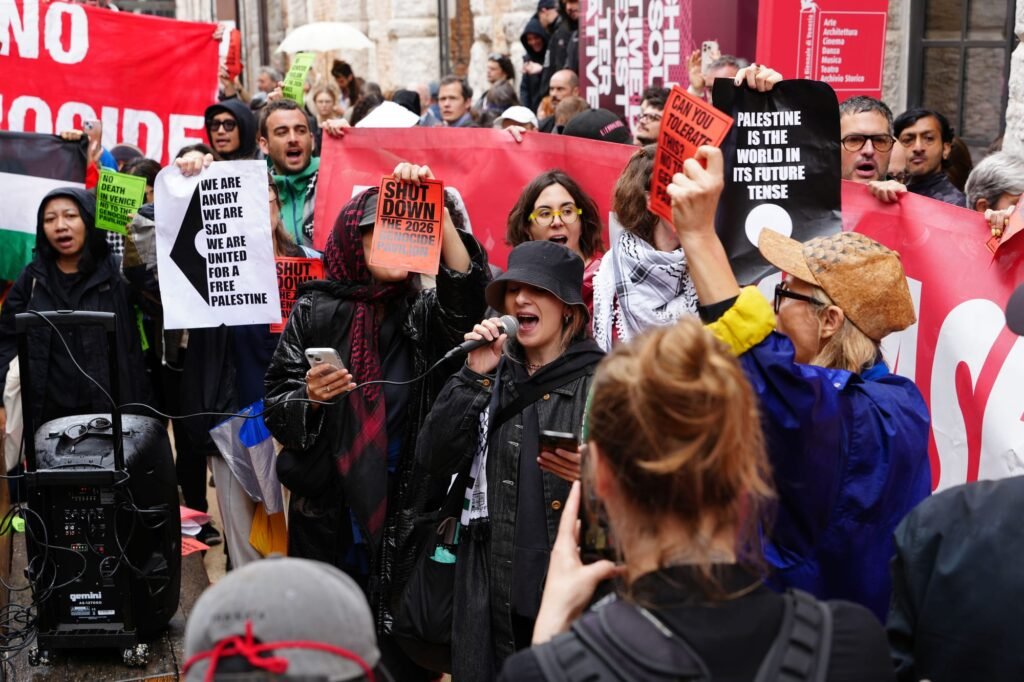
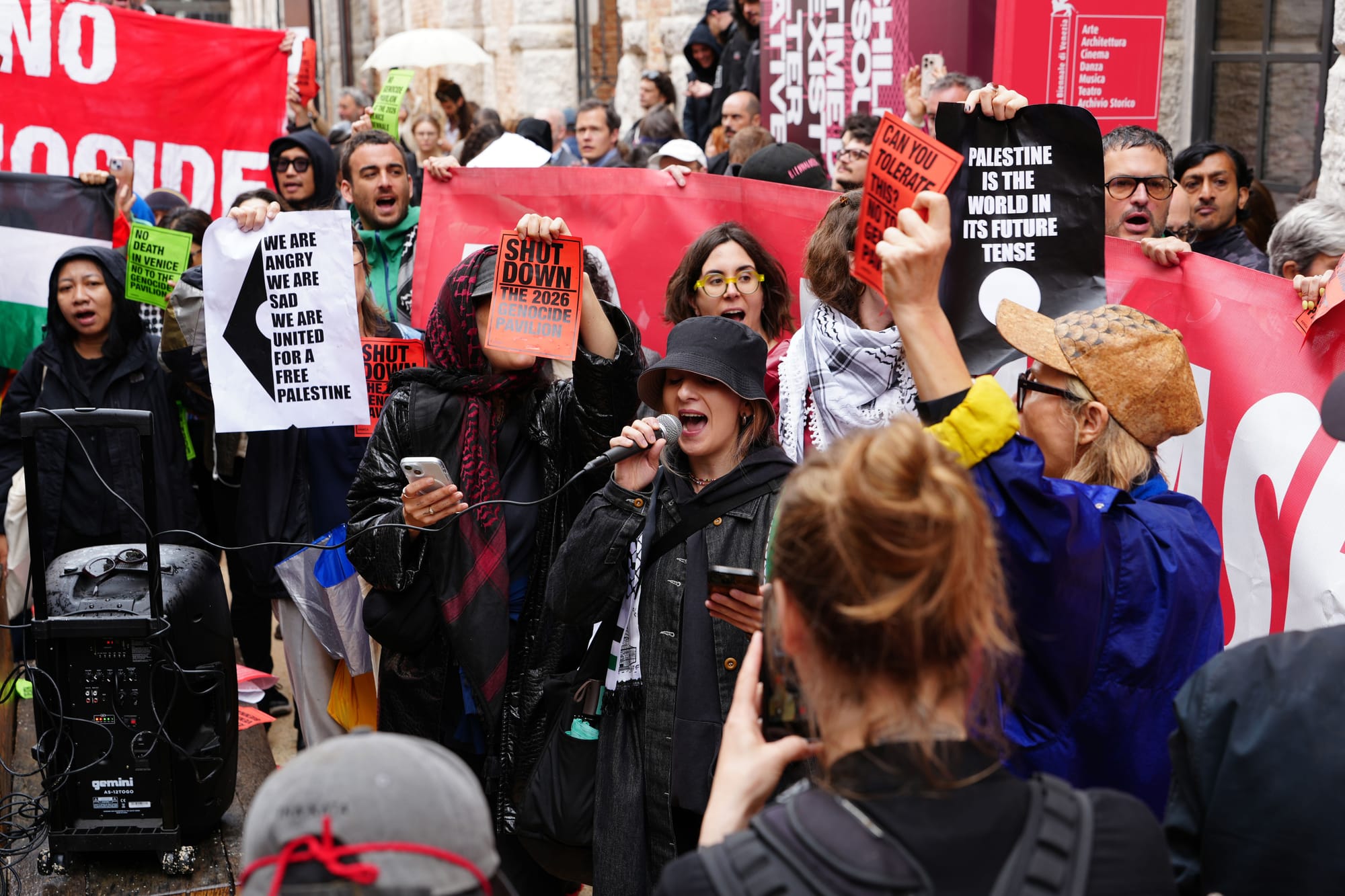
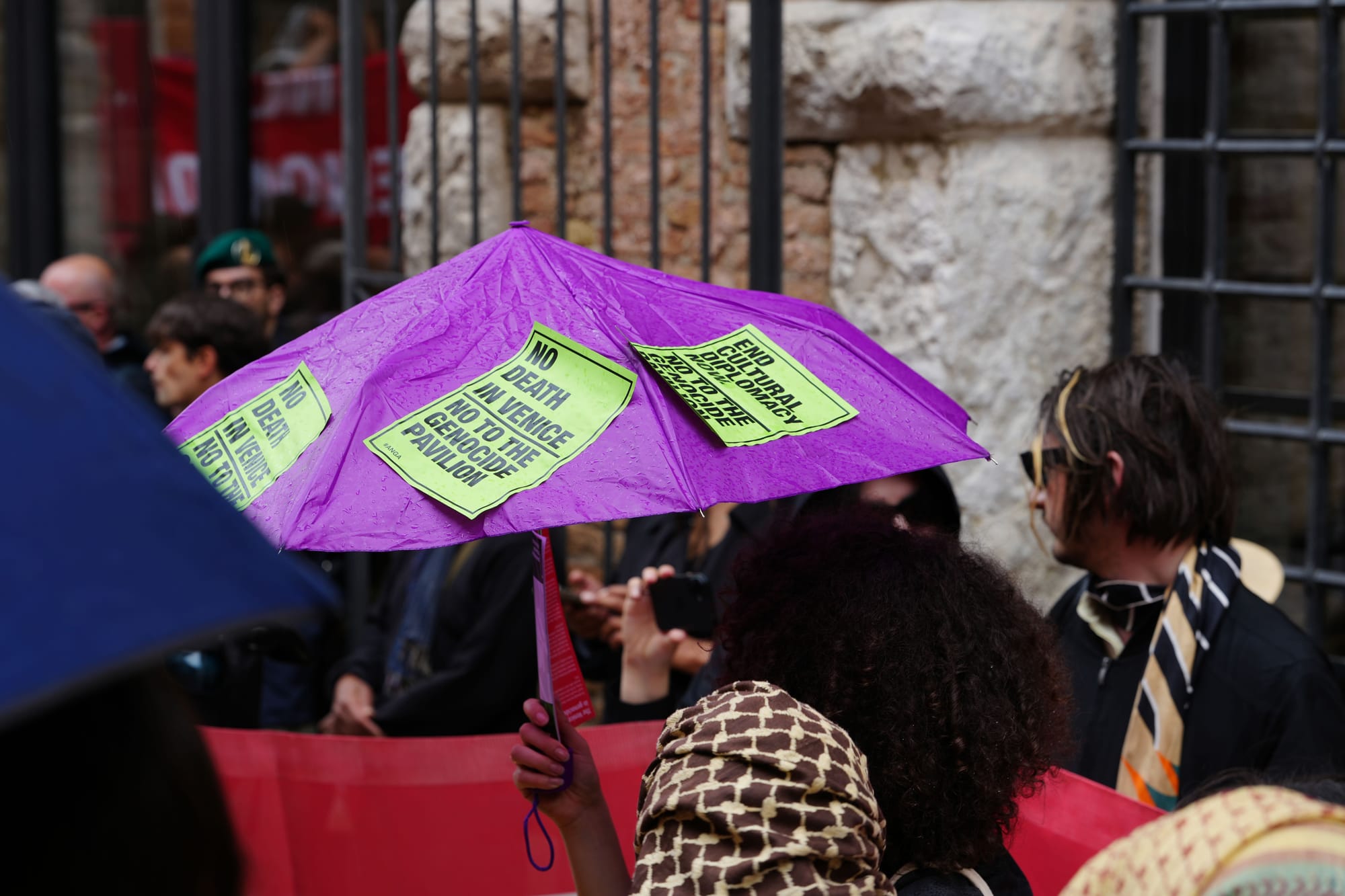
VENICE — On the first day of the Venice Biennale preview, May 6, hundreds of pro-Palestine activists rallied in front of the Israeli pavilion, demanding it be shut down immediately.
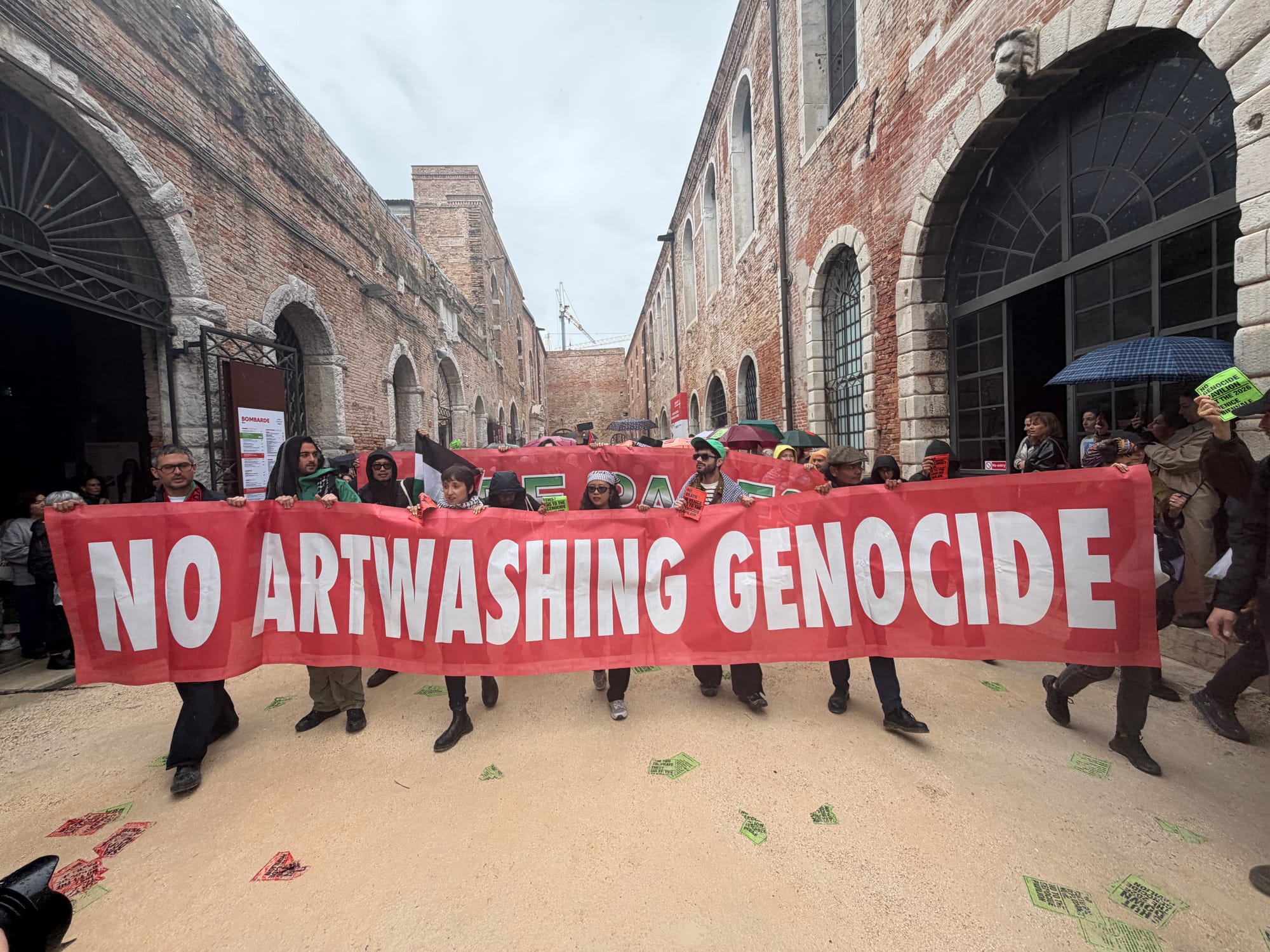
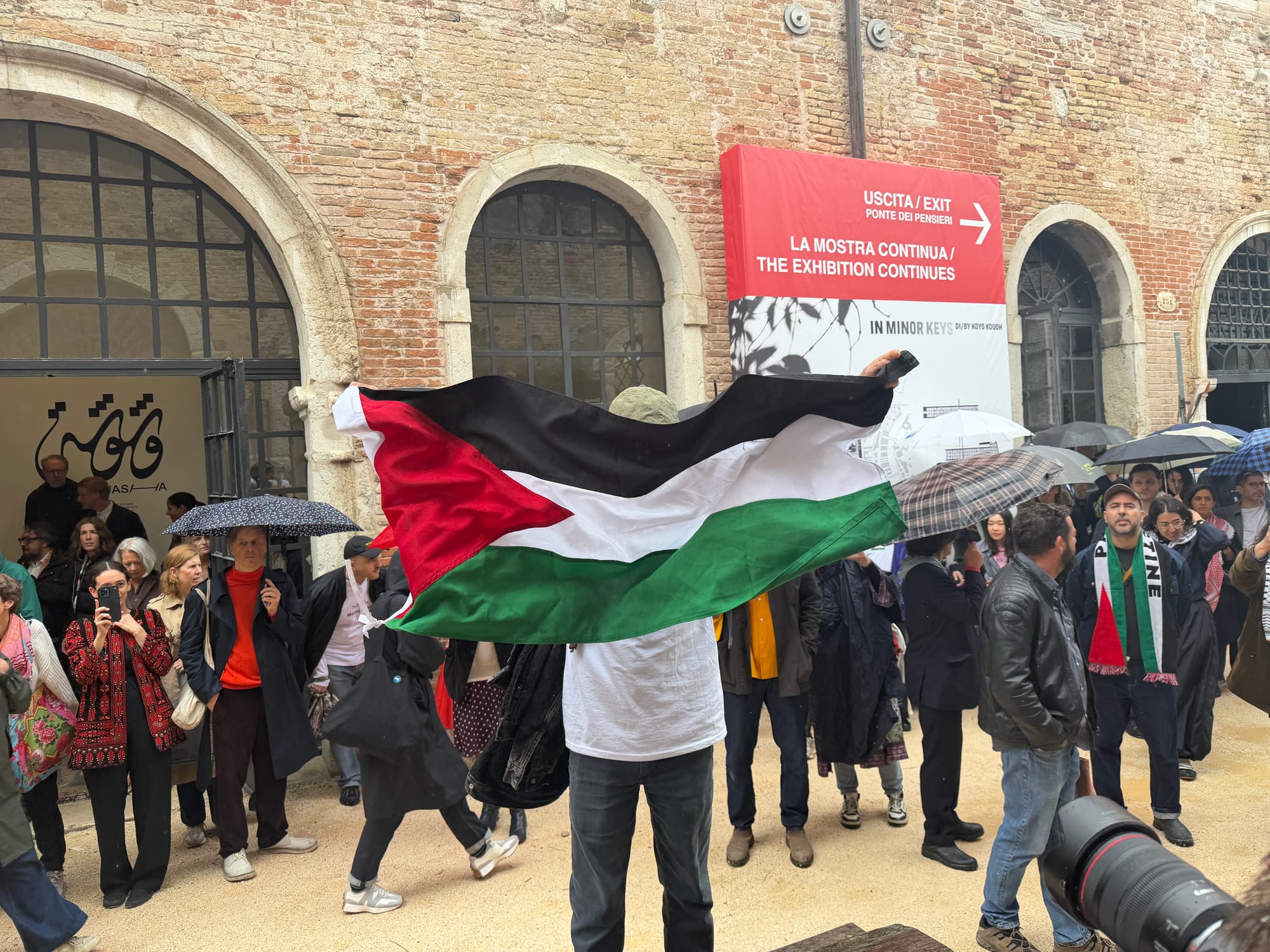
And for about half an hour until 1pm, that’s exactly what happened. The international group of protesters, led by Art Not Genocide Alliance (ANGA), blocked the entrance to Belu-Simion Fainaru’s exhibition Rose of Nothingness while waving Palestine flags and banners that read “No Artwashing Genocide” and “No Genocide Pavilion at Biennale.”
“Israel, you can’t hide. We charge you with genocide,” they chanted while flinging flyers into the air and handing out mock Biennale booklets titled, “A Guide to Complicity and Protest.”
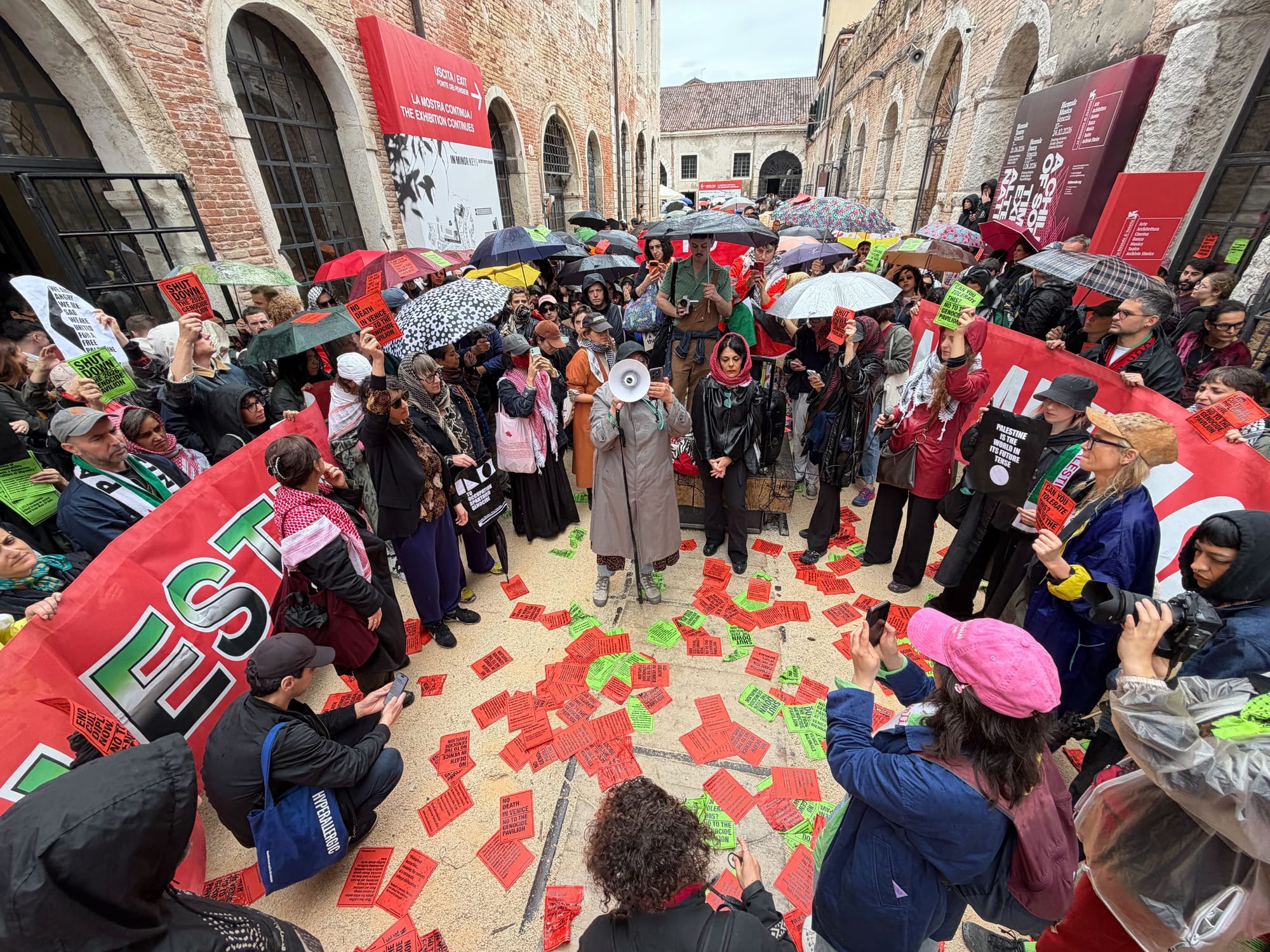
More than 200 artists, including some participating in this Biennale, have signed a letter urging leadership to exclude Israel from the 2026 international exhibition.
That did not happen. Instead, the biennale afforded Israel an alternative location in the Arsenale while its official pavilion in Giardini is undergoing renovation. The Biennale award jury resigned en masse last week, likely due to political backlash to its decision to disqualify Israel and Russia, two countries charged with crimes against humanity, from any of the awards.
“The Venice Biennale is complicit in genocide,” said one of the speakers at the protest, calling the exhibition an “empty fantasy of inclusion and tolerance.”
Earlier today, the art collective Pussy Riot joined feminist activists from the Ukrainian group FEMEN in a rally outside the Russian pavilion. Unlike Israel, Russia will present its national exhibition only during preview days, shuttering the pavilion to the public for the rest of the show in compliance with sanctions.
“It’s an artist’s duty, to be honest,” South African artist Nolan Oswald Dennis told Hyperallergic at the protest. “In this instance, we have to be honest about whom we’re sharing space with: a genocidal state.”
Dennis is one of the artists whose work is included in the international exhibition In Minor Keys, conceived by Cameroonian curator Koyo Kouoh, who died shortly after being selected for the role. Holding a megaphone, Dennis read Kouoh’s invitation to take part in the show.
“If you’re from South Africa, you know that Apartheid must be fought, but more importantly, Apartheid can end,” he told Hyperallergic.
The protesters continued to march through the Arsenale and dispersed peacefully. No arrests were made.
This Friday, May 8, cultural workers in Venice are planning a 24-hour strike in solidarity with Palestinians. The strike could disrupt the Biennale’s pre-opening schedule, potentially causing the temporary closure of some pavilions.
“This strike is a collective refusal of genocide normalization in culture and of the precarious labor conditions the Biennale is built on,” said one of the protest organizers. “Together, we can make the Biennale a place where the truth is told.”