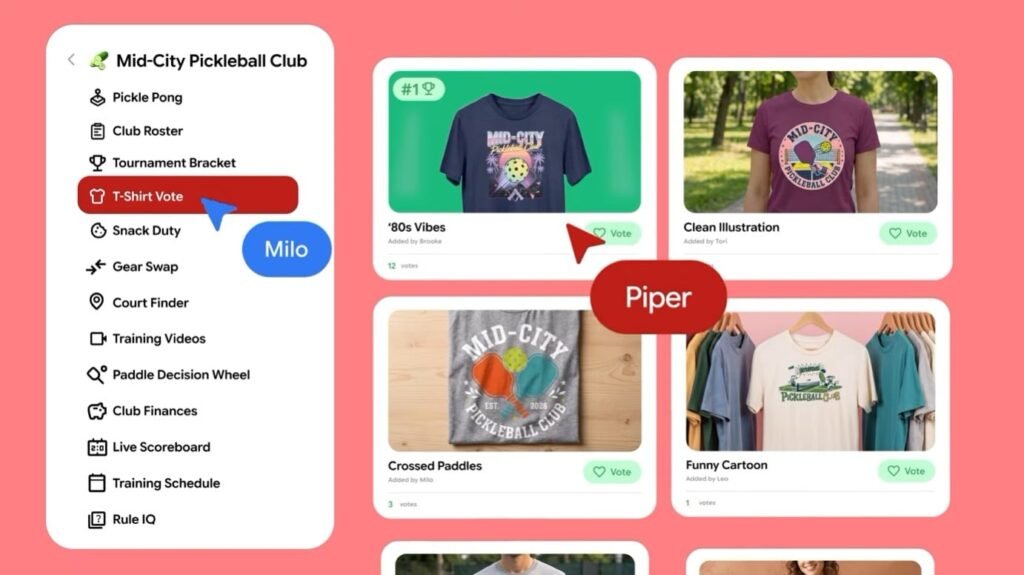

Planning a weekend road trip or splitting dinner bills in a busy group chat usually leaves important links buried under dozens of messages. Google wants to clean up that daily chaos with a new experimental tool called Tabletop. The AI-powered service lets friends and families generate custom interactive planning pages simply by typing what they need.
In a blog post, Google Labs design and engineering lead Roman Nurik explained that users start by dropping links, files, and rough notes into a shared hub. Tagging @tabletop in a prompt—or picking a starter template—builds interactive tools like trip itineraries, dinner polls, expense splitters, and sports tournament brackets. Sharing an invite link lets everyone open the page and edit those tools at the same time, much like collaborating inside a Google Doc.
Interactive spaces adapt as group plans shift
Unlike rigid workplace software such as Asana, these shared spaces change quickly whenever a group changes its mind. Anyone in the room can ask @tabletop to adjust rules, turn a weekly chore list into a points game, or make a party seating chart draggable without rebuilding anything. Google’s product demos even show a basic Pong game turning into Pickle Pong with a live scoreboard after a quick text request.
Google has not said which AI model runs the service behind the scenes, though recent Labs experiments relied on Gemini builds. The release also lands as tech rivals push deeper into group AI tools, following OpenAI bringing multi-user chats to ChatGPT last year. Rather than keeping everyone inside a single text thread, Google is betting that shared visual mini-apps make real-world coordination much easier.
Waitlist opens for adult users across the US
Currently, Tabletop is rolling out through a waitlist on the Google Labs website for users aged 18 and older in the United States. Google plans to admit new testers every week, though the company has not shared details about international availability or future pricing. As several product demos focus on family schedules and school pickups, that age limit will likely relax if the tool leaves testing.
Google Labs experiments do not always survive long-term, yet popular tests regularly grow into major products like NotebookLM, which rebranded as Gemini Notebook earlier this year. Letting everyday people build custom mini-apps without touching code removes a lot of friction from group planning. If Tabletop works as smoothly as its demos suggest, messy vacation spreadsheets might finally get a break.

The post Google’s Tabletop AI Builds Custom Planning Tools to Ditch Clunky Spreadsheets appeared first on Android Headlines.