
During Google I/O 2026, Android boss Sameer Samat spoke about the upcoming Android XR smart glasses and its contrast to Google Glass, noting that the failure of the latter had a lot to do with its lack of fashionable design. Now knowing that, you can probably see how that makes sense. Google Glass was not a fashionable piece of tech, no matter how Google and the Google Glass loyalists will try to spin that it was. There’s a reason the term “glasshole” exists, and that’s part of it.
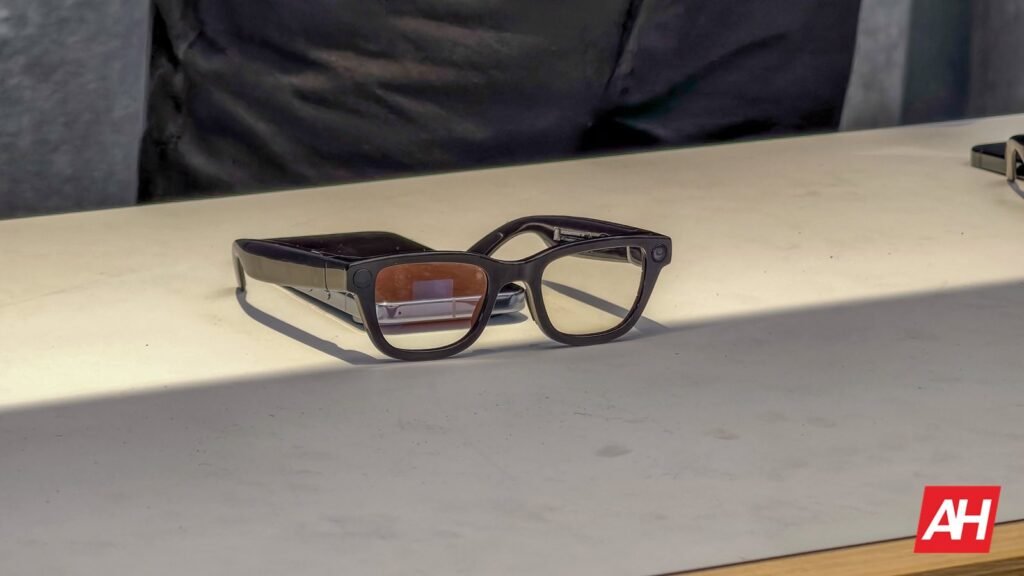
Contrasted with Google’s newly revealed Android XR glasses that are made in partnership with Samsung and utilizing frames made by Warby Parker and Gentle Monster, Google Glass took a very different approach. Of course, there’s something to be said for Google’s early entry into a market that is now starting to bloom. You can sort of think of Google as pioneers in this regard. At the end of the day though, people weren’t willing wear something on their face that would potentially make them look stupid.
Google discusses what it learned from the failure of Google Glass
While Google Glass didn’t catch on it certainly wasn’t a complete waste of Google’s time. Rather, there were lessons there to be learned and Samat recently discussed thinking back on those lessons. One such lesson that he emphasizes is that fashion outweighs technological appeal. Sure, the smart glasses of today a more technologically advanced than Google Glass was. However, Google Glass was pretty technologically advanced for its time. It just didn’t look good. Especially not compared to today’s options.
This makes the whole “not fashionable enough” statement make a lot more sense. Because now, Google is working with actual eyewear brands to design the frames for these new smart glasses. They actually look nice, and like something people want to wear. Meta has proved this with the Meta Ray-Ban glasses. You’ve likely seen the adoption of these grow in scale and have probably seen them on the street more times than you count and probably just didn’t notice.
Fashion, or in this case lack thereof, wasn’t the only reason Glass didn’t catch on. There was a rapidly growing stigma surrounding Google Glass that it was an invasion of privacy. Those concerns are still around for today’s smart glasses, but they seem to be less so. Google Glass was also $1,500 (a ridiculous price). Compare that to something like the glasses coming from Samsung and Google, which are rumored to be around $349-$499, and you can start to understand even more why Google Glass just didn’t excite people the way Google hoped.
The post Google Glass failed because it “wasn’t fashionable enough” appeared first on Android Headlines.