This article is part of Hyperallergic’s 2026 Pride Month series, featuring interviews with queer and trans elder artists throughout June.
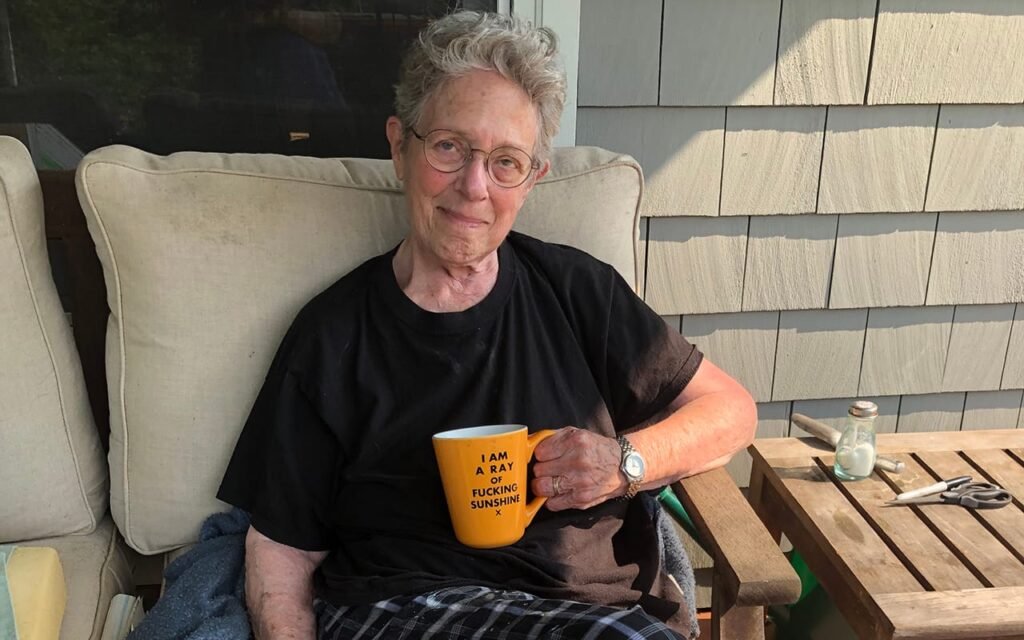
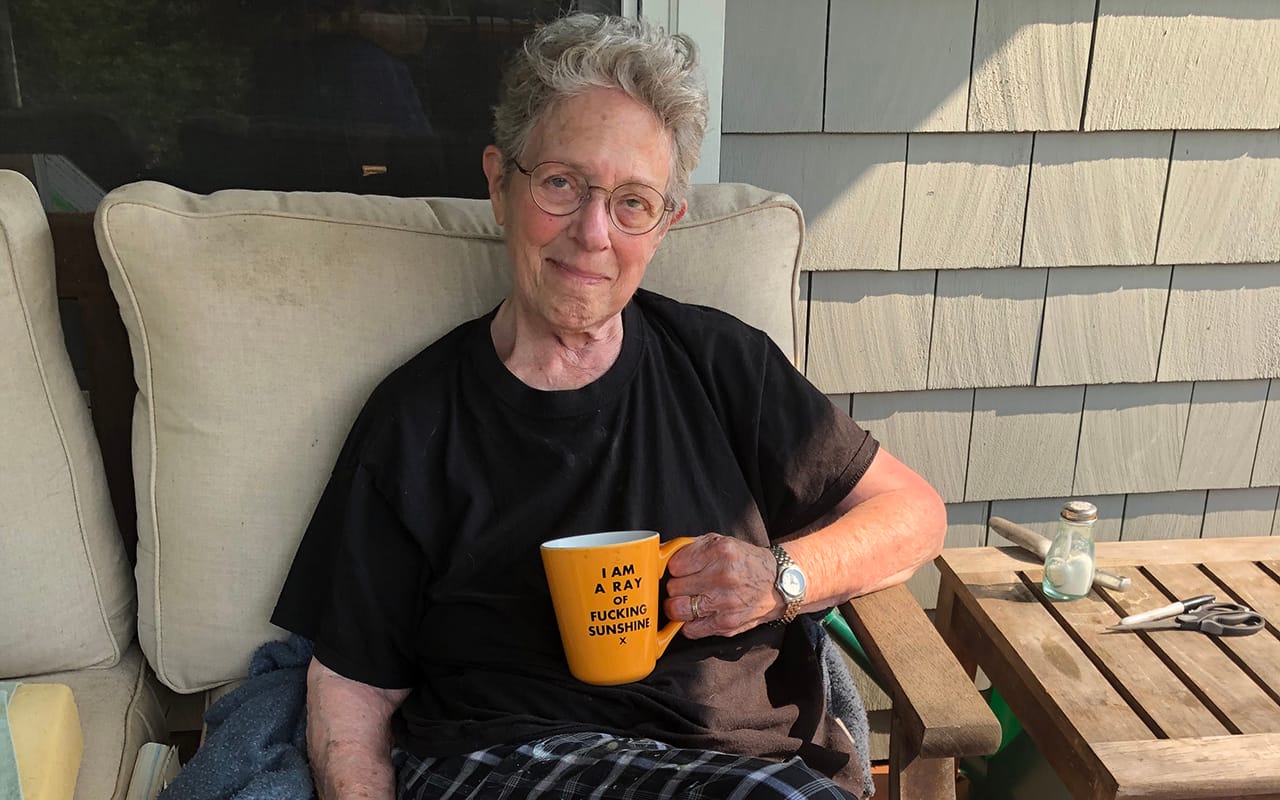
Artist Brenda Goodman was born in Detroit, Michigan, in 1943. She lived in New York City from 1976 to 2009 and now lives and works in Pine Hill, NY, in the Catskill Mountains. She has had about 50 solo exhibitions of her work since 1973, most recently at Sikkema Malloy Jenkins. This fall, her work will be featured in three New York exhibitions. In September, she’ll be in group shows at Marc Straus Gallery and the Studio School. In October, she’ll show her collages in a solo exhibition at JJ Murphy Gallery.
Painter Angela Dufresne and I first saw Goodman’s show of self-portraits at Sikkema Jenkins in early 2022. That summer, we introduced ourselves and started spending time with Brenda and her partner, Linda Dunne.
Over her long career, Brenda has made paintings that could be called “abstract” and others that could be called “figurative.” She has mixed oil paint with things like pumice, sawdust, sand, and ash. She has cut incisions into the smooth surface of her works on panel and filled the thin grooves with paint. She has used translucent washes over color pencil. Her curiosity and openness come through both in her choice of materials and her fiercely honest approach to her subjects.
Brenda and I are about 30 years apart in age, so I had some curiosity about her experiences as a young woman growing up in Detroit in the 1950s and ’60s, as well as getting caught up on what she’s been working on most recently.
We sat together in her large studio, recording an almost two-hour conversation. This version has been shortened and edited for clarity.
Hyperallergic: You know, I could be considered a queer elder, too, for someone who was, like…
Brenda Goodman: Twelve.
H: Ha! So, do you feel like being queer has either hampered or helped your work or your “career”? Has it helped you take risks, or have you felt limited by the label?
BG: None of that. Zero. I once, early on, changed my signature from Brenda Goodman to B. Goodman, because I didn’t want people to think of me as a male or a female. I wanted the work to speak for itself. But that was something that didn’t have to do with being queer. I didn’t even know that I was gay until the beginning of art school, in the early sixties. My story is that my life has been my work.
When I was a junior or senior in high school, I took evening classes at the Detroit Society of Arts and Crafts. I applied for a scholarship and got one for four years. When I started art school, I was just totally focused on being an artist. You’d see me and say, oh, she’s a cute little butch dyke. But I wasn’t associating myself that way then. I just thought that’s how you dress when you’re an artist. You wear a white T-shirt, a blue work shirt, Levi’s and a key ring with lots of keys on it. The serious artists were all men and that’s how they dressed. I was also a serious artist.
My mother would spend two hours putting her makeup on every morning. She was really into her looks and her makeup and tried to make me be more feminine. She would give me a lacy thing or a pair of red leather gloves, which I totally rebelled against. She made me wear dresses sometimes to art school and I hated that! I remember taking a plaid dress, tearing it up and using it as paint rags.
H: When I was growing up, there were no gay people that I can remember in my personal social realm. My parents didn’t have any friends who were out or identifiably queer in some way. As a kid, I was certainly aware of characters in fiction and also pop stars who were outside of the norm, like Scout in “To Kill a Mockingbird” and “freaks” like Michael Jackson and David Bowie. Did you know any gay people when you were a kid?
BG: No, I didn’t either. What I dealt with from day one was that I came from a really unhappy childhood. I was a sad, lonely, miserable little girl. My mother was not affectionate or warm. We yelled and screamed, it seems like all the time. That’s how we communicated. My father was invisible. He worked 24-hours a day because she wanted material things in her life. He had no eye contact with people. I don’t think he ever got past being 15, emotionally, and when she divorced him, he just fell apart. Everything was about my mother. She was extremely demanding. After my mother died in 1972, my brother said he found big bottles of pills in the basement. She was always on diet pills, which makes you very erratic. I never really knew what to expect.
I fell in love with my sixth-grade teacher, Betty Bowman. She was warm, sweet, and affectionate. She cared about me — and I felt all the things I didn’t feel with my mother. Over the years, Betty came to some of my openings and she fulfilled so much of what I didn’t get from my family.
In art school, I started to feel some attraction to other female students, which scared me a little. I didn’t understand my feelings and it made me very depressed. Eventually, I developed a relationship with another artist and we lived together for eight years.
H: What was your mother’s reaction when you told her you were attracted to women?
BG: There were two things my mother was nice about. She was accepting. She never gave me a hard time about being gay, and she wanted a piece of art for every single occasion that existed. Memorial Day, Veterans Day, Flag Day, birthdays, you name it. She had 90 pieces of mine when she died. She was very supportive of me being an artist.
H: Did you ever date a man?
BG: No. There were a few attempts, like when Janet, a friend in night school, was going to spend the night with her boyfriend, Elliot. He had a heavyset best friend. Janet asked if I wanted to come along — sort of a double date, but I had a feeling it was going to be something more. They went off into a room, and I was left with this big, not-attractive guy. He was ready to do it. But I’m wearing a girdle —my mother made me wear a girdle, and they’re hard to get on or off.
H: Right. I know there’s, like… belts and things with buckles involved.
BG: No! It’s elastic. You don’t know what a girdle is? Oh my god.
Google it. It looks like elastic underpants. My mother used to wear them all the time. Anyway, he was ready to do it, and I said, NO WAY. I’m not going to do this. I was terrified of getting pregnant, so the girdle was a good thing that night.
H: What was Detroit like in the 1960s-70s when you were in art school and afterwards? And was anyone buying your paintings during that time?
BG: Detroit was a tough town to live in. I lived right near the Detroit riots in 1967. From about 1970 to 1976, I got a lot of recognition and sales. Gertrude Kasle showed only well-known New York artists, but she also showed me. In one show, my painting was hanging between a Guston and a Tworkov.
In the early 1970s, I was part of the Cass Corridor, where many artists had studios. They were almost all men.
After my first show in 1973 at the Willis Gallery, I got involved with a well-known poet, Faye Kicknosway, and I made a big drawing, “Things I Love About You.” It was from my heart and one of the guys made fun of it. They were all using barbed wire and industrial Detroit stuff.
I didn’t get upset about it. Around that time, I was doing symbols because I wanted to create a more personal voice for myself. Faye was teaching creative writing at Wayne State, and I started creating symbols for everybody in my life. Me, my mother, my friends, people whom I liked and whom I hated. If I hated you, I would put your symbol in a mason jar. I did those symbols for 11 years. They were a visual diary of my life.
That’s how I dealt with my feelings. The guys were doing what they were doing, but I was on my own journey. I wanted to know more about myself. There were things I liked about myself and things I hated about myself. And by doing these drawings and also being in therapy for a long time, I learned a lot.
It was a way to process everything. That’s why my work has the kind of strength that it does — because I went inside and then put it out there in my paintings. There are no walls between me and my work.
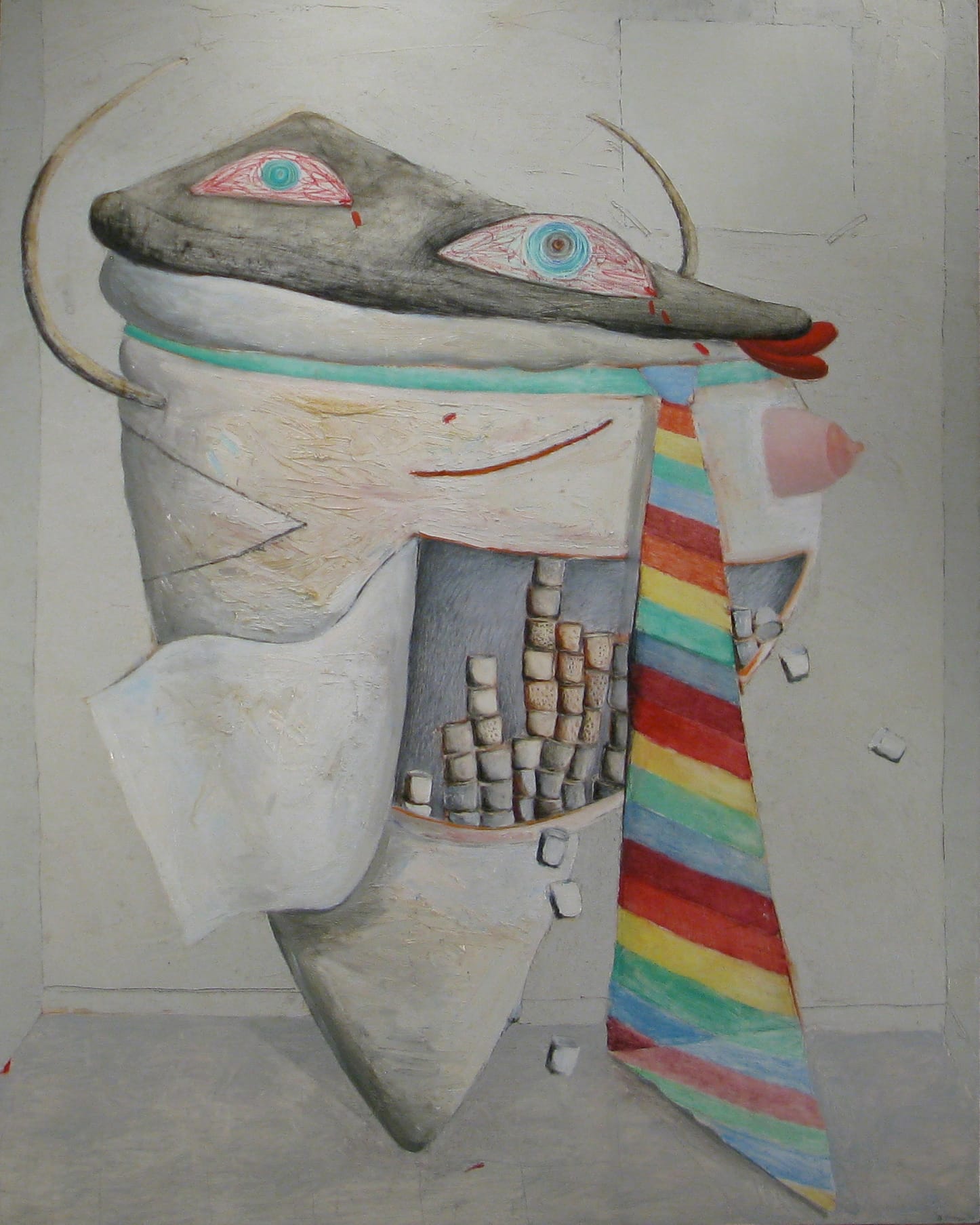
H: What were the things you hated about yourself?
BG: Well, when I did that first self-portrait in 1974, I felt like I had a very tough exterior. I can still put on a Detroit face when something threatens me, but by that time, I wanted to feel my softer feelings. So I did that self-portrait painting with the big rainbow tie and the marshmallows coming out of the belly — and that was my way of starting to break down some of those defenses.
I’ve struggled with my weight over the years, and in the early 90s, I hated myself when I was 180 pounds. But I also loved painting that. I felt like Rubens — all those beautiful flesh folds. I painted myself nude in all of those paintings in my studio. In real life, I never painted nude in the studio ever, not once.
H: What brought you to New York City?
BG: I was friends with the painter, Bobbie Oliver. She was my only friend in New York. I would take trips on occasion and stay with her. At some point, she was ready to move on and her place at 94 Bowery was available. I had exhausted the places to show in Detroit.
I knew I couldn’t move while my mother was alive. I had never lived anywhere else. I went from Detroit to the Bowery. I always wanted to live in New York. That loft, which I was very familiar with because it was the only place I stayed when I would visit, was my home. But the first night there by myself, I just cried and cried.
I mean, all of my emotional life was in Detroit, and there I was.
H: How did you sustain yourself during those early years in New York City— both emotionally and financially?
BG: I would go to Bonnie’s, a gay restaurant. I’d go there practically every night and write in my journal and have my dinner. I wouldn’t go to the bar and chat with anyone or make conversation. I wanted to meet other gay people, but I didn’t know how to do it. I’m not a chatterer. I would do a little better now, I think. I can strike up a conversation.
I taught classes in my loft for a few years. I had collectors in Detroit who continued to buy my work. I had my first New York show in 1980 with Pam Adler Gallery. I became friends with Marcia Tucker and met many artists through her. I joined a spiritual community in upstate New York, which became an important part of my inner search.
The move was very hard at first, but then I had many friends. You could always find me at Food on Prince Street, drawing away.
I met Linda in 1987, on a bus going to a gay rights march in DC. When it seemed like it was going to be a serious relationship, that changed so much in my life. She was a total support system: financially, when I needed it, and emotionally, and for everything that I didn’t have. It’s going to be 39 years in October. We’ve made it work pretty wonderfully.
H: What are you making in the studio these days?
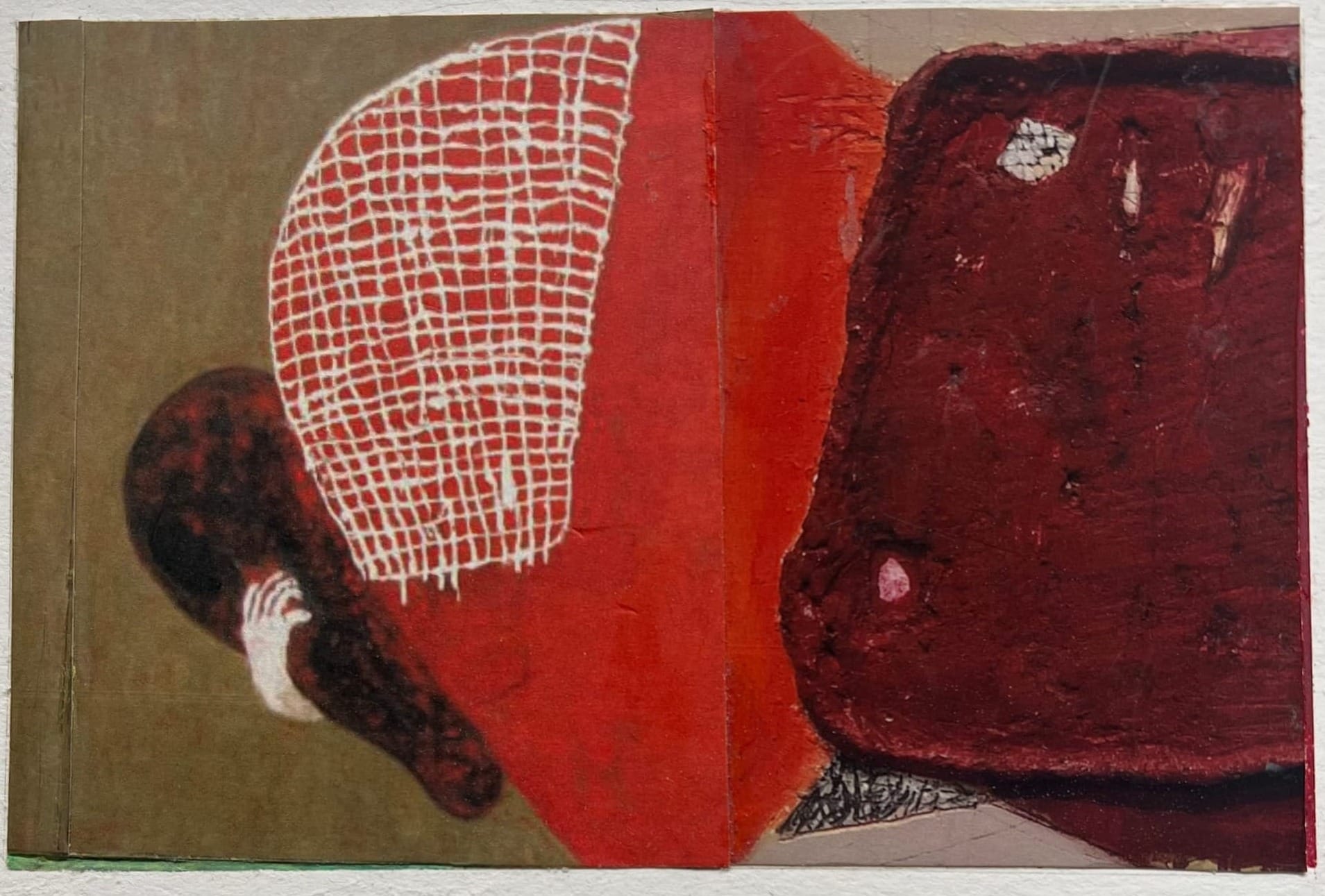
BG: What I’m doing now are these little collages with pencil, watercolor and images from my other paintings that I shrunk in Photoshop and made prints of. There’s about 26 of them.
I take risks with my work. I don’t sit still and do the same thing over and over again. I have so many series in my 60years of painting, and I just paint what I feel I need to.
My work has expanded beyond myself and my personal issues. I had tunnel vision for so long. In the 60s, I didn’t even know what the Beatles or Motown were. I knew nothing about politics. I just painted. So my life and my work have become more expansive — I have plenty to say about politics now.
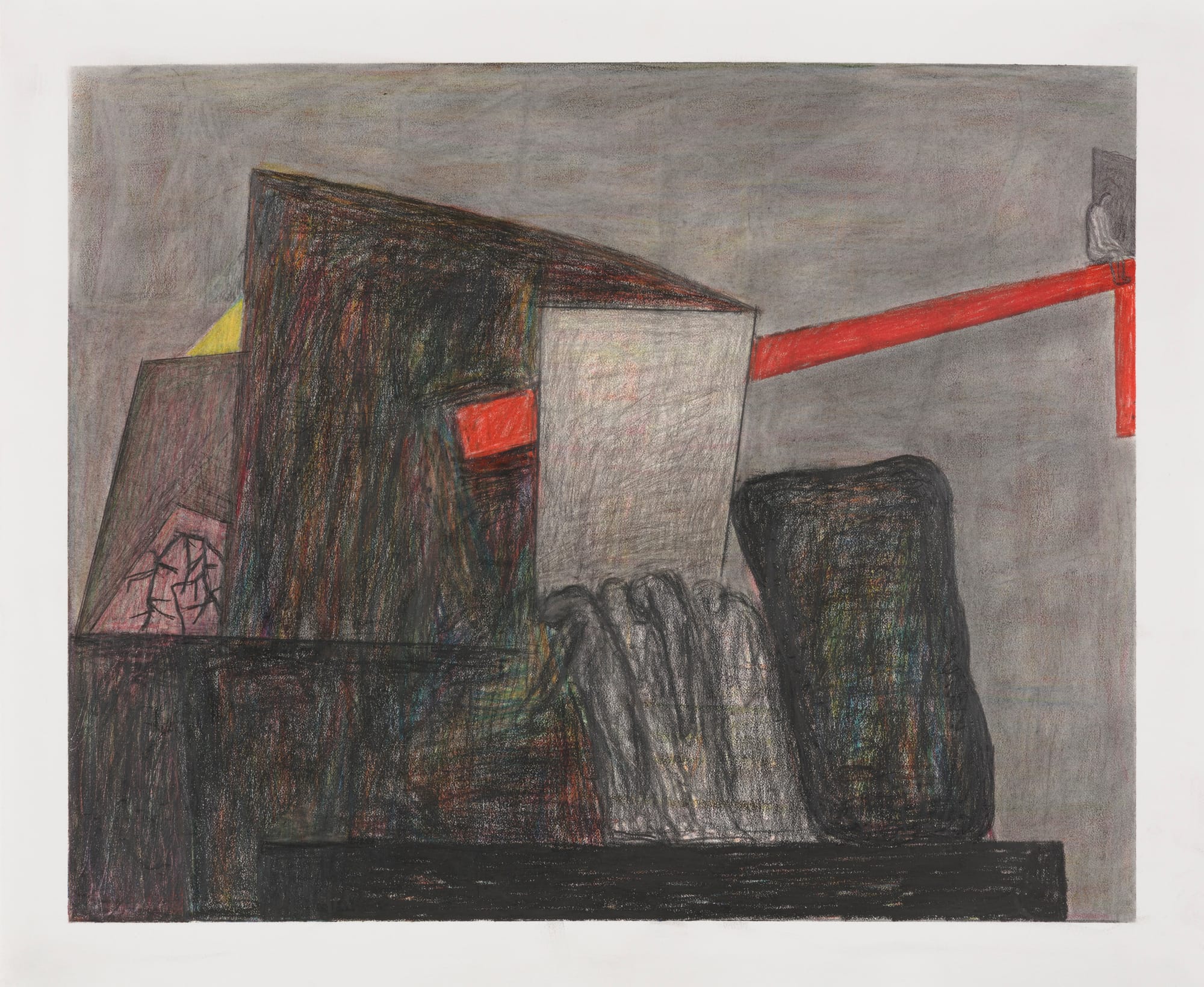
H: I wanted to talk to you about the drawings you made a few years ago, which I find especially haunting. John Yau wrote about them in Hyperallergic in November 2024 after he visited your studio. How did you come to make them?
BG: Gaza was on the news constantly. There was a picture of an elderly woman standing on top of rubble, which had been her home. I couldn’t get that picture out of my mind. I’d just had my second knee surgery, so I couldn’t move around very well and was making drawings at the dining table. The drawings weren’t all abstract or all figurative, but by being a combination, they conveyed a somber, tragic feeling.
When John Yau came by for a studio visit, I didn’t say to him: These are my Gaza drawings. And I think I did that deliberately because I didn’t want to pinpoint it like that.
A curator/artist in London wants to use them in a book called “Drawing the Unspeakable.” She organized a big museum show in the UK of drawings working through grief and pain and other things that can’t be expressed in words.
It’s really hard not to think of my mortality as I’m approaching 83. That’s on my mind a lot. Even when I was doing the self-portraits, mortality was one of the things I was thinking about. But things change as you get older. Your body is breaking down and that’s the thing that really brings it home. It’s not a theoretical idea anymore and it has an effect on your work. But I still love painting and though I’ve slowed down some, I’m still experimenting and taking risks and painting my heart out. If I die with a paintbrush in my hand, I’ll be happy.