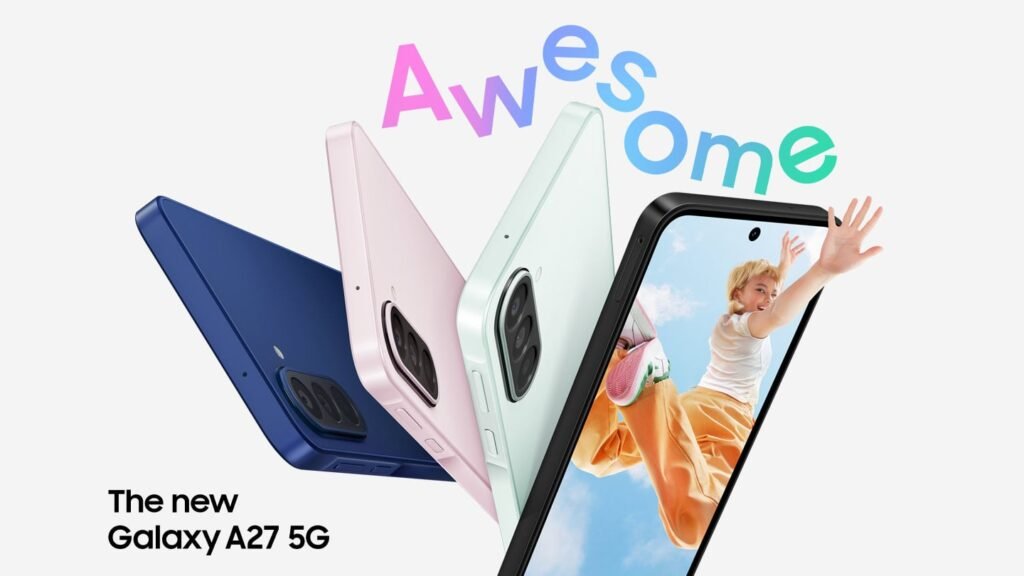

Tech fans love finding hidden gems in official documentation. So, when a product listing briefly hints at premium features coming to budget-friendly hardware, the internet immediately takes notice. Unfortunately, the arrival of the Galaxy A27 generation has officially crushed any lingering hopes of seeing Samsung DeX—the company’s mobile desktop environment—make its way down to affordable smartphones.
The brief wave of excitement started because of a surprising corporate mix-up. Less than two weeks before unveiling its newest mid-range devices, Samsung prematurely published the product page for the new Galaxy A27 on its official Czech website. Sharp-eyed users noticed that the spec sheet explicitly listed support for Samsung DeX. For a moment, it looked like the tech giant was finally ready to break its long-standing tradition of keeping its best productivity software locked behind premium price tags.
An early exit for mobile desktop hopes
Sadly, the dream ended before it could even begin. When the hardware finally stepped into the spotlight, Samsung made absolutely no mention of desktop features. The early listing on the European site turned out to be nothing more than a simple copy-paste clerical error, as SamMobile highlights. The Galaxy A27 has officially landed, and it completely lacks the internal plumbing required to run a desktop screen setup.

This outcome isn’t entirely surprising. After all, bringing heavy multitasking software to cheaper components is a big engineering hurdle. Running a secondary desktop interface while simultaneously managing a phone’s core operations demands serious processing power and efficient thermal management. Budget chips and limited RAM allocations on affordable devices simply aren’t built to handle that kind of intense physical strain without slowing to a crawl.
Keeping productivity behind a premium wall
Still, it is hard not to feel a little disappointed by the reality check. DeX remains one of the most underrated tools in the entire Android ecosystem. It allows users to transform their mobile device into a functional workstation, complete with overlapping windows, a traditional taskbar, and full keyboard integration. All you need to do is connect it to an external display—even wirelessly.
Expanding this ecosystem to mid-range devices would be a big win for students and some professionals looking to replace a bulky laptop with a single, wallet-friendly device. For now, however, Samsung is keeping a strict boundary between its product tiers. If you want a mobile phone that doubles as a pocket-sized desktop computer, you are still going to have to pay for top-tier flagships.
The post Galaxy A27 Launch Crushes Hopes for Samsung DeX on Budget Phones appeared first on Android Headlines.