
The Fitbit Air is finally official, and here to challenge Whoop. For years, Whoop has been gaining traction for being a screenless fitness tracker that you never have to take off. It’s more of a subscription fitness tracker, which costs $199 pear year. Now, the Fitbit Air is here to challenge it.
I’ve been wearing the Whoop 4.0 and now Whoop 5.0 for almost three years, so let’s compare it with the new Fitbit Air and see which one is the right choice.

Fitbit Air
Fitbit Air is available for $99, with no subscription required.

Whoop 5.0
Whoop 5.0 is more geared towards Athletes, and does have a subscription required and included in its price.
Hardware and Design
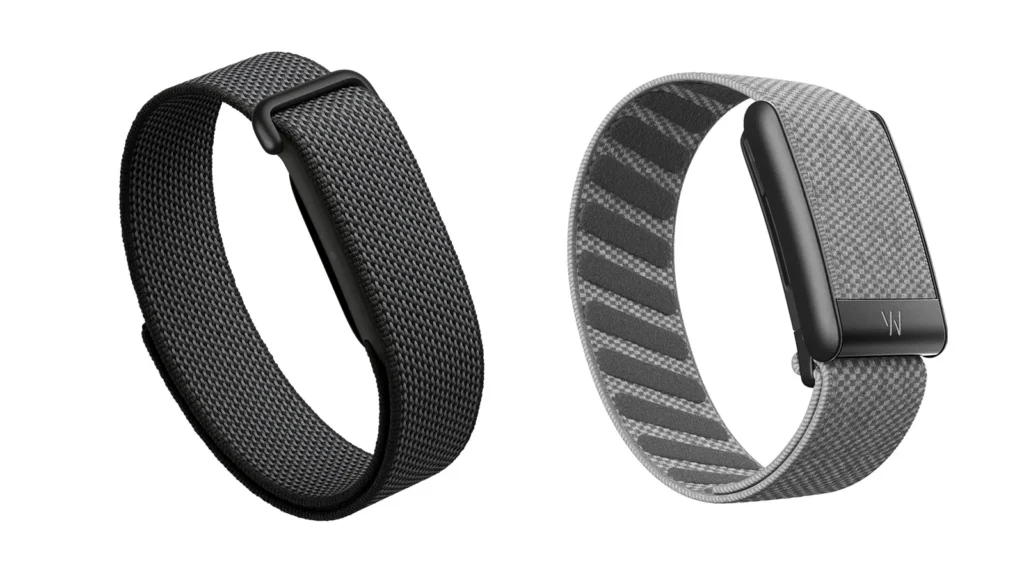
Both the Whoop 5.0 and the Fitbit Air ditch the display and are essentially just a small tracker in a band. You wear them on your wrist, though Whoop does have a few options for wearing it on your bicep, calf, or in your clothes, if you don’t want to wear it on your wrist. Fitbit doesn’t have that option just yet, but that may change.
The Fitbit Air is the smallest tracker that Fitbit has ever made, and it just slots into the band to record your fitness and vitals 24/7. Whoop does the same thing, but it has a bit more band options right now. This is also likely going to change in the coming months, as the Fitbit Air has literally just launched. Fitbit does have the advantage of band cost, though, as their bands start as low as $34.99, versus the Whoop 5.0 bands costing $49.99 or more. Of course, both do and will have third-party bands available on Amazon for much cheaper. But beware, at least with Whoop 5.0, that those cheaper bands do not connect as well as they should.


Then there’s battery life. Whoop clearly wins this area, as the Whoop 5.0 is rated for 14 days. Though, as something that’s had the Whoop 5.0 since launch, I typically can get more than two full weeks on a single charge. And when I do need to charge, just slide the charger pack onto your Whoop 5.0 and let it charge. It’s really a great way to charge and not miss out on any precious steps. Meanwhile, the Fitbit Air is going to get you 7 days of battery life, and you do need to take it off to charge. It charges on the underside of the band, kind of like the Apple Mouse does.
Winner: Whoop
Sensors and Tracking
As you’d expect, both the Whoop 5.0 and Fitbit Air cover the basics. These include 24/7 heart rate, sleep stages, SpO2, HRV, and skin temperature. They also both offer AFib detection, with the Whoop MG (A more expensive version of the Whoop) also having a dedicated FDA-cleared ECG, while Fitbit Air has irregular rhythm notifications.
Whoop captures data 26 times per second, which is very impressive for raw sensor frequency. However, many have pointed out that Whoop’s wrist-based heart rate readings are inconsistent, especially during HIIT and high-intensity workouts. Keep in mind that this is typically the case, unless you’re wearing a chest strap, as it’s measuring much closer to your heart versus your wrist. Fitbit has historically been pretty solid with heart rate tracking, so we’ll have to try out the Air when we get a unit to check out.
Sleep accuracy on Fitbit devices has been pretty impressive, and Google continues to improve it. However, Whoop’s secret sauce is the Strain and Recovery scores. These are some of the best in the business for athletes who care about training load. Fitbit Air does have its own Cardio Load and Readiness scores, which are similar in concept but are less granular, typically.
It should go without saying, but a lot of these comparisons with Fitbit are with other Fitbit devices like the Sense, Ionic, and the Pixel Watch. We have not yet gotten our hands on the Fitbit Air, but the algorithms and data should be virtually identical.
Winner: Whoop
Software and AI Coaching
Here’s where things get interesting. Both of these work on both smartphone platforms – both Android and iOS. This is great news, compared to the Pixel Watch, which only works on Android. Both of these also work with Apple Health, so you can export your data to Apple Health as well as import your Apple Health data to Whoop or Fitbit. This is great for adding your weight from a Withings scale or another app like that.
Both of these devices do use AI for coaching, with Google using Gemini. This is integrated right into the new Google Health app, while Whoop has the Whoop Coach, which is powered by OpenAI.

Right now, Google’s Health Coach has the potential to be a bigger deal long-term, because it is using Gemini. So it can pull in your medical records, your Apple Health data, your other apps and devices as well. It’s trying to be more of a holistic health platform instead of just a fitness tracker. While Whoop is more focused. It’s built for athletes and longevity needs, not the everyday person just trying to lose some weight or stay in shape.
Winner: Fitbit Air
Pricing
This is where Fitbit Air absolutely crushes the Whoop 5.0, especially after the upgrade fiasco from Whoop 4.0.
Let’s start with Whoop. This is going to cost you $199/year for Whoop One or $239/year for Peak. There’s also a Life option that gets you the Whoop MG with ECG and blood pressure for $359/year. And if you stop paying, the device turns into a rock, it just stops working entirely. Now, the cost of the tracker is tied into that yearly fee, so you’re paying $199 for the year plus the Whoop 5.0. This was also supposed to include upgrades to newer hardware when it becomes available. But Whoop decided to renege on that when it introduced Whoop 5.0. So Whoop 4.0 users had to pay for the new Whoop 5.0. It wasn’t a full year of service, but it was still something they should not have had to pay for.
Then there’s the Fitbit Air. The actual tracker itself is $99, which is one of the cheaper trackers Fitbit has put out in quite some time. It also has a paid subscription for Google Health Premium, which is $9.99/month or $99/year, but that is not required to use the hardware. You can use Google Health without it; you’ll get fewer metrics as outlined in the graph below, but you can pay $99, and that’s it.

Let’s say you do sign up for Google Health Premium (Fitbit Air buyers get three months free, by the way). After three years, the subscription cost would be about $397, including the cost of the Fitbit Air. While the Whoop 5.0 would be $597 for One, or $1,077 for Whoop Life. That’s a pretty massive gap right there.
Winner: Fitbit Air
Fitbit Air
Fitbit Air is available for $99, with no subscription required.
Whoop 5.0
Whoop 5.0 is more geared towards Athletes, and does have a subscription required and included in its price.
Which one should you buy?
It’s pretty simple. And I say this as someone who has been wearing a Whoop for almost three years now, alongside a smartwatch; most people should wear the Fitbit Air.
The Whoop is geared more towards athletes, those who are staying in shape for their job and training at unreal levels almost every day. Whereas the Fitbit Air is more about everyday fitness, those of us who want to stay in shape, maybe lose a few pounds, and just look good. That and the redesigned Google Health app are definitely major winners over the Whoop app. And this isn’t even taking into account the pricing, which is a clear win for Fitbit.
The post Fitbit Air vs Whoop 5.0: Which screenless fitness tracker is actually worth your money? appeared first on Android Headlines.