Editors’ Highlights are summaries of recent papers by AGU’s journal editors.
Source: AGU Advances
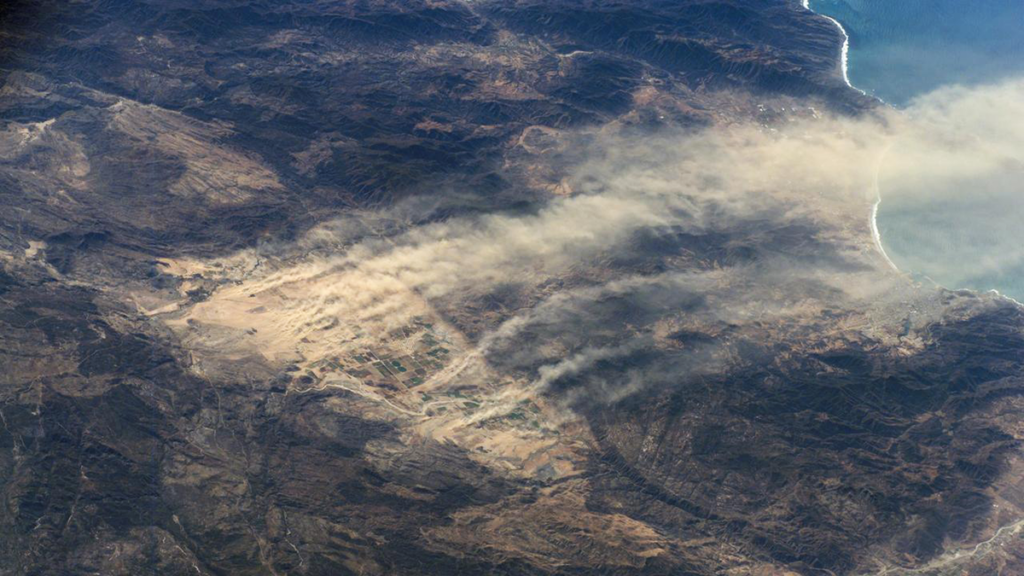
Both tropospheric ozone and mineral dust are air pollutants capable of being transported over long distances from their original sources. Despite coming from different sources, both pose significant threats to human health, interact with the Earth’s climate system, and can negatively impact agricultural productivity. While scientists know that mineral dust acts as a natural sink for the ozone, the mechanisms represented in current global models are insufficient to explain the observed ozone reductions in dust-influenced regions.
Meidan et al. [2026] apply a global chemistry-climate model with explicit representation of dust-induced release of halogens, specifically chlorine and iodine, in the marine atmosphere. The authors demonstrate that this dust-catalyzed chemistry leads to substantial ozone reductions over marine regions, successfully matching real-world observations of dust-induced ozone loss. The authors also find that this natural ozone reduction yields surprisingly positive impacts far from dust sources, boosting crop production in major agricultural belts and lowering ozone-related mortality in densely populated areas like South Asia.
As climate change is expected to expand desert regions and increase global dust emissions in the future, this natural ozone-destroying mechanism has the potential to significantly modulate future tropospheric ozone levels.
Citation: Meidan, D., Bossolasco, A., Cuevas, C. A., Villamayor, J., Fernandez, R. P., Li, Q., et al. (2026). Global ozone reduction driven by dust-catalyzed halogen chemistry. AGU Advances, 7, e2026AV002453. https://doi.org/10.1029/2026AV002453
—Vaishali Naik, Editor, AGU Advances

Text © 2026. The authors. CC BY-NC-ND 3.0
Except where otherwise noted, images are subject to copyright. Any reuse without express permission from the copyright owner is prohibited.