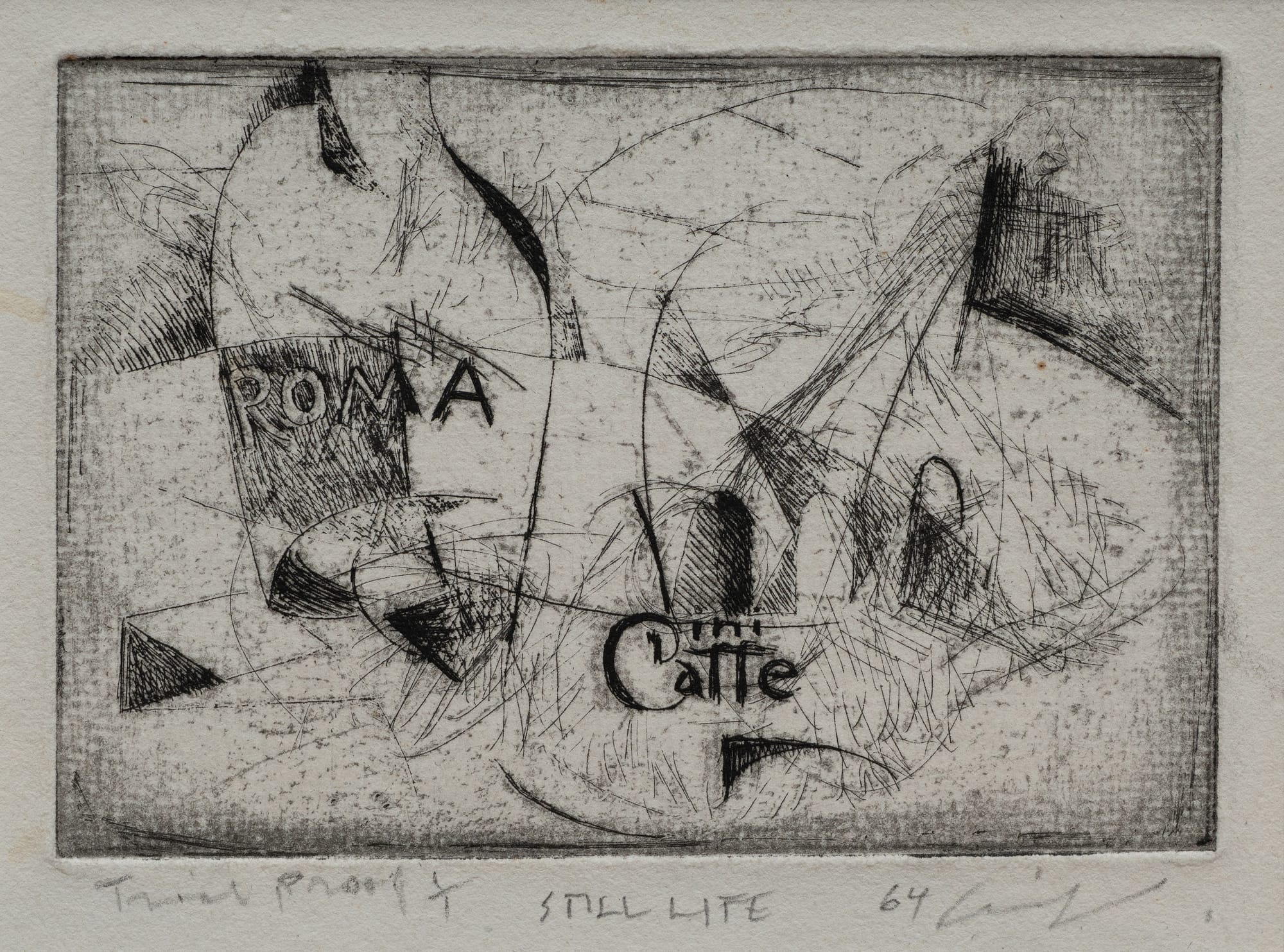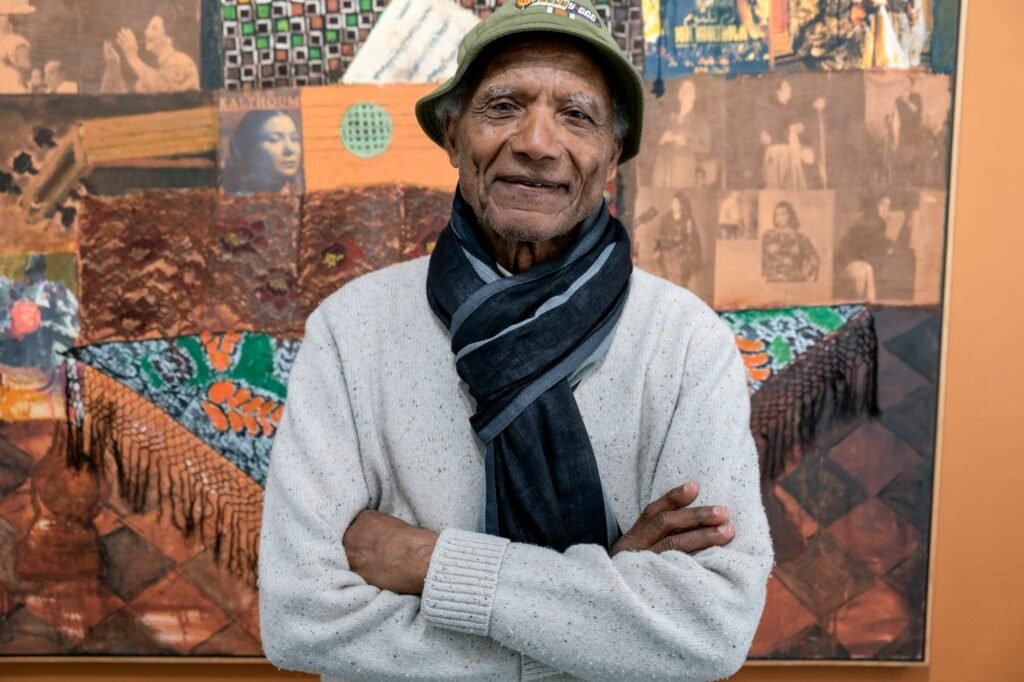
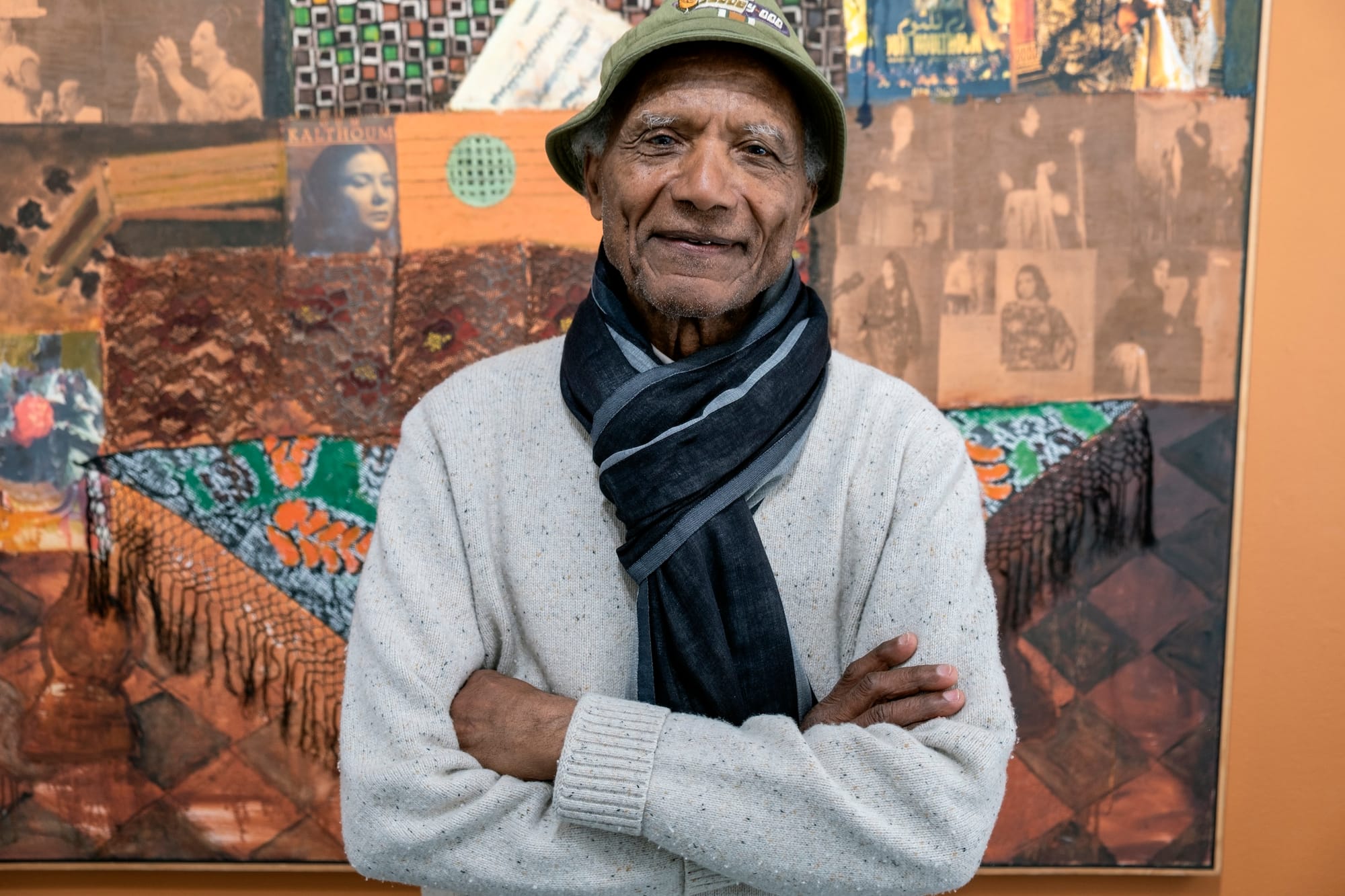
In 1964, Mohammad Omer Khalil made his first etching. He was initially dubious about its chemical process, hesitantly dipping his fingertip into the acid to test its safety. But this small print, cautiously rendered during his studies in Florence, Italy, marked the start of a decades-long trajectory toward becoming a master printmaker, working across continents. “Still life (Cafe Roma)” (1964) is now on view through May 31 at the Blackburn Study Center in Manhattan, the anchor site of Mohammad Omer Khalil: Common Ground, a multi-city retrospective celebrating the New York-based Sudanese artist in his 90th year.
The expansive program came together over several years under the supervision of curators Amina Ahmed and Jenna Hamed, collaborators and friends of Khalil. Throughout the spring, exhibitions, literary readings, screenings, and performances foregrounding Khalil’s oeuvre will open up at other venues across the country, including Twelve Gates Arts in Philadelphia, Pennsylvania; the Arab American National Museum in Dearborn, Michigan; the New York Public Library; and Anthology Film Archives.
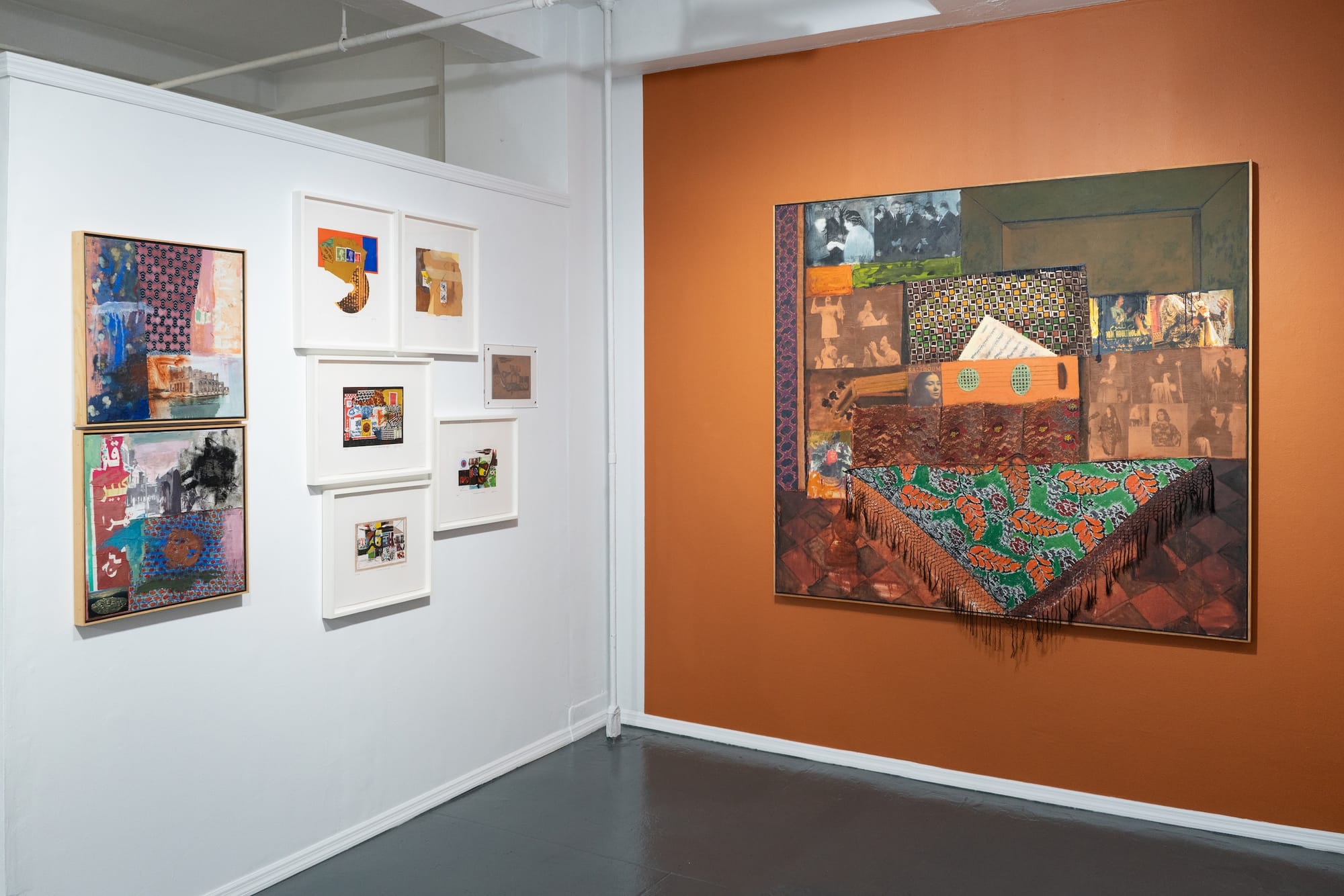
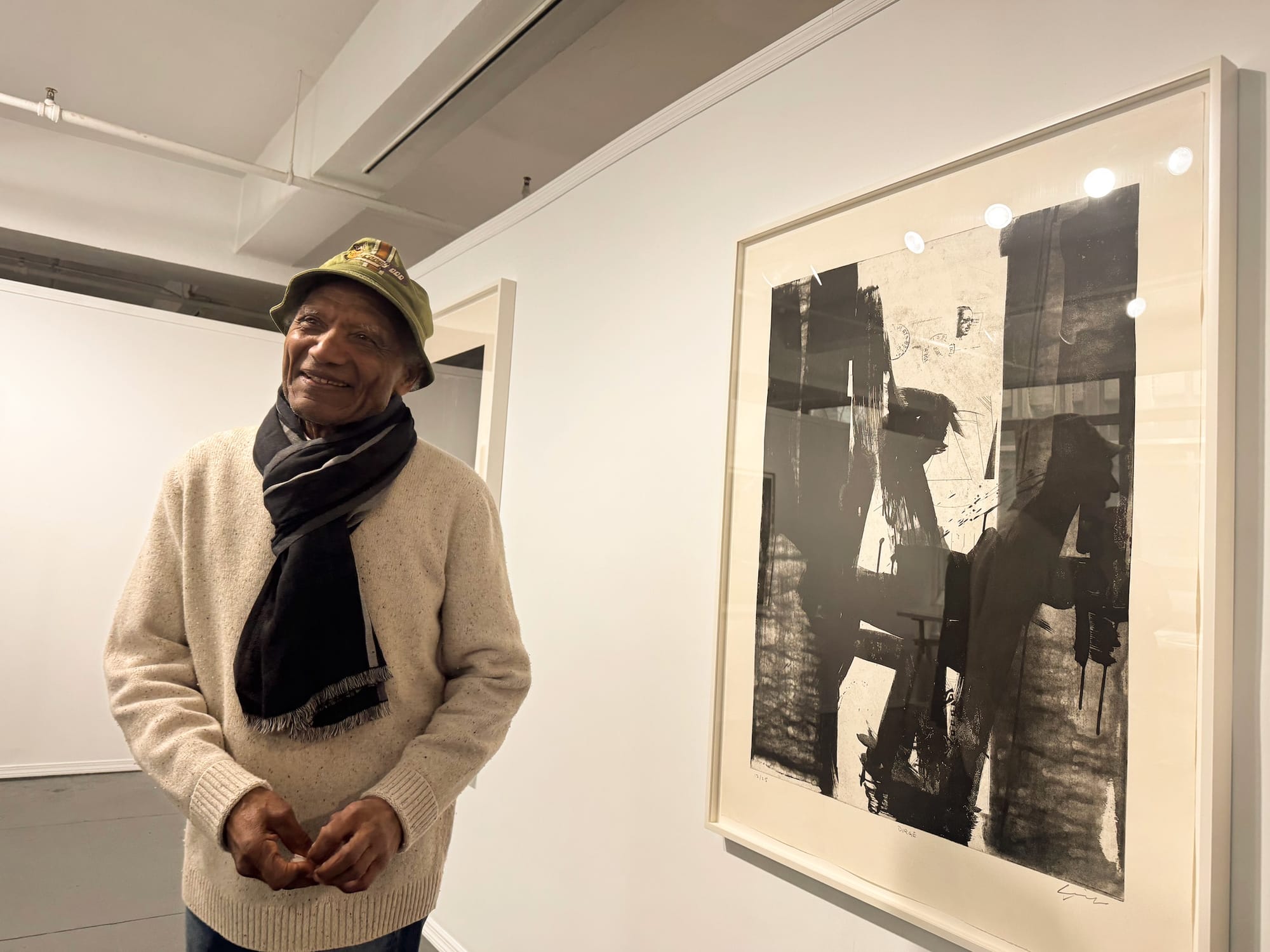
Hamed calls Common Ground a “marking of time” — a comprehensive look at the artist as he celebrates several milestones, such as becoming a nonagenarian and reaching 60 years in New York City. The show spans Khalil’s entire artistic life, from those early prints to massive etchings (their scale a rarity for the medium). A great deal of his works are ekphrastic, made in response to music, poetry, landscapes, and films, moving through the emotions that boil over when one experiences a beautiful thing. Some of his etchings after Bob Dylan songs, like “It Ain’t Me Babe” (1987), were made in the wake of a difficult separation, when he says he began to truly understand the music and its meaning.
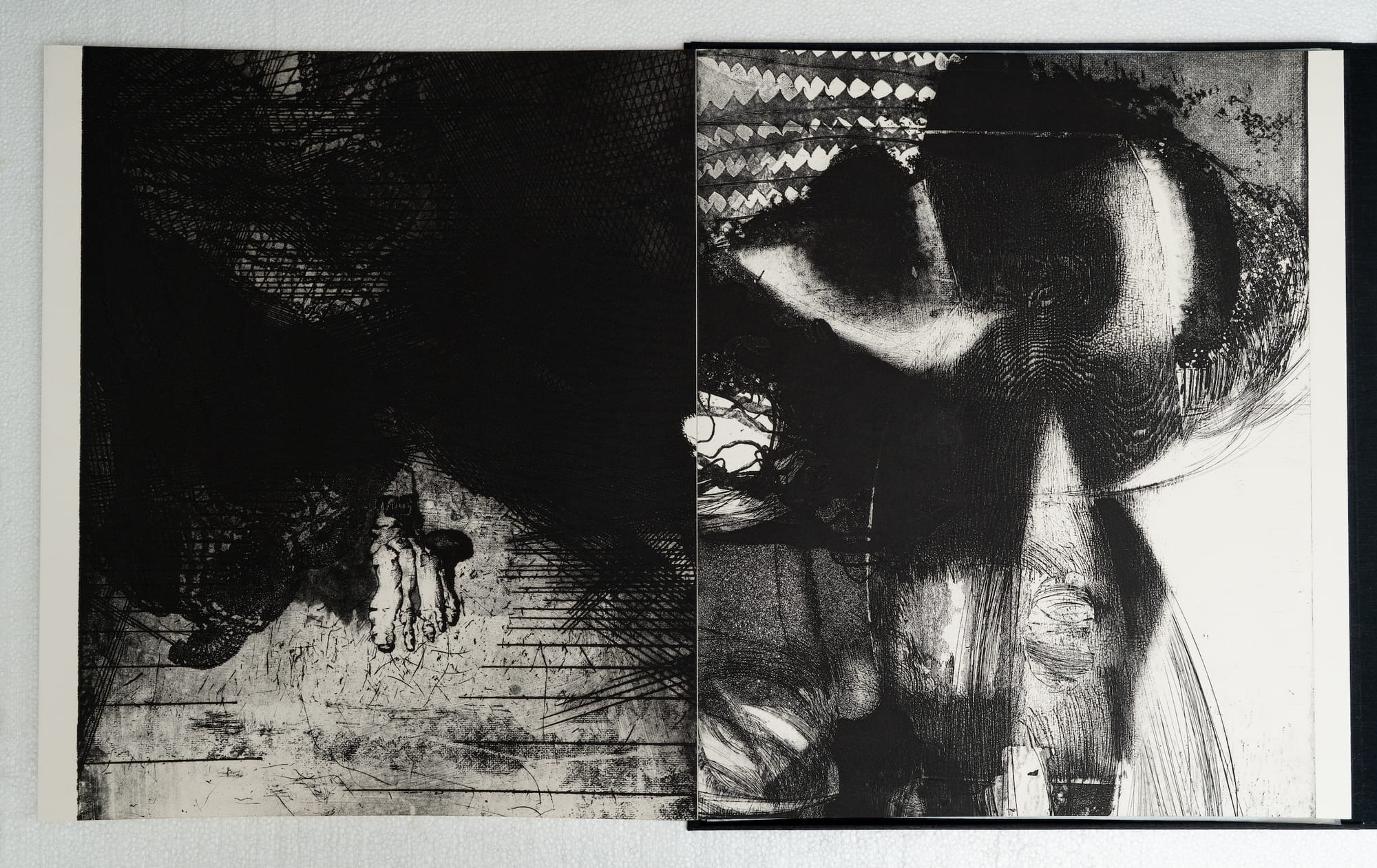
During a walkthrough at the Blackburn Study Center in late March, Khalil and the curators mentioned that he drew inspiration from sources as varied as Egyptian singer Umm Kulthum, Ronald Neame’s film The Chalk Garden (1964), and Italian Renaissance painter Piero di Cosimo. Also striking is a series of 1999 etchings in a glass vitrine accompanying an excerpt of a 1971 poem by Syrian modernist Adonis, reproduced in the original Arabic and English translations by Mirene Ghossein and I.M. Elfadel. “Gospel spirituals — /The music sings the roads of grief/And journeys toward the listener,/Erasing the very road it sings,” Adonis wrote; Khalil paired the poem with a visual language of his own — one of rich black ink and lacy patterns blending into bold lines.
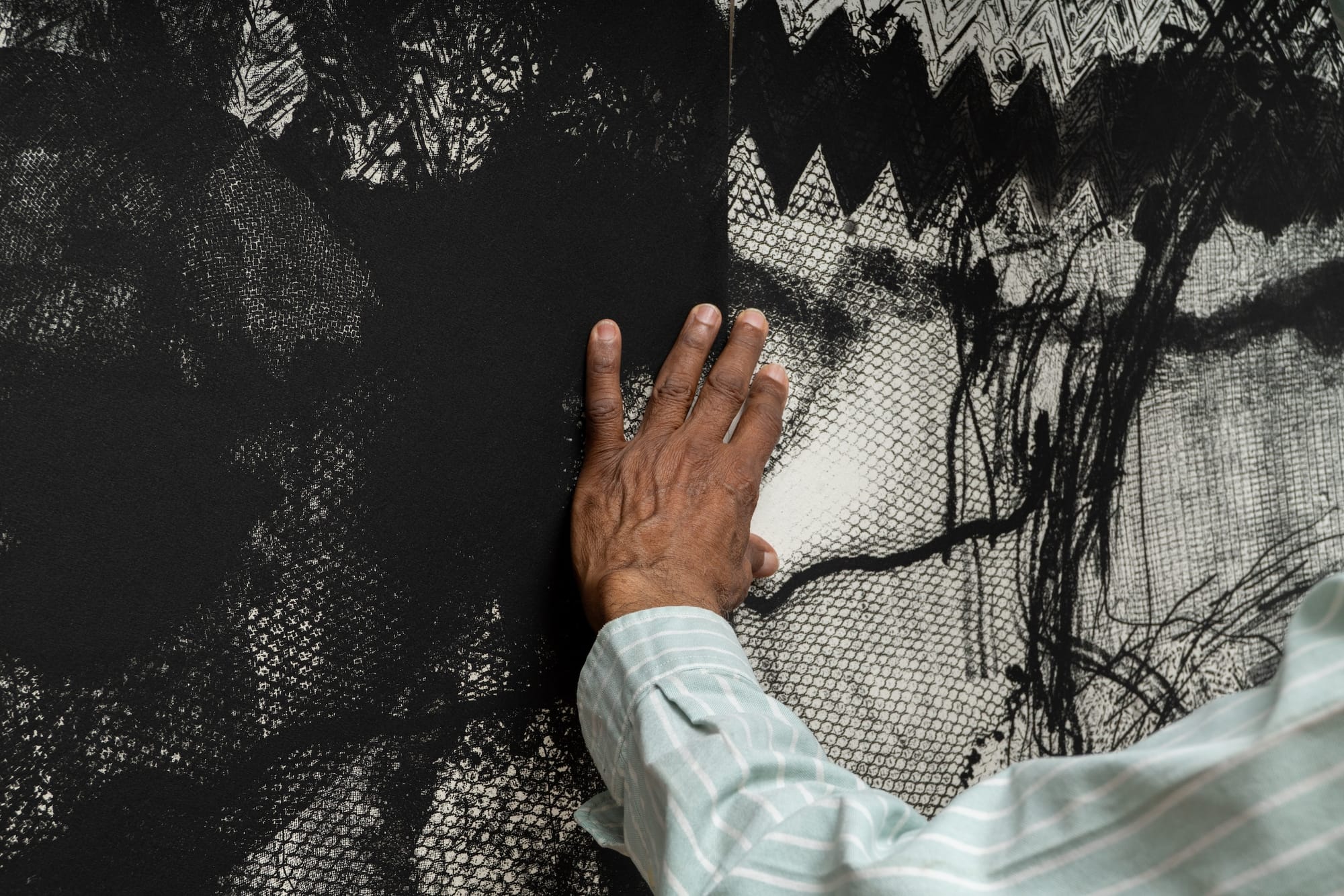
These days, Khalil is sorting through his studio, rediscovering and revitalizing plates from throughout his life. The artist, now and then, celebrates and invites surprise and experimentation. “You have to have your eyes open to whatever happens and see if you can use it or reject it,” he told Hyperallergic.
Though Common Ground is just his third solo exhibition in New York City, Khalil has been celebrated across the Arab and African art worlds, the curators said. They hope the exhibition will raise his profile to deserved new heights. “One of the sparks of our interest in wanting to tell Mohammad’s story is because there were stories that he was left out of,” Hamed said.
Born in 1936 in Khartoum, Sudan, Khalil began studying painting at the city’s School of Fine and Applied Arts as a young man just before the nation gained independence in 1956. He later traveled to Florence, where he learned printmaking at the Academy of Fine Arts. As a Black, Muslim man, he was denied housing at many hotels and slept in hallways until he found a safe place to rest. He moved back to Sudan to teach in Khartoum before leaving for New York City in 1967 with his pregnant wife.
As the Civil Rights Movement was taking hold, Khalil worked odd jobs to support his family. He began teaching at Robert Blackburn’s printmaking workshop, becoming entrenched in the city’s artist communities and opening his own studio in 1970. He printed editions for peers including Romare Bearden, Jim Dine, Sean Scully, and John Wilson, and collaborated closely with Blackburn, Camille Billops, and Krishna Reddy. The foursome was integral to developing the now-famed Asilah Printmaking Workshop in 1978, and Khalil became one of its most important instructors. “All of the artists that would go through there were trained under him on how to do printmaking,” Hamed explained. Khalil lived between New York and Asilah for many years, and the Moroccan city inspired his Common Ground series, from which the retrospective takes its name.
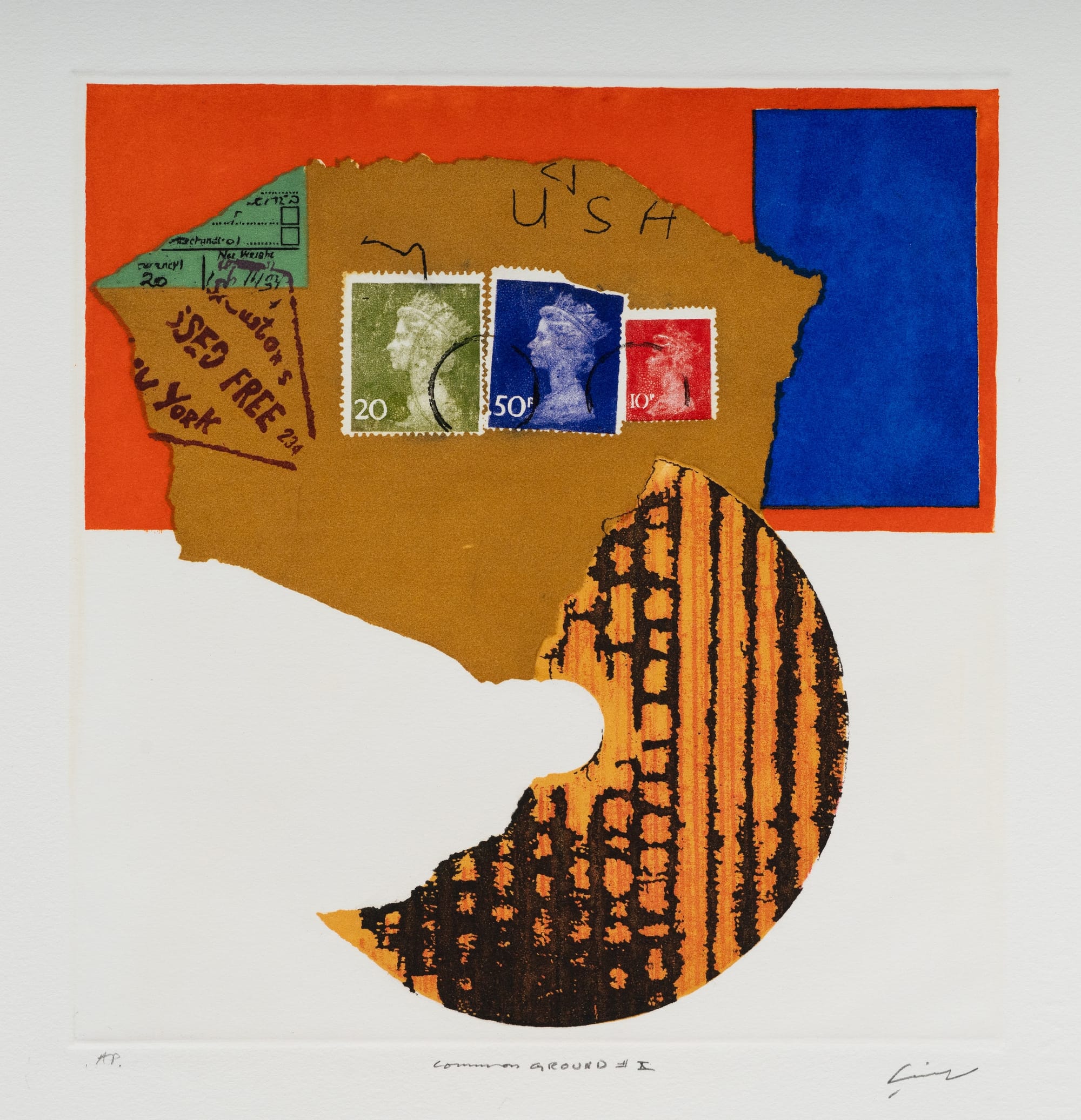
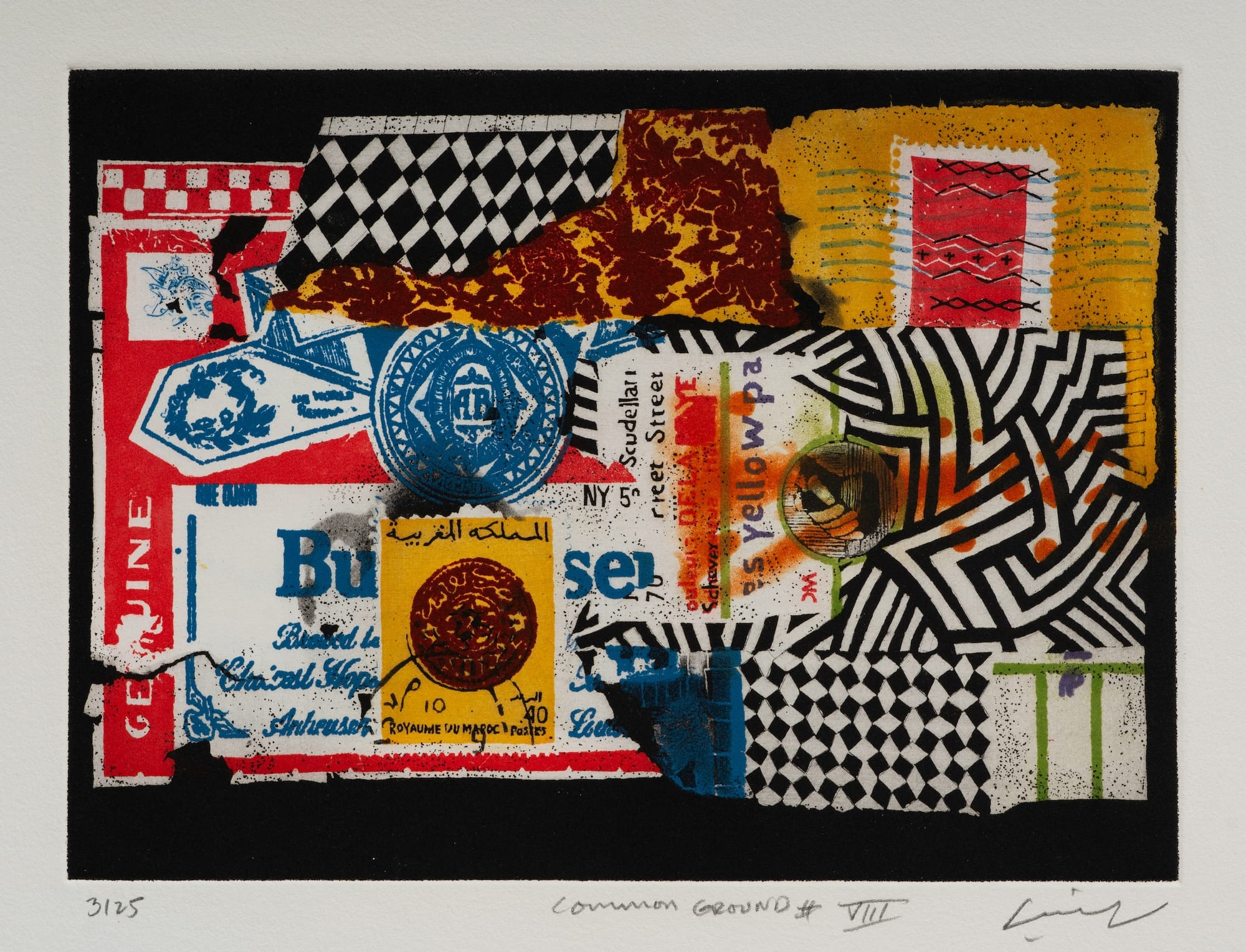
When asked about Sudan and its influence on his work, Khalil said, “I can’t find the words to express myself. I speak five languages, very badly … I speak Arabic, English, Italian, Spanish, and a bit of French — but as I said, badly. This is my language.” He pointed to the lifetime of art on the walls. The mediums of printmaking and painting inform one another, he explained — to him, they’re one and the same.
“Sudan has changed since we met him, Gaza has changed since we met him. So much has happened throughout his lifetime, and it is the lands that have changed,” said Ahmed. “His paintings, the techniques that he uses, the methodology, or the process of layering … these are all metaphors, in many ways, of telling that story.”
His art helps him keep track of his life, Khalil explains. As he guided us through the gallery, he recalled moments in his life: his separation, his father’s death, his travels, his studies, and the artworks and films that moved him. With “Still life (Cafe Roma)” hanging on a nearby wall over six decades after it was made, he said: “The minute I came and I saw it, it took me back to where I was in Florence.”