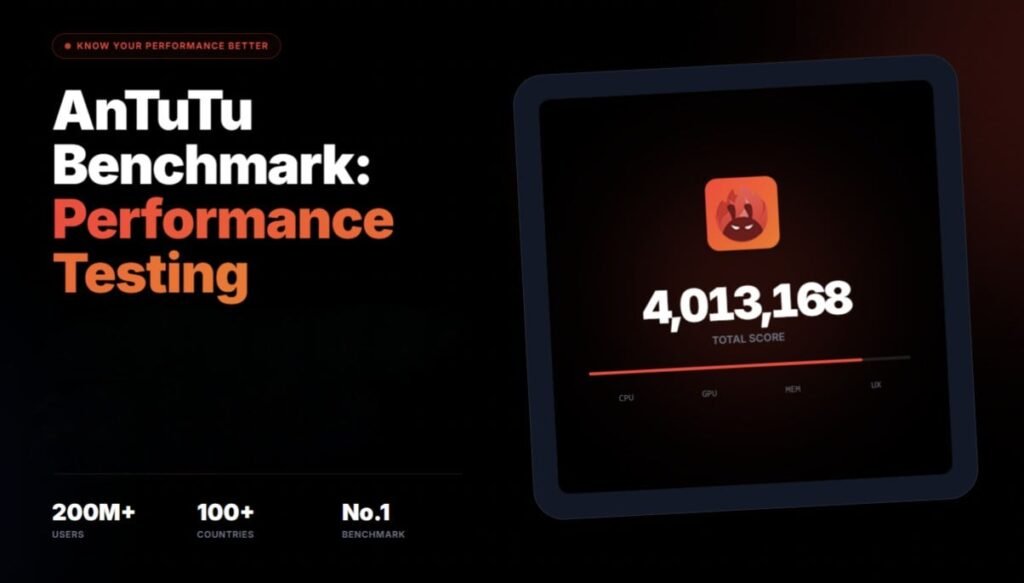

The mobile performance benchmark scene is getting a massive shakeup. AnTuTu officially released the public beta of AnTuTu V12 on September 4, rolling out the update across its website and major app stores. Instead of encouraging phone makers to chase giant, vanity benchmark numbers, V12 rewrites the rules across CPU, GPU, Memory, and UX testing to reflect how smartphones perform in real life.
AnTuTu is being very transparent about this rollout. To give everyone a clean baseline, the team published sample scores recorded under strict lab conditions: a room temperature of 26°C (79°F), battery levels above 80%, and display brightness locked at 300 nits.
Smarter CPU behavior, tougher graphics, and real memory stress
The revised CPU benchmark adjusts single-core and multi-core models to match daily habits. Modern mobile chips constantly switch between high-frequency power bursts and low-frequency efficiency modes. So, AnTuTu V12 evaluates how well a processor manages that balance rather than just pushing maximum clock speeds.
If you love mobile gaming, the GPU section brings serious visual upgrades. The test introduces detailed 3D scenes with soft shadows and realistic lighting built to strain modern graphics chips. AnTuTu also added a new Vulkan-based Cooperative Matrix test, which pushes heterogeneous GPU computing units to work together on heavy matrix calculations.

Memory testing gets an equally thorough overhaul to catch system hiccups. V12 adds a dynamic latency stress test to evaluate memory behavior under mixed workloads, plus a brand-new memory fragmentation test to see how performance holds up as storage fills up over time. The developers also refined sequential and random read/write tests and application-level I/O testing to strip out external noise and show raw storage speed.
Smooth UX rendering, foldable UI layouts, and the V11 reset
The UX module moves away from isolated hardware metrics. It uses new algorithms that follow actual operating system rendering and input responses. The resulting score maps directly to perceived smoothness during app launches, scrolling, and system animations.
Visuals-wise, the AnTuTu app gets a modern card-based information feed with category filtering. It also adapts seamlessly for tablets and foldable displays, making full use of larger screens. Under the hood, V12 adds support for Android 16KB memory page sizes to stay compatible with next-gen hardware architectures.
Here is the biggest detail to keep in mind: because AnTuTu updated the test items, workloads, and scoring algorithms, V12 scores cannot be compared to older V11 scores. A higher or lower score on V12 doesn’t mean your phone got faster or slower overnight—it simply means the way to evaluate changed to adapt to what matters in modern chips.

The post AnTuTu V12 Public Beta Overhauls Smartphone Benchmarking with Focus on Real-World Performance appeared first on Android Headlines.