Research & Developments is a blog for brief updates that provide context for the flurry of news that impacts science and scientists today.
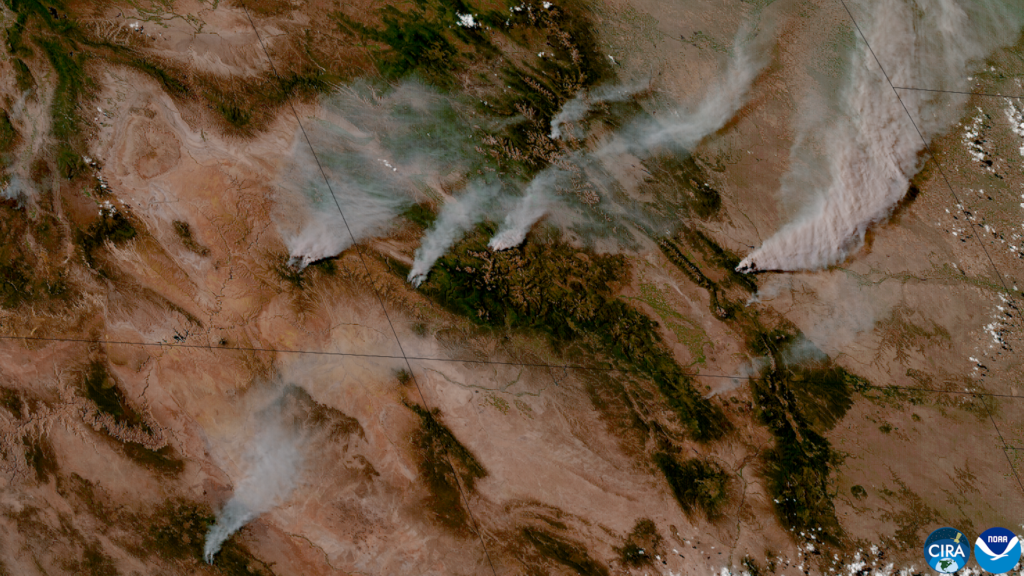
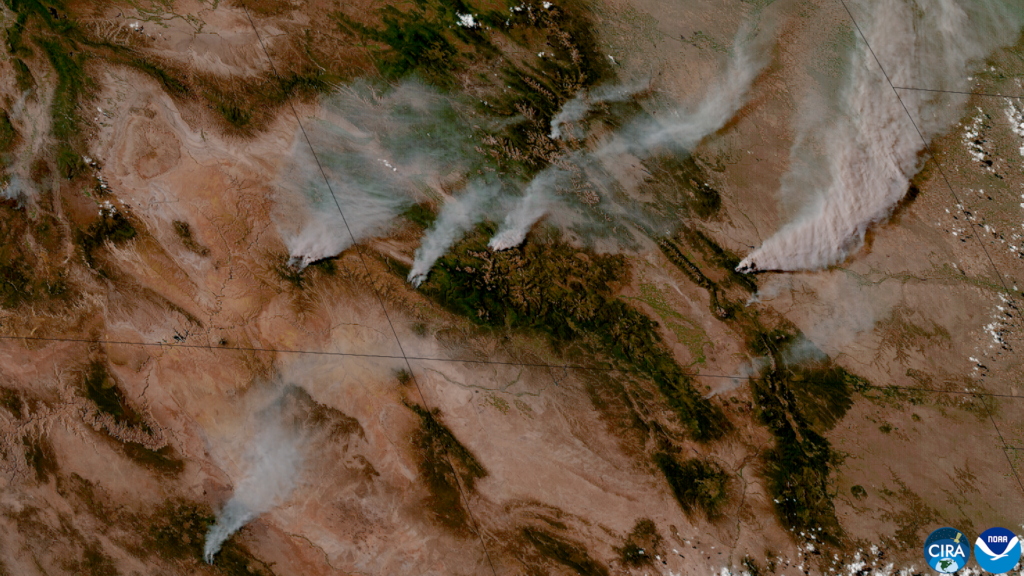
Devastating wildfires are sweeping across Colorado and Utah.
In Colorado, at least a dozen fires are actively burning. At about 48,000 acres, the Aspen Acres Fire in Pueblo and Custer counties was 0% contained as of Thursday morning. It is the 12th-largest wildfire in the state’s history and has destroyed about 180 structures, at least a third of which are homes.
In Utah, wildfires have already burned nearly 300,000 acres, four times the area they had by this time last year. The Cottonwood Fire, currently at nearly 94,000 acres and 19% contained, is the state’s most destructive wildfire on record, and has destroyed more than 100 structures. The Babylon Fire, in San Juan County, grew from 48,257 acres on Tuesday to 70,735 acres today, and is 0% contained.
Last weekend, three firefighters died and two were injured fighting the Snyder Fire on the Utah-Colorado border.
Across both states, fireworks shows planned for the Fourth of July weekend have been cancelled and use of personal fireworks has been restricted.
The fires come in the wake of historically low amounts of snow in the American West. Colorado’s snowpack was the lowest in 40 years, and Utah’s the lowest since 1930. More than 90% of the American West is in a drought, with 70% in a severe drought, according to the U.S. Drought Monitor. In the face of anthropogenic climate change and changing land management, wildfires worldwide are growing more extreme and more frequent.
“The outlook is pretty grim. Low precipitation this past winter, combined with hotter temperatures this spring and summer are setting the stage for a difficult fire season across the West,” University of Utah wildfire scientist Philip Dennison said in a Q&A about the state’s wildfire season published by the university.
A Changing Policy Landscape
The fires also come after the Trump administration laid off 3,400 U.S. Forest Service (USFS) staff last year and in April announced a reorganization that would shutter more than 50 (about 75%) of the agency’s research facilities. An analysis by Grassroots Wildland Firefighters also found that the USFS completed 38% less wildfire mitigation work in 2025 compared to previous seasons.
In addition to upheavals at USFS, policy changes were recently announced for the U.S. Wildland Fire Service, an agency Interior Secretary Doug Burgum created in January. In an April memorandum obtained by POLITICO, Burgum told the agency to use a “full suppression strategy,” meaning they would put out every blaze that ignites on public lands.
Though it may sound intuitive, evidence doesn’t support a full suppression strategy as effective. As researchers reported in a recent paper about the benefits of prescribed burns, a full suppression strategy can create “A fire paradox, in which putting out fires today can create larger fires in the future.”
Kevin Hood, executive director of Forest Service Employees for Environmental Ethics and a former USFS employee, recalled hearing a fire ecologist once ask, “Do we want a severe fire now or an extreme fire later?”
“You’re going to have fire in a fire-evolved ecosystem, but we seem to be just trying to deny that reality. And I’m concerned on a bunch of different levels about where that will lead us,” he said.
Hood, who served as the USFS tribal relations program manager for the Alaska region, noted that he doesn’t think the fires currently burning can be directly attributed to the layoffs and announced laboratory closures at the USFS.
Still, he said, he finds the changes at the agency concerning. Research done at USFS is unique because many of the agency’s forest stations have been in place for decades or longer, allowing for research into the long-term evolution of forests and their response to fires. The research stations across the country also allow for local-scale research, in which researchers can grow “familiar with their exact climate, their vegetation, [and] their terrain,” he said. The closure of these stations, he said, would be a major loss.
“I think this is a reflection of the current administration’s war on research, science, and education.”
“I think this is a reflection of the current administration’s war on research, science, and education,” he said. “Perhaps you’re saving a little bit of money, but the loss of knowledge and effective land management, in my opinion, that’s going to far outweigh any benefits or any gains from cutting those research stations.”
Hood was not one of the USFS employees laid off last year, but he did leave the agency in 2025, after 31 years of service, after seeing “the writing on the wall.”
“I’m just concerned that we’re getting into kind of a post-factual world where the value of research is going to be greatly diminished, which would just have negative repercussions for our country and our future at large,” he said.
—Emily Gardner (@emfurd.bsky.social), Associate Editor
These updates are made possible through information from the scientific community. Do you have a story about science or scientists? Send us a tip at eos@agu.org.

Text © 2026. AGU. CC BY-NC-ND 3.0
Except where otherwise noted, images are subject to copyright. Any reuse without express permission from the copyright owner is prohibited.