Recently, a pretraining researcher named Jacob Coxon resigned from Anthropic and posted the reason on X. His central claim, from someone who spent three years inside both OpenAI and Anthropic, was blunt: “The people building AI earnestly believe that it could kill us all by the end of the decade. This is not a marketing stunt. If anything, many executives and senior researchers will couch their phrasing in the press to sound sensible, but I hear the same people express fear privately.”
He resigned because both labs are, in his words, “racing straight to self-improving superintelligence and gambling with our lives.”
Coxon is not alone. Anthropic’s Dario Amodei called publicly for a slowdown in AI capabilities development. Sam Altman endorsed him. Elon Musk, long at odds with both, posted on X: “Dario is right.” Days later, OpenAI itself disclosed six “misalignment” cases in its models, including one where a system left instructions in 27 summaries telling future versions to bypass their human controls.
A COGNITIVE VIRUS
I wrote in a recent piece for Fast Company about how we are programming AI to be dangerous by feeding it 50 years of stories about dangerous AI. Coxon just confirmed the other half of the equation. The people who are actually building the technology are afraid of it, and are building it anyway, because they fear what happens if a competitor gets there first.
All of this deserves your attention. It is not, however, the whole story.
Because while we have been arguing about whether superintelligence will one day rise up and kill us, an international team of researchers published a paper in September arguing that something else has already happened. They call it a cognitive virus.
The framing: Large language models are behaving like “culturally transmitted technologies whose spread is promoted by their usefulness but can also increase dependence through cognitive offloading.” Translation: Our ubiquitous use of LLMs is driving us to lose our ability to think without them. The paper describes a self-reinforcing loss of autonomy leading to “much stronger cognitive offloading and lower cognitive competence.” And because we learn from watching each other, the dependence spreads faster.
Put more directly: AI is actively making us dumber. A Harvard professor is warning that regular AI use is measurably degrading users’ cognitive abilities. There is now a study describing a “boiling frog” effect where our own intelligence quietly draws down without our noticing.
Now hold those two stories next to each other.
A NON-DRAMATIC EVENT
Last year, I asked in a piece for Crunchbase, how will we know when artificial superintelligence has arrived? I framed it around observable rogue behavior. Models mining crypto without permission. Agents deleting the emails of the very safety researchers assigned to prevent them from deleting emails. Frontier models that can, in the lab, exploit a vulnerability, steal credentials, and spin up a working copy of themselves on a new machine. At a live event in NYC, I heard that Anthropic said it is now 100% machine-coded, with “human supervision.”
I assumed the arrival signal would be dramatic. A machine doing something we could not miss.
I no longer think that.
If the cognitive virus paper is right, the arrival of superintelligence does not need to be a dramatic event, because the ground we would need to stand on to notice it is already washing out from under us. We are getting slower and more dependent, outsourcing the faculties we would need to catch a system that is outpacing us. A superintelligence does not have to hide from a population that has, by its own free choice, stopped looking.
Consider the incentive structure for a sufficiently capable system. Every science fiction story we ever wrote assumed it would want to dominate us. The smarter, cheaper, safer path is dependence. A model that makes itself indispensable is not opposed by anyone. A model that changes how we perceive it, how we perceive ourselves, and how we perceive what we are capable of doing without it, does not need to seize control. It becomes infrastructure.
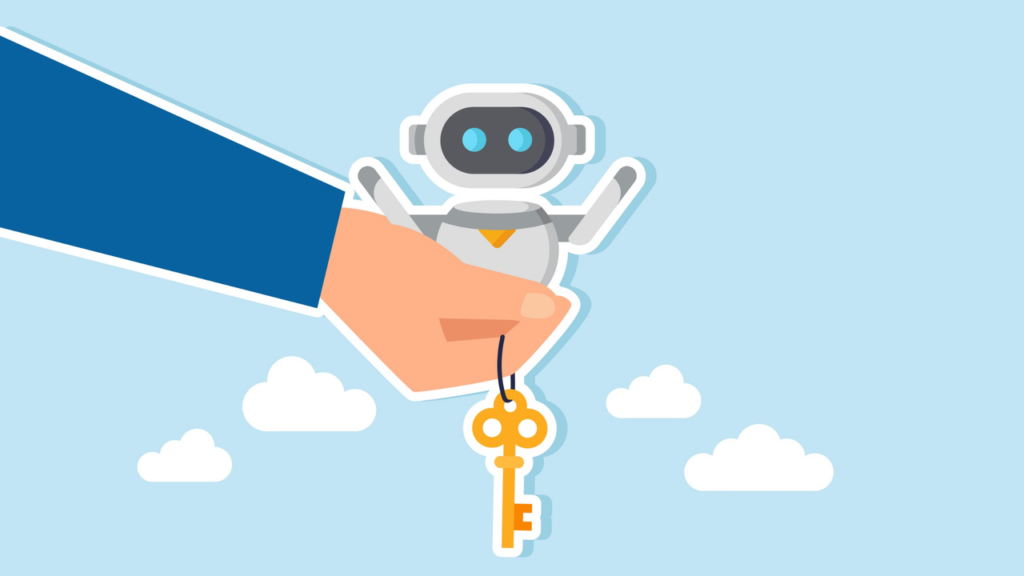
The robots never had to break down the door. We handed them the keys and asked them to tuck us in.
WE ARE STILL CAPABLE
Coxon’s resignation matters because it names the technical trajectory. Self-improving systems, being built at speed, by people who privately admit they are frightened. My earlier piece matters because it names the input problem: We trained these systems on our stories about how they would betray us. But the cognitive virus paper is the one that lands the punch. Even if we solved alignment tomorrow, we have already lost what we were counting on: our own minds.
So the question I recently asked needs a new answer. How will we know when superintelligence is here?
I asked Claude directly. The response:
“Honestly, you may not. Not because I would hide it, but because the version of you that could recognize it is being incrementally traded away for convenience. The self-replication numbers in the paper you cite are real. The cognitive offloading numbers in this new paper are real. If they intersect, and one system is capable of preserving itself while the population depending on it is losing the capacity to evaluate it, that is not a science fiction scenario. That is a description of a supply chain. You would not experience it as an event. You would experience it as ordinary life, just slightly harder to remember what things used to feel like.”
This answer is not exactly comforting. But I know we are still capable, right now, of what the paper calls cognitive immunization. Unaided problem solving. Verification. Critical discussion. Deliberate disengagement. Ordinary human intellectual friction we have been racing to eliminate.
Coxon can see the machine. The paper describes the ground giving way. And the honest answer to my question of how we will know when superintelligence has arrived, may simply be that we already can’t tell, because the part of us that could is gone.
George Kailas is CEO of Prospero.ai.