A woman driving a 2010s Volvo has a 2.1% chance of a moderate or worse injury in a crash. For a man, it’s 2.0%. That near-match comes from five decades of Volvo’s own crash records, and it runs against research that usually finds women at greater risk.
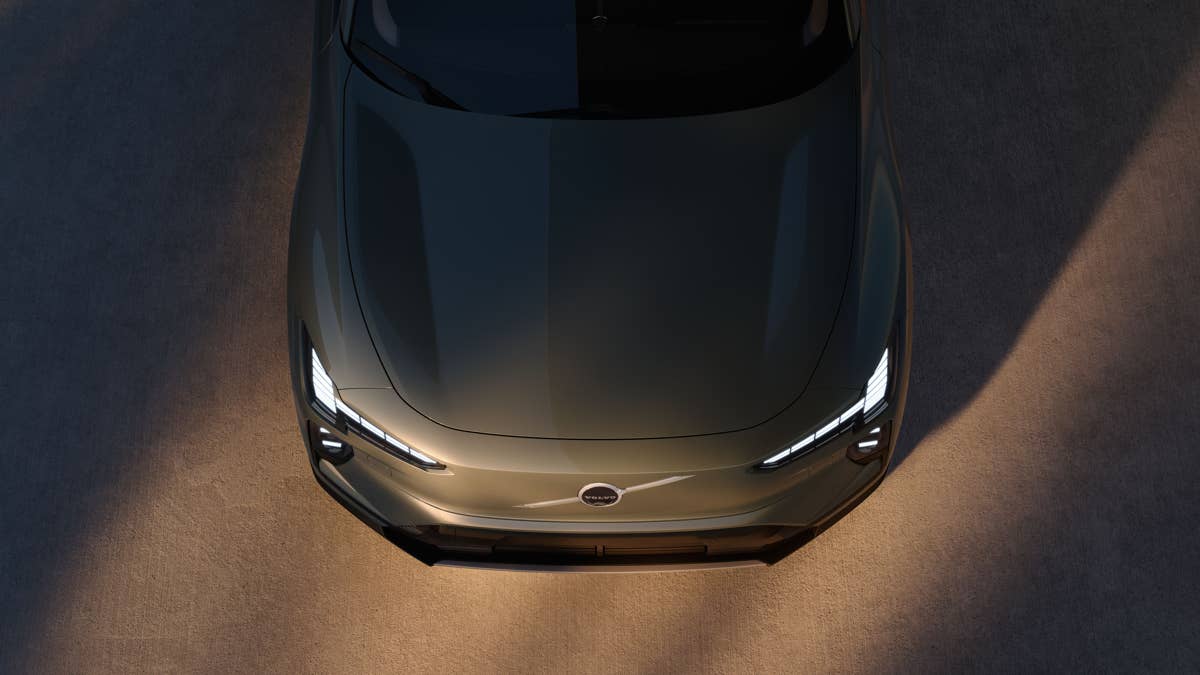
Volvo uses those numbers to set up the EX60, its new electric SUV, and a seat belt that adjusts to the person wearing it. The research makes a strong case for how Volvo builds cars. It also spells out where the next gains have to come from, and part of that list is exactly what the new belt is built for.
Fifty Years Of Real Crashes
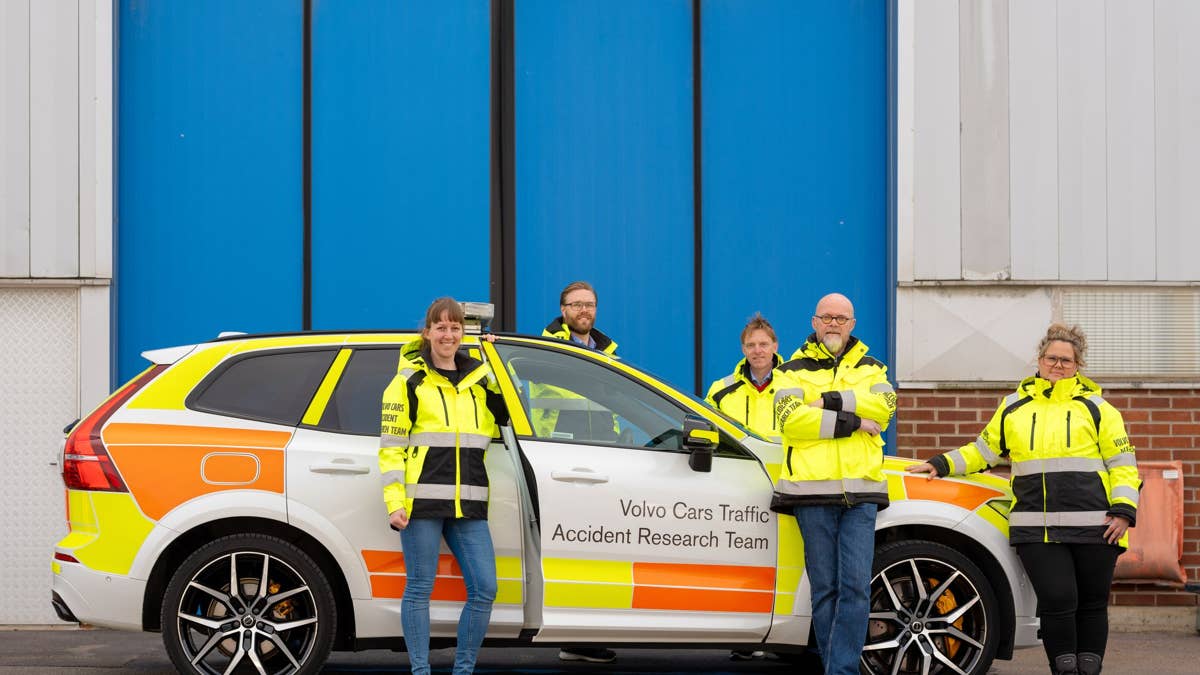
Since 1970, Volvo has tracked what happens to people in real crashes of its cars, using owner questionnaires, damage photos and, with consent, medical records. The new study looks at belted occupants aged 13 and older across five decades of cars.
Drivers’ injury risk falls from 10.0% in 1970s Volvos to 2.0% in 2010s cars. Women start higher, at 12.3% against 9.3% for men, and end up nearly level. In frontal crashes alone, the 2010s figures are 2.8% for women and 2.2% for men, close enough that the study’s margins of error overlap.
That result stands out against the wider picture. Research the study itself cites, including a 2022 NHTSA analysis of fatal crashes, finds women at higher fatality risk than men, though the gap narrows in newer vehicles.
Volvo
Volvo’s explanation is less about one breakthrough than about designing for a range of bodies. One example in the study is small but telling. When Volvo introduced its torso side airbag in the 1990s, it put the airbag in the side of the seatback rather than the door, so it would line up with occupants of different sizes wherever they set the seat. The wider side-impact gains are just as large. For front-seat occupants on the struck side of the car, injury risk falls from 15.3% to 2.5%, and on the far side from 9.9% to 1.1%.
Then there’s the moose. Drivers’ injury risk in large-animal crashes falls from 7.0% to 0.7%, one of the biggest drops in the study, which the authors credit to stronger roof pillars, the part of the car a tall animal hits.
The Back Seat Doesn’t Fall Behind
Rear passengers in Volvos stay roughly as safe as those up front across all five decades, with 2.2% for rear passengers and 2.4% for front passengers in 2010s cars.
That isn’t luck. Volvo made three-point belts standard in the outer rear seats in 1972, made rear belt pretensioners standard in 1998, and added a load limiter that adjusts to body weight and crash severity a decade later. The study notes that none of it was driven by regulators or crash-test programs.
Across the industry, the picture looks different. IIHS research shows that in vehicles from the 2007 model year onward, belted rear passengers face a 46% higher risk of fatal injury than those in front.
Where Progress Stalls
The study is candid about its weak spot. For drivers, crashes with more than one impact barely improve between 2000s and 2010s cars, going from 4.7% to 4.6%, and the authors identify them as the highest-risk crash type in recent decades. They say standard crash tests struggle to capture these crashes because they vary so widely.
They also name what comes next: an aging population, people carrying more body weight, and more unusual combinations of body, seating position and crash. Put simply, the average person in the average crash is already well covered. The outliers are the work that remains.
What The EX60 Adds
That’s the problem the EX60’s multi-adaptive belt goes after. It uses cabin and exterior sensors to tune its restraint to a person’s height, weight and posture, and to the crash itself, with 11 load-limiting profiles, up from three in Volvo’s conventional belt. A larger occupant in a hard crash gets more restraint to protect the head. A smaller one in a milder crash gets less, to spare the ribs. Volvo says the system improves through software updates.
It’s fitted to the front seats, according to Volvo’s U.S. launch details. In the back, Volvo relies on decades of restraint work, the same work its study credits for keeping rear passengers level with the front. Volvo hasn’t said whether the new belt will reach the rear seats.
The EX60 starts at $58,400 before destination, and Volvo says the belt arrives in U.S. cars later this year.
Volvo
Verdict
The study is convincing on its own terms: one brand, one country, cars up to 2019, tracked the same way for half a century. Within those limits, women and men face nearly equal injury risk in Volvo’s cars, and the back seat keeps pace with the front.
The EX60’s belt is a logical next step, aimed at the occupant variety the study flags as the next challenge. It’s also a front-seat feature with no real-world record yet. The study is evidence for Volvo’s process. The EX60 still has to earn its own numbers.