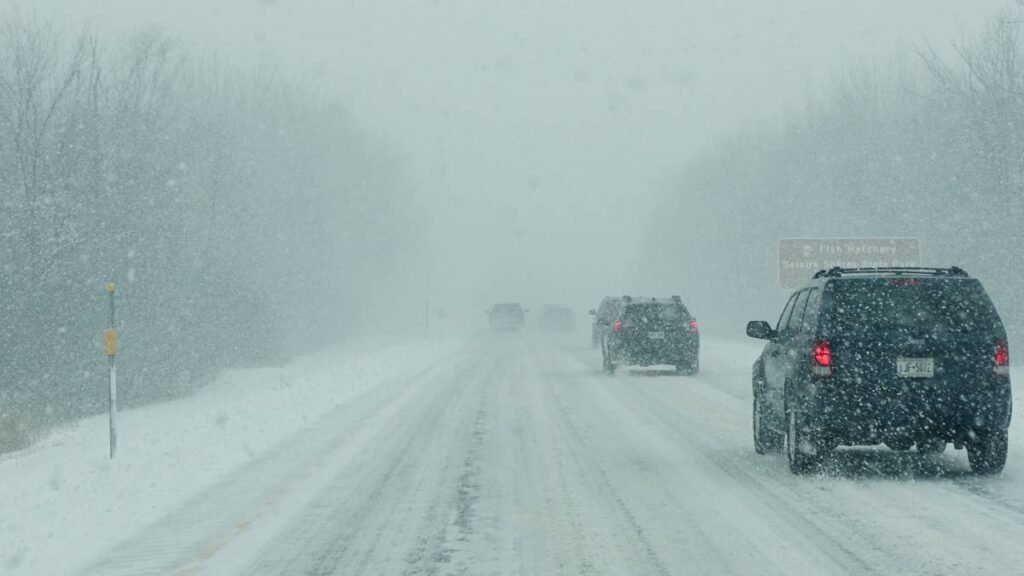
Heavy snow is moving into the high country on Thursday, and the National Weather Service expects up to 20 inches at the top elevations before it tapers off Saturday. Winter weather advisories cover several mountain ranges, and gusts up to 45 mph could reduce visibility in some areas.
The advisories begin late Thursday morning, and snow keeps falling through the Thursday evening and Friday morning commutes, so canyon roads that are dry at lunchtime may require chains or snow tires by the drive home.
Where Snow Totals Run Highest
Utah’s Wasatch Mountains could get the heaviest snow. The NWS office in Salt Lake City forecasts 10 to 20 inches, with locally higher amounts in the upper Cottonwood Canyons around Alta and Brighton. The advisory covers the mountains on both sides of I-80 and lists Logan Summit and the Mirror Lake Highway. The Western Uinta Mountains could get 5 to 10 inches.
Park City and the Ogden Valley could see 4 to 8 inches, with less near Heber City. In the southern mountains, 3 to 7 inches are forecast above 6,500 feet and up to 10 inches around Brian Head and the Tushars, with gusts up to 45 mph.
In the Eastern Uinta Mountains near Manila and Dutch John, the NWS office in Grand Junction expects 4 to 8 inches above 8,000 feet. Gusts up to 45 mph there could create blowing and drifting snow and lower visibility.
Timing
- Wasatch and Western Uinta Mountains: 1 p.m. ET Thursday to 1 p.m. ET Saturday
- Park City, Ogden Valley and Heber City: 1 p.m. ET Thursday to 7 a.m. ET Saturday
- Southern mountains: 1 p.m. ET Thursday to 7 p.m. ET Friday
- Eastern Uinta Mountains: 7 p.m. ET Thursday to 7 p.m. ET Friday
Related: The Best AWD SUVs for Snow, Trails and Everyday Driving
Traction Rules on I-80 and the Canyon Roads
Utah’s traction law can apply to every vehicle on several routes in the advisory area during severe winter weather. A Utah Department of Transportation poster lists I-80 through Parleys Canyon, SR-158 from Eden to Powder Mountain and SR-44 among them. When the rule is in effect, two-wheel-drive vehicles need tires with the three-peak mountain snowflake symbol on all wheels, or chains.
Big Cottonwood Canyon (SR-190) and Little Cottonwood Canyon (SR-210), which lead to Alta, Brighton and the area’s other big resorts, get the biggest totals and carry stricter rules. Tires there need at least 5/32 inch of tread when traction requirements are on, according to UDOT’s canyon guidance, and the department can now put those requirements in place before a storm begins. Police check vehicles at the canyon mouths when enforcement is active, and drivers without the right tires can be turned around.
Gusts in the Eastern Uintas could also blow and drift snow onto SR-44 toward Manila. UDOT posts traction law status and closures on its traffic site, and the NWS recommends slowing down and allowing extra time on every mountain route covered by the advisories.