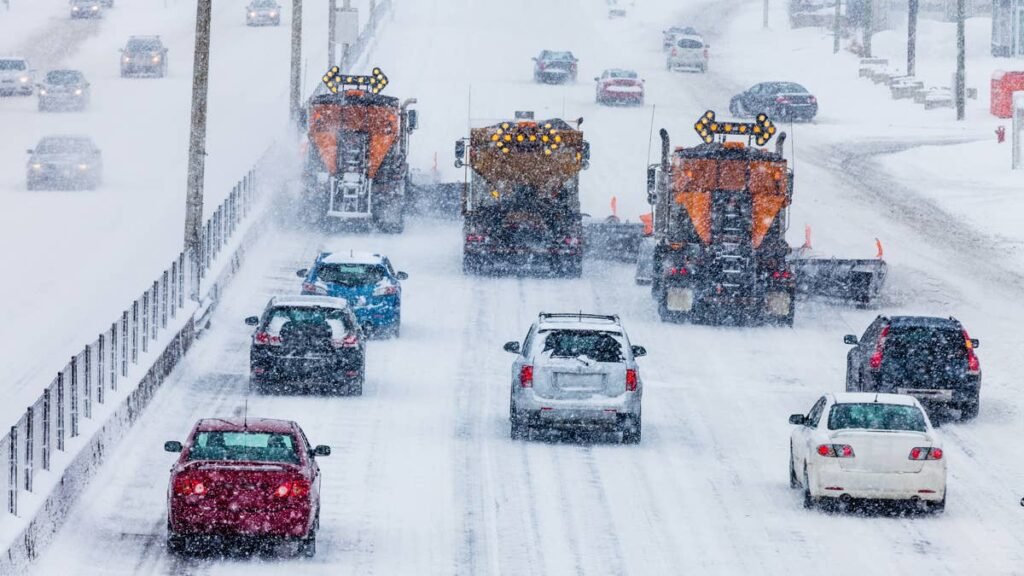
Up to 30 inches of snow could fall on Sunday alone in one corner of the country, according to the National Weather Service, with winds climbing to 40 mph while it falls.
The heaviest totals belong to a single high peak rather than a town, but the same storm also put a winter weather advisory on one of the region’s main highways overnight.
Heaviest Snow
A NWS Anchorage point forecast for a spot 18 miles north of Kennicott, Alaska, at 12,123 feet, calls for 13 to 19 inches of snow Saturday night and another 24 to 30 inches on Sunday, heavy at times. Up to 11 more inches could follow Sunday night before the snow eases on Monday afternoon. South winds of 25 to 30 mph increase to 35 to 40 mph Sunday morning, with temperatures stuck between the single digits and the low teens.
Totals like that are tied to the altitude, and lower down the same storm looks far more ordinary.
On The Richardson Highway
Near Thompson Pass on the Richardson Highway, NWS Anchorage issued a Winter Weather Advisory running through 5 a.m. ET Sunday, with 1 to 3 inches of snow overnight and east winds around 25 mph gusting to 30 mph, according to theNWS point forecast for the pass. Snow and rain continue at the pass after the advisory ends, through Sunday and Sunday night, with little new accumulation as temperatures sit in the upper 30s, and the mix turns to all rain by about 5 p.m. ET Monday before snow returns Tuesday afternoon ET. The highway has had a rough week already, after the storm earlier this week farther north along the same road. Near sea level in Valdez, at the southern end of the highway, it was still raining at 40 degrees around 2 a.m. ET Sunday while the pass above picked up snow.
Inland, the airport at Gulkana, near Glennallen, was reporting snow and freezing fog at about the same hour, with visibility down to half a mile and the temperature at 29 degrees.
Driving In Freezing Fog
Freezing fog is the harder hazard to see coming. It lays a thin glaze on windshields, mirrors and pavement that is easy to miss in the dark, and half a mile of visibility leaves roughly 30 seconds of warning at 55 mph before a slower truck’s taillights appear. Low beams and fog lights cut through better than high beams, which reflect straight back off the fog, and running the defroster on outside air rather than recirculation keeps the inside of the glass from misting over.