Grand Theft Auto was once the game you weren’t supposed to own, let alone play. Today, it’s one of entertainment’s biggest cultural forces, as shown by its latest release, GTA VI, which is arguably the most anticipated game release ever, with $1 billion in preorders and countless memes as evidence.
So, how did something once treated as a threat to culture become such a powerful part of it?
As someone who has spent more years of their life playing GTA than not—and who now helps brands find their own loyal following—I think it offers a lesson in how creative conviction can become a commercial superpower.
What can we learn from the rise of Rockstar’s biggest player?

Culture moved. ‘GTA’ kept designing its way
The original top-down Grand Theft Auto launched on November 28, 1997. At the time, music, television, and film dominated cultural conversation and gaming was dismissed to a dark corner of teenagers’ bedrooms. It was counterculture. Today, that’s changed. There are an estimated 3.5 billion gamers globally, gaming shapes conversation more than people think, and it has become a destination where culture is built.
While its audience grew, and culture shifted, GTA kept designing a world that was unmistakably its own. Critically, GTA wasn’t just a game set in a version of American culture; it was a playable satire of it, exaggerated and, yes, often uncomfortable. It had an extraordinary way of bringing users in on the joke. Excess became the punch line. And brilliantly, it didn’t ask players to watch the joke from a distance. They could participate in it.
As gaming became more mainstream, GTA brought this irreverent perspective with it. Its audience boomed but it didn’t lose the qualities that made the property so distinctive more than two decades ago. Its eventual, yet incredible, gravitational pull ensured that culture started moving towards it.
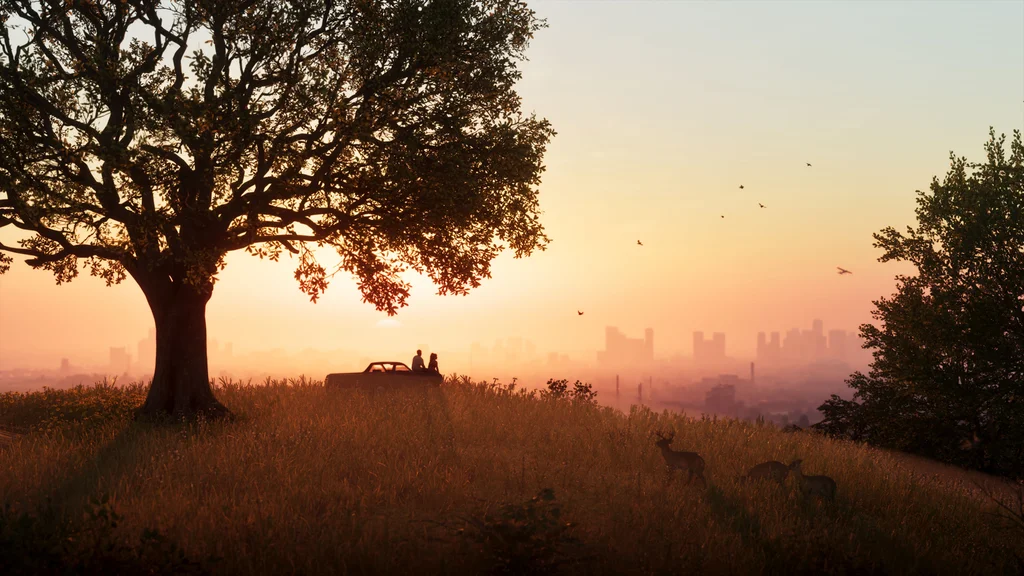
A world with a point of view
When creatives talk about a “brand world,” we usually mean the things that make a business recognizable: language, art direction, behavior, and personality. Grand Theft Auto has always taken that idea very literally. It demonstrates how powerful the idea can be when every detail contributes towards the world it’s building. Its fictional advertising, radio stations, characters, and dialogue all see the world through the same warped lens. You can be driving across Los Santos, doing nothing useful, and still be experiencing the brand. The city keeps talking to you.
That world influenced the medium. GTA III helped set the template for a generation of open-world games, from Saints Row to The Getaway. But a city you can explore is one thing; a city that could only belong to GTA is another.
Look at its brands. Burger Shot, Sprunk, and Lifeinvader turn fast food, soft drinks and social media into material for satire. Their ads parody the desires, insecurities, and commercial nonsense of the real world, while making GTA’s fictional one feel more alive. The radio does something similar. Music, presenters, and commercials make a journey feel like time spent somewhere, rather than a loading screen with steering. A drive across town might take you past a Cluckin’ Bell billboard boasting that its chicken is “better than roadkill.”
Because the brands are fictional, GTA has the freedom to make the joke as uncomfortable as it needs to be. (You don’t have to ask the company you’re mocking to approve it.) Those design details give the city a voice, and give GTA a self-fulfilling identity that extends far beyond its logo and missions.
None of this feels like design tactics layered on top of the game. The point of view is the game.

Being risqué isn’t enough
Let’s talk about GTA’s attitude. It’s another part of the story that’s aged very well. Plenty of brands have attitude. But few can authentically maintain it. Being provocative might get people’s attention. But it won’t earn their loyalty if the experience doesn’t match. For me, GTA has repeatedly raised the bar for what an interactive world—and what a world-leading brand—can be.
Its reputation for creating exceptional experiences does an enormous amount of its marketing work; a trailer arrives and people examine it frame by frame, dissect the details, make predictions, and revisit earlier games. They’re excited because they know GTA will deliver on its promise.
That is the foundation beneath the swagger. And an important lesson for every brand trying to be bold.
You don’t need everyone to love you
During the COVID-19 pandemic, I taught Sarah Mei, my wife, to play PlayStation. (“Taught” might be taking too much credit.) Would she play GTA VI? It’s very unlikely. Too violent. Fair enough. Grand Theft Auto doesn’t have to resolve that objection to succeed. Removing everything someone dislikes wouldn’t necessarily improve the experience for the people who love it.
I’ve put hundreds of hours into GTA. That changes the relationship I have with it. A film might occupy an evening. But a game can become somewhere you spend months. You learn its geography, understand its rules, and develop habits within it. The attachment starts to resemble supporting a team. There’s history there. GTA Online took that further; the world became somewhere to return to, meet friends and make new memories. Not just something you buy, it’s somewhere you spend your time.
And it’s not for everyone. The point is, it’s been intentionally designed for someone.
Wanting in doesn’t mean belonging in
The same applies to potential partners. While a brand might feel comfortable associating with GTA, that doesn’t mean their presence makes sense. People have spent years getting to know GTA’s world, and assert that even a good tonal match isn’t always welcome. After all, what does a real brand add? Does it make the world richer, or remind me that someone has bought their way in?
Most brands want to be relevant to more people. The temptation is to broaden the message, soften the edges, and make room for everyone. GTA seemingly surmises that some things aren’t worth watering down.
‘GTA’ makes gaming better
What retains my attention is the feeling that there’s always more to discover, and understand. Easter eggs being uncovered years after release; the detail of San Andreas, NPC dialogue that might actually be too detailed; and the license to ignore the mission. It’s all world-building. GTA’s design delivers. And I trust that GTA will improve with every launch.
That’s what makes Grand Theft Auto, in my view, one of the best brands in the world, even if it’s not a brand in the traditional sense of the word. Not because everyone wants it, but because it knows every detail either earns attention or breaks the spell.
That’s a useful challenge for brand design. Brands are very good at making things people recognize, want, or expect. Many are poor at challenging us. Designed for everyone, but resonating with no one. Can we design brands that have a greater, stronger perspective? Brands we would miss? Or, even better, brands we could learn to love?