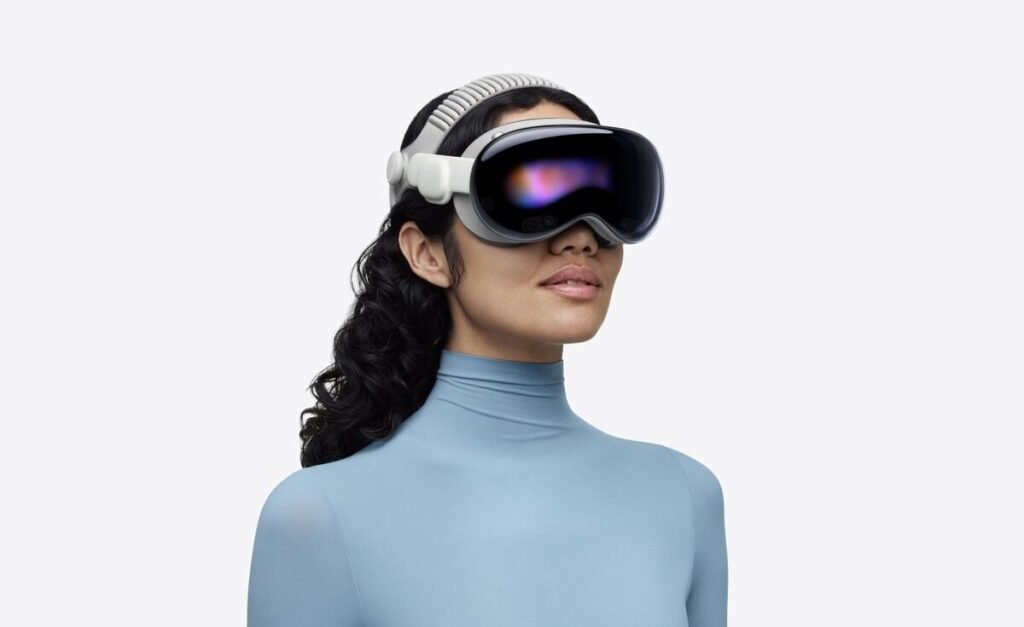

Is Apple quietly preparing to abandon its most expensive hardware gamble? Two years after launching the nearly $4,000 headset as a revolutionary breakthrough, the company is now deeply divided over whether the Vision Pro even has a long-term future in its product lineup.
The latest information comes from Bloomberg’s Mark Gurman in his Power On newsletter. According to the report, internal skepticism, organizational demotions, and team layoffs have placed future Vision hardware development on “life support,” leaving the entire category’s survival on shaky ground.
Leadership shake-ups and corporate demotions
The growing uncertainty surrounding the spatial computer coincides with major executive shifts inside Cupertino. With hardware veteran John Ternus rising to the CEO role, Johny Srouji stepped up to the Chief Hardware Officer role, bringing silicon and device development under one roof. This restructuring effectively pushed the Vision Pro hardware group lower down the executive hierarchy.
Key departures underscore the internal friction. Former Vision hardware chief Paul Meade left for OpenAI after his role was moved down the organizational ladder. Meanwhile, his successor, Fletcher Rothkopf, now reports underneath vice president Tom Marieb instead of directly to top brass. Combined with recent layoffs across development teams and retail reports showing stores lucky to sell a single unit per month, Apple’s organizational priorities are visibly shifting away from heavy headsets.
Code name N224 and the smart glasses pivot
Engineers are still exploring a revamped headset under the code name N224. They are reportedly testing roughly four design concepts to fix the original device’s weight and ergonomics. One concept involves offloading internal processing components to an external battery puck, similar to Meta’s recent hardware. However, senior Apple decision-makers dislike external pucks. Instead, they prefer an all-in-one design even if it delays potential launches to 2028 or 2029 at the earliest.
Meanwhile, Ternus has long been skeptical of the current model’s heavy weight and high price. He views it internally as an awkward stepping stone rather than a mainstream platform. Instead of doubling down on massive visors, Apple is actively reallocating resources toward displayless smart glasses, camera-equipped AirPods, and screenless health bands. By prioritizing lightweight wearables to directly challenge Meta’s Ray-Ban lineup, Apple is signaling that the Vision Pro’s long-term survival remains a massive question mark.
The post Vision Pro’s Long-Term Future Inside Apple Is Seriously in Doubt appeared first on Android Headlines.