LOUISVILLE — The idea of freedom, it seems, is embedded in Louisville, Kentucky. Situated on the banks of the Ohio River, the city once provided a crucial corridor for enslaved Black people to escape northward. Later, in 1896, the Louisville Industrial School of Reform added a Colored Girls Dormitory to incarcerate 15 Black girls. The stories of these young women might have been entirely erased were it not for their bold attempt to escape, carried out in the darkness of one hot summer night in 1913.
This emancipatory gesture provided the foundation for vanessa german’s work as the inaugural participant in the Sam Gilliam Visiting Artist Program at the Speed Art Museum. Her research informed a three-day participatory performance series last October as well as the current exhibition, …do you remember when you were the sky?. In this show, german brings the faint fragments of the girls’ history into her signature assemblage practice to create new sculptures and wall works that vibrate with color, movement, and playful vitality.
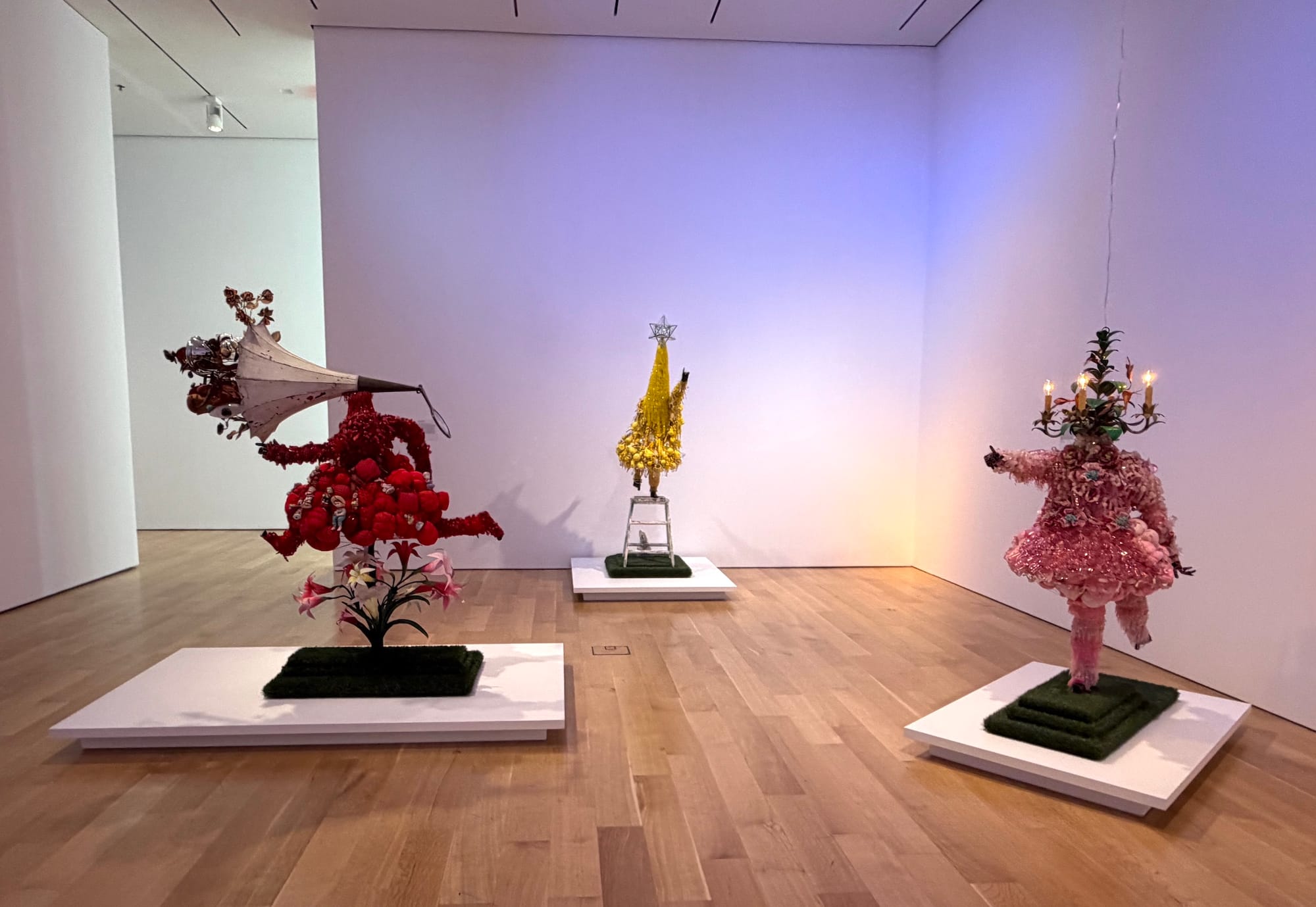
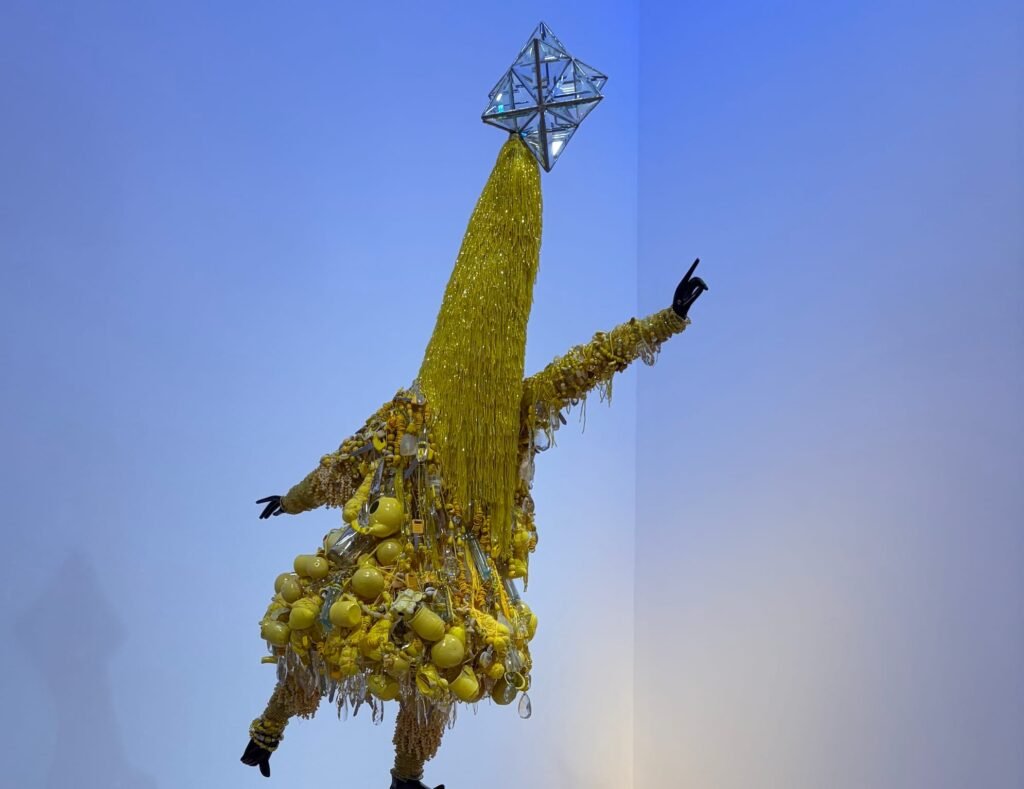
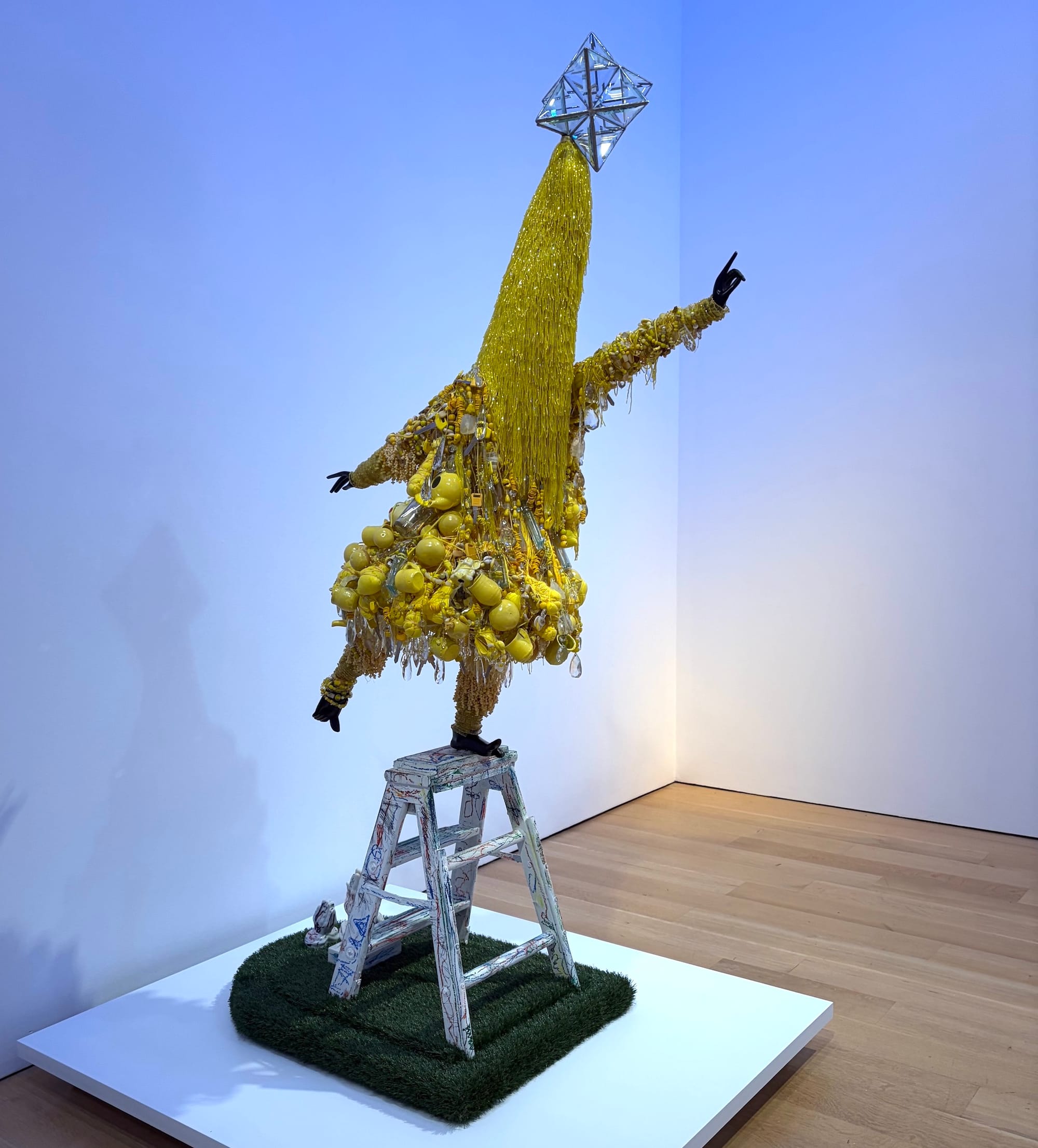
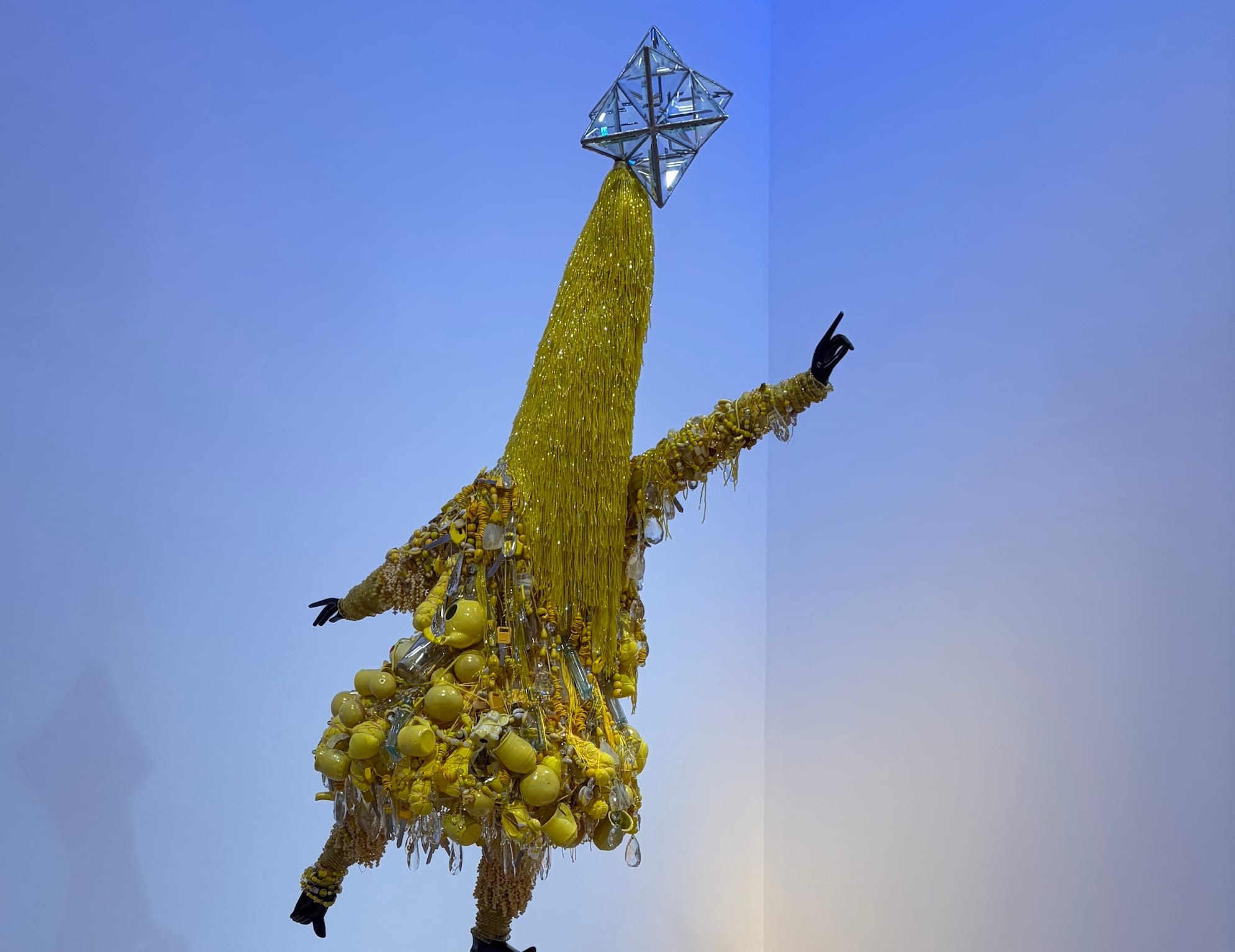
The figures, each about four to five feet tall, are dominated by glittering bricolage: ceramic teacups, glass bottles, wooden and glass beads, ribbons, yarn, textiles, and other found objects such as keys, coins, cowrie shells, porcelain figurines, and child-size boxing gloves. Together, they tell the story of the girls’ plotting and escape: “The Girl Who Had The Idea” balances on a step stool, radiant in yellow-gold, her face covered by an elongated headpiece that shimmers with cascading beads; a glass merkaba balances at its apex. Her small body reaches forward on one foot as if in excited anticipation; her hand points slightly ahead to a pink figure titled “The Girl Who Lit The Path.”
This girl wears not a head but a candelabra, which gently flickers as it illuminates a way forward. She, too, balances and points onward, as if to direct our attention to “The Look-Out, The Girl Who Rang the Alarm, The Bell-Ringer.” The striking crimson assemblage wears a Victrola horn for a head and is suspended in mid-air as she leaps over a bed of ersatz Sandhof lilies. Along with “The Girl Who Fell” and “The Midnight Sisters,” each sculpture is placed in dynamic conversation with one another; this calls to mind the stations on the Underground Railroad that once guided enslaved Black people from one safe point to the next.
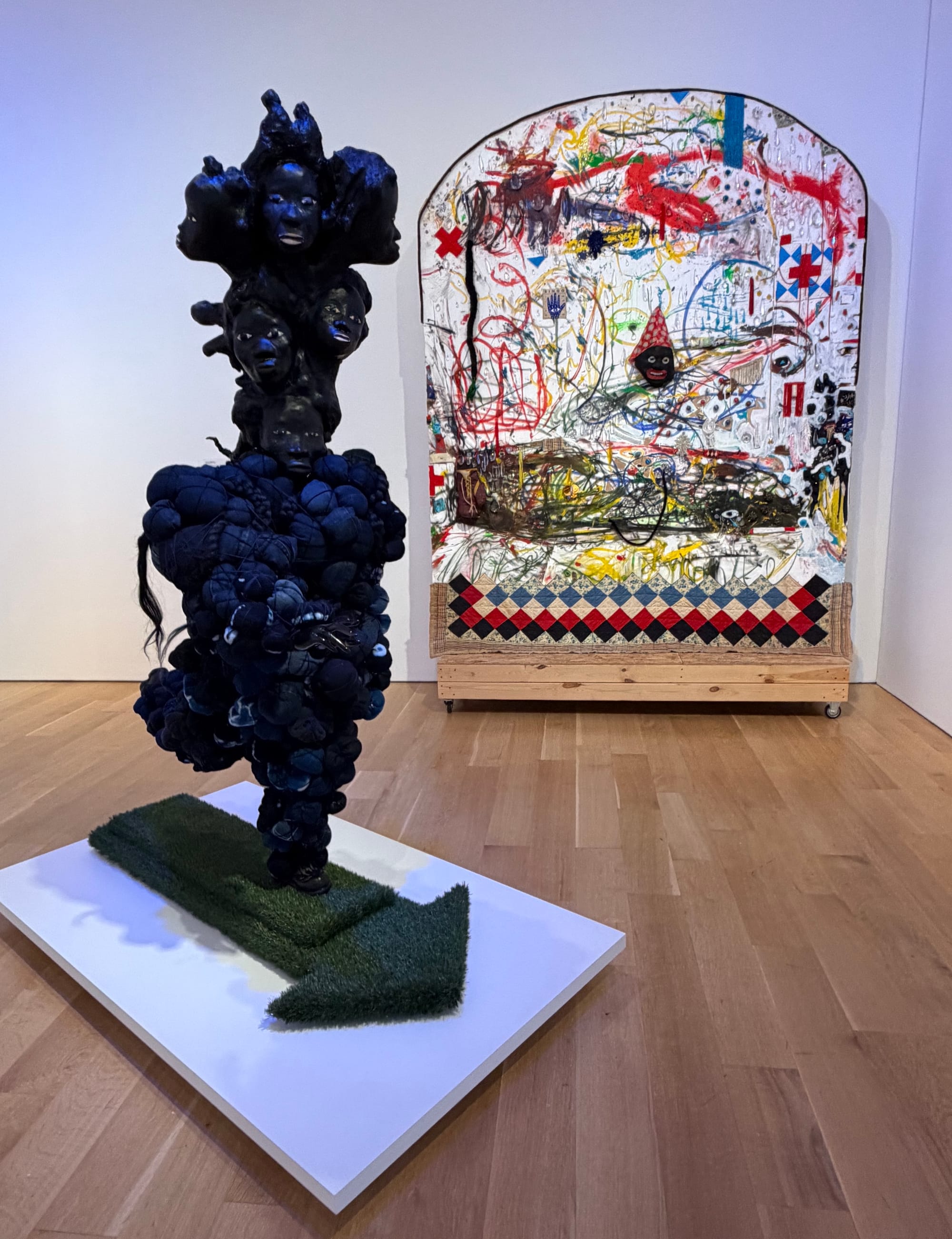
An adjacent gallery depicts the girls who stayed behind and alludes to the harsh conditions of their imprisonment. Two figures flank a small black bedframe filled with menacing ceramic snakes, bugs, eyeballs, and spiked creatures that slither and crawl amid flowers and butterflies, as if to suggest the persistence of hope and beauty despite nightmarish environs. german’s material lists read like poems; the golden figure near the bed is made not just of “twine, ribbon, beaded glass trim” but also “magic” and “an irrepressible knowledge of personal power, a spirit compelled to justice.” In a nearby wall work, “Threshold,” the artist embellished a found quilt with small trinkets, dolls, toys, and “the sound of dancing feet.”
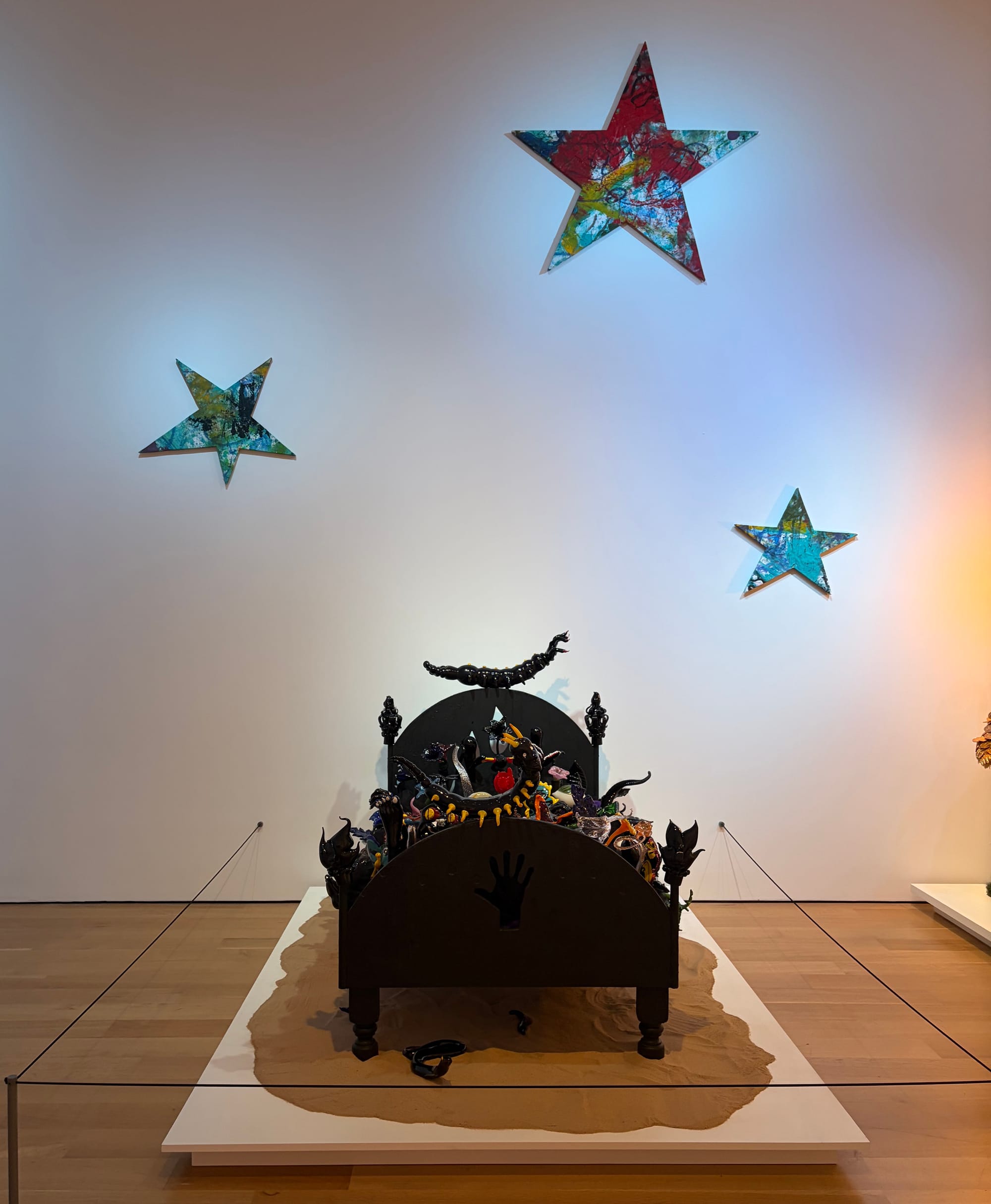
A canvas-based piece, “Codified By Light: Darkness and Rebellion—All the things that we can see and cannot see,” was created with community members during the first evening of german’s performances last fall. The event took place on the former site of the Colored Girls Dormitory, a building that, fittingly enough, now houses the University of Louisville’s Department of History.
A short film shows german entering the room in a white dress, her face obscured by a resplendent beaded headdress, and presiding over a troupe of Black female dancers who also wear white dresses. The artist narrates, prays, and sings with an incantatory energy as the women move and dance in the third-floor room from which, more than a century earlier, the imprisoned girls attempted their escape. Time and space seem to collapse in a single liberating moment. Perhaps the possibility of transformation is not foreclosed by death but rather something that belongs to both the living and their ancestors.
vanessa german: …do you remember when you were the sky? continues at the Speed Art Museum (2025 South Third Street, Louisville, Kentucky) through June 28. The exhibition was organized by Diallo Simon-Ponte, Sam Gilliam assistant curator of Artist Programs, with Taleah Gipson, curatorial administrative assistant; Tyler Blackwell, curator of Contemporary Art; and Adia Elam, Sam Gilliam Visiting Artist Program intern.