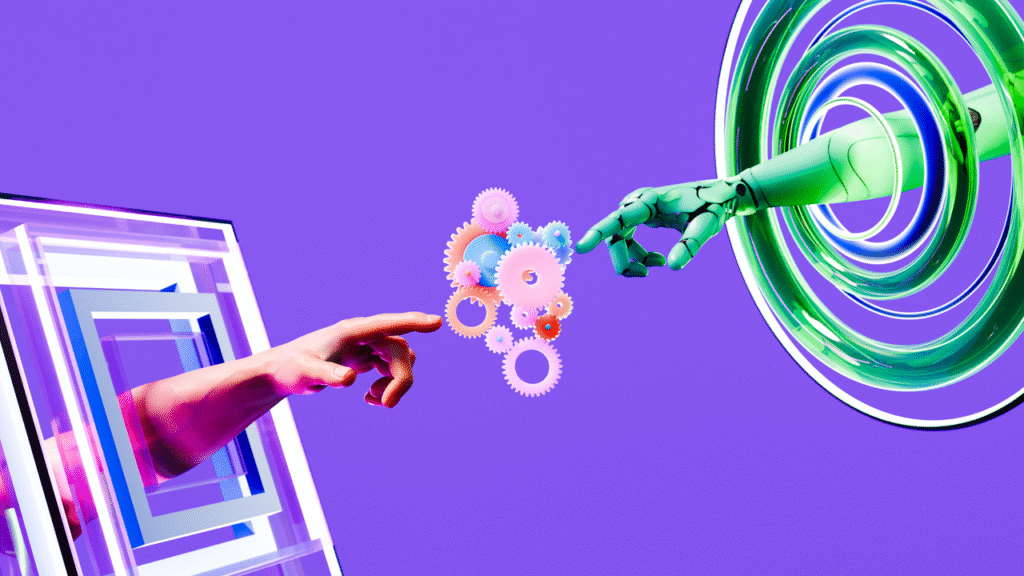
AI is now front and center in every conversation about the future of design in the architecture, engineering, and construction industry. At my firm, we’re embracing AI, but not in the way some headlines would have you think. Our belief is that AI should augment our design expertise, not replace it.
Across the industry, some organizations are pushing full automation, which means automating deliverables and trying to remove the designer from the creative process. I believe that’s a terrible idea. Design is personal. Our teams pour passion into their work, and people feel that downstream. If we chase efficiency by skipping over the natural human tendency to want to influence through our professions, we lose what actually makes design valuable.
A BETTER MODEL: AI AS A TEAMMATE
I’m excited by what AI can unlock, but I’m also candid about the risk: Over-reliance on AI could make us less smart and creative. When we stop forming hypotheses, stop exploring, and stop taking the journey (because the answer arrives instantly), we lose the mental “flex” that keeps professionals sharp. Creativity isn’t just the final output; it’s built through the process.
We’re already seeing how easy it is to slip into automation habits: “Answer this email for me,” or “write this RFP response.” That approach eliminates the creative thinking and professional reasoning we should be strengthening, not outsourcing.
START WITH YOUR EXPERTISE, THEN USE AI TO REFINE
So, what do I recommend instead?
When I engage AI, especially for generative text, I start by responding first in my own words. I verbalize what I would say based on my experience, then let AI challenge me. It can point out gaps in logic, strengthen the argument, and anticipate questions I should be prepared to answer. I’ve set my own tool directives, so it doesn’t “make up language for me.” The expectation is that I begin from my own professional knowledge base, and AI helps me hone it. That’s augmentation, not replacement.
This matters even more when you consider emerging professionals. If we thrust young architects and engineers into an immediately automated world, their ability to grow greatly diminishes. Early career designers deserve the same kinds of challenges many of us had: work that forces you to think, iterate, defend decisions, and develop a point of view. Those experiences shape future leaders in our industry.
AI CAN HELP US BECOME MORE EMPATHETIC AND AUTHENTIC
Ironically, the more AI-generated content the world produces, the more valuable authentic communication becomes. People are getting used to “machine-sounding” outputs, and clients feel the difference when someone is genuinely engaging with them. I believe people-oriented communication skills will become even more important.
AI can also support empathy in high-stakes settings like public or stakeholder meetings, where not everyone speaks “design language.” Used responsibly, it can help pick up nuance and intent through verbal cues, and potentially other signals, so designers can respond more thoughtfully.
THE TAKEAWAY
We can’t ignore AI, and we shouldn’t. But we need to use it as a tool deliberately. I’m focused on targeted technology that unlocks new ways of thinking and new ways of working, while protecting what makes design matter: human judgment, creativity, and empathy.
Mike Sewell is chief digital transformation officer at Gresham Smith.