So Much for a Straight Line
At the start of the decade, it seemed EV adoption was going to be a straightforward transition, with automakers like Volvo once vowing to go all-electric by 2030. Now, automakers have adopted different powertrain strategies, while countries around the world pursue different EV policies.
But thanks to the GEMRIX 2026 study, there is now a comprehensive look at which countries are currently leading in EV readiness. The U.S. may be the world’s second-largest car market and home to one of the leading EV makers, Tesla, but it ranked only 25th out of the 31 countries assessed. China, meanwhile, took the top spot after ranking second in GEMRIX 2023.
Before comparing these two major automotive markets on EV readiness, it is worth noting the study’s methodology. It uses 46 data points across five areas: macro factors, EV market conditions, customer readiness, charging infrastructure, and total cost of ownership/regulation. The factors are weighted into an overall score, with 100 representing broad parity between EVs and combustion vehicles.
Geely
American and China Take Different Roads
The macro factors dimension is the only one where the U.S. scored higher, with nine points versus China’s five. That doesn’t mean the U.S. has a stronger EV market; it means it has more favorable underlying conditions for EV adoption, including economic prosperity and renewable energy availability.
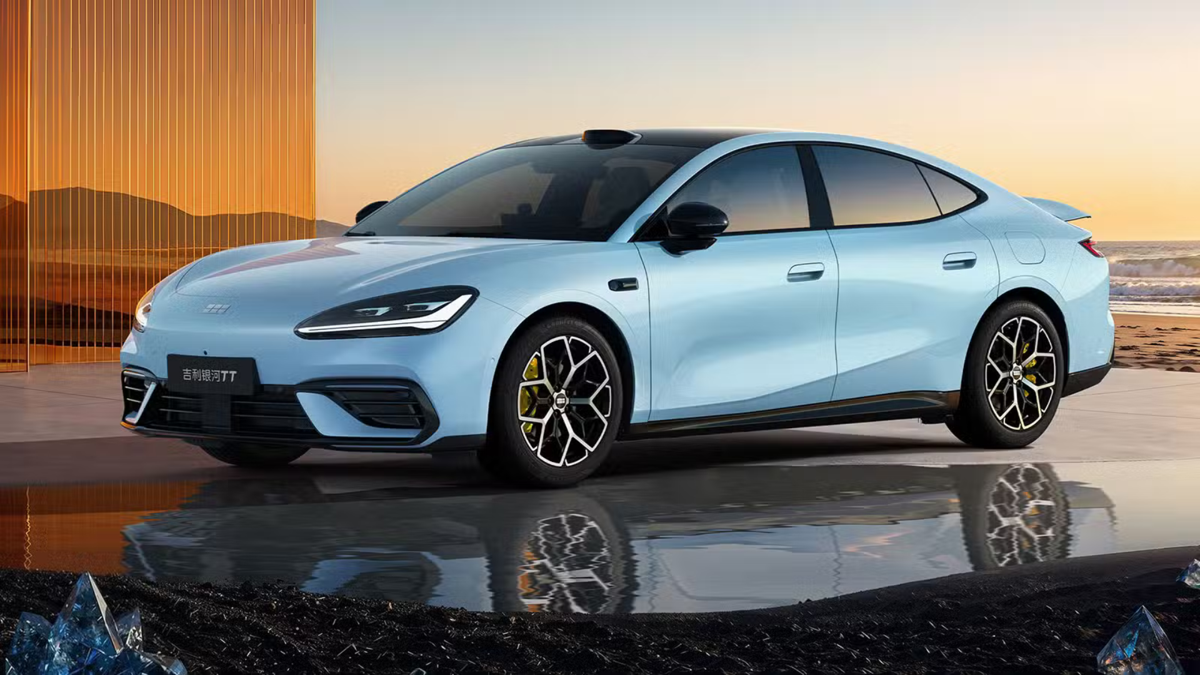
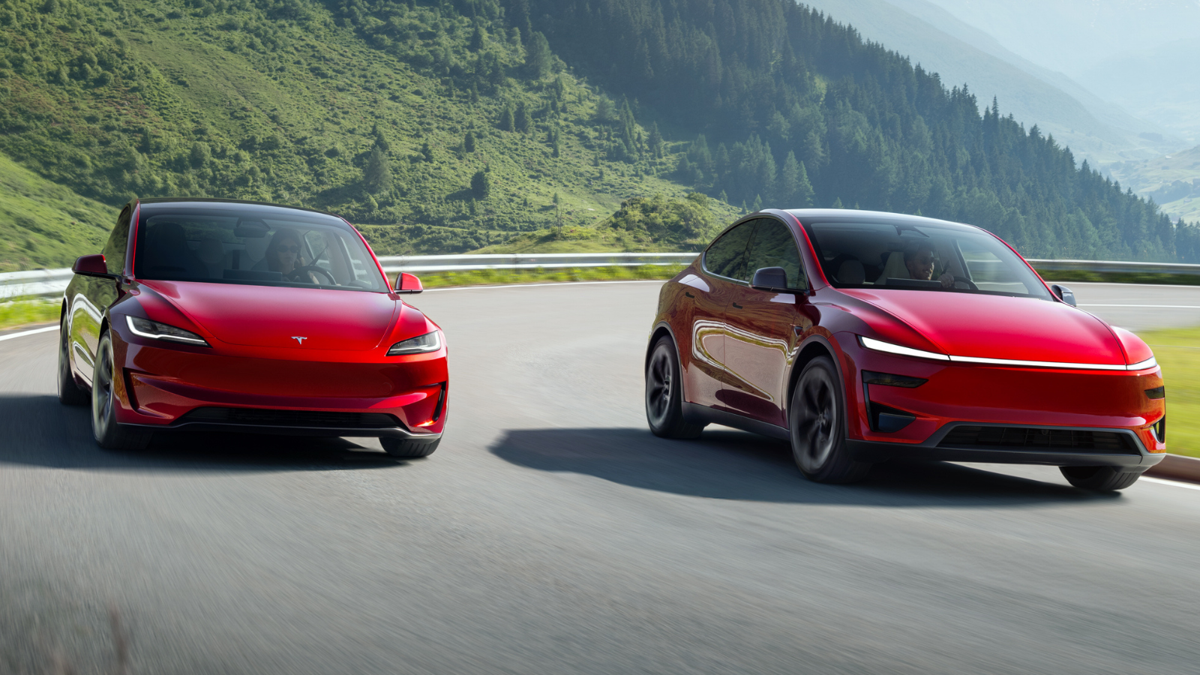
China beats the U.S. in the other four areas, including the EV market dimension, where the score is 21 to eight. This dimension pertains to a market’s scale and growth potential, as well as its electrification maturity. Out of the 34.4 million new vehicles sold in China in 2025, 51% were plug-in electrified – 27% were all-electric cars, led by the Geely Galaxy Xingyuan, while 24% were plug-in hybrids. That contrasts sharply with the U.S. profile, which uses 2024 data: 16.2 million vehicles were sold, with EV adoption at 9.3%, including 7.5% BEVs and around 2% PHEVs. Unsurprisingly, the Tesla Model Y led BEV sales stateside.
In terms of customer EV readiness, China scored 23 points, while the U.S. earned seven. It essentially shows how willing and prepared customers are to switch to EVs.
An adjacent dimension is public charging infrastructure, which can help encourage car buyers to opt for EVs and address so-called range anxiety. Again, China beats the U.S., scoring 33 to seven points, the largest gap between the two in the study. China’s country profile lists 20.7 million charging points, 55% of which are DC and 45% are AC, dwarfing the roughly 300,000 charging points in the U.S., where nearly 47% are concentrated in California, New York, Florida, Texas, and Massachusetts.
Lastly, there’s the policy and economics dimension, which assesses government support and the cost of owning an EV. China beat the U.S. 24 points to 17. China continues to offer EV tax incentives and trade-in subsidies, while the U.S. ended its federal EV tax credits of up to $7,500 for new vehicles in September 2025, reducing federal purchase support. The Trump administration has also rolled back federal rules that had pushed automakers toward greater electrification.
Overall, China scored 106 points, eight points more than its 98-point score in GEMRIX 2023. The U.S., meanwhile, dropped from 55 points to 47 points.
A World Apart
Because of these scores, the U.S. and China fall into completely different categories. China belongs to the top Global Benchmark category along with Norway (103 points), Singapore (96 points), and the Netherlands (90 points). Next on the hierarchy is the Ambitious Followers category, which includes Canada (65 points) and European countries such as France (88 points), Germany (87 points), and the U.K. (87 points). The U.S. belongs to the Emerging EV Markets category, tied with New Zealand and Brazil at 47 points. Then there’s the Starter Markets category, consisting of Mexico (40 points), KSA (36 points), and South Africa (26 points).
The comparison highlights where the U.S. and China stand today and what could shape their respective EV markets going forward. But despite China’s commanding position, Chinese EVs still face major barriers to entering the U.S. Trump has said he would be open to Chinese automakers building cars in the U.S. if they hire American workers, but existing restrictions on Chinese-linked connected vehicles remain a major obstacle. In fact, Polestar, which is majority-owned by China’s Geely, will be unable to sell new vehicles in the U.S. starting with the 2027 model year.
Dodge