Kevin Dietsch/Getty Images
- Donald Trump’s renovations for the Reflecting Pool haven’t worked out.
- Trump could blame himself — he’s the one who ordered it. Instead, he offered stories about vandals.
- We’re used to Trump falsehoods. When they are turned into federal charges — like this one did — it should freak us out.
On July 2, federal prosecutors charged David Hearn, a 67-year-old former Olympian, with vandalizing the Lincoln Memorial Reflecting Pool in Washington, DC.
Hearn had made a “a violent effort” to damage the pool, US Attorney Jeanine Pirro said.
A month later, Pirro’s office told the court she wanted to drop the case.
It turns out, Pirro said in a court filing late Friday, that the pool’s well-documented problems probably weren’t a result of vandalism. Instead, they were likely because of “hasty and botched work” performed by a contractor.
A standard news management rule of thumb is that you put out embarrassing news right before the weekend, when it’s least likely to get noticed. And most of the coverage of the Hearn case has indeed focused on the embarrassment it is generating for the Trump White House. Primarily because up until now, Pirro has been a loyal Trump supporter.
But if we treat this story like a standard-issue optics narrative for the Trump White House, we’re doing it wrong. Because this is something much more important: It’s the Trump White House using federal prosecutors as a tool to punish perceived enemies.
In a normal administration, this would be a giant story. The fact that we’re treating this like business-as-usual should be a giant story, too.
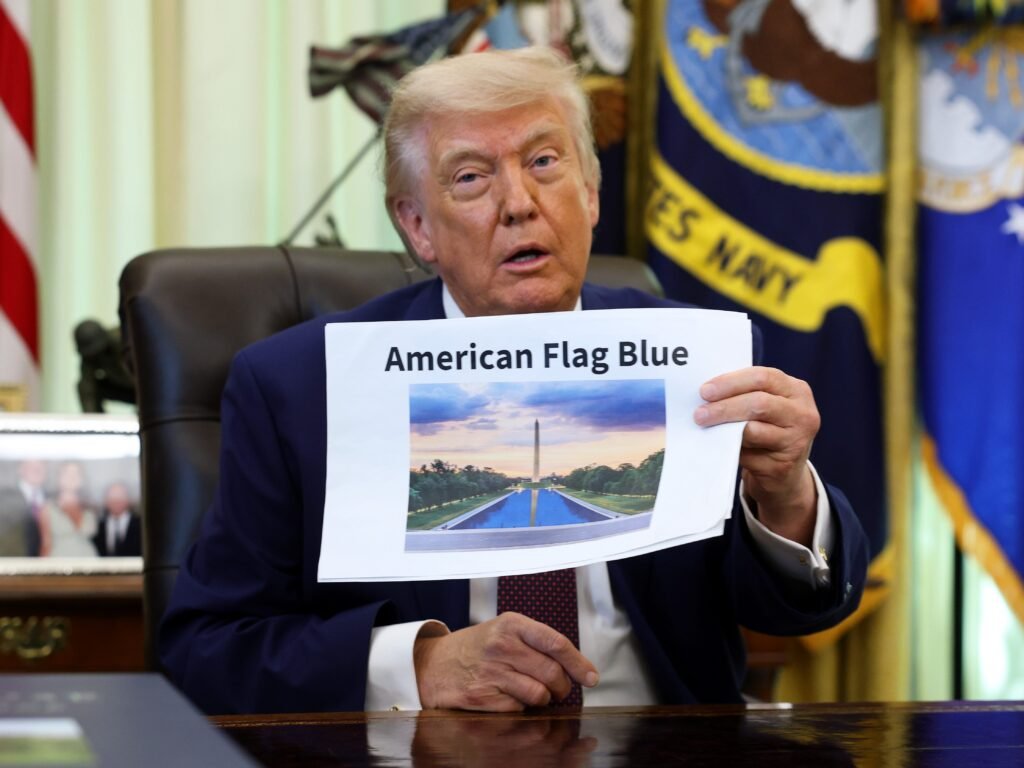
The story of the Reflecting Pool, and Trump’s obsession with it, has been well told. The shortest version is that last spring, the Trump administration ordered a poorly conceived renovation using contractors without experience doing that kind of work. So instead of a clear pool with an “American flag blue” bottom, the pool became an algae-infested bog.
But Trump wouldn’t acknowledge that his plan hadn’t worked. Instead, he insisted that rogues had attacked the pool with a box-cutter and somehow gouged a “300-foot slit” in the pool’s lining.
That made the pool a “Trump says thing that’s obviously not true” story — the kind that initially seemed unique back in 2017, when he insisted that his lightly attended inauguration was actually the world’s biggest. Now that kind of tall and easily disprovable tale just elicits shrugs.
Last month, Pirro turned Trump’s fibs into something much more serious by using them as the basis for a felony charge (her office later charged three other Americans with misdemeanors for similar theoretical offenses).
In Pirro’s motion to dismiss the charge against Hearn, she argues that she was misled by Trump’s Department of the Interior, which oversees the pool. The DOI initially provided “less than fulsome information” about the case, Pirro said. So her office didn’t really understand what had happened until late July — weeks after a grand jury had indicted Hearn.
That’s silly. Throughout the spring, story after story from mainstream news outlets reported that Trump’s attempt to transform the pool was misguided, poorly executed, and had made things worse. Just as important: Trump’s claims about vandalism weren’t remotely plausible.
So, again: It’s one thing not to correct Donald Trump when he says things that aren’t true (Trump continues to insist that VANDALS are the cause of the pool’s problems, as he argued on Truth Social this weekend; when I asked his press office for comment Monday, they referred me back to his post. He told reporters Monday that Pirro “made a mistake.”)
It’s another thing to tell stories about the president that don’t seem to be true. But turning a Trump falsehood into a federal criminal charge is something very different.
It’s also not the first time we’ve seen federal prosecutors turn themselves into Trump-branded prosecutors. The New York Times, for example, has documented hundreds of flimsy charges the administration has filed against immigrants and protesters during its ICE crackdowns in the last year. Almost half of those have fizzled, the Times reports: “Juries acquitted defendants, judges threw out charges, or prosecutors withdrew them.”
The Times itself has been the subject of a Trump legal campaign — last month Trump’s Department of Justice filed subpoenas against Times reporters who’d written about security issues with Trump’s new Air Force One, then dropped them after getting scolded by a federal judge.
In the Hearn case, it’s tempting to brush this aside: After all, Pirro dropped the charges. The system worked, right?
But Hearn, whose case attracted support from prominent allies, should never have had to face a felony charge — and to take on the legal, reputational, and financial obligations fighting that charge entails — in the first place.
So the fact that the federal government has seemingly conceded that it brought a bogus case shouldn’t give anyone comfort. It should make you wonder how many dubious charges Donald Trump’s prosecutors have filed so far — and how many more we’ll see while he’s in office.