Bloomberg/Getty Images
- The DOT is pushing for regulatory changes to enable the development of autonomous vehicles.
- NHTSA proposes allowing the removal of brake pedals and steering wheels for AVs.
- Safety advocates are concerned about the lack of clarity on vehicle operations.
The idea of riding in a car with no steering wheel or pedals is one step closer to becoming reality, thanks to Donald Trump and the Department of Transportation.
The Trump administration is considering a regulatory change that could help accelerate the rollout of purpose-built robotaxis, including vehicles without steering wheels or brake pedals.
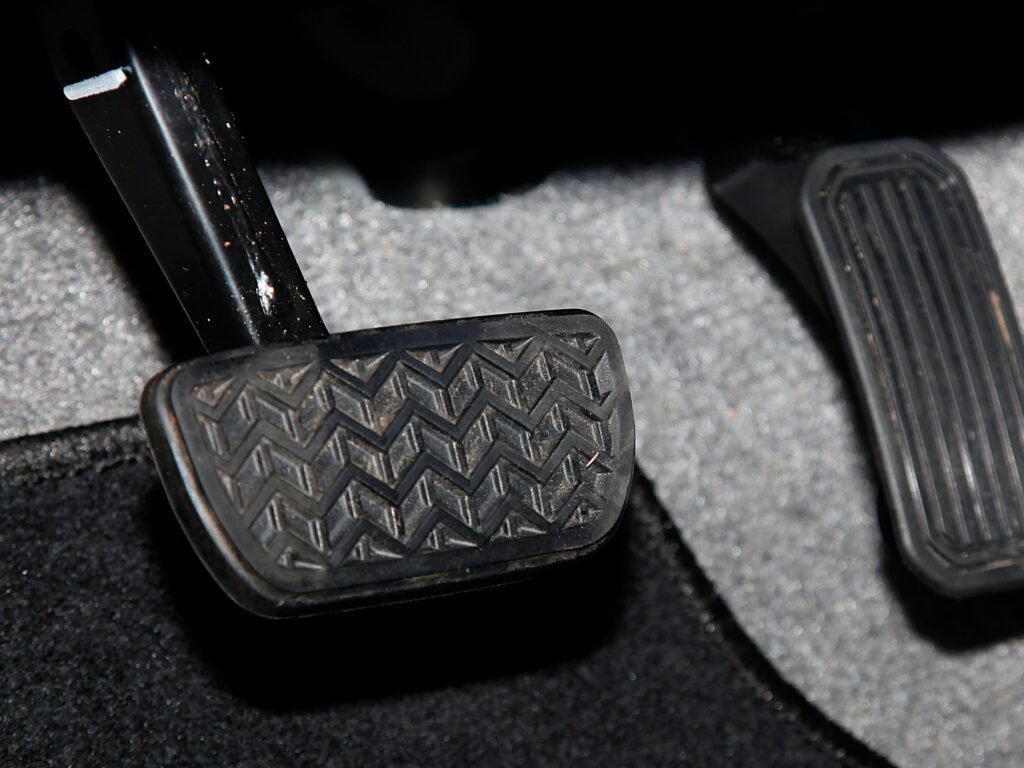
On Thursday, the DOT proposed updating federal vehicle safety rules to no longer require brake pedals in vehicles designed to operate exclusively with automated driving systems. If adopted, the change would remove a hurdle for companies such as Tesla and Zoox, which are developing autonomous vehicles without traditional driver controls.
The proposal is now open for public comment for 30 days.
The move is part of a broader effort by federal regulators to modernize vehicle rules for the autonomous era. The National Highway Traffic Safety Administration has previously proposed eliminating requirements tied to features such as windshield defoggers, wipers, and tire placards for certain self-driving vehicles. During the Biden administration, regulators finalized a rule allowing autonomous vehicles to operate without steering wheels.
At the moment, companies that want to deploy vehicles missing federally required equipment must obtain government exemptions, and those exemptions come with limits on how many vehicles can be put on the road.
The new regulations would allow companies like Zoox to scale quickly. At present, Zoox is waiting on an exemption on driver-control requirements so it can produce 100 robotaxis a week.
NHTSA Administrator Jonathan Morrison said in a statement that the latest proposal is an effort to tear down “pointless barriers to innovative designs.”
Smith Collection/Gado/Getty Images
Philip Koopman, an emeritus professor of electrical and computer engineering at Carnegie Mellon University, said that removing “historically unintended restrictions on autonomous vehicles” is generally a good idea.
“It is appropriate to modify the Federal Motor Vehicle Safety Standards to remove unintended barriers to driverless vehicle deployment by removing dependencies on the presence of a human driver, which this latest proposal does,” Koopman said.
“Another equally important point is that while NHTSA is busy removing unintended barriers, there are no FMVSS parts that are specific to autonomous vehicles,” Koopman added of the regulations. “It is long past time to see movement in adding new safety standards relevant to this new technology as well.”
The proposal could be especially significant for Tesla’s Cybercab and Amazon-owned Zoox, both of which are developing robotaxis without conventional driver controls. Multiple AV companies have voiced their support for the NHTSA proposal through public comment filings.
Both Waymo and Zoox wrote in April that the revised regulations would reduce their compliance costs, while Tesla wrote that it would like the agency to consider adding more vehicle types to the pedal exemption.
Safety complexities remain
The American Automobile Association said in its public comment to NHTSA that while it supports easing regulations for fully autonomous vehicles, transparency is key, especially for passengers and emergency responders who may not know how to operate a vehicle without such controls.
Jay Janner/The Austin American-Statesman via Getty Images
The Advocates for Highway and Auto Safety echoed these concerns.
“NHTSA presents no research or analysis of the potential safety impacts of removing the display and provides no discussion of the possible concerns not only for passengers but also potentially for first responders who may need to know the potential for the vehicle to be in gear following a collision or other system failure,” the advocacy organization wrote in its public comment.
Dan O’Dowd, founder of The Dawn Project, an AV safety advocacy group, told Business Insider that robotaxis should be required to meet certain reliability standards before they can have no physical controls.
“Tesla’s ‘Robotaxis‘ are nowhere near the reliability level required to remove the brake pedal,” O’Dowd said. “The removal of physical controls should only be granted to robotaxi companies who have conclusively proven their software is safe for autonomous, unsupervised driving.”
Tesla, Waymo, and Zoox did not immediately respond to requests for comment.