Toyota Thinks There’s More to Gain From the Rear End
Every drop of fuel matters these days. Automakers are looking at everything that could squeeze a little more efficiency out of their vehicles, from powertrain improvements to lighter materials. Aerodynamics, naturally, are part of that conversation. And Toyota thinks there’s room to do something different at the back of the car.
A patent published in China this week describes a retractable aerodynamic extension designed to improve airflow over a vehicle’s rear section. The filing offers an interesting solution to a problem designers face all the time: making a car slippery through the air without giving up too much interior space.
Take the current Toyota Prius, for example. That famously chopped-off rear isn’t just a weird design flex. It’s all about airflow, but there’s always a tug-of-war between making the car slippery and keeping the trunk usable.
Toyota’s solution? Instead of giving the car a permanent tail, why not bolt on something that pops out only when you actually need it?
CarMoses
A Tail That Comes Out When Needed
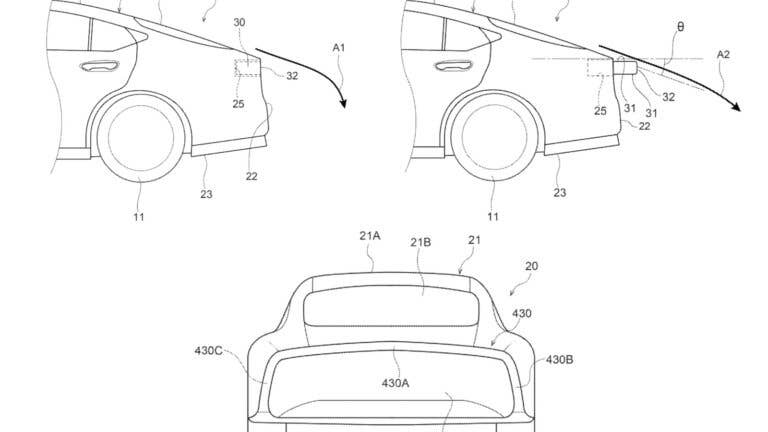
That’s essentially what the patent describes, first spotted by CarMoses. A panel is tucked into the area where the roof meets the rear of the vehicle. When deployed, it moves backward and acts as an extension of the roofline.
Why bother? Well, when air hits the end of the roof, it tends to break away and swirl around, making a mess and adding drag. Give it a longer runway, and you keep things smoother, which means less wasted energy.
This isn’t your typical sports car spoiler, either. Those are all about downforce and flashy moves. Toyota’s trick is more about stretching the body itself, not just bolting on a wing.
The patent describes two ways to deploy the component. One slides backward using a rail-and-arm mechanism, while another rotates outward from its mounting point. There are also variations in its shape, including one that resembles an inverted U when viewed from behind, with additional sections running down either side.
But why bother retracting it? A permanently extended panel could interfere with the vehicle’s styling and potentially introduce unwanted aerodynamic compromises when it’s not needed. Hiding it inside the bodywork keeps the rear looking relatively conventional. Toyota even suggests linking deployment to vehicle speed, although it doesn’t specify an actual activation threshold.

CarMoses
Could Toyota Put This on the Prius?
The concept makes sense for vehicles where designers want decent cabin and cargo space without accepting the aerodynamic penalties of a more abrupt rear end. A retractable extension could offer some of the benefits of a longer, tapered profile without requiring that shape all the time.
That makes the Prius an interesting vehicle to associate with the idea, particularly given its emphasis on efficiency and its distinctive rear styling. Still, there’s an important distinction here: Toyota doesn’t mention the Prius as a confirmed application in the patent. There’s no indication that the electrified hatchback will receive this technology.
As with any patent, there’s no guarantee the technology will make it into a production vehicle. Automakers patent plenty of ideas that never leave the drawing board. This one, though, offers an interesting look at how Toyota might tackle an old engineering compromise without necessarily changing the shape of the entire car.

CarMoses