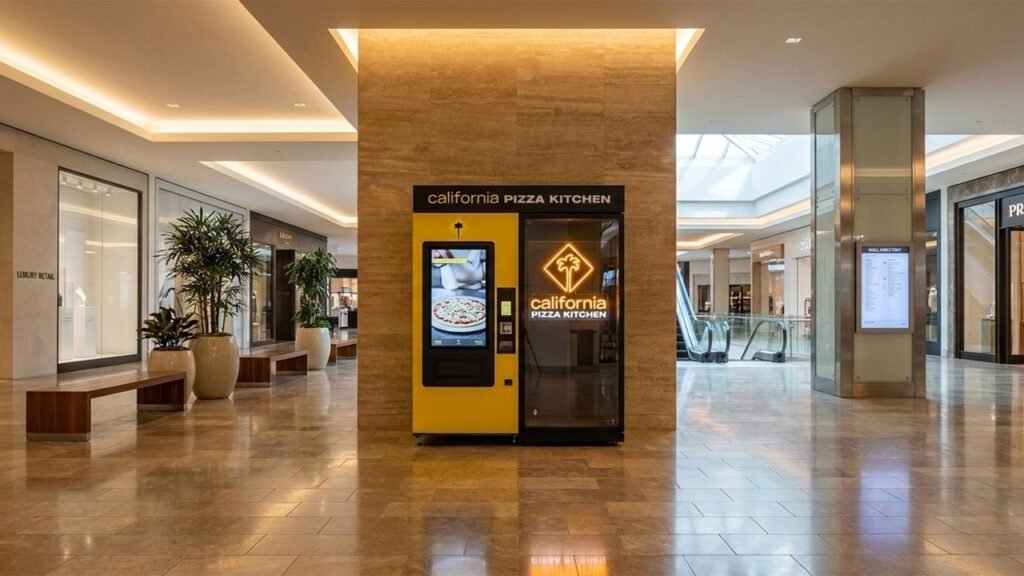
Tucked in America’s busiest airport, Hartsfield-Jackson in Atlanta, a California Pizza Kitchen-branded kiosk whips up barbecue chicken pizza; macaroni and cheese; and spaghetti, kung pao or Bolognese, in just 90 seconds. On busy days, travelers order 140 pizzas.
Following a small pilot at airports in Dallas and Boston, the restaurant operator announced on Friday it plans to roll out up to 1,000 of these autonomous vending machines over the next three years at airports, universities, hospitals, hotels, and office complexes.
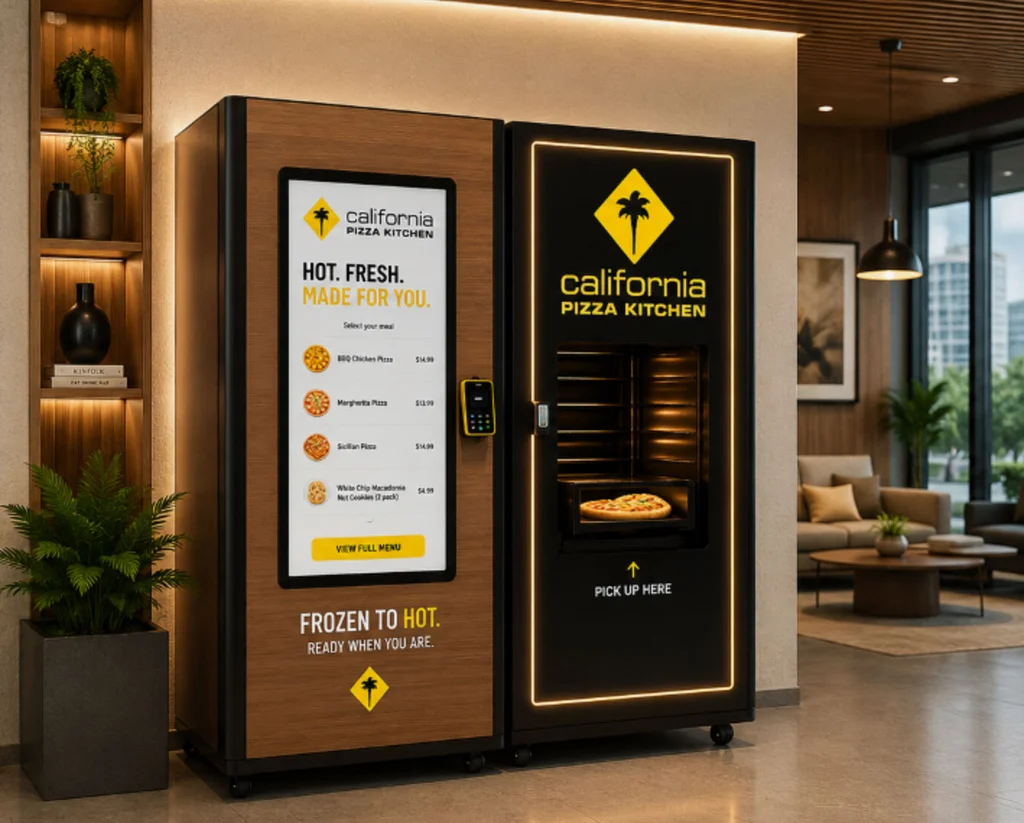
California Pizza Kitchen, which operates 104 company-owned restaurants and has 32 franchise locations, says kiosks will help extend the brand in new locations where traffic is high, but dining options can at times be limited as the industry is constrained by high labor and food costs. The kiosks can make 7-inch pizzas sold at an average price of $12 per pie using the same ingredients found in California Pizza Kitchen’s physical restaurants.
Michael Beacham, president of the brand’s parent company, California Pizza Kitchen Global, tells Fast Company that the brand has high name recognition due to a multiyear push to sell frozen goods at more than 20,000 retail grocery stores. But restaurants can be found in only 25 states, mostly along the coasts and in the South. California Pizza Kitchen is making a cautious, cost-effective bet on brand expansion six years after the chain filed for bankruptcy during the height of the COVID-19 pandemic.
“There’s a huge need to get closer to our consumer with our product, in a convenient way for them to experience it at all hours, without having a labor cost attached,” says Beacham.
Pizza without the restaurant
He adds that diners are prioritizing convenience, but are fed up with the high fees tacked onto orders from food delivery apps such as DoorDash and Uber Eats. In recent years, kiosk technology has also improved to “finally get to a point where we knew we could deliver a product that was as good when it came out of that machine, surprisingly, as the table in the restaurant,” says Beacham.
Restaurant vending machines are also being tested on a limited scale by peers like Chick-fil-A and White Castle, as food and beverage vending sales in the U.S. and Canada rose 5% year over year to $3.3 billion in 2025, according to the retail software and payments technology vendor Cantaloupe.
“You have limitless hotels that have all of the ingredients of not being open 24/7 and not having restaurants in their facilities,” Brett Beveridge, CEO and founder of T-ROC Global, a retail staffing and technology firm, tells Fast Company.
T-ROC Global will own and operate the California Pizza Kitchen kiosks through a license agreement, handling the infrastructure that includes 32 warehouses and thousands of technicians to maintain and replenish the kiosks.
The 90-second pizza
Beacham says California Pizza Kitchen met with 27 commercial oven manufacturers before settling on the operator TurboChef. An earlier version of the brand’s kiosk was a refrigerated system that had higher spoilage risk and a longer, three-minute cooking time. TurboChef was selected because it can cook frozen food, which has a longer shelf life and can be warmed up in a sealed box.
“When the consumer opens it, it’s crispy as if it was cooked in a wood fire oven,” says Beacham.
And yet, placing a bet on autonomous kiosks can be risky, given the restaurant sector’s choppy track record on technology. While mobile ordering and in-store digital kiosks have been home-run hits, artificial intelligence-enabled voice ordering systems have thus far had a clunky rollout, and robots that handle kitchen tasks or food delivery have mostly been stuck in the testing phase.
Industry experts caution that companies like California Pizza Kitchen will need to determine whether kiosks fit the brand’s vision, while also thinking through how to educate consumers on this new ordering experience and astutely selecting the right high-traffic locations.
“The technology is there,” Will Auchincloss, a retail sector leader at the consulting firm EY-Parthenon, tells Fast Company. “I think customers have a learning curve to go through on these things to learn how to use them and adapt to them.”
CPK’s comeback from bankruptcy
California Pizza Kitchen’s embrace of kiosks represents the first big test for the company’s new ownership team. The brand was sold in a deal that was reportedly valued under $300 million in December to an investor group led by Consortium Brand Partners, a private equity firm that owns the activewear brand Outdoor Voices, the home decor and furniture company Jonathan Adler, and the lifestyle and clothing brand Draper James, which was founded by Reese Witherspoon, the Oscar-winning actress.
The private equity industry has had a choppy history with restaurants, at times overleveraging balance sheets with debt, which contributed to the seafood chain Red Lobster’s decision to file for bankruptcy in 2024, or cutting staff and swapping in lower-quality ingredients to save costs. That’s what has put a dent into the fast-casual chain Panera’s recent sales. When news gets out that a chain has sold to private equity, diners flock to social media channels like Reddit to lament the feared demise of their beloved eateries.
“Private equity, on the whole, has unfortunately developed a pretty bad reputation for being so balance sheet-minded that oftentimes you lose what’s special about a brand,” Cory Baker, founder and managing partner at Consortium, tells Fast Company.
Baker says the firm is investing in California Pizza Kitchen by standardizing payment systems and effecting a redesign that will spruce up interior design, decor, furniture, and lighting fixtures. He adds that partnerships are key, which is why Convive Brands was tapped as a minority investor to run restaurant operations at California Pizza Kitchen, a brand that says it generates nearly $1 billion in annual global revenue. Convive also runs the Le Pain Quotidien and Little Beet restaurant chains.
“I think we’re probably brand operators first, and we’re investors second,” says Baker. “We try to balance that as responsibly as we can.”