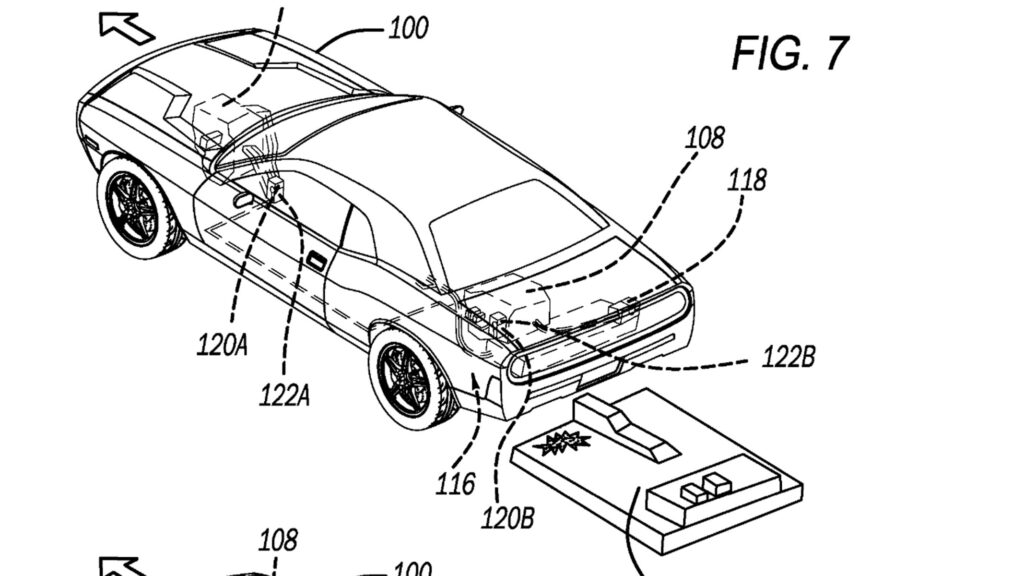
- Stellantis patented a system that can physically disconnect an EV’s high-voltage battery.
- The battery could be dropped during a fire, overheating event, or other emergency.
- A low-voltage battery could then power the motor to move the vehicle away.
There are plenty of ways to deal with an overheating EV battery, but Stellantis has apparently taken a page from China’s playbook. Forget cooling it, just ditch the thing. A newly published patent from FCA US describes a system that can electrically and physically disconnect a high-voltage battery from an EV. Better yet, the car could then use its 12-volt battery to literally drive away from the discarded pack.
The patent, titled “High-Voltage Battery Quick Release System For Vehicle,” was published by the USPTO on September 17. It lists FCA US as both the applicant and assignee, and the document describes the system as a response to situations where a high-voltage battery overheats, becomes damaged, or otherwise creates a thermal event. No question, this is a safety issue, and it’s one we’ve seen many times in the real world.
Read: Ferrari’s New Hypercar Patent Turns The Rear Wing Into A Long Tail
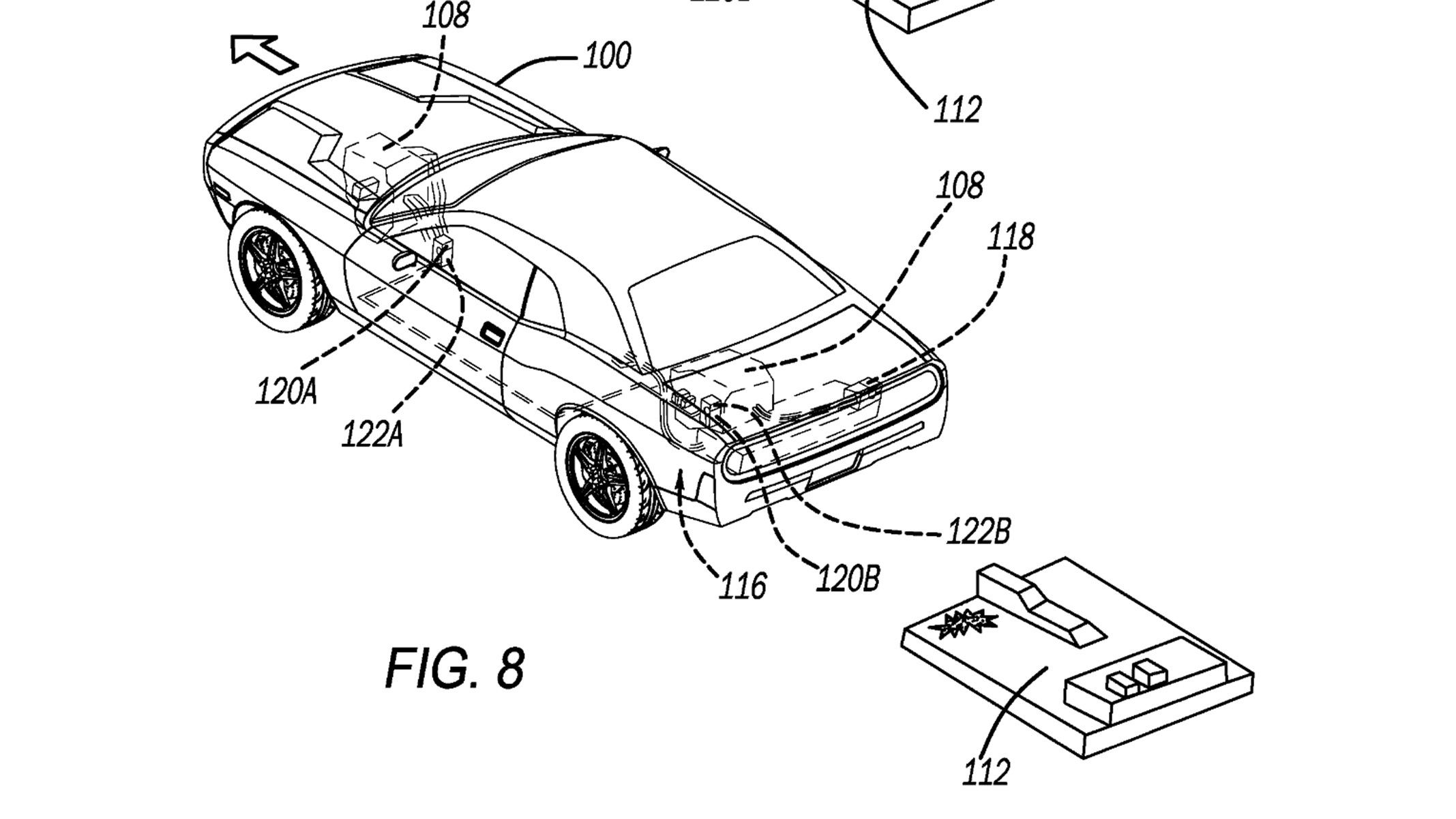
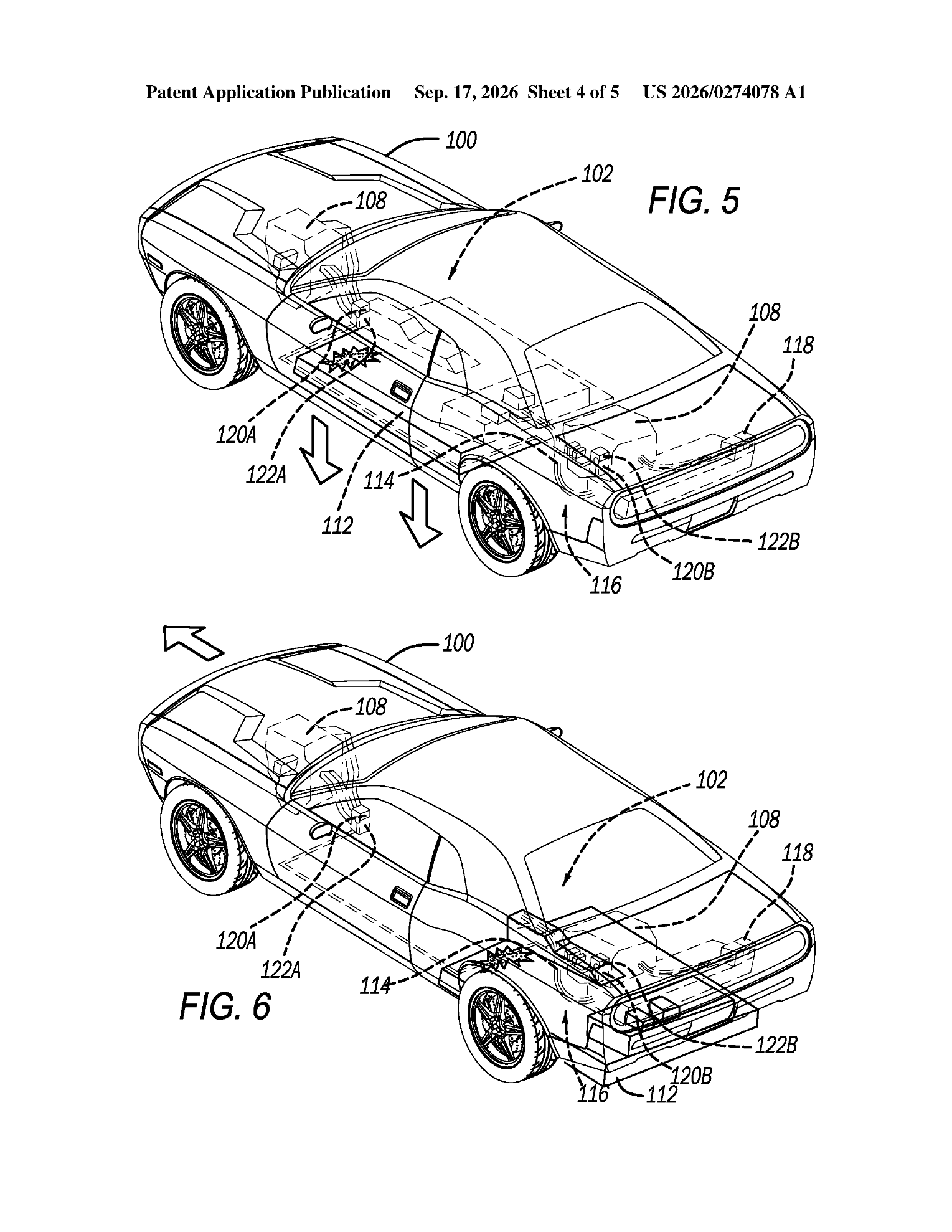
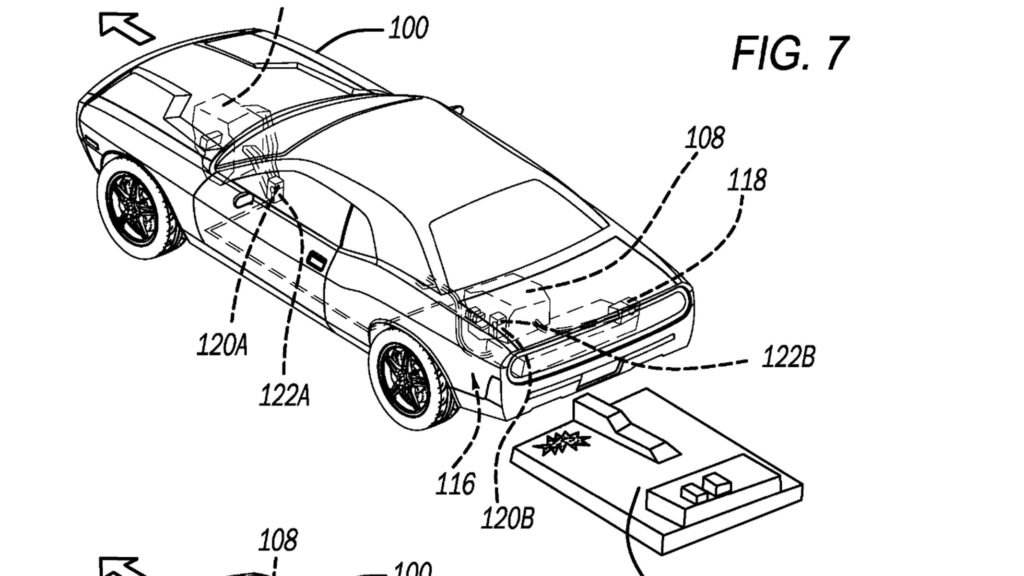
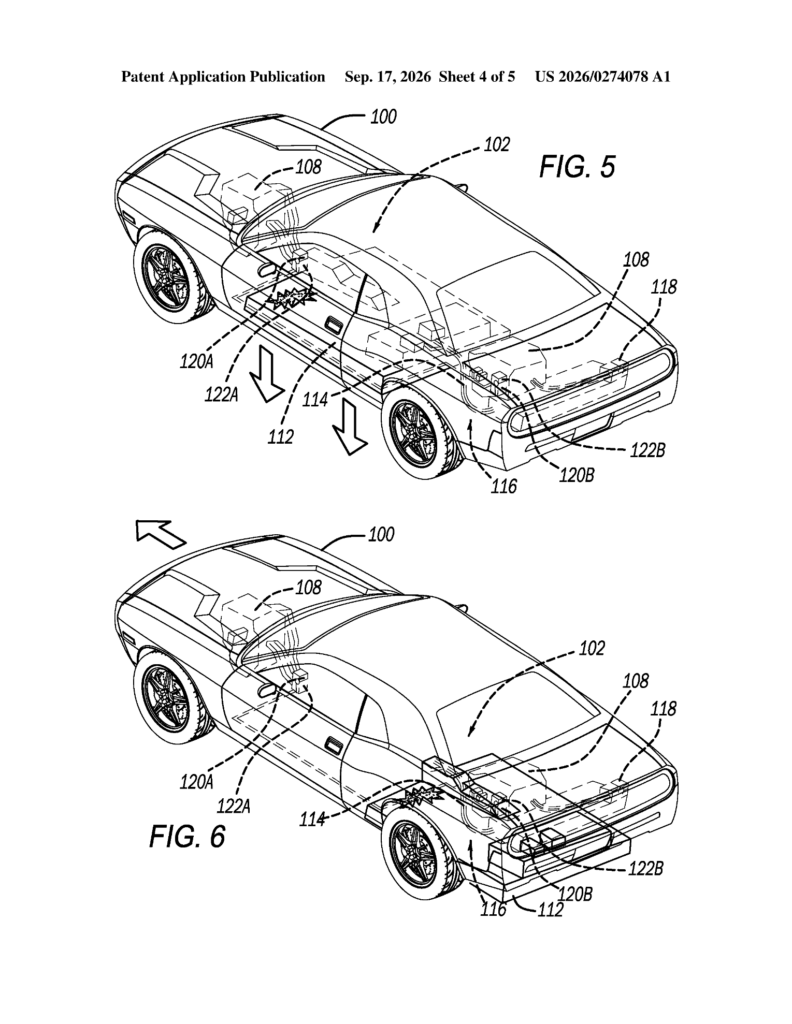
Stellantis’ solution is basically to yeet the battery and then let the car drive away. A Chinese research center demonstrated a similar-sounding idea about a year ago. How the process happens in this case is particularly interesting. First, the driver, passenger, first responder, or another individual needs to activate a quick-release switch. The car, in theory, or at least according to the patent, disconnects the high-voltage battery and decouples it from the car in question.
Notably, the decoupler could use several methods to separate the battery from the car, including frame sections that slide apart or, far more interesting… “pyrotechnic features.” If that doesn’t sound like a Hollywood movie scene come to life, we’re not sure what does. Stellantis also envisions having more than one release switch.
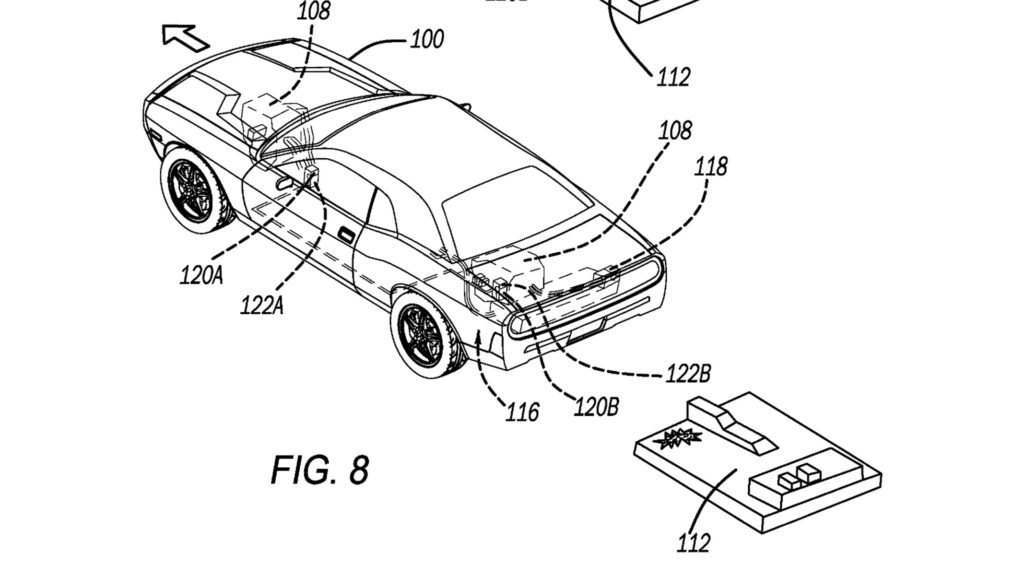
One could be located inside the cabin while another could live in the trunk, allowing someone outside the vehicle to trigger the system. The switches themselves could take the form of a lever, physical button, touchscreen control, or toggle. Plenty of you are likely scratching your heads right about now. How could one drive away if the battery is no longer connected to the car?
That’s where the 12-volt battery comes into play. According to the patent, this battery would provide enough juice to move the vehicle a predetermined distance away from the potentially burning pack. The patent specifically describes the controller commanding the motor to propel the vehicle away after the high-voltage battery has been decoupled. That all said, there are still some questions left unanswered.
Stellantis doesn’t specify how far the vehicle might travel. We expect it to be closer to a few hundred feet rather than a few miles. We also don’t know how serious Stellantis is about putting this into a production car. The patent makes it clear that it could work in all types of vehicles, though, so that’s a touch closer to real than it is to something the brand will stick on the shelf indefinitely. It’s certainly a novel way to remove the threat of a battery-related fire in order to save the vehicle and its occupants.
Photos: USPTO / Stellantis