American libraries have evolved in recent decades as their role as centers for learning and community expand. Many have added maker spaces, turned into climate resilience hubs, and even become partners in projects to add more affordable housing.
But despite all that change, a vast majority of them still organize books with the Dewey Decimal System, a categorizing system developed in 1873, which critics say still has the outdated 19th century social opinions to match.
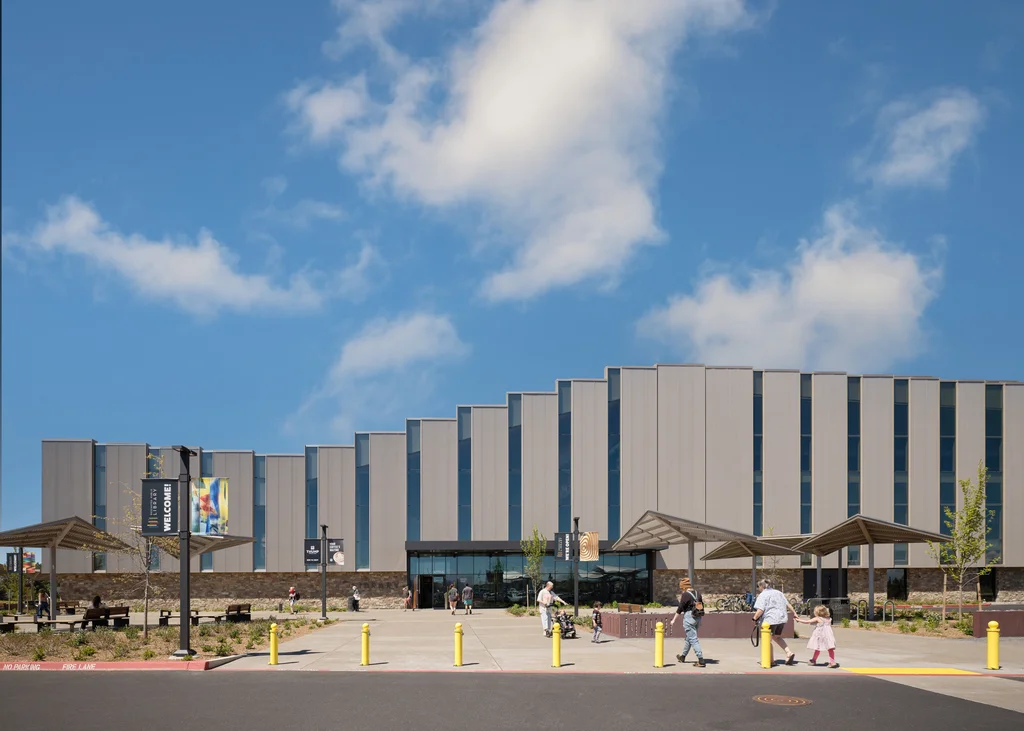
In Deschutes County, Oregon, the local library system not only said “down with Dewey” but rethought how books should be categorized and displayed. After passing a $195 million bond measure in 2020, the county redesigned all its branches at once, which allowed library staff to conduct an experiment in rethinking how libraries engage readers today.
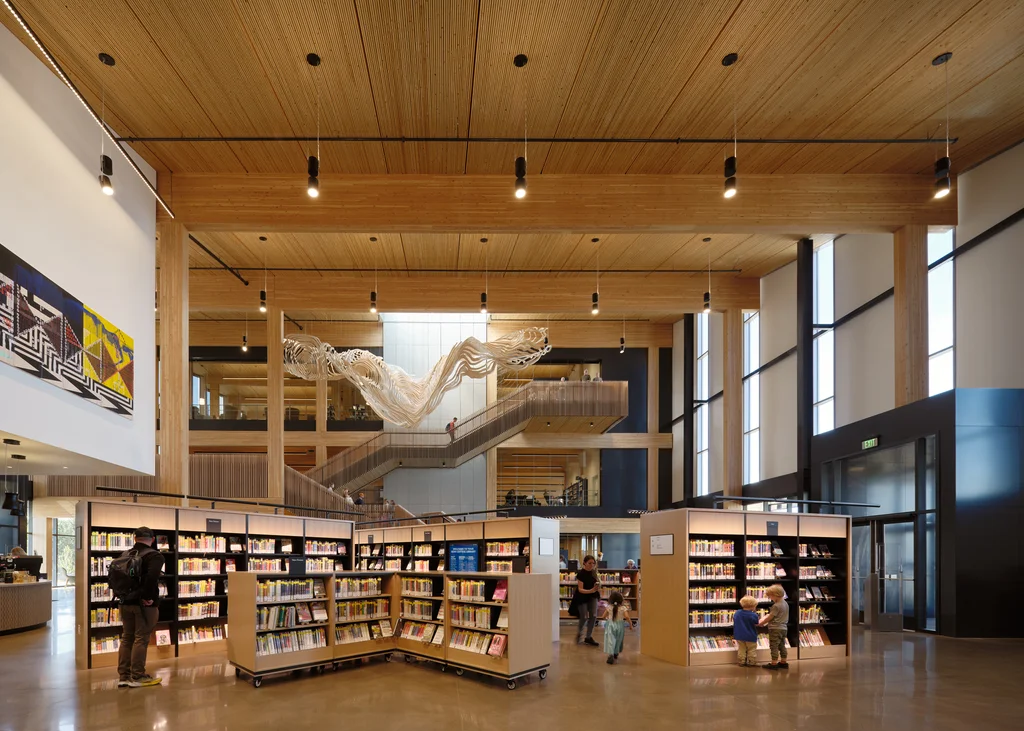
The new Stevens Ranch Central Library in Bend, Oregon, a 100,000-square-foot branch designed by architects from the Miller Hull Partnership, features a new philosophy of organization and engagement. In addition to a new set of shelving units designed to feel more like a bookstore, books were placed using the libraries’ proprietary Wayfinder system.
“The research that we did told us that the vast majority of library users are actually there to browse,” says Emily O’Neal, a librarian who as technical services manager for Deschutes Public Library helped develop the new system. “We really embraced the idea of making it as fun and exciting and as unexpected a browsing experience as you could.”
What comes after Dewey
In the Dewey method, books are assigned numbers that correspond to their place in broad three-digit categories. For each book, that number is followed by a decimal point and a longer string of digits that correspond to subsections that convey greater specificity.
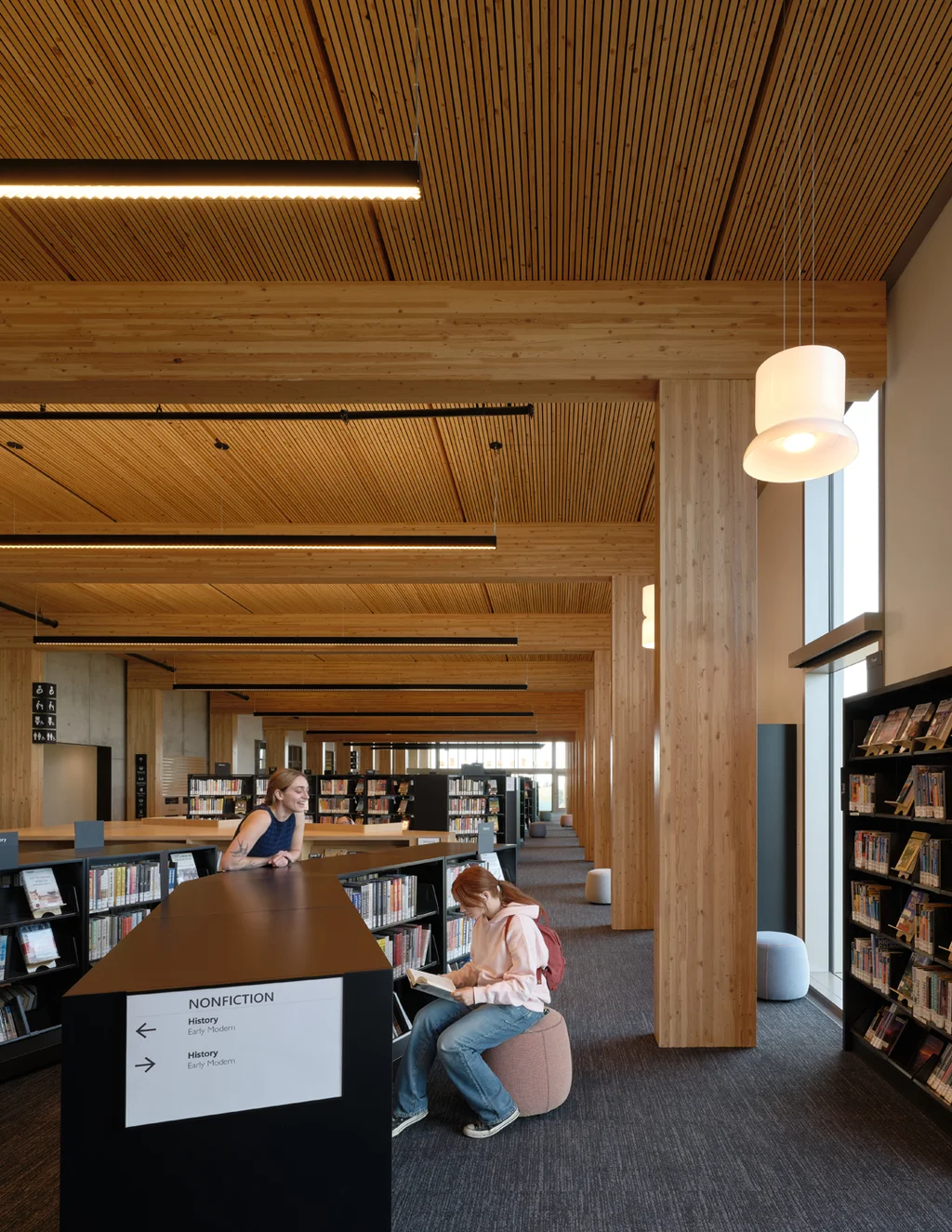
Wayfinder eliminates the Dewey reliance on mere numbers, and instead organizes into broad categories and subcategories. A book on growing tomatoes, for example, would be in the Arts and Crafts category, in the gardening subcategory. In the Dewey Decimal System, a book on gardening could potentially be in any of the four places in the system that contained gardening content. With Wayfinder, it’s all in the same place.
There have been alterations and expansions to the traditional categories used by libraries in recent decades. O’Neal and her team looked into systems that had done similar projects, such as Markham, in Ontario, and the Maricopa County system in Arizona, outside of Phoenix. But by and large, the widely adopted Dewey Decimal System remains slow to replace, despite complaints against it.
The effort by Melvil Dewey, the developer and library pioneer, to classify and categorize knowledge is filled with blind spots and prejudices, including a number of racial, religious, and sexual biases (LGBTQ+ content was originally filled under “mental derangements”). Dewey himself was called out by librarians of his time for sexual misconduct and lewd advances.
Like a bookstore
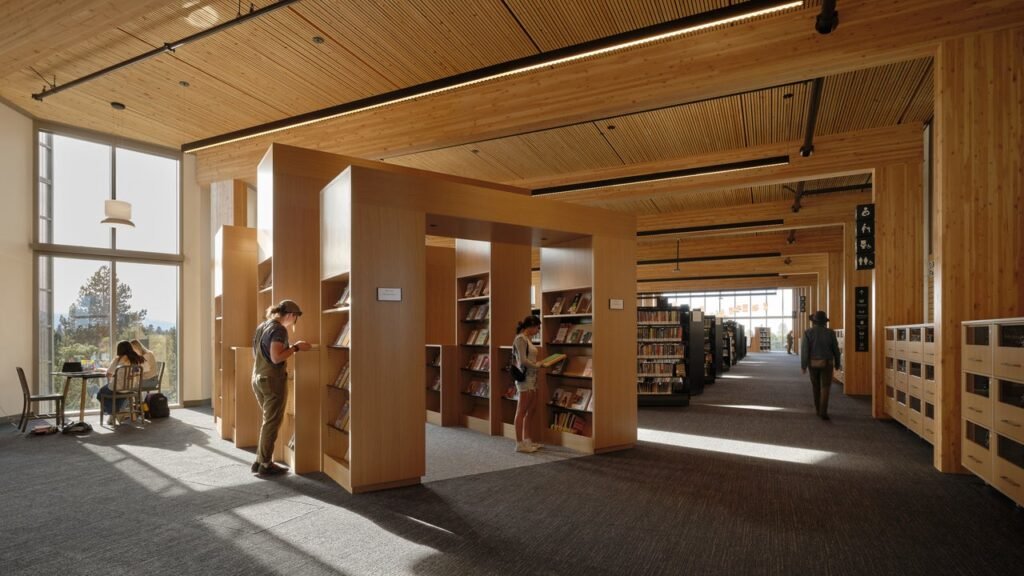
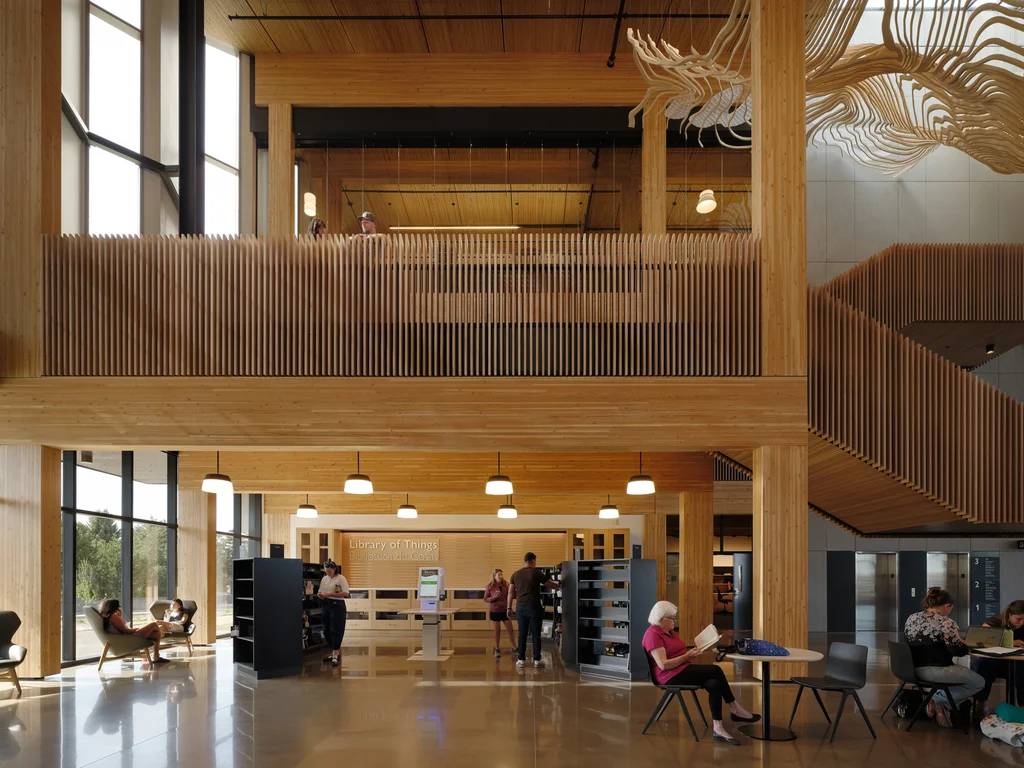
Architects at Miller Hull had a better browsing experience in mind when they designed a new shelving and display system for the books at Stevens Ranch. All libraries tend to have a large, open space to expand and contract along with the collection, says Ruth Baleiko, an architect and Miller Hull partner. But since the Wayfinder system allowed more concise categories, books could be placed in more intimate spaces, creating what Baleiko called “little eddies” instead of blocky grids.
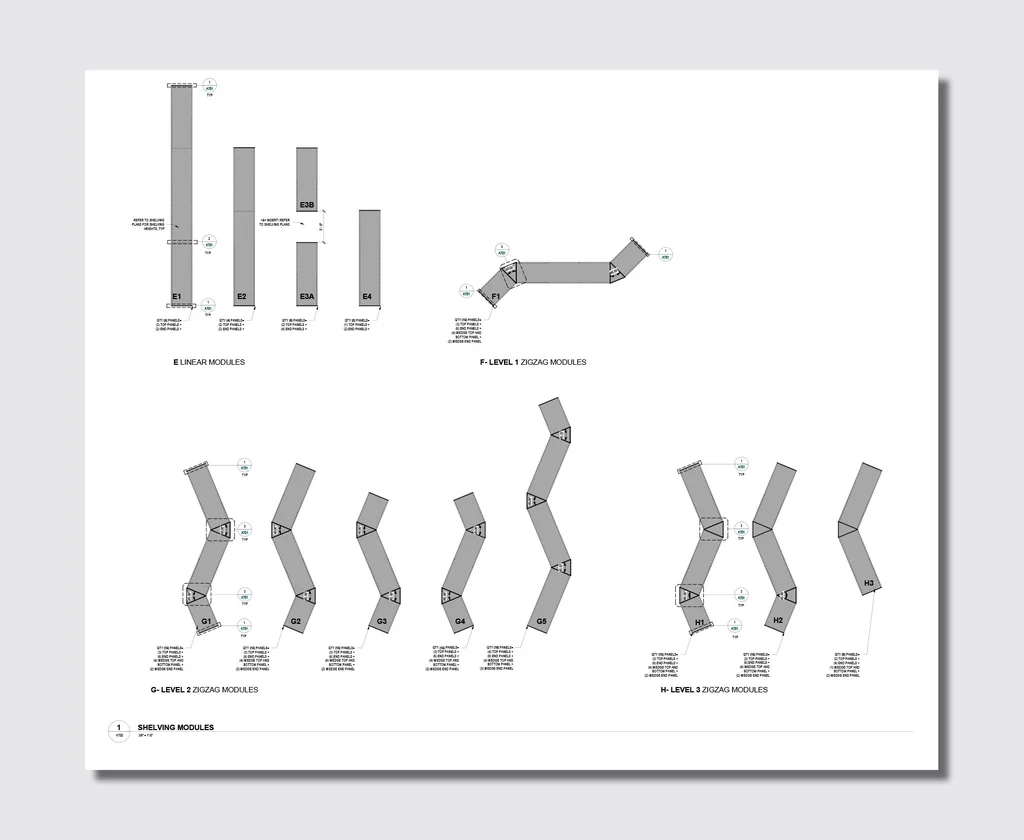
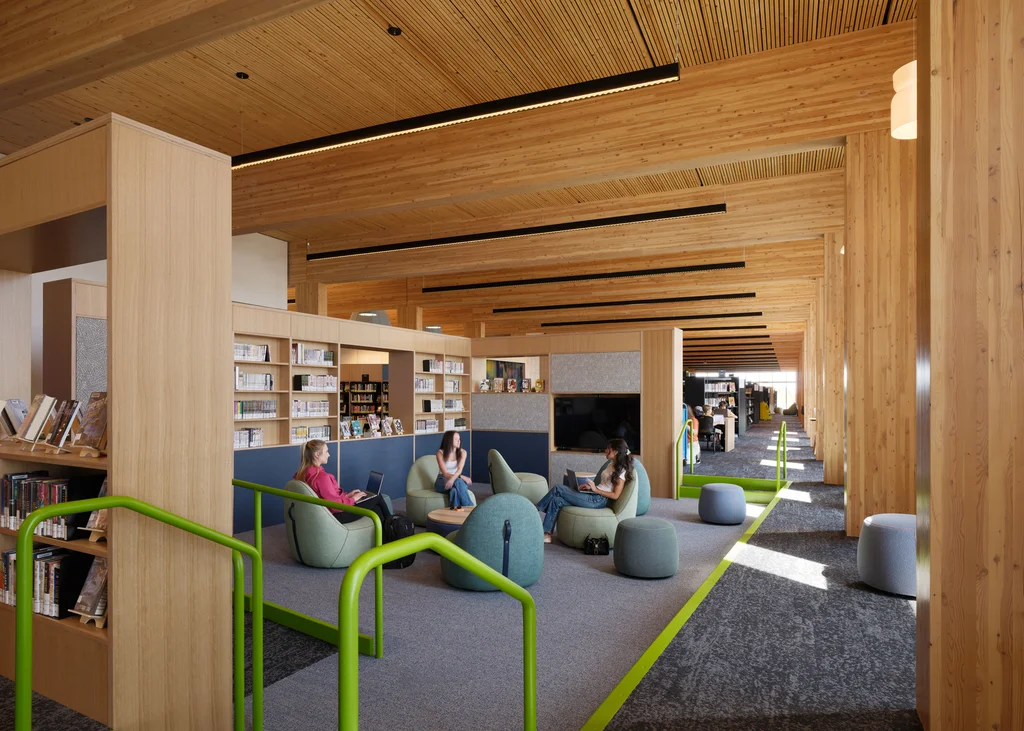
Miller Hull designed a system of custom modular shelves on wheels, all lower than standard shelving, to encourage easier access and reconfiguration. The kit of parts came in four shapes, including a standard rectangular shelf as well as bent modules shaped like hockey sticks, that can be combined in various configurations. Taller U-shaped display shelving was custom-designed with integral lighting and adjustable shelves with the ability to do face-out, cover-facing book displays. The design team aimed for flexibility, Baleiko says, so the staff could change layouts and create the sense of discovery that keeps people coming back.
The new shelves weren’t laid out in a regular grid of shelves, making for a less linear browsing experience. Combined with a better system of topical organization, it’s designed to make it easier to linger and find an unexpected, exciting read.
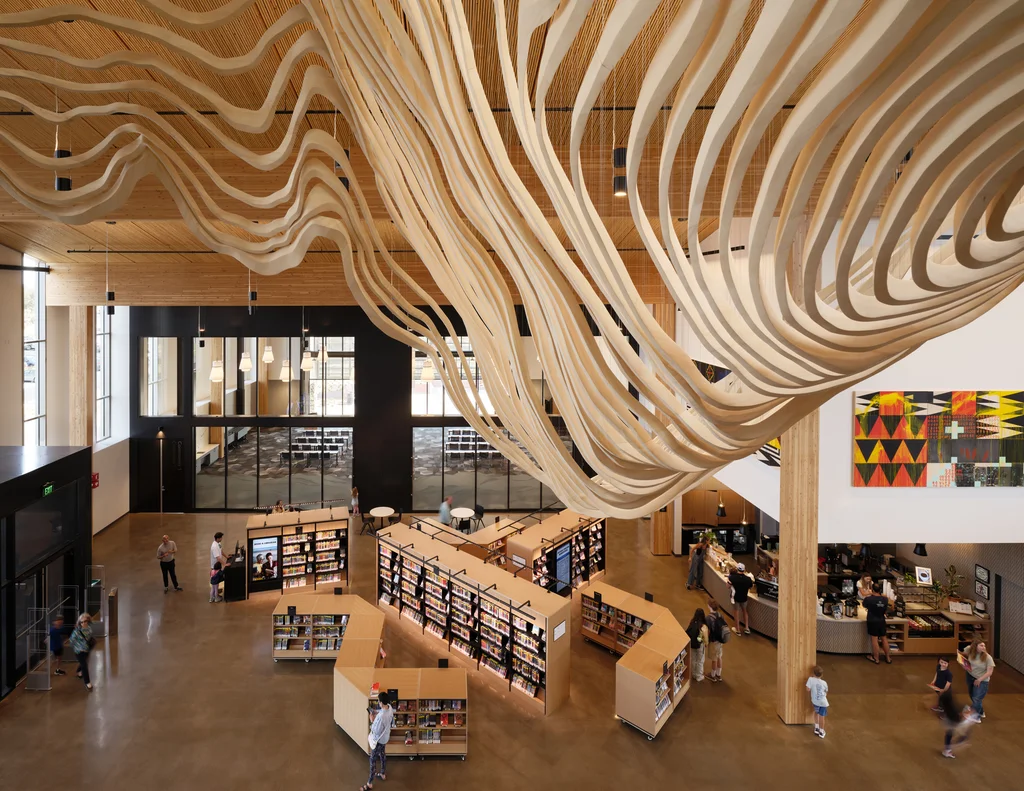
“One of my favorite things to do is walk around and just see the number of display holders we have that are empty because we just filled them 15 minutes ago,” says Todd Dunkelberg, the retiring director of the Deschutes system. “People are just grabbing them off the shelf.”
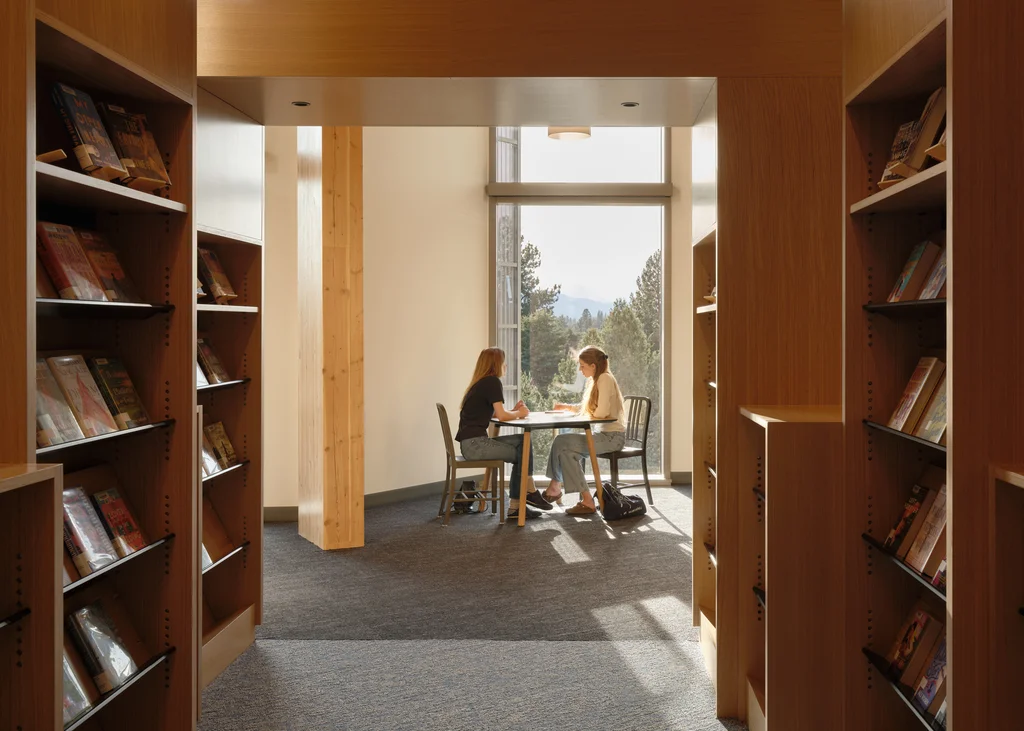
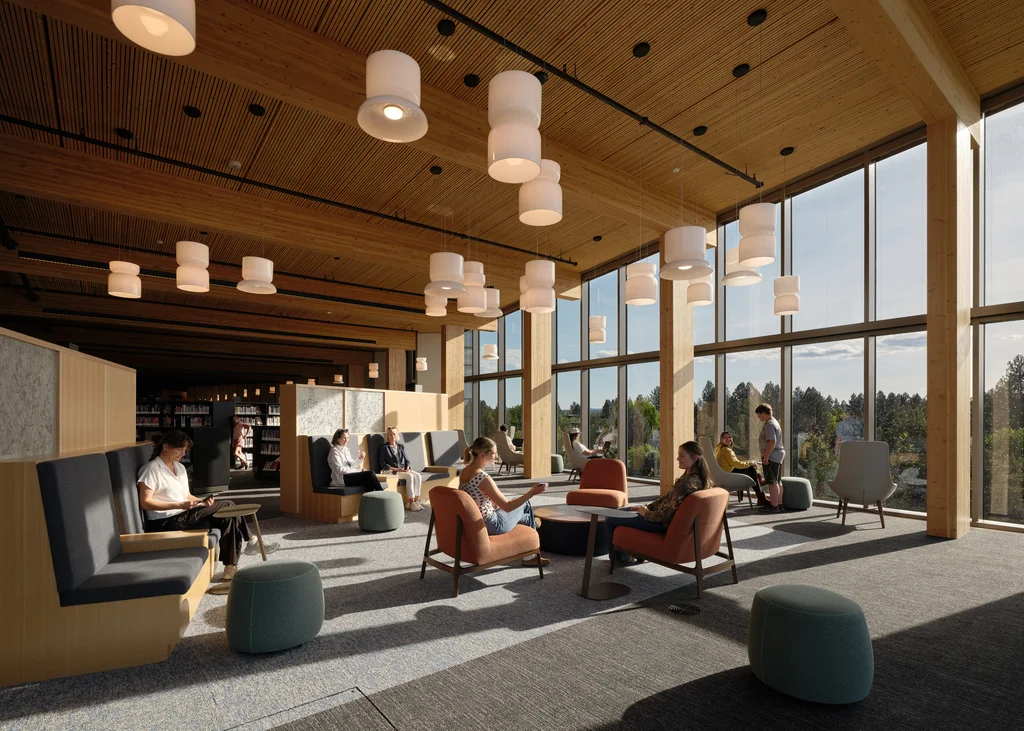
Other design touches carved out more space for lingering. Seating sections are interspersed amid shelving modules. A special wooden display for oversized arts and crafts books, including photo books and calligraphy books, sits at the top of the landing on the third floor, and a sunken, conversation pit area near the manga collection has become a popular teen hangout spot.
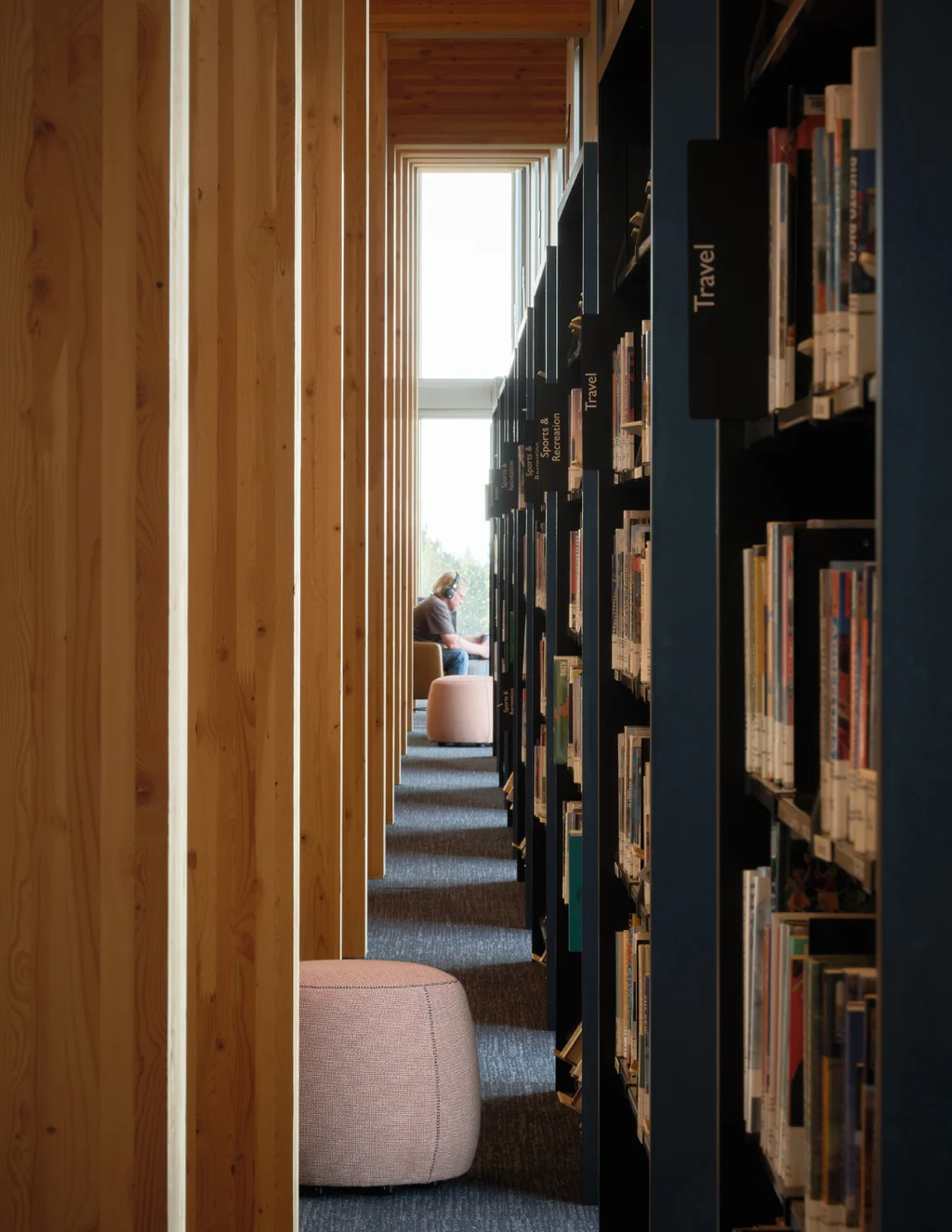
Wayfinder also boasts a better system for patrons to locate books. Signs, or flags, displayed on the outside on the top of shelves provide an easily viewable label of what topic is where. Shelf end caps contain a broader breakdown of what’s inside. And within the shelves themselves, small signs attached to magnets—so they’re moveable as the stacks of books get shifted and changed—contain the subtopics. When patrons consult a library computer to find a book or topic they want, a system called Stack Map provides a visual route to the correct shelf, like Google Maps for books.
The Deschutes library system reordered the stacks using Wayfinder in 2023, a significant undertaking that required retraining the staff, relabeling books and shelves, and updating the computer system. The process took about two weeks per branch.
But they were confident in the results. In 2017, librarians tried reclassifying the children’s picture books, switching from alphabetical organization by author to setting them out by topic, like animals or dinosaurs. The pilot increased circulation by 20%. Then, staff tried a reorganization of the law library, a fairly niche collection, and saw a 10% jump in circulation.
When Deschutes County made the switch system-wise, circulation jumped; instead of averaging about 20% of the collection checked out at any one time, the libraries saw nearly 30% of books checked out thanks to Wayfinder. O’Neal found that the reorganization and new shelving system does mean less room for books on the floor, but the increase in circulation helps make up for the lost display space.
The improvement was more pronounced for adult nonfiction—arguably the part of the catalog most constrained by Dewey’s shortcomings—where circulation leapt from 15% to 27%. In addition, the library has seen fewer requests for help at the front desk and a threefold increase in library card applications since opening.
“We wanted it to feel like a community space where folks wanted to stay a while, and so each of the decisions were going to be intermeshed together to create that sense of community,” O’Neal says. “It doesn’t matter how I’m interacting with this building. I’ve found what I want, and I want to stay, and I want to come back.”