Despite Google’s status as one of the true giants of U.S. tech, it’s never quite been able to make its Pixel phones a mainstream success.
Last year, for instance, the company enjoyed record U.S. sales in September after the launch of the Pixel 10 line, according to Counterpoint Research. But despite achieving 28% year-on-year growth, the Pixel still only accounted for 6.1% of the $600-and-up smartphone market in the U.S., which is dominated by Apple.
There is one market, however, where Google has managed to turn the Pixel into a big hit, and surprisingly, it’s in a country that was one of the last to adopt its search engine. The entry-level Pixel 8A and 9A have been some of the best-selling phones in Japan in recent years, and this seems to have prompted Google to pull out all the stops for the latest iteration.
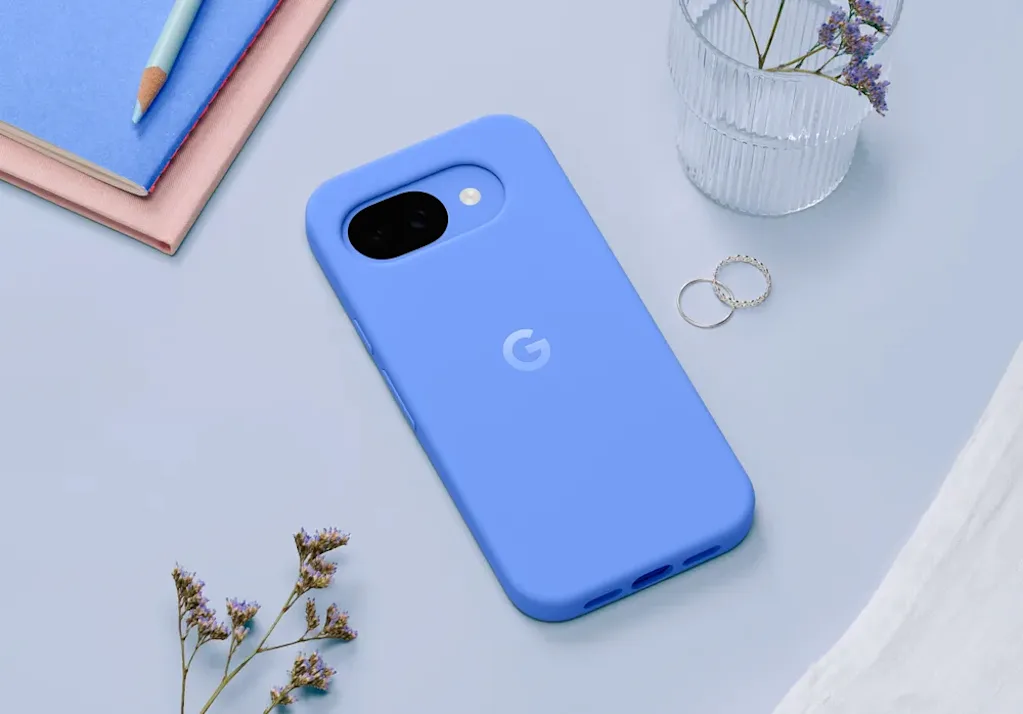
Announced this week, the Pixel 10A is getting a design-forward variant that’s exclusive to Japan. Google calls the color “Isai Blue,” and it was developed in partnership with the Japanese creative company Heralbony, based in the city of Morioka in Iwate Prefecture. “Isai” is a term that refers to “unique brilliance,” and the shade of blue used is intended to represent the symbolic color for autism. Earlier this month, Heralbony launched a campaign called the Beyond Blue Project to tie into World Autism Day on April 2.
The connection there is that Heralbony collaborates with artists who have disabilities and helps integrate their creative work into lifestyle products. The Isai Blue Pixel 10A, for example, features exclusive wallpapers by artists including Midori Kudo, Kaoru Iga, and Shigaku Mizukami, and the Pixel software dynamically adjusts its app icons and color schemes in response.
The Japan-exclusive Pixel 10A comes in specialized packaging with artwork from Kudo. It also includes a limited bumper-style case to highlight the device’s color, and a set of included stickers by artist Nozomi Fujita. It will be available in a single 256-gigabyte configuration for 94,900 yen ($596).
“Smartphones have now become an integral part of our daily lives,” said Heralbony project planner Rinko Daimon in a statement. “I believe there is great significance in the fact that by featuring artists’ work on these familiar devices, people will naturally encounter the artists and engage with their expressions as part of their everyday lives.”
Taking Japan Seriously
It’s another example of Google taking Japan seriously and tailoring its product marketing in a way that feels authentic and well thought-out. The Pixel series has long been heavily advertised with unique campaigns featuring local celebrities, and the results speak for themselves: Google often sells more Pixel phones by volume in Japan than in its home market of the U.S., despite the much smaller population.
Last year, the Pixel 9A and 8A were the second- and fourth-most popular Android phones in the country, according to Japanese analytics firm BCN. Pixel phones are now available on all of Japan’s major carriers, and Google has often priced them aggressively and offered regular discounts—which has helped keep prices affordable despite rising costs and the weakening of the yen.
A modest upgrade
The Pixel 10A, then, may well prove to be another hit in Japan. But there might be another reason that Google is making a big effort to win people over in what’s already its biggest market: The phone itself isn’t actually much of an upgrade this year.
Unlike the Pixel 10 and 10 Pro, which feature Google’s latest Tensor G5 processor, the 10A uses the same G4 chip from the Pixel 9 range. The 6.3-inch OLED screen is almost identical to the previous panel but has slightly higher peak brightness and sturdier Gorilla Glass. The camera hardware is unchanged, save for an even tinier bump—in fact, it’s slightly recessed now. The battery is the same 5,100-milliampere-hour (mAh) capacity but charges a little faster, at up to 30 watts with a cable or 10 watts wirelessly.
To be clear, the Pixel 10 phones weren’t radical upgrades over their predecessors, either. But they did at least get the new G5 chip, as well as Google’s MagSafe-style Pixelsnap magnetic wireless charging solution. Both headline features are absent on the 10A.
This would be a solid upgrade for anyone using a 7A or 8A, to be sure. Most people who bought last year’s second-most popular phone in Japan, however, are unlikely to be very convinced.
But Google’s announcement of a Japan-exclusive model—which is not something particularly common for Western tech brands—makes the launch feel like an event all the same. And it helps that Heralbony is a classy partner for the collaboration, providing some stylish art and an authentic connection to the local market. The two companies are even putting on a weeklong exhibition in Tokyo’s trendy Shimokitazawa neighborhood next month, where visitors can see the phone for themselves and get limited-edition pin badges with artwork by Fujita from a gacha (vending) machine.
In what has proven to be perhaps the most important market for the Pixel, Google has turned an otherwise pedestrian phone upgrade into an inspiring, design-forward event. The Pixel 10A might not be the most exciting phone of 2026, but it should be one of the more eye-catching launches in Japan this year.