Reliability is a Two-Way Street
We often hear stories of engines blowing up early, with owners ranting about how unreliable the powertrain was and giving up the ghost before 100,000 miles. The thing is, reliability is a two-way street. Granted, some cars require more proactive maintenance, but even the most resilient engine will throw in the towel with constant deferred maintenance.
With the advent of turbocharging and direct-injection engines, any neglect can trigger a domino effect of mechanical failures. One such Kia Stinger V6 turbo owner found that out in a rather expensive way.

Kia
Teardown Points to Deferred Maintenance
The higher-spec Kia Stinger was equipped with what’s called the G6DP engine. It’s a 3.3-liter twin-turbo V6 that also powered the Genesis G70 right up until the 2026 model year. It’s generally reliable and not prone to failure, as long as it gets timely upkeep. The thing is, this particular G6DP engine didn’t exactly have the best care; hence, it was gone at just a little over 100,000 miles.
Eric Berg of I Do Cars has torn down countless engines over the years, including the G6DP. He received the engine without some auxiliaries that could have pointed to its eventual demise. That said, the signs of neglect were clear the moment it was cracked open. The valves had an abundance of carbon deposits, and metal particles were caked in the sludge.
The engine eventually failed due to a spun rod bearing, with four of the six rods catastrophically damaged. Further inspection also revealed metallic debris in the oil pump, and the timing chain tensioners were found to be oozing metallic debris. This is the domino effect we were talking about earlier, wherein a single fault went unnoticed or straight up ignored, compounding one problem after another.
Post-Mortem
Cause of death? Simply put, it was long-term progression of neglect. There was evidence of oil consumption in the engine, as well as signs of running low on oil. Berg concludes that the owner may have failed to monitor the oil consumption issue. Again, this could have been prevented with more frequent servicing, and had the first signs of consumption been found early, necessary repairs could have been done.
Hyundai and Kia recommend 7,500 to 10,000 miles between oil changes for the G6DP engine, but that’s under ‘normal’ driving conditions. You can do that if your commute is mostly freeway driving or cruising down country lanes and the like. But under more severe conditions, such as spirited driving, constant short trips, and heavy traffic, the intervals should be much shorter.
Automakers have been recommending longer intervals, mainly to show cars can be run at lower cost. However, thatis only a recommendation, and it doesn’t hurt to service the vehicle more often. Our take? Examine your use case, and service it every six months if your usage is severe. Take care of your car, and it’ll take care of you for many more miles.
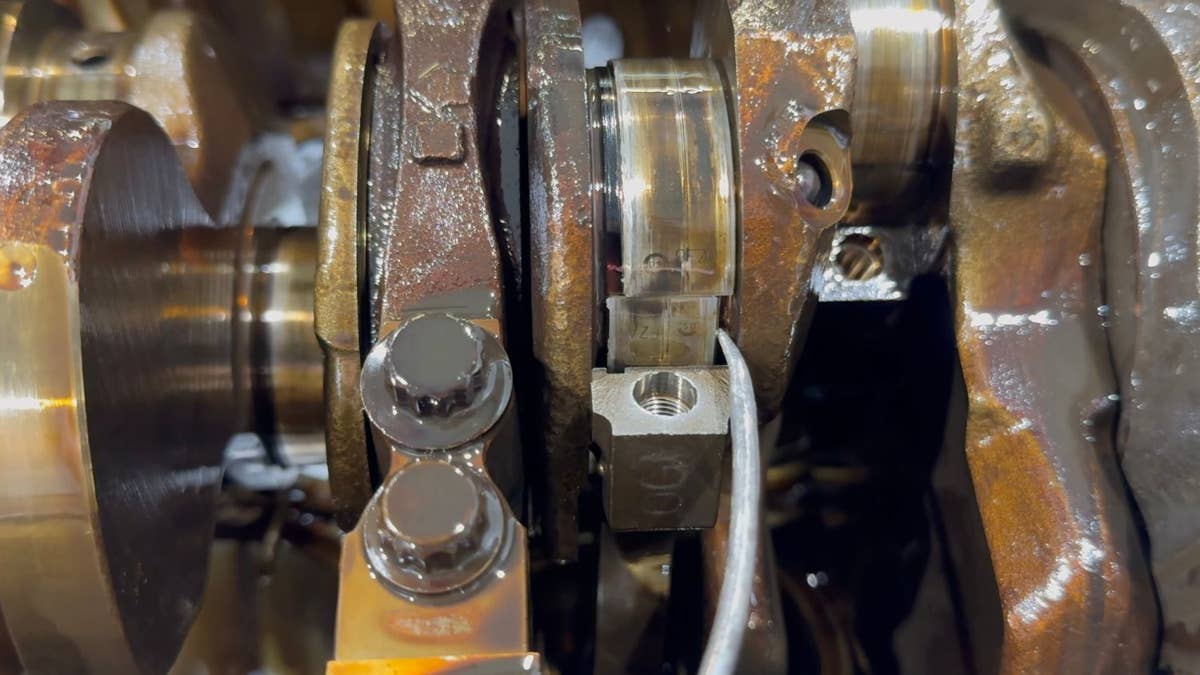
I Do Cars/Youtube