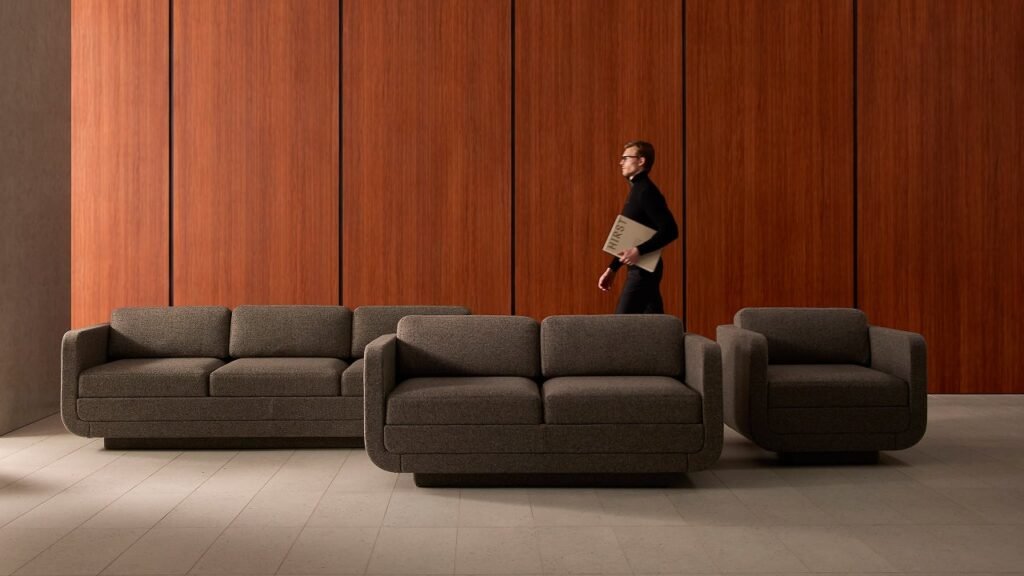
Skidmore, Owings, and Merrill, the giant of corporate office architecture in the mid-20th century, has its fingerprints on some of the most iconic buildings in American business. From Sears Tower in Chicago to IBM’s New York headquarters to Lever House in midtown Manhattan, these towers became skyline definers, and symbols of postwar American economic power.
But zoom in from those skyline views, and you’ll see that SOM‘s designs were more encompassing than the buildings themselves. Taking a total design approach, the firm designed the buildings and their interiors, but also their furnishings and even objects like ashtrays. Specific to the project, these furnishings and objects were never made commercially available.
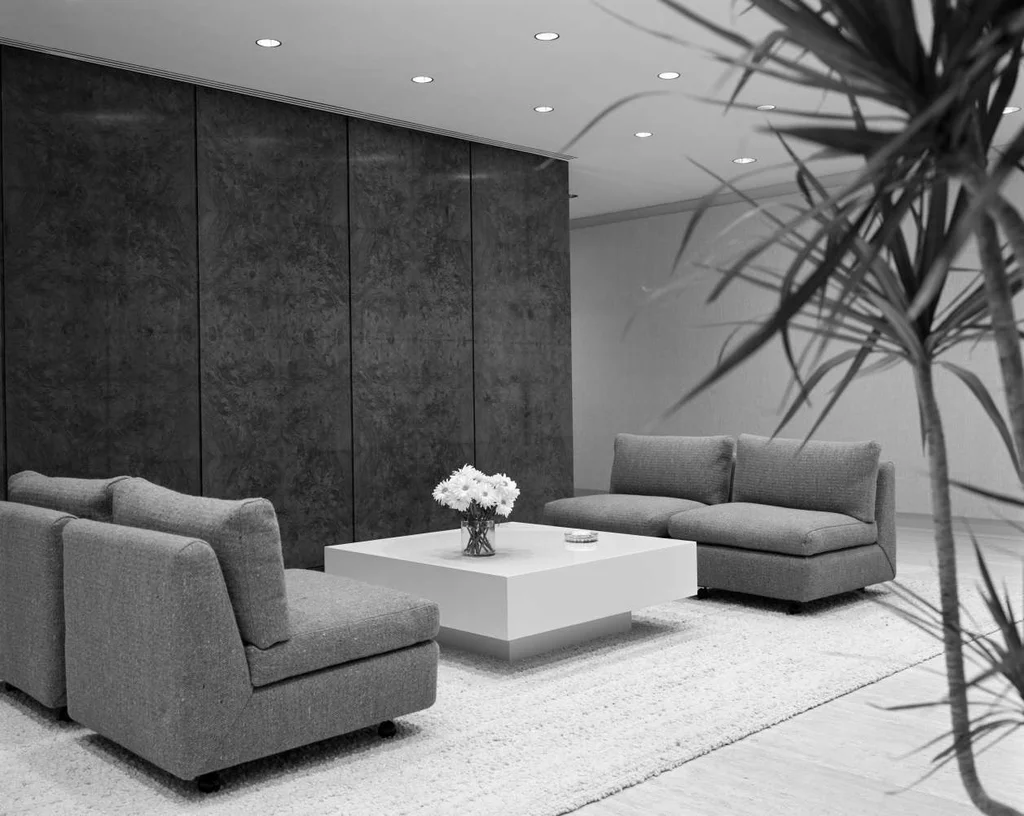
Now, those bespoke objects are getting a chance at a larger audience. SOM has opened its archives and collaborated with the furniture maker Teknion’s IkonStudio to create production versions of some of its deep portfolio of corporate furniture from the past.
“When we realized that we should do this, we actually opened up the archives and said let’s pull everything out of the cupboards and look at it holistically,” says Chris Cooper, a partner at SOM.
SOM and Teknion worked to curate a group of items for broader release, combing through archival images, designs, and even preserved pieces of furniture to find items that felt both timeless and relevant to the needs of people today.
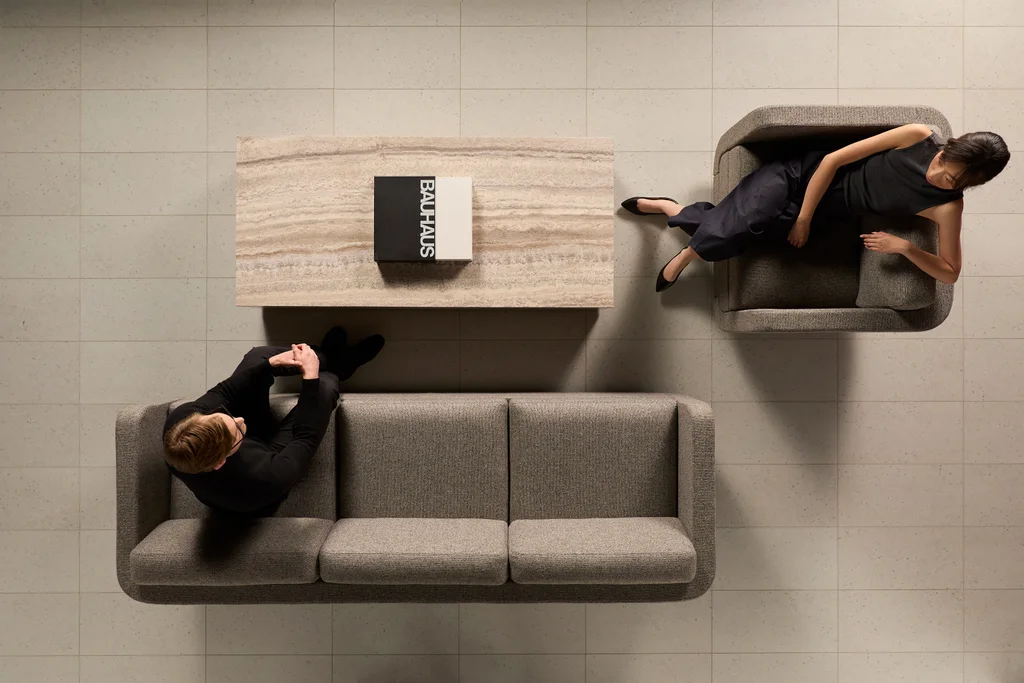
“We did this culling down from hundreds to maybe 80 to now there’s probably a dozen pieces that are going into production,” Cooper says. “It’s a very privileged position to be in looking back at 100 chairs and seeing which ones percolate to the top as being exceptional.”
The first items to be announced are a sofa and easy chair designed for IBM’s headquarters in the late 1950s and a tubular chrome table and chair set designed for the American fashion designer Halston in the ’70s.
“We had a trove of really interesting designs that emerged in this very fertile mid-century period where furniture systems were emerging to meet post-war needs and new production methods,” says Julia Murphy, another SOM partner. SOM’s approach back then was to take a holistic view of a project, and design the furniture to meet the specific needs of the client and mesh with the look and feel of the building. “It’s been an interesting process to pick out the pieces that are enduring and uniquely SOM,” she says.
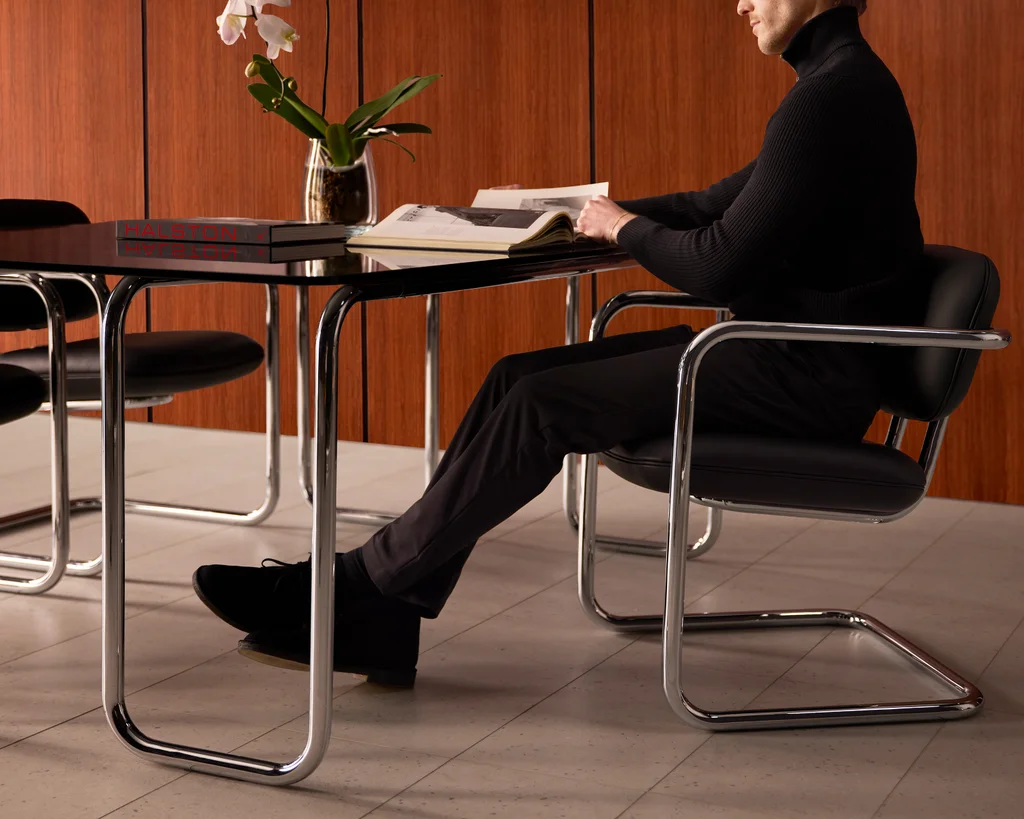
But these aren’t just reproductions of old designs. SOM painstakingly reviewed each piece to determine where new materials, ergonomic designs, and structural forms were needed. Sometimes that meant identifying foams that were not toxic like the originals, or coverings that are less harmful to the environment, or seat widths that are slightly wider or deeper to match modern expectations. The results are archive-based furnishings made with modern user needs in mind, and also furniture that can be mass produced in the manufacturing facilities that exist today.
“This isn’t trying to replicate authentic, historic pieces. This is trying to leverage good design forward,” Cooper says.
The newly released SOM archive furniture pieces are now available from Teknion, and more items will be released soon. Given SOM’s decades-long archive, there could be more to come.