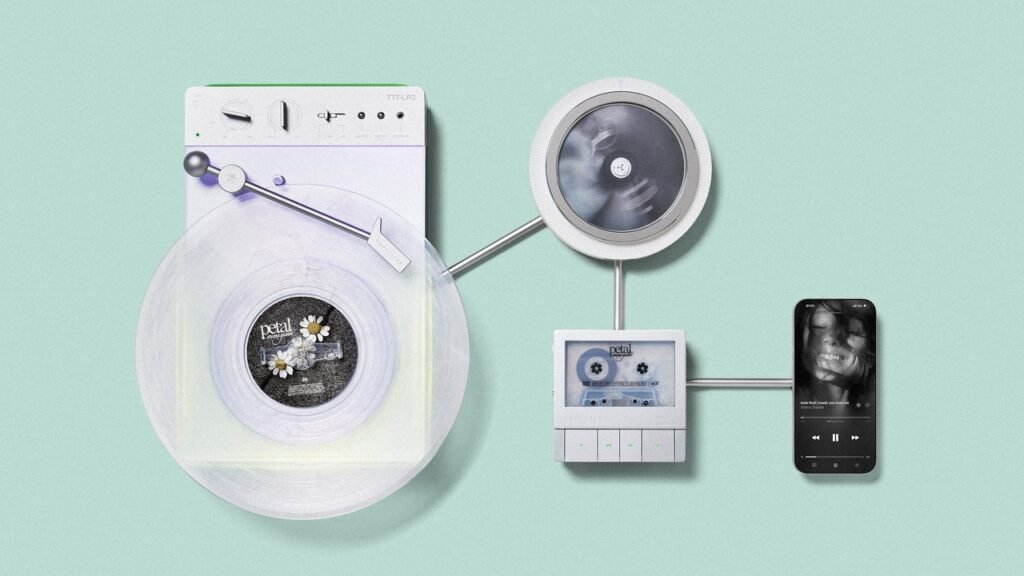
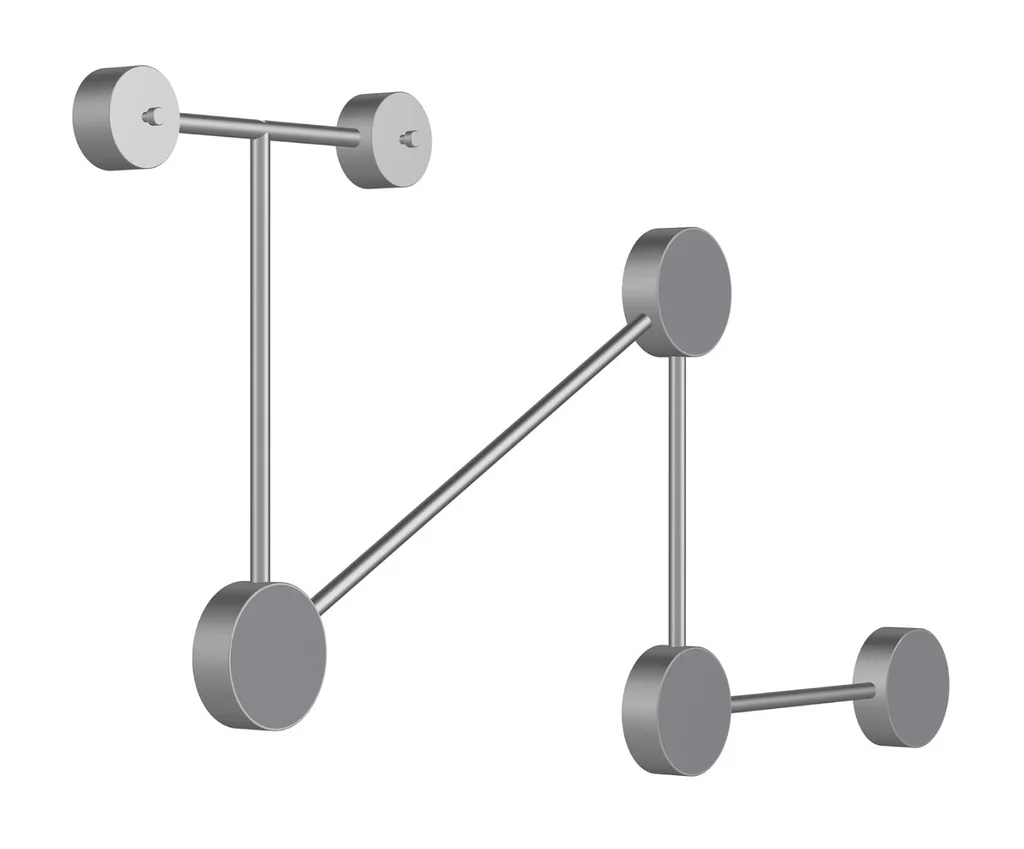
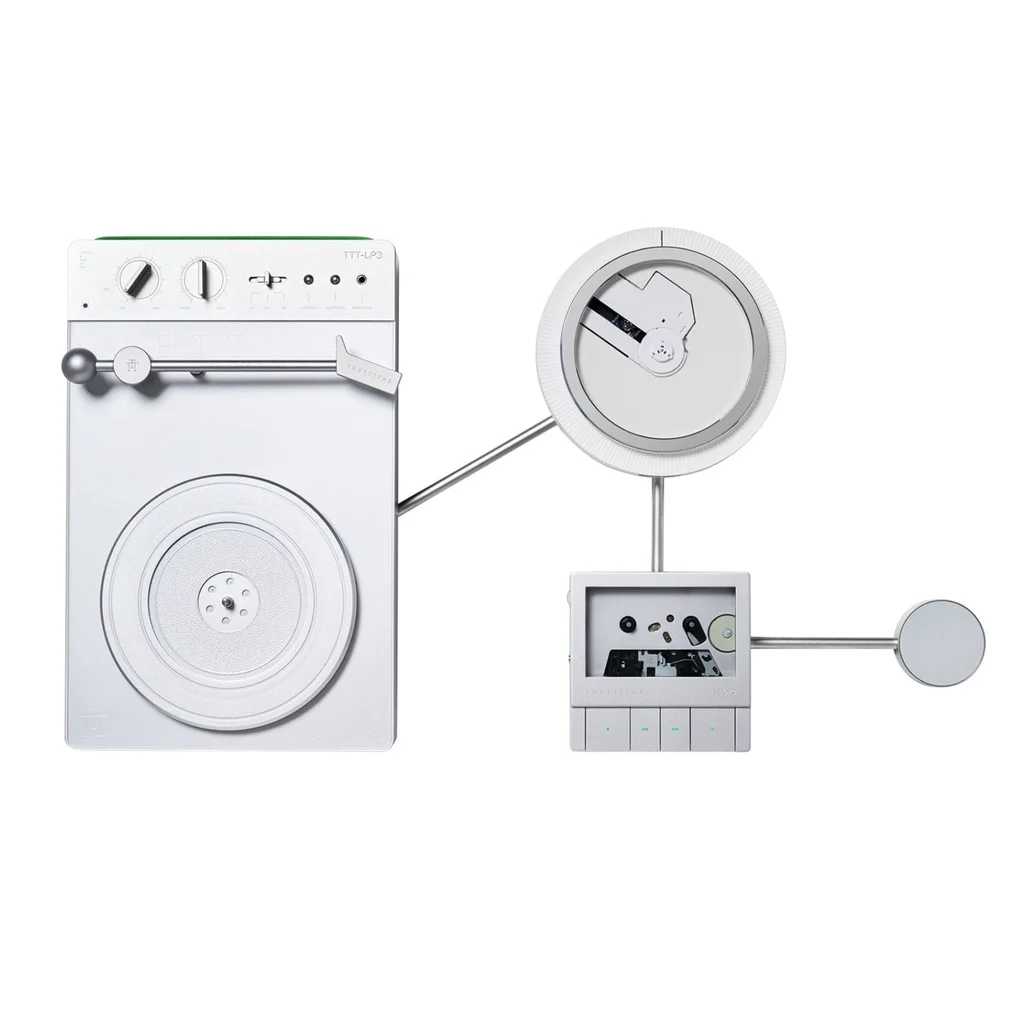
The Retro Ambient Audio System, from Trettitre, is a device designed to feed every generation’s sense of FOMO. The setup combines a record player, a CD player, and a cassette deck—plus a magnetic base for your phone—that snap onto a modular metal rack mounted to your wall, where they spin and play music.
After a Kickstarter campaign that raised more than $2.2 million (and a summer of shipping delays), the company is now selling the complete package on its own website for $529. It’s a poor man’s version of the famous $9,930 (adjusted for inflation) Wandanlage, the classic wall-mounted hi-fi system that Dieter Rams designed in 1965. The $529 price covers the three players and the magnetic wall rack, but not speakers.
Trettitre’s design director, Yong Cao, tells me the team members were born across three decades, from the ’70s to the ’90s, and each of them still has a soft spot for the format they first listened to as kids. Back in October 2025, Jeff Lyu, a cofounder, suggested putting all of those formats back into the living room, “so that our kids could feel that tangible connection to music too,” Cao says.
That’s why the players stay separate. “Vinyl, CD and cassette each stand for a different era. Each format sounds different, and the way people interact with each one carries different emotions. So I placed them at different points along the rack, which works as a timeline,” Cao explains.
Rams’ fans
Trettitre, known for its cone-shaped Bluetooth speakers, designed its audio setup to look like wall art. Instead of stashing a player in the corner and hoping people would eventually forget about it, the team designed the player to remain in sight and set the mood of the room whenever a record starts spinning.
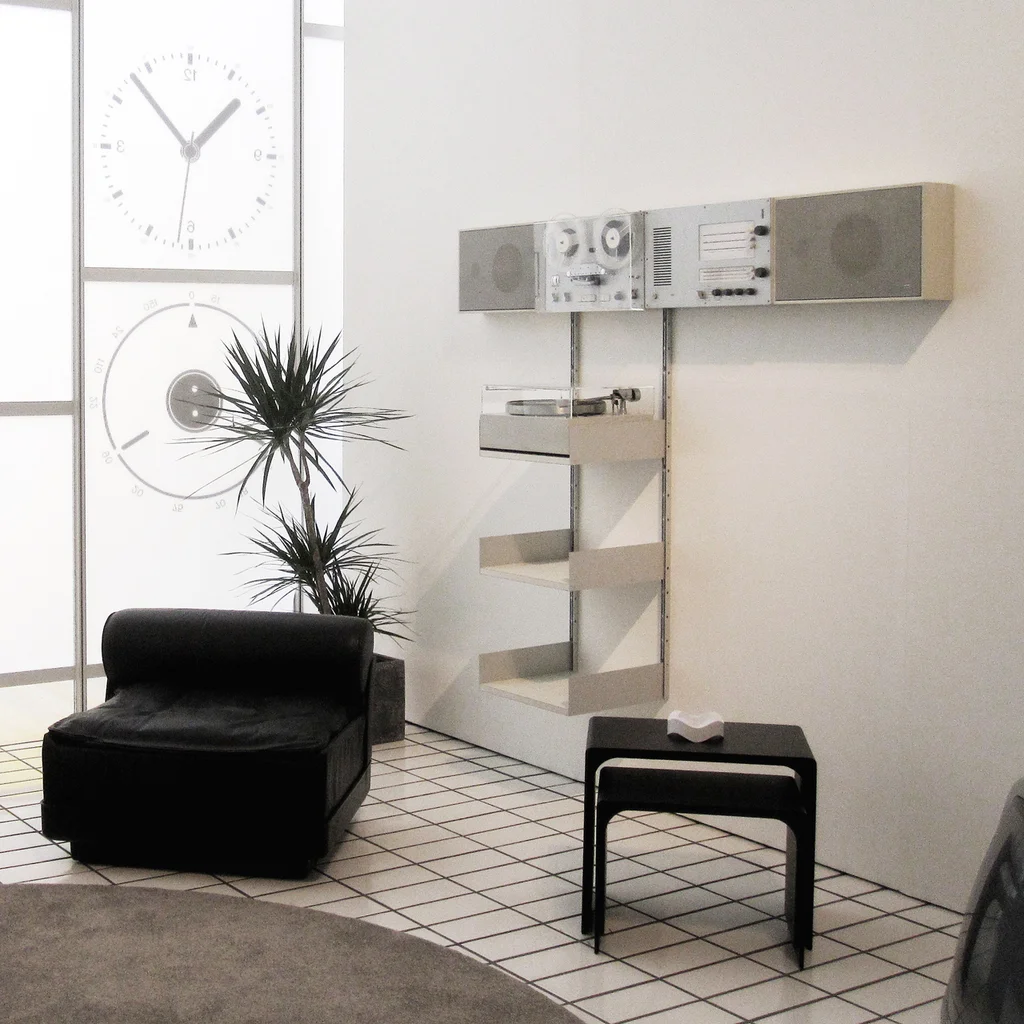
Hi-fi as wall display art is not a new idea. Dieter Rams, the famed industrial designer, spent decades shaping products for Braun, the German electrical and electronic products company, under his motto “weniger, aber besser” (less, but better). In 1959, Rams combined a pocket transistor radio with a portable record player to create the Braun TP 1. Later, in 1965, he designed his Wandanlage, as well as other wall-mounted audio systems. That device combined an amplifier, FM radio, reel-to-reel tape recorder, turnable, and speakers on a wall-mounted rack. Bang & Olufsen also had hi-fi equipment that could be mounted on walls as “art.”
Trettitre’s hardware follows that minimalist lineage with brushed metal plates, flat surfaces, and simple buttons. Its irregular layout, the mix of geometric shapes created by the different modules, and its turntable’s glowing ambient light, however, push it well out Rams’s purist aesthetic. Cao admits the debt: “Bauhaus and Dieter Rams have had a deep influence on me, and you can see it in this system: simple and useful. Behind minimal design there is usually maximal thinking.”
The star of the Retro Ambient Audio System is its LP3 turntable. A frosted panel behind the platter lights up the whole unit while a record spins. The LP3 charges wirelessly on the system’s T-shaped rack, like a phone on a pad.
Every unit has its own rechargeable battery, so you can unhook the turntable by its silicone-leather strap and take your records out to the patio. Out of the rack, Trettitre claims its battery lasts up to 10 hours with a record spinning.
The tonearm, the swinging arm that carries the needle, sets its own tracking force when you switch the player on. On other consumer turntables, setting the needle’s pressure on the groove requires fiddling with a counterweight by hand. The needle is a common Audio-Technica AT-3600LA cartridge, a budget workhorse found in many entry-level turntables, and Trettitre sells its replacement stylus for $35.
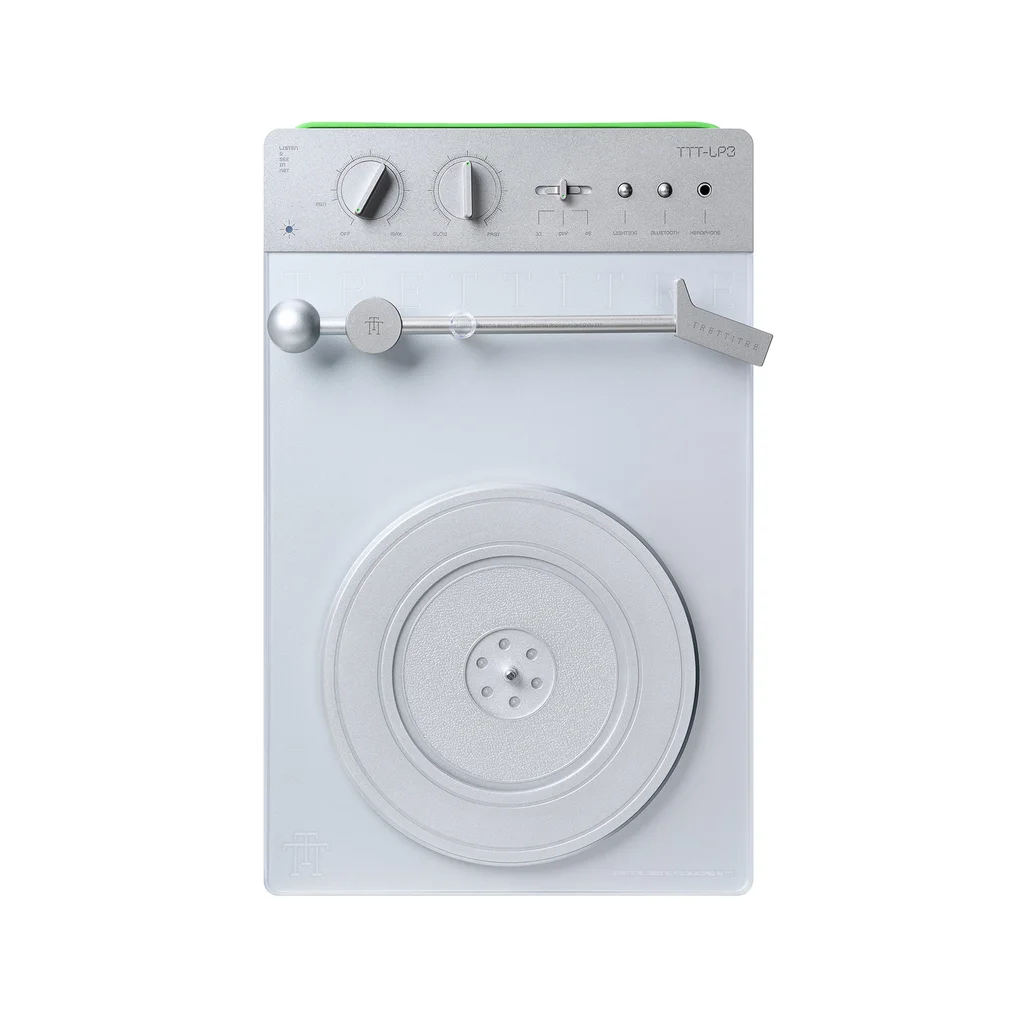
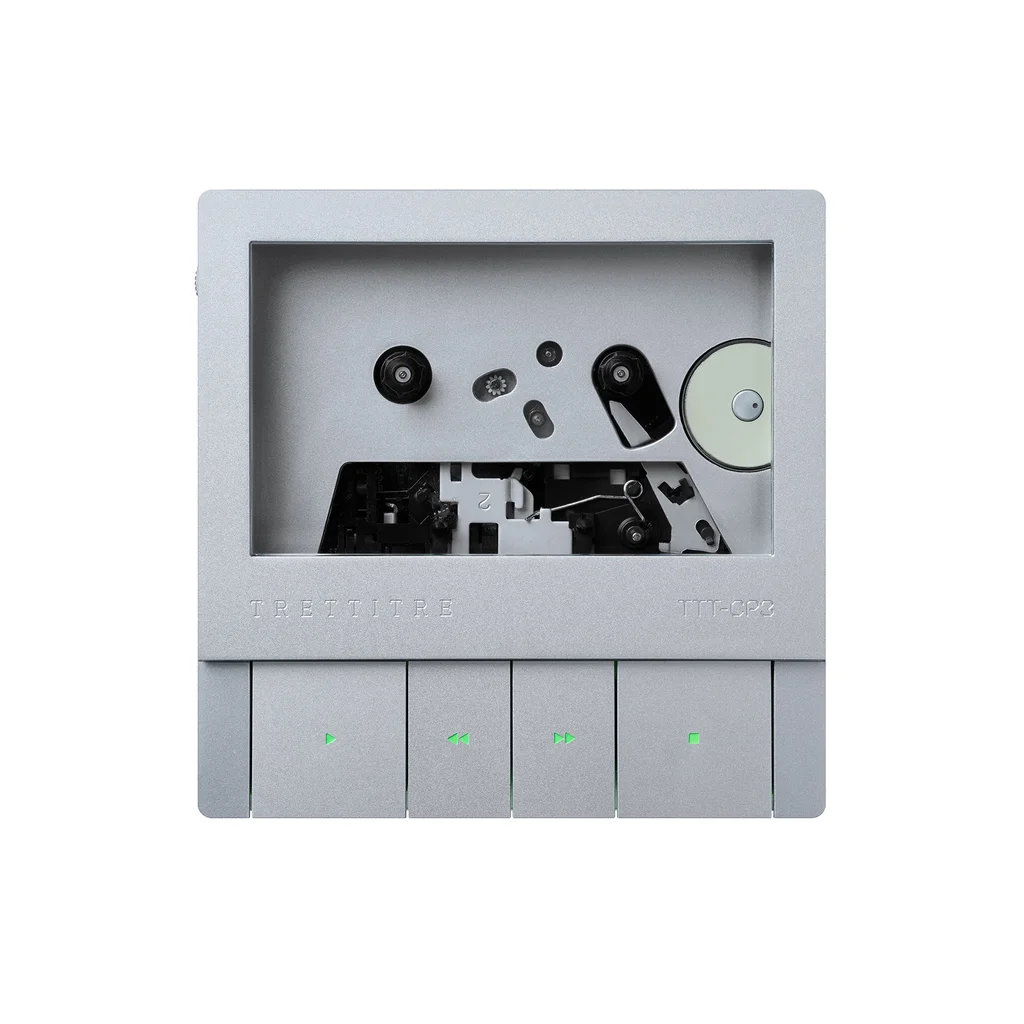
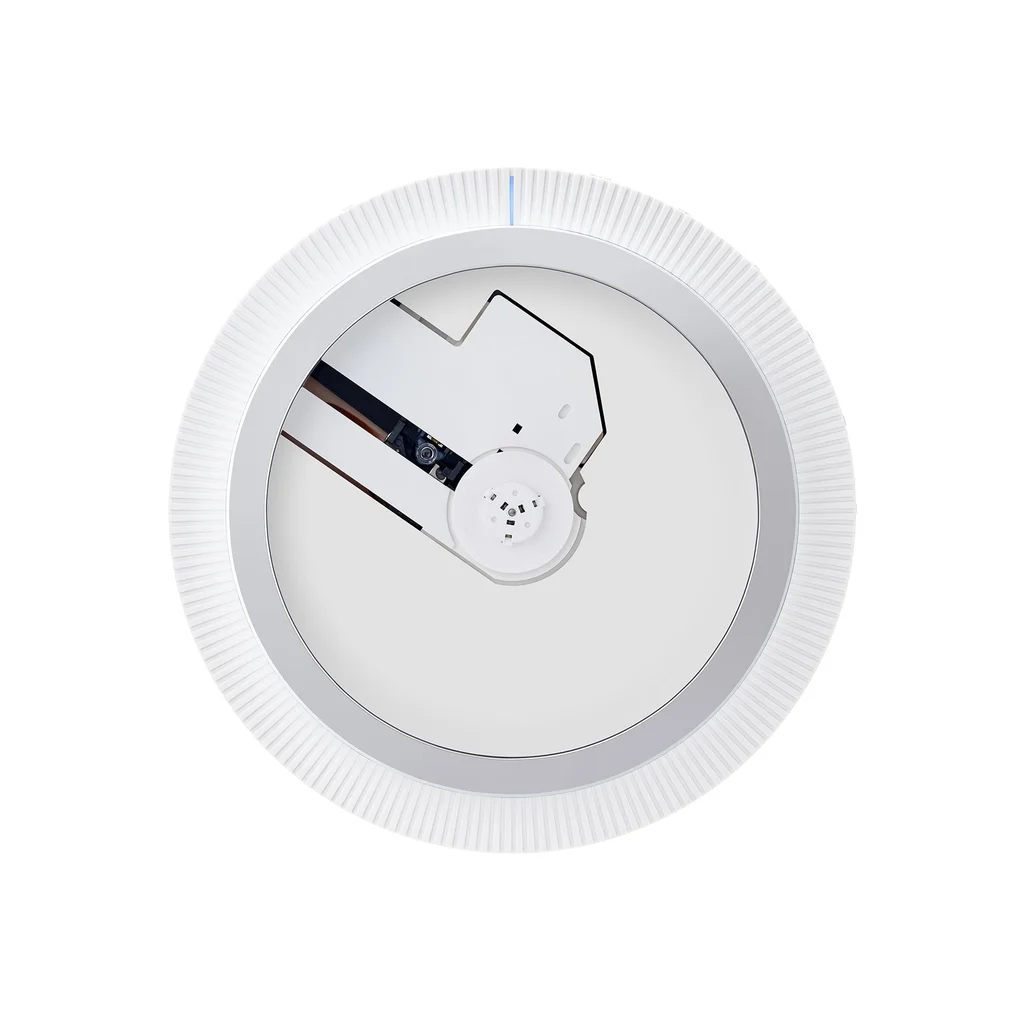
Next to the turntable is the DP3 CD player, a 6.7-inch flying saucer with a clear magnetic lid that leaves the disc visible as it spins. The round shape recalls Naoto Fukasawa’s 1999 wall-mounted CD player for Muji. It sits next to the CP3 cassette deck, which features a metal top, sharp angles, and big mechanical keys. Trettitre claims up to 10 hours per charge for both, and sells them separately for $119 and $129, respectively.
The fourth spot on the rack doesn’t play anything: It’s a magnetic phone holder. Once it’s up there, the phone can stream over its own Bluetooth to the same speakers as the other three players. It’s Trettitre’s admission that streaming apps aren’t going anywhere, even on a wall built to celebrate physical media.
The wall strikes back
Hanging a turntable on a wall creates an obvious engineering problem: gravity. On a regular turntable, gravity pulls the needle down into the groove. Turn the record on its edge and that same force pulls sideways, along the face of the record, so the player needs another way to keep the needle in the groove, and the record needs something to stop it from sliding off its spindle. Trettitre sells an optional $10 clamp that holds the record in place for vertical playback.
Early owners report mixed results. One Kickstarter backer, who still gave the system four stars in a review on Trettitre’s store, found that records with heavy instrumentation sounded distorted once the player went up on the wall. “Flat, no problem at all, vertical the instruments sound flat (not empty, like their pitch is out of tune),” the owner wrote, after testing the Guardians of the Galaxy: Awesome Mix Vol. 1 and My Fair Lady soundtracks. Noah Wong, a company cofounder and the chief marketing officer, tells me they know about the off-pitch problem and says they have fixed it. Others have had better luck. “It’s amazing how the needle stays on the record flawlessly,” one backer wrote on Kickstarter. We asked Trettitre how its engineers adapted the tonearm for vertical play and will update this story if the company responds.
According to the company, older vertical turntables fought gravity with nothing more than a counterweight or a spring. The LP3 instead uses a mechanism of its own that pushes back both vertically and horizontally. That keeps two forces steady while the record stands on its edge: the needle’s downward pressure on the groove, known as tracking force, and antiskate, a small counterforce that stops the arm from drifting toward the center of the record and leaning on one side of the groove. After hearing the pitch wobble on some busy, densely arranged recordings, its engineers narrowed how far that needle pressure is allowed to vary, a change the company says “resolved the issue.”
The second issue is Bluetooth, which has to compress the music to send it through the air, losing some detail along the way. Each of these components must send its audio over Bluetooth to the wireless speakers or headphones you already own, or through a standard 3.5 mm headphone jack. Audio enthusiasts would have liked regular RCA cables and an amplifier. Purists will get queasy at the thought of turning a vinyl groove into a compressed digital stream. Alas, this is not a device for audiophiles. It’s more for people who listen to music and like fancy stuff on their walls.
Now anyone can buy it. The $529 system is listed as in stock on Trettitre’s website, with a 12-month warranty. The company told one customer it’s “a temporary test price” that “will most likely increase.”
While I would rather have a Wandanlage, this system is a nice proposition for anyone who misses the ritual of sliding an album out of its sleeve and watching it turn, instead of letting an algorithm pick the next song. I can certainly get behind that.