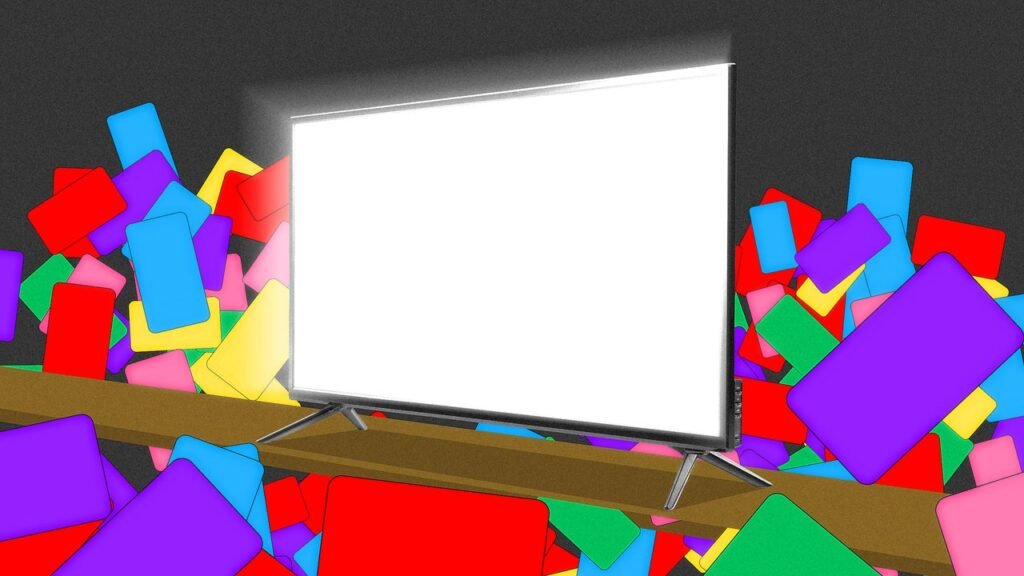
On a quiet Monday evening, 42-year-old Igor Aguiar decided to give his 75-inch Amazon Fire TV a much-needed—and pointedly pious—facelift.
Ninety minutes and a handful of AI prompts later, he sat back to admire his handiwork. The TV’s original home screen, once dotted with movie recommendations and toilet paper ads, was gone. In its place sat a sleek, colorful replacement launcher with shortcuts to his most-used apps and, more crucially, a breakdown of the day’s significance in the Catholic liturgical calendar.
“I needed something more useful to me,” he tells me. “That’s kind of why I said, OK, let me try to make this a Catholic TV.”
Aguiar is a developer by trade, but he’s no smart TV guru. Instead, he’s one of a growing number of tinkerers using artificial intelligence to combat the software clutter gumming up the biggest screens in their homes. It can be less daunting than it sounds; in some cases, all it takes is toggling a few developer options on a compatible TV, pasting a prompt into the AI coding agent of your choice, and watching as the changes take hold.
The motivations behind these mods are as varied as the TVs people have been trying to overhaul.
Some people care mainly about style. Griffin Cock Foster, a New York-based entrepreneur, turned his TV’s streaming app icons into bound books on a faux-wooden shelf to better match the vibe of his 1920s-era townhouse. (Bonus: He says his Sony Bravia now runs more smoothly, too.)
Others seek to streamline, so they (or their parents) can access built-in features and favored services more easily.
More than a few, meanwhile, jumped on the trend after finding themselves fed up with the ads and data tracking at the heart of the connected television industry. CleanYour.TV and dumbtv, two of the most prominent vibe-coded mods to surface in recent weeks, don’t just give your TV a sleek new look—they also promise to excise bloatware and disable content recognition tools that generate usage data to be sold or used to target ads.
“The whole advertising experience still leaves a lot to be desired,” says Michael Goodman, director of entertainment research at Parks Associates. He says it’s not just that ads interrupt our favorite shows. It’s that there’s big business in packing ads into as many on-screen slots as your smart TV will allow.
“All that marketing is how the OS [operating system] operators are making money,” Goodman says. “It’s not only the OS guys; because there’s ad splits, there’s lots of people making money off that OS.”
Encouraging rejection
Technically, overhauling your smart TV to be less cluttered or more respectful of your data was always possible to a degree. You just needed the know-how and the right kind of television.
For years, people have used apps and developer tools to coax TV sets running Google’s Android software into running alternate launchers they could customize as they saw fit. Plenty of TV manufacturers offer at least some control over those automated content recognition features, even if it isn’t always easy to find.
Now, though, broad availability of tools like Claude Code means you don’t need a shred of TV expertise to deploy these tweaks all at once—just a bit of spare time and a certain tolerance for troubleshooting. (Thankfully, it’s easy enough to undo most redesign mods should setup go awry.)
Like plenty of other vibe-coded endeavors, these projects come with caveats. Some TV models, particularly those from companies like Samsung and LG, run on in-house operating systems that can be more resistant to these kinds of vibe-coding tricks. And while these homegrown redesigns stick around when you turn a modified TV off and on again, they may not last after that TV installs a software update.
Still, that a growing cottage industry devoted to cleaning up our TVs exists at all now suggests we may have been less satisfied with our biggest screens than we cared to admit. And it’s not hard to see why a TV’s software foibles might start to grate. Americans, after all, spent north of 2.5 hours per day watching TV on average in 2025; that adds up to 38 days over the course of a year spent flipping through series, trying to ignore ads, and wondering when things got so laggy.
This push to vibe code a way out of the mess tapped into a latent dissatisfaction with TV interfaces and the way they’re managed, says Goodman at Parks Associates. He notes that he finds these DIY redesigns “fascinating.”
What’s not clear to, well, anyone really, is how the world’s smart TV brands will react. Will they read these projects as the work of harmless enthusiasts? Or direct challenges to their bottom line?
“I’m going to guess that their level of awareness is rising, and I’ll be very curious as to what their responses are,” Goodman says. Those responses may emerge pretty soon, too: CES, the massive tech trade show where TV brands compete on sheer spectacle, is a little over two months away.
For now, at least, these TV redesigns get to proliferate unchecked, enjoying what feels like an unspoken truce. That suits people like Igor Aguiar just fine; his newly Catholic TV is still going strong, and he’s just happy it’s helping him remember when to run to Mass for the next unsung feast day.