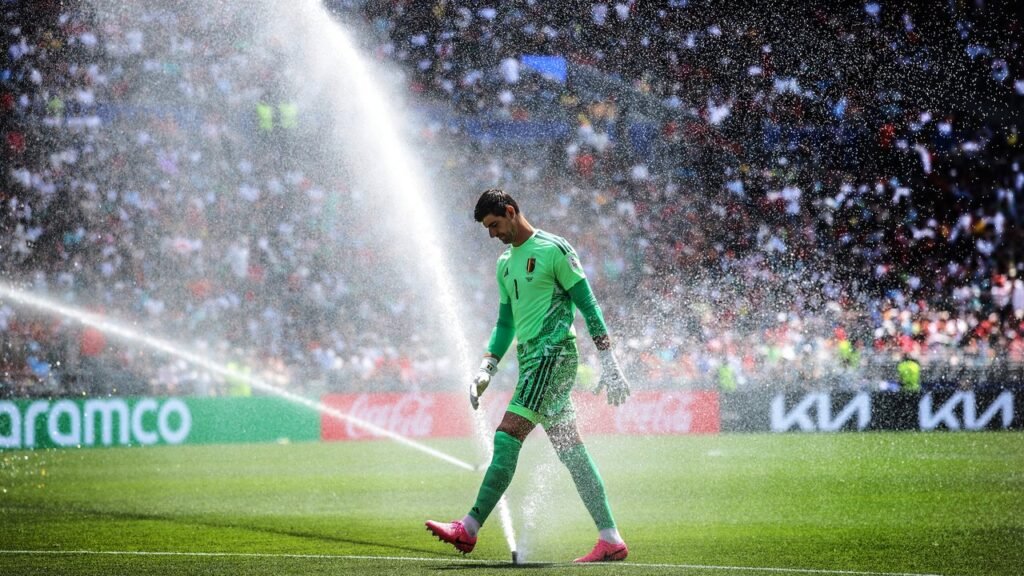
Fans and players at the World Cup this year are facing the heat as summer temperatures skyrocket, but smart stadium design can help keep them cooler than they would otherwise be.
Ten of the 16 World Cup venues this year in the U.S., Canada, and Mexico are at high risk of extreme heat conditions, according to a report by Future for Football, a group that researches climate and sustainability in soccer. A warming climate will only make it worse.
The report found that a “sharp increase in extreme heat poses rising risks to the players’ health, matchday operations, and spectator safety.” Extreme heat is especially an issue in 2026 World Cup cities farther south in the U.S., like in Atlanta, Dallas, Houston, and Miami, where historical average temperatures are high in June and July. However, stadiums farther north also face hazardous conditions. The upcoming Fourth of July match in Philadelphia will take place under high heat illness risk, according to NPR.
“The fact is that summers are hotter. They’re hotter longer,” Chris DeVolder, director of sports at the architectural firm Gensler, tells Fast Company.
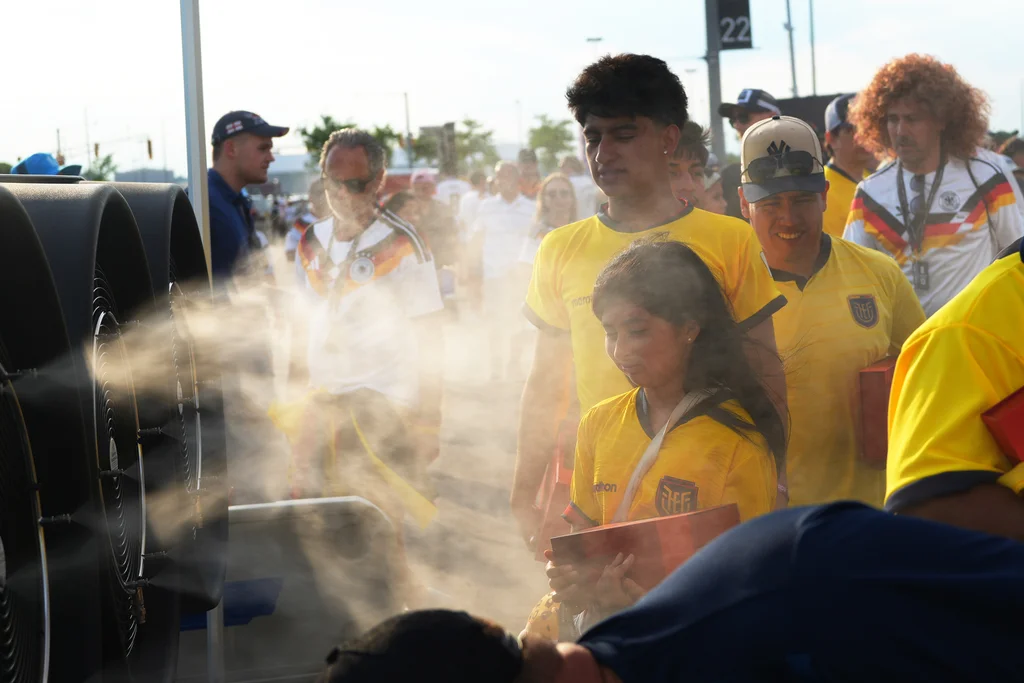
FIFA does have plans to combat the extreme heat at the World Cup, which includes a Heat Illness Mitigation and Management Task Force staffed with medical professionals, as well as scheduling games to avoid the hottest times of the day. Organizers have also added cooling areas, water stations, and misters for fans.
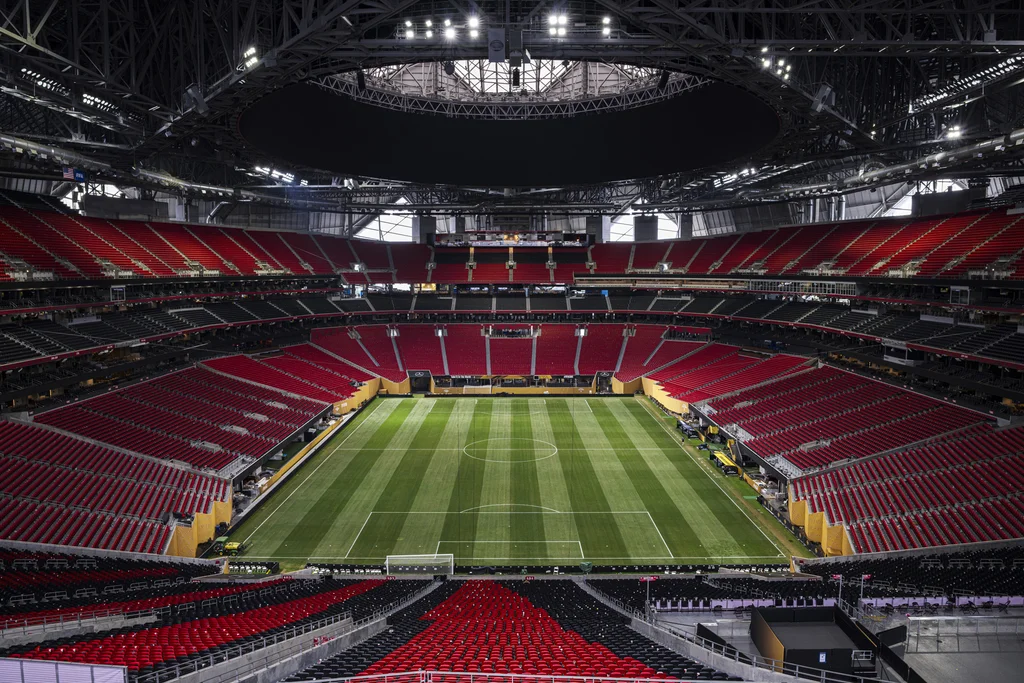
Only three of the World Cup stadiums in the U.S.—Atlanta, Dallas, and Houston—are air-conditioned and have retractable roofs that can close. To ensure player and fan safety in other cities, venues are relying on various other interventions. Here are three strategies that stadiums can employ now, as well as in the future.
Throw shade
Canopies and other shading strategies are core interventions to mitigate heat. “Shade is our best friend,” DeVolder says. “And it’s not just in the seating bowl, but in the concourses.”
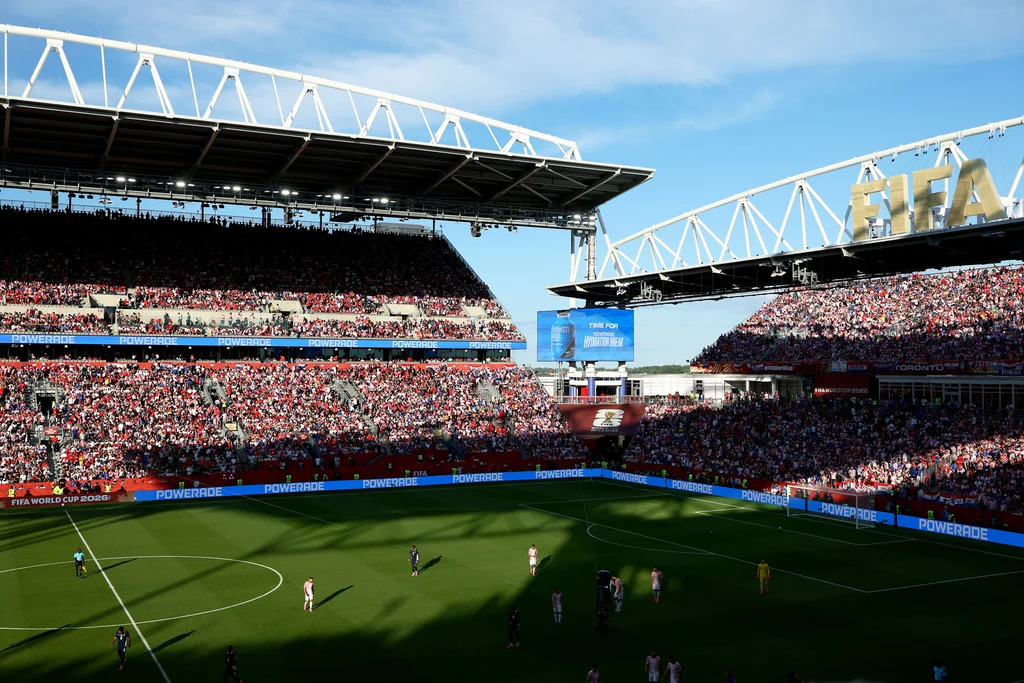
Shading over the field of play and seating can keep players and fans cooler, although it creates a challenge in maintaining healthy grass. Artificial turf is an alternative, but it retains more heat than natural grass. The World Cup venues all use natural grass.
“It just means the groundskeeper has to put a little more energy into keeping the grass green because you’ll have some times a year where you get full shade, and that’s hard to deal with,” DeVolder says.

Extending the shade out with canopies, trees, or tents, like the temporary air-conditioned tents outside of World Cup stadiums, can also help lower the overall ambient temperature.
Install cool seating
Mesh and waffle-pattern seats are another effective intervention against extreme heat. Unlike solid plastic, these designs maximize airflow to keep people cool. This trend began in minor league baseball in the Southern U.S. and continues to grow in popularity.

Work with nature
For new builds, stadiums can be strategically positioned to maximize natural airflow and combat extreme heat. Additionally, solar studies allow architects to pinpoint when and where direct sunlight will hit throughout the day and season, enabling them to plan shading and canopies accordingly.
Designing venues with plenty of water fountains is also key to keeping fans hydrated and safe. Similarly, the World Cup’s mandatory hydration breaks protect players on the field when temperatures rise—while also conveniently opening up extra advertising slots for broadcasters.
“Providing access to water, maintaining hydration during an event like this, is super important,” DeVolder says.