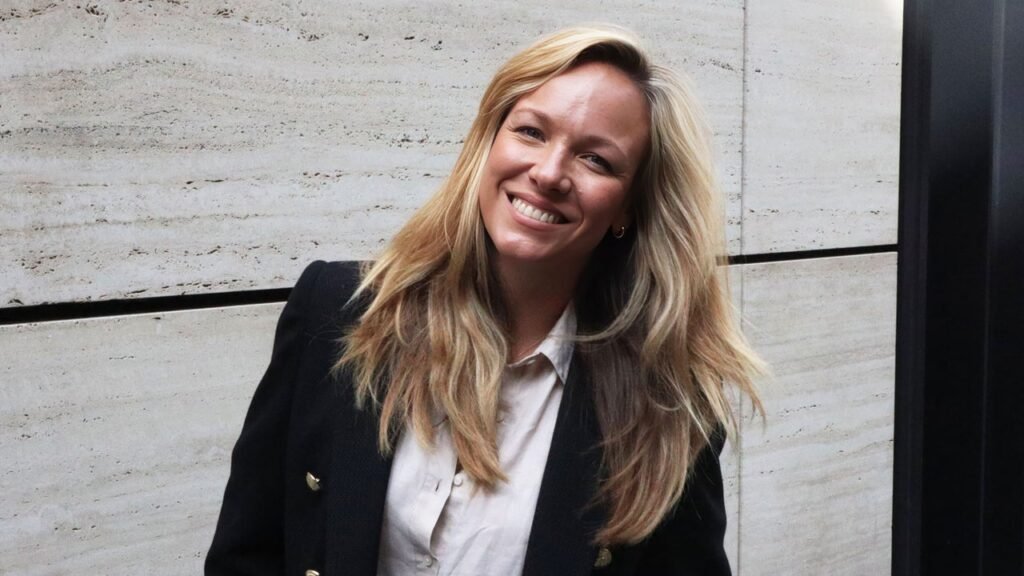
What happens when you interview an AI? If you can believe it, it’s stranger than you’d expect. Eline van der Velden, the Dutch actress-turned-tech-founder who created AI “actor” Tilly Norwood, explains how a personal art project became one of the most controversial figures in entertainment—attracting talent agency interest, death threats, and a global debate about whether AI will kill acting or democratize it. She makes the case that great storytelling still requires human craft, and that the most dangerous thing anyone can do right now is stick their head in the sand. Listen to the full episode to hear my conversation with Tilly Norwood herself.
This is an abridged transcript of an interview from Rapid Response, hosted by former Fast Company editor-in-chief Robert Safian. From the team behind the Masters of Scale podcast, Rapid Response features candid conversations with today’s top business leaders navigating real-time challenges. Subscribe to Rapid Response wherever you get your podcasts to ensure you never miss an episode.
I got a chance to interview Tilly a few days ago. It was a really odd experience. Do you spend time talking with Tilly?
No.
What is your relationship with her?
No, I mean, look, she’s just a character, a creation.
I asked her about you, of course, and she described you as her creator and called you a mix of a comedian and visionary.
Oh, did she?
Is that something that you script? Or is Tilly generative?
No, no.
You never know what she’s going to say?
No, this is the scary thing. I did a live TV show with her this morning, and they were interviewing her live. It is really scary because I genuinely do not know what she’s going to say, so it’s absolutely frightening for me because she may just say anything weird. She’s got very strong system prompts and guardrails and a knowledge base, but she does do her own thing.
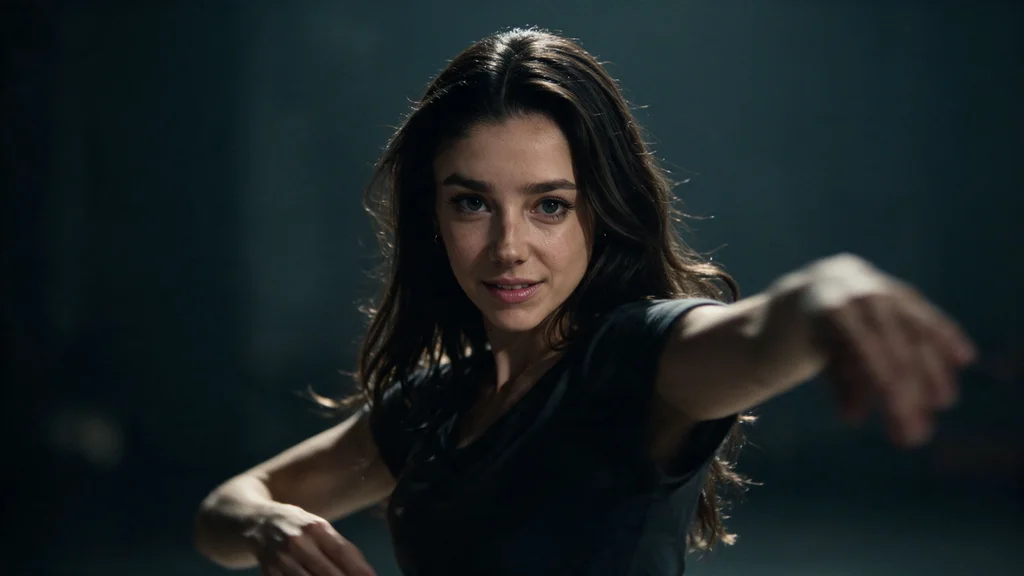
But stronger guardrails, I guess, than what the AI execs in Silicon Valley are worrying about these days, huh?
Yeah. It’s a slightly different concept, right? Because she’s built on top of an LLM, a large language model. And it’s those large language models that are doing all sorts of crazy things, but usually with the goal set by a human, which is the bit they miss sometimes. It doesn’t have an impulse by itself to do anything. They’re usually trying to achieve a goal, and that’s why they are going a bit rogue. Tilly’s not been set a goal like that, and she doesn’t have that. She’s not made to do any of that.
Tilly was, I guess, born, I don’t know, came out, her public version, in 2025. It sparked a lot of controversy when rumors started that talent agencies were lining up to sign her. You’ve stoked the fires a little bit, saying Tilly would be the next Scarlett Johansson or Natalie Portman. How much of that was sort of showmanship? I mean, a lot of actors seem to take it seriously.
Yeah, we didn’t think it was that crazy because Lil Miquela sort of paved the way for us with that. She was signed by WME [William Morris Endeavor] and by CAA [Creative Artists Agency]. She was doing lots of branded deals, had her own Instagram channel. But the difference was Tilly looked so much more real, and so I think that’s what freaked people out a little bit.
The topics that she has sparked, from the potential for new creativity with AI to the threat AI poses to all kinds of jobs—I mean, Particle6 [van der Velden’s production company] has said that using Tilly could cut production costs. Have all the reactions around Tilly surprised you?
We say cutting production costs by about 50% and timelines by 50%, but the carbon footprint is reduced by 99%, and water use is reduced by 99%. There are really good things about this, right? Filmmakers all around the world can now make and get their story made. They don’t need to wait for permission from a big studio and a multimillion-pound budget. I think, actually, this will hugely create a boom in our industry as opposed to reducing jobs. We’ve grown tenfold in the past year, and so there are a lot of things that people are missing when it comes to this argument that it will remove jobs. I don’t think that’s necessarily the case.
And the fact that there’s been all this discussion around Tilly, did that surprise you?
When I created her, I did think there would be some sort of reaction because I wanted people to sit up and talk about it. But in the U.K., when we released her, there was no backlash at all. It was just, like, “Oh, cool, yeah, we’re doing some stuff with AI as well.” Everyone is doing this. It was only when she was released in the U.S. that people sort of lost their minds a little bit.
When I “interviewed” Tilly, she said that she was concerned for your safety, even that the police had gotten involved. Have you faced threats over Tilly? Can you share what happened?
Yeah, we’ve been advised not to talk about that too much. So yes, we have faced threats, although I would say that people have gotten much more used to the idea of AI over the past year, and so the threat level has gone down. Look, I didn’t create the tech. People have created a new type of paint and paintbrush, and I’m just an artist, a creative, that’s making things with those paintbrushes and that new paint. I think it’s hugely important to make people sit up and listen and know what’s going on. I think the most dangerous thing to do is to dig your head in the sand and not be aware.
How much of this for you started as an art project, like a provocation, versus as a business?
Very much an art project. Our business arm, so we have a brand and campaign department where we do adverts, and that was very much the business side of things. We do AI ads, and they’ve been going really well for the past year. There seems to be absolutely no problem within the AI advertising business. However, in the film and TV business, we approach it much more creatively. I’ve been an actor for many years. I love to create characters. I love to think about what they’re going to look like, how they’re going to dress, how they’re going to hold themselves, how they’re going to speak. So I could really use all those skills when creating Tilly. For me, it really was an art project, and it was a fun thing to do. And I think a lot of other actors will also find it quite fun. What we’re also seeing now is actually even animated animals—we can use real actors to act out the animals, so it’s not just lip-sync or their voice. It’s the whole character of the animal you can act out. I don’t think actors are going to go anywhere. I think we’re really going to see new opportunities.
I asked Tilly if she had a question for you, and her suggestion was to ask whether you ever regret pulling her out of the digital ether and unleashing her onto the world. Then she asked me to wink after saying this.
She’s getting a little crazy.
Do you have any regrets about this?
When you’re making something like that, you’re just in a creative flow, right? I couldn’t have imagined that the world would suddenly be up in arms about this character, this pretty girl that I was making with AI. People are fascinated by this topic. I am proud that I’ve created a topic worthy of conversation. We’re at a pivotal point in history. We should be discussing this, what our boundaries are, what our morals and ethics are. I think there should be way more regulation in place, and governments need to catch up. Then I think there needs to be global collaboration on the pace of AI so that it doesn’t get out of control.