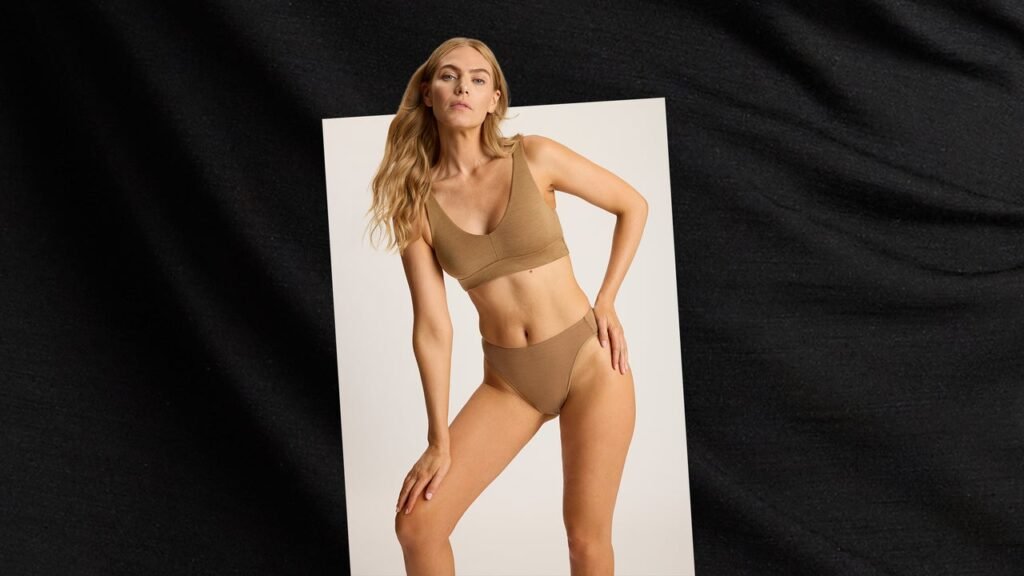
Back when she was too young to buy her own clothes, Kerry O’Brien remembers loathing hefty wool sweaters—especially turtlenecks. But her career as the founder and CEO of basics brand Commando gave her a new perspective on fabrics and fibers, including a love for wool and what can be done with it beyond creating itchy knitwear. Now, decades after her turtleneck terrors, O’Brien brought wool to unexpected new territory: panties.
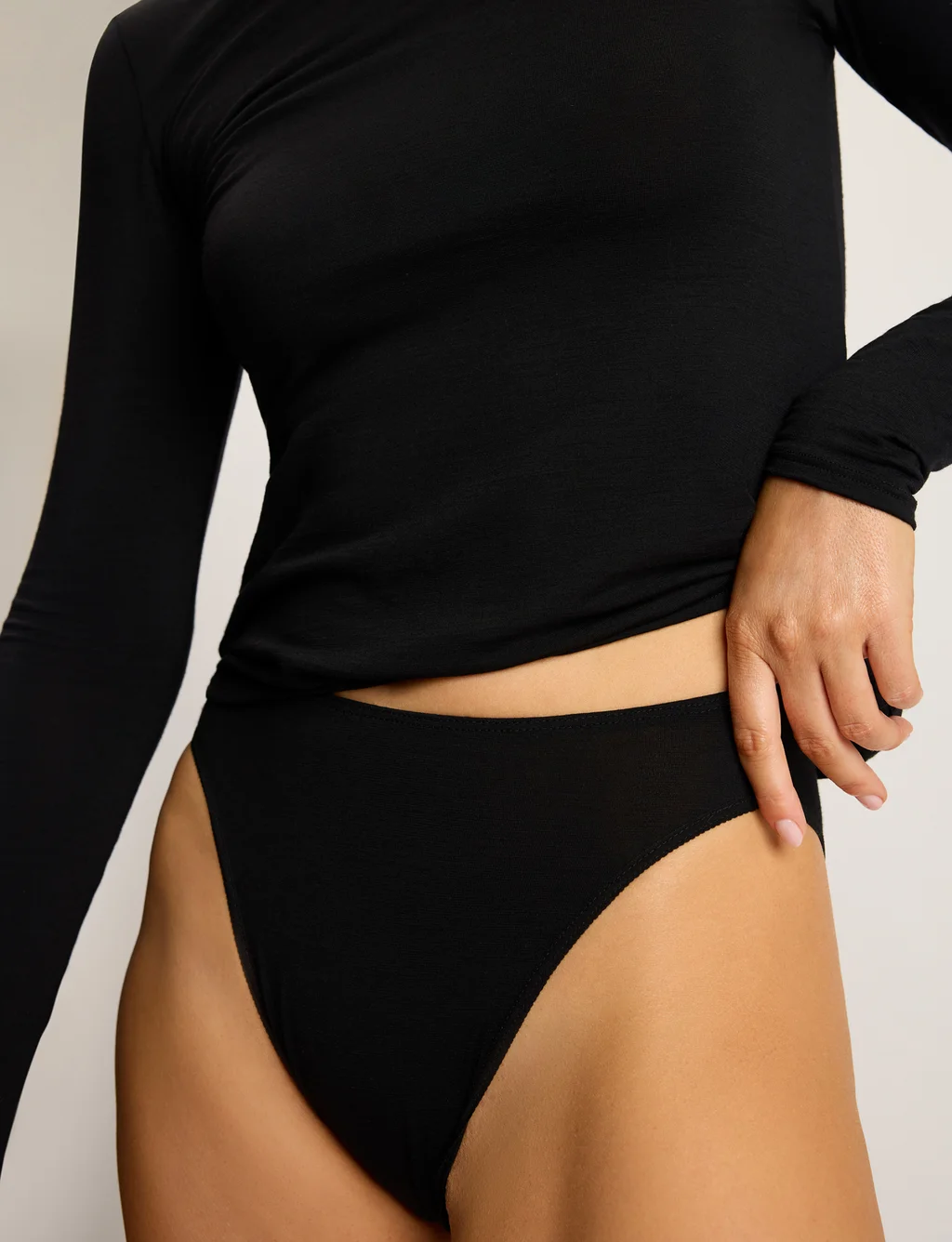
Commando started out nearly 25 years ago by transferring some of the fabrics engineered for activewear to women’s intimates, originally building a brand on seamless, raw-cut panties made of a synthetic fabric. But the new wool panties, which are available online now and in select stores and retail for $38, inherently achieve a lot of what those nylon panties do artificially.
“Nothing can really replicate the technical aspects of wool, what it does naturally,” O’Brien tells Fast Company.
This wool underwear debut coincidentally comes amid some consumers’ growing war on polyester, which also happens to be the most produced fiber on the planet.
Abercrombie, for instance, recently drew controversy online over a mostly synthetic women’s sweater marketed as a “wool-blend.” More broadly, a growing number of fashion content creators are lauding the benefits of natural fibers over synthetics, citing environmental and health concerns. (So are wellness and MAHA influencers, although a direct, causal connection between microplastics and sickness has yet to be proven). “Polyester” has even become an insult among Gen Z.
This consumer preference is also showing up in search trends. Interest in “natural fibers” is up 60% over the past year alone, according to Google Trends. Zoom out further, and stats show the term is up a whopping 140% over the past five years.
Wool panties aren’t a new invention; they’ve historically been sold at wool-focused brands and more niche outerwear labels. But they might be on the horizon of becoming a more mainstream, fashion-forward panty as synthetic pushback continues.
Why wool?
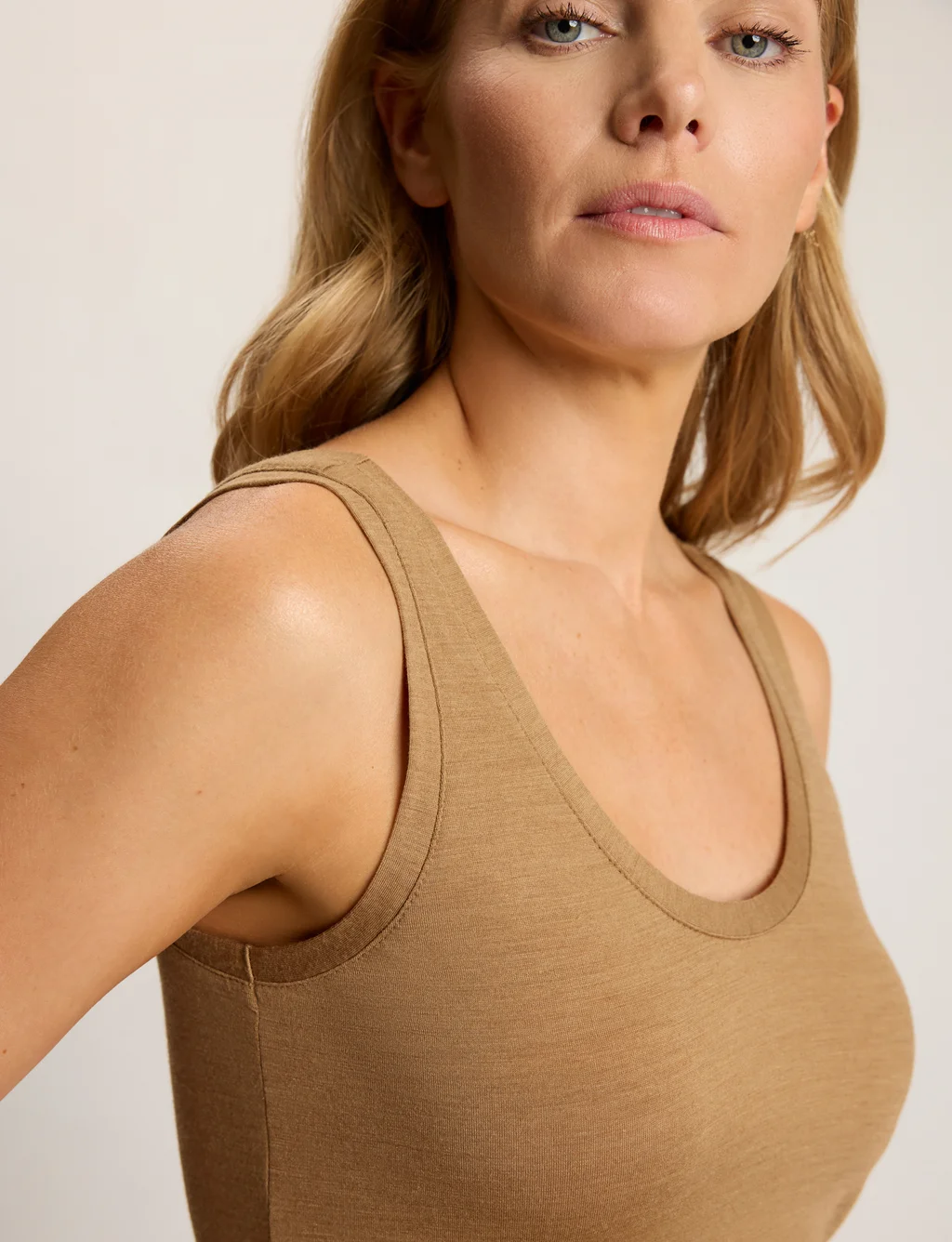
Despite its often scratchy connotations, this fiber that most commonly comes from sheep has a lot of natural advantages. For example, it possesses abilities in “moisture management, biodegradability, renewability, temperature regulation, and odor resistance,” Huipu Gao, PhD, an assistant professor of textile development at the Fashion Institute of Technology, says. These properties lend themselves well to women’s underwear, especially moisture management, odor resistance, and temperature regulation.
“[Wool] is the next frontier,” O’Brien says. “Everybody has a wool sweater. Everybody knows what wool is. Unfortunately, they have this idea that wool has to be chunky, scratchy, super warm, and thick.” But it can be altered the same way cotton can, to become everything from Kleenex to a hefty sweatshirt. As shoppers increasingly look for natural fibers, wool might be an emerging contender, including in the women’s underwear space where cotton has long reigned as the recommended and most available fabric.

Why wool has its challenges
The reason why wool probably hasn’t taken off as a go-to material choice for undergarments has less to do with make than with cost, according to Gao, who noted that fine wool fibers are more expensive. Wool also requires additional treatments in order to prevent pilling and shrinking when washed and dried, which add to the overall bill. Altogether, added requirements and their subsequent added costs have likely limited its popularity in underwear thus far, he says.
Transforming wool also comes with difficulties. For luxury hosiery, intimates, and apparel brand Wolford—which launched a six-silhouette capsule (sans panties) in collaboration with Australia-based wool certification and advocacy group Woolmark in early October—the challenge began with developing the right yarn.
It took a lot of trial and error to “find the right balance in the micron of the fiber and the twist” to create a super soft fabric that’d feel comfortable on the skin, Wolford CEO Marco Pozzo says. In other words, they had to figure out the right diameter of the fiber to use (measured in microns) and the right tautness of the yarn’s twist, without it breaking or creating something uncomfortable on the skin.

“The other challenge was the finishing and the dyeing because the reaction to the color was very different on natural fiber compared to the synthetic fiber,” Pozzo says. “Every sheep is different, like our hair, so the way they absorb the color can be very different.”
Wolford had to change its dye “recipe,” especially to recreate its signature colors. To finish things, Pozzo says they “stabilized the material in a steam chamber” to prevent the fabric from performing differently or changing sizes across variable environments, be they cold, hot, or humid.

Liz Sargent, fibers professor at the Savannah College of Art and Design School of Fashion, explains that fiber fineness is the key to spinning wool comfortably enough to work as underwear or a first layer. “Merino fibers are extremely fine, which lets them bend easily rather than poke the skin. That flexibility is why merino can feel as soft as cashmere and as smooth as silk against the body,” she says, adding that “next-to-skin Merino” usually ranges between 15.5 and 18.5 microns. For items like underwear that need recovery or bounce back to their original shape, she says, “wool is often blended with or wrapped around a small amount of nylon or elastane.”
Why brands keep using elastane
The blend Sargent describes is what’s in Wolford’s line, which uses one pure wool fabric and one with 15% elastane mixed in. It’s also what’s in Commando’s French cut panty, which is composed of 96% wool and 4% elastane. With that sprinkle of synthetic, the new Commando panty isn’t pure natural fiber, but O’Brien wanted it this way, regardless of current backlash.
“[Elastane] is really a key ingredient to Commando, helping things stretch and be modulus against your body,” she says. Wool naturally has stretch to it, but it can shrink and warp out of its original shape depending on heat and agitation. Elastane makes that bounce-back after a wear or machine wash possible. That’s why O’Brien cautions against completely ditching synthetics.
“Synthetic fabrics have given us a lot of benefits over the years in terms of technical performances,” she says. That being said, the CEO is also leaning into more natural fibers ahead. Within the next year, Commando plans to release new lines made with cashmere and linen, each with a fraction of elastane mixed in.
Wolford is also thinking about its natural fiber evolution. Though the initial wool line only features ready-to-wear garments, Pozzo is tracking how it sells in order to decide whether Wolford should add silhouettes—including, possibly, wool panties.